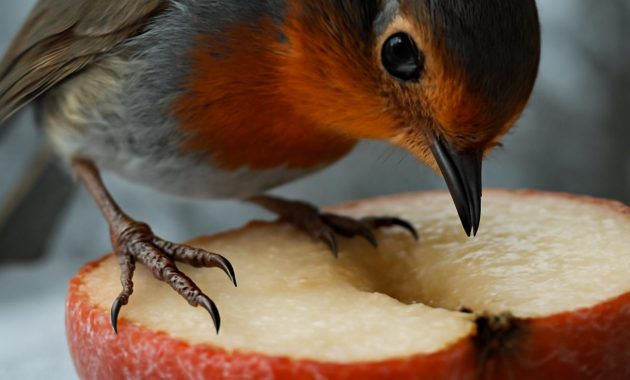
The first time you hear a robin sing on a dull, grey winter morning, it feels like someone’s lit a tiny lantern in the gloom. The garden is bare, the flowerbeds look tired, and your breath hangs in the air like ghostly silk—yet there on the fence post is a flash of russet red and bright bead-black eyes, bold as you like. Robins do that. They show up when everything else is quiet. And this winter, according to the RSPCA, they could really use a little help from you—and from something you almost certainly already have sitting in your kitchen.
The Tiny Bird That Refuses to Leave
When the first real cold snap arrives—when the car windscreen glazes over and the ground stiffens to stone—most of us hunker down indoors. Kettle on. Heating up. Curtains closed earlier and earlier each afternoon. But outside, the garden robin is still there, holding its claim.
Unlike many other birds that migrate to warmer countries, robins stay. They tough it out through damp, wind, sleet, and frost. That defiant presence in the hedge or on the shed roof is one of the reasons people feel such a fondness for them; they’re a symbol of perseverance, of colour in the depths of grey.
But staying put comes with a cost. Winter is a ruthless accountant. Every cold night, a robin can lose up to 10% of its body weight just keeping warm. Imagine burning through almost a tenth of yourself every time the sun goes down. To make it to morning—and to the end of winter—they have to refill that tank, and quickly.
This is where your kitchen, of all places, becomes unexpectedly important. The RSPCA has been reminding people that while fancy bird feeders and seed mixes are helpful, a simple, plain pantry staple can mean the difference between a robin surviving a cold snap—or not.
The Humble Kitchen Staple That Could Save a Robin
Here it is: plain, unsalted, lightly crushed mild cheese—like cheddar.
Not glamorous. Not exotic. No expensive specialist mix, no complicated recipe. Just that block in your fridge that you grate over pasta or slice into sandwiches. According to guidance widely shared by the RSPCA and other wildlife organisations, small amounts of grated or finely crumbled, mild, unsalted cheese can be a lifeline for robins and other small garden birds in winter.
Why cheese? Because for a bird battling sub-zero temperatures, fat and protein are pure survival fuel. Insects and worms, a robin’s natural favourites, retreat deep into the soil when it freezes, and lawns turn into green concrete. It’s like their supermarket suddenly closes its doors. A little cheese steps in as a high-energy alternative, especially when offered at the bitter edges of the day: early morning and late afternoon.
But as with most acts of kindness toward wildlife, the details really matter.
How to Offer Cheese Safely
Picture your garden on a frosty morning. The grass looks sugared. The bird bath has a thin lid of ice on the top. You open the back door and that cold air rolls into the kitchen. Somewhere in your hedge, a robin is watching you, silently calculating whether you’re worth following today.
To help it, here’s exactly what the RSPCA and bird-care experts recommend:
- Use plain, mild cheese – Mild cheddar or similar is ideal. Avoid blue cheeses, strong flavoured cheeses, processed cheese slices, and anything with herbs or flavourings.
- Make sure it’s unsalted (or very low in salt) – Too much salt is dangerous for birds. If in doubt, use only a tiny amount and very occasionally.
- Grate or crumble it finely – Tiny flecks, about the size of small seeds, are best. Large chunks can be difficult or unsafe for little beaks.
- Offer only small amounts at a time – A light sprinkle is enough; this is a supplement, not a full diet.
- Place it on a clean, flat surface – A ground feeder tray, bird table, or even a plant pot saucer at ground level works well for robins.
- Clear away leftovers – Remove any cheese after an hour or two so it doesn’t spoil or attract rats and other unwanted visitors.
That’s it. A few seconds of grating, a quick step into the cold, a light scatter on the table or tray—and you’ve just turned your garden into a winter lifeline.
What a Winter Day Looks Like for a Robin
To understand why that tiny offering matters so much, it’s worth stepping into a robin’s world for a moment.
Dawn in midwinter is a pale, reluctant thing. Before first light, a robin is already on the move, feathers fluffed into a perfect little orb to trap warm air close to its body. It has survived the night, but the price is steep: its energy reserves have plummeted.
So it starts to hunt. Hopping along flowerbeds, tilting its head to one side to listen for the faint rustle of something moving beneath the soil. Scratching under leaves. Investigating the cracks between paving slabs. Every small movement is a potential breakfast, but when the ground is iron and the air is numb, the menu is severely reduced.
The robin is territorial, so it can’t simply wander miles and miles in search of food. This patch—the hedge, the fence, the broken pot by your shed—this is its stage. What appears bare and lifeless to you is a tightrope for it. Too little food over a few days of sharp cold, and even the boldest robin will quietly vanish.
Now imagine that on this territory, there is a dependable place where, most mornings, a sprinkling of easy, high-energy food waits on a table. A few flecks of cheese. Some soaked raisins. A handful of soft crumbs from unsalted, wholemeal bread. For a small creature burning fuel faster than it can find it in frozen soil, that regular offering is not a luxury. It’s a margin of safety.
More Than Cheese: Building a Robin-Friendly Winter Menu
Cheese is the centerpiece of this RSPCA-highlighted tip, but you can create an even better winter larder with a few other everyday foods and simple extras. Think of it as laying out a tiny buffet for your feathered neighbour.
| Food | How to Offer It | Why It Helps in Winter |
|---|---|---|
| Plain mild cheese (unsalted) | Finely grated or crumbled on a tray or bird table | High in fat and protein for quick, warming energy |
| Mealworms (live or dried) | Scattered on the ground or a low tray | Mimics natural insect diet; robins love them |
| Soft fruit (e.g., raisins, sultanas) | Soak briefly in warm water, then drain and offer | Adds sugar and moisture when water is frozen |
| Sunflower hearts & soft seed mix | On a tray or table, not just in hanging feeders | Easy-to-eat seeds suitable for soft-billed birds |
| Crumbled, unsalted wholemeal bread (small amount) | Mix with seeds or cheese; offer sparingly | A stopgap filler food—but should never be the main diet |
Even in a small yard, balcony, or shared courtyard, just a saucer with a little of the above can make your space a tiny sanctuary. Robins are ground feeders at heart; they’re happiest hopping around low surfaces, so keep things near the ground but safe from prowling cats.
Where Warmth Meets Responsibility
There’s a special kind of warmth in watching wildlife from your window. You stand there, mug in hand, the glass misting with your breath, and outside a robin flicks its wings, checks the garden for danger, then hops forward toward the food you put out. That trust—tentative at first, then bolder as days go by—feels like a quiet conversation between species.
The RSPCA’s winter advice about feeding robins comes with an important unspoken message: kindness needs to be thoughtful to be truly kind.
Well-meant but unsuitable food can cause more harm than good. It’s tempting to throw whatever is to hand onto the lawn when snow is falling, just to “give them something.” But birds aren’t tiny people in feathers; their bodies work differently, and their tolerances are very specific.
What Not to Feed Your Garden Robins
If cheese is the hero, these are the villains to avoid:
- Salty foods – Salted peanuts, salted crisps, bacon rind, heavily salted cheese. Excess salt can be toxic for birds.
- Milk – Birds are not able to digest milk; it can make them very ill. Cheese is fine in small amounts because the milk is fermented and processed—liquid milk is not.
- Mouldy or spoiled food – If you wouldn’t eat it, don’t offer it to them.
- Large chunks of bread or cheese – Risk of choking, poor nutrition, and filling them up on “empty” calories.
- Fat mixed with salt or meat juices – Cooking fat from meat often contains high salt levels or residues that aren’t safe.
It can feel counterintuitive. We’re used to thinking: “Something is better than nothing.” But for wild birds, “the right something” makes all the difference. A pinch of grated, unsalted cheese is good; a handful of salty snacks tipped from a packet is decisively not.
Responsibility doesn’t dampen the magic of helping wildlife; it deepens it. You’re not just feeding a bird—you’re learning how to respect its needs, the shape of its life, the invisible threads that tie its survival to small choices made in warm kitchens.
Turning Your Garden Into a Safe Winter Stage
Food is only part of the story. A robin braving winter needs three main things from your patch of the world: food, water, and shelter.
Food we’ve talked about. Water, though, is easy to overlook. On the coldest days, when everything glitters with frost, water is actually harder to find than food. Puddles freeze. Gutters ice over. Even the soil moisture locks up.
If you can, set out a shallow dish of water—an upturned dustbin lid, a plant saucer, an old pie dish—and check it each morning. Break or remove the ice and top it up with fresh water. A few seconds with your fingers in icy water might feel unpleasant, but to a robin, that small disc of liquid is a drinking fountain and a bath.
As for shelter, think of your garden in winter from a bird’s-eye view. Is there somewhere to dive into when a sparrowhawk cuts across the sky? A dense shrub? An ivy-covered fence? A wild corner where last year’s stems and seed heads are still standing?
Many of us tidy our gardens so thoroughly in autumn that we unknowingly strip away vital hiding places and micro-habitats. Leaving a few tangled corners, a pile of logs, or a thick hedge can give robins and other small birds the layered shelter they need to dodge predators and escape the wind.
And then there’s the rhythm. Birds thrive on routine. If you can, put food out at roughly the same times each day—early morning, when they’re hungry after the night, and again in the late afternoon, giving them a boost before the cold tightens its grip. Soon enough, you’ll find a robin is waiting for you, as punctual as a commuter train, on the same post or branch each morning.
The Quiet Joy of Being “Known” by a Robin
There’s a particular kind of happiness that sneaks up on you when you start feeding a robin regularly. At first, it flits away as soon as you open the door, no more than a rusty flicker in your peripheral vision. Then curiosity starts to win over caution.
Maybe the bird lingers on the gate when you step outside, watching your hand place the tiny snowdrift of grated cheese on the table. Maybe it waits only a metre away, head cocked, chest glowing even under the dullest sky. One day, it might even dart down to feed while you’re still at the window, a small, warm punctuation mark of colour in a mostly monochrome world.
In a season where so many things feel dormant or withdrawn, that tiny connection can be startlingly uplifting. The RSPCA’s message about winter feeding is partly about robin survival, but it’s also—quietly—about us. About remembering that even on the shortest, coldest days, your small acts of care ripple outward into the lives of other creatures.
One grater. A handful of cheese. A saucer of water. A decision made on a sleepy, dark morning to step outside and scatter a few crumbs of help into the freezing air. The robin, huddled in your hedge, is waiting to see what you’ll do.
Frequently Asked Questions
Is it really safe to feed cheese to robins?
Yes, in small amounts and if it’s a plain, mild, unsalted or very low-salt cheese, such as mild cheddar. It should be finely grated or crumbled so birds can pick up tiny pieces easily. Avoid strong, blue, processed, or flavoured cheeses.
How often should I put cheese out for garden birds?
You can offer a light sprinkle once or twice a day during the coldest months, ideally morning and late afternoon. Use small quantities so it’s eaten quickly and doesn’t sit around spoiling.
Can I put out any other kitchen scraps?
Some are suitable in moderation: small amounts of crumbled, unsalted wholemeal bread, cooked plain rice, plain cooked pasta (chopped small), and soaked dried fruit. Avoid salty, sugary, mouldy, or highly processed foods.
What’s the best place to feed robins?
Robins like to feed on or near the ground. Use a low bird table, ground feeder tray, or wide plant saucer placed in an open spot with nearby shrubs or hedges for cover. Make sure cats can’t easily ambush the area.
Do I need to provide water as well as food?
Yes. Fresh water is crucial, especially in winter when natural sources freeze. Put out a shallow dish of water and check it daily, breaking any ice and refilling as needed.
Should I keep feeding birds when winter is over?
You can. Garden birds benefit from year-round feeding, though their needs change with the seasons. In spring and summer, focus more on seeds, live foods like mealworms, and avoid fatty foods during very hot weather.
Can feeding birds make them dependent on humans?
No, not if food is offered as a supplement. Wild birds remain skilled foragers. Your offerings help them through tough periods—especially during cold snaps—by topping up what they find naturally.
Why does the RSPCA emphasise careful feeding?
Because well-meant feeding can accidentally harm birds if the wrong foods or large, unsafe portions are used. Thoughtful feeding—like offering small amounts of grated, mild, unsalted cheese—supports their health rather than risking it.