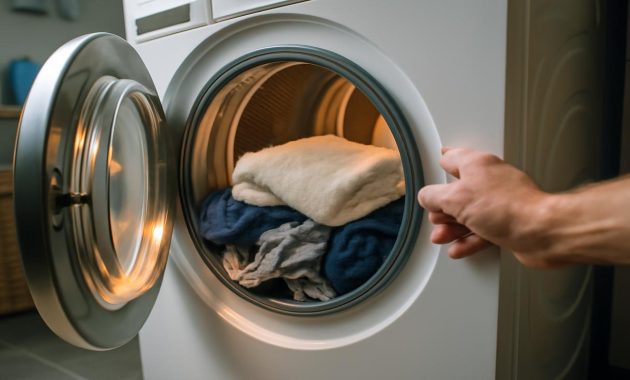
The towel goes in almost as an afterthought—a soft, folded afterword tucked on top of a heap of wet jeans, socks, and T-shirts. You close the dryer door with a hollow thump, tap the familiar button, and walk away. The rush of warm air and the soft thud of tumbling cotton fades into the soundtrack of the house. An hour later, though, when you pull the clothes out, something’s different. They feel lighter, drier, finished. And you notice—glancing at the timer—that the cycle wrapped up sooner than usual. All because of one simple, almost suspiciously simple, addition: a dry towel.
The Night I Stumbled on the “Towel Trick”
It started, for me, on a rainy Tuesday evening when the whole world seemed damp. The yard was a wash of slick leaves and dark soil, and the house smelled faintly of wet dog, wet boots, and wet everything. The laundry basket was overflowing, and I had exactly one clean towel left—the thick, white one I always tried to save for guests.
I loaded the washer in a hurry: socks, school clothes, my favorite worn-in sweater that had survived too many winters. The spin cycle finished with that familiar, uneven shudder. When I pulled the load out, the clothes clung to each other, heavy and cold in my arms as I crammed them into the dryer.
That’s when I saw the towel, folded on the bathroom counter, dry and almost smug in its cleanliness. I remembered some half-heard tip from a relative—“throw in a dry towel and it’ll go faster”—the kind of advice you file away mentally, somewhere between “store your batteries in the fridge” and “rice fixes phones.” Still, the night was getting late, and the thought of waking up to damp jeans was not appealing. I grabbed the towel, tossed it in, and hit start.
The dryer hummed to life, filling the hallway with that soft, warm, mechanical sigh. I went about my evening: dishes, email, dimming lights, moving through that quiet, domestic rhythm. When I returned to the laundry room a while later and pulled open the dryer door, a gentle wave of warmth and the faint scent of clean cotton washed over me.
The clothes were dry. Not “kinda dry,” not “slightly damp around the seams”—just ready, warm, and loose. I checked the dryer’s display. The remaining time was lower than what I usually saw after this sort of load. It looked like the machine had simply… needed less time with that one extra item inside. That single dry towel had apparently hustled its way through the cycle like an overachieving teammate, pulling moisture out of the air and off the clothes.
I held the towel up. It was no longer smug. It was heavy now, tired and warm. And suddenly, that old half-remembered tip didn’t feel like a myth anymore. It felt like a tiny piece of quiet, practical magic.
What’s Actually Happening Inside the Drum
The idea almost sounds too good to be true: put one dry towel in with a bunch of wet laundry, and your clothes will dry faster. But the reason it works is simple and surprisingly elegant.
When the dryer starts, everything inside is wet—except the towel. That towel is a thirsty traveler in a steamy world, and it goes straight to work. As the drum spins and hot air floods in, the towel absorbs moisture from the surrounding clothes, acting like a temporary sponge. Instead of all your garments slowly trading moisture with the hot air, a lot of that water rushes first into the towel’s fibers.
At the same time, the air inside the drum can only hold so much moisture before it becomes less effective at drying. By giving that moisture somewhere “solid” to go—into the towel—you’re sort of clearing the air repeatedly, allowing the hot air to keep doing its job more efficiently. It’s like handing off excess water to a helper who can carry more than the rest.
The result is that, in the early stages of the cycle, the towel speeds up the average rate at which moisture leaves the whole load. The dryer doesn’t have to blast heat for as long, because the towel has soaked up a big portion of the dampness and then gradually releases it under heat, rather than forcing the machine to evaporate it directly from every single garment.
Of course, this isn’t a miracle—it has limits. The trick works best with moderately sized loads, not when the drum is packed so full that air can barely move. The towel needs space to tumble, collide, and trade moisture. But when conditions are right, you can see a meaningful difference in time and energy.
The Subtle Art of Saving Energy One Load at a Time
Dryers are quiet energy hogs. They don’t scream about it the way a power tool might; they just hum along, hour after hour, turning electricity—or gas—into warm air that leaves the duct and disappears into the sky. You don’t really notice how much they use, until you start paying attention.
Imagine this: your average dryer load takes about 60 minutes. If you do several loads a week, you might easily run the dryer for three to five hours over seven days. Over a month, that’s a dozen hours or more of tumbling and heating. Over a year, it adds up to days—literal days—of your machine running when you’re not even in the room.
Now picture shaving even 10–15 minutes off each of those cycles. The savings start to look tangible. Less time running means less heat produced and less electricity drawn from the wall. For many households, the dryer is one of the top energy-consuming appliances, and any trick that shortens its hardworking hours is welcome.
The dry towel isn’t a grand gesture. It’s a quiet adjustment—one small, mindful habit. But it stacks up. Over time, that handful of minutes saved per load becomes money saved on your utility bill and energy saved from a grid that’s already under strain. In a world full of big environmental questions, it’s a small but satisfying way to feel like you’re nudging the needle in the right direction without any sacrifice in comfort.
To make this more concrete, here’s a simple illustration of how the “towel trick” can play out in daily life. The numbers are only an example, but they mirror what many households might notice when they start paying attention to drying times:
| Scenario | Average Time per Load | Loads per Week | Dryer Hours per Month |
|---|---|---|---|
| Without Dry Towel | 60 minutes | 5 loads | ~20 hours |
| With Dry Towel | 45–50 minutes | 5 loads | ~15–17 hours |
Those three to five hours saved each month are hours your dryer isn’t burning through energy. And they’re also hours you’re not waiting for warm socks, or re-running a cycle because the seams of your jeans were still damp.
How to Use the Dry Towel Trick (Without Overdoing It)
The beauty of this little ritual is that it doesn’t require gadgets or special detergents. Just a towel—ideally, a clean, medium-size bath towel.
Here’s a gentle, practical way to make it part of your routine:
1. Keep the load reasonable. If your dryer drum is so full that clothing barely moves, no towel in the world will save you. Aim for a load that fills the drum loosely to about half or two-thirds. Air needs room to swirl, and the towel needs space to tumble.
2. Choose the right towel. A standard bath towel works best. Too small, and it won’t absorb much extra moisture. Too large and thick, and it can become a slow-drying burden of its own. Cotton terry towels are ideal—they’re naturally absorbent and robust enough to handle frequent drying.
3. Add the towel at the beginning. Toss the dry towel in with your wet clothes before you start the cycle. It does its best work in the earliest, wettest phase of drying.
4. Check halfway through (if you can). If you’re around, open the dryer after 15–20 minutes. Often, the towel will be noticeably damp while other items are closer to dry. At this point, you can remove the towel and hang it to air-dry, then let the rest of the load finish. This prevents the towel from become the new slowpoke in the drum.
5. Match the towel color to the load. Use a light-colored towel with light loads, dark with darks, and be cautious with new or brightly dyed towels that might bleed. The last thing you want is pale shirts picking up a faint blush of pink from an overzealous red bath sheet.
Listening to the Rhythm of Your Laundry
There’s a kind of quiet intimacy to the laundry routine. The soft clatter of buttons inside the dryer, the way denim slaps gently against the drum, the whisper of cotton as it tumbles… These are the domestic soundscapes we barely notice, and yet they mark the rhythm of our lives as surely as passing seasons.
When you start paying attention to how long your clothes take to dry, you begin to tune in to that rhythm more closely. You notice how heavy bath towels anchor everything else. How thick hoodies cling stubbornly to moisture long after T-shirts are ready. How, on cold days, the dryer works just a little bit harder, exhaling warmth into a chillier room.
Adding a dry towel to the mix isn’t just a mechanical hack; it’s a small act of awareness. You’re saying to yourself: I know this machine, I know these fabrics, I know how this little ecosystem of heat and water behaves. You’re watching the cycles instead of just starting them and walking away.
Sometimes you’ll notice that for very small loads, the towel doesn’t help much. Sometimes with extremely heavy items—like dense blankets—it makes less of a difference than you hoped. But that, too, is part of learning the ebb and flow of your particular household, your particular dryer, your particular drawer of towels.
When the Trick Works Best (and When It Doesn’t)
This small piece of laundry lore has its sweet spots—and its limitations. Understanding both makes it more satisfying to use.
Best conditions for a dry towel:
- Medium-sized mixed loads: jeans, shirts, socks, everyday cottons.
- Loads that feel “very wet” coming out of the washer, especially from older or less efficient machines.
- Situations where you can check the dryer mid-cycle and remove the towel once it’s done its job.
Less helpful conditions:
- Overstuffed loads where items can’t move freely.
- Very small loads that already dry quickly.
- Bulky bedding or dense comforters that trap moisture deep inside—these sometimes need their own, slower rhythm.
Think of the towel not as a miracle, but as a useful ally, one that shines in the everyday but knows its limits when the job becomes extreme. Even then, it can still often shave off a little time, even if it’s not dramatic. And a little time, repeated week after week, still matters.
The Human Side of a Simple Habit
What stays with me about this trick isn’t just the physics or the savings, but the way it gently shifts how you feel about something as ordinary as laundry. It’s one of those rare, low-effort habits that makes you feel quietly clever.
There’s a pleasure in learning that the things in your home—towels, machines, even steam and air—can be rearranged in slight, thoughtful ways to better serve you. The world of domestic chores, so often painted as dull and repetitive, opens up a little bit. You start to wonder what other small rituals might be hiding in plain sight, waiting to be rediscovered.
Maybe you begin timing your cycles, noticing which fabrics always emerge stubbornly damp. Maybe you hang that now-damp towel over a chair instead of throwing it back in the hamper, letting it give one more small gift of dryness to the evening air. Maybe you talk about the “towel trick” almost sheepishly to a friend, who then tries it and reports back with surprise in their voice: “It actually worked.”
Like most good habits, it’s gentle, repeatable, and easy to share. No preaching, no guilt, no complicated equipment. Just one extra towel, doing its quiet work in the dark, turning wet weight into warm, wearable softness—and shaving a little bit off your bill, one cycle at a time.
Putting It All Together in Your Own Laundry Room
The next time you stand in front of the dryer, basket of wet clothes at your feet, pause for a moment. Feel the cool dampness on your fingers as you load the drum. Hear the rustle and thud of cloth settling into place. Then, before you close the door, go find a dry towel.
Fold it loosely, as if you’re giving it an invitation rather than an order, and lay it on top of the heap. Close the door. Start the cycle. Let the machine do what it does best, and let the towel do what it was quietly designed to do: absorb.
Maybe you’ll set a mental note to check back in twenty minutes. Maybe you’ll simply trust the process and come back when the dryer sings its familiar end-of-cycle song. Either way, as you reach into that swirl of warm cotton and fleece, you just might feel the difference—a lighter, drier, more cooperative load of laundry, all for the price of one extra motion.
In a world of big solutions and overwhelming advice, this one is small, tangible, and satisfyingly ordinary. A dry towel, a drum of wet clothes, a bit less time, a bit less energy. It won’t change the world overnight. But in the quiet, steamy heart of your laundry room, it’s enough to make the work feel a little bit softer.
Frequently Asked Questions
Does putting a dry towel in the dryer really shorten drying time?
Yes, in many cases it does. The dry towel soaks up some of the moisture from your wet clothes early in the cycle, which can help them dry faster overall. The biggest difference is usually seen with medium-sized loads made of everyday fabrics like cotton.
How much time can I actually save?
The exact savings depend on your dryer, load size, and fabrics, but many people notice a reduction of about 10–15 minutes per typical load. It’s not dramatic per cycle, but it adds up over weeks and months.
Will this trick damage my dryer or clothes?
No, as long as you don’t overstuff the drum. A dry towel is just another fabric item. Make sure the load can tumble freely and that you’re not exceeding the dryer’s capacity. Used sensibly, it’s safe for both the machine and your garments.
What kind of towel works best?
A medium-sized cotton bath towel is ideal. It’s absorbent, durable, and dries reasonably fast itself. Avoid brand-new brightly colored towels with unstable dyes, and try to match light towels with light loads and dark towels with dark loads.
Should I leave the towel in for the whole cycle?
You can, but you’ll get the best results if you check partway through. Often, the towel will be damp before the rest of the load is fully dry. Removing it halfway—then hanging it up to air-dry—allows the rest of the clothes to finish more efficiently.
Does this work for every type of load?
It works best for regular mixed loads. For very small loads, the difference is minimal. For large, bulky items like comforters, it may help a bit but won’t solve the challenge of thickness and trapped moisture. Those often need more time and careful positioning in the drum.
Can this really reduce my energy costs?
Yes—shorter drying times mean less energy used per load. If you do several loads a week, the saved minutes accumulate into hours per month, which can translate into noticeable energy and cost savings over the course of a year.