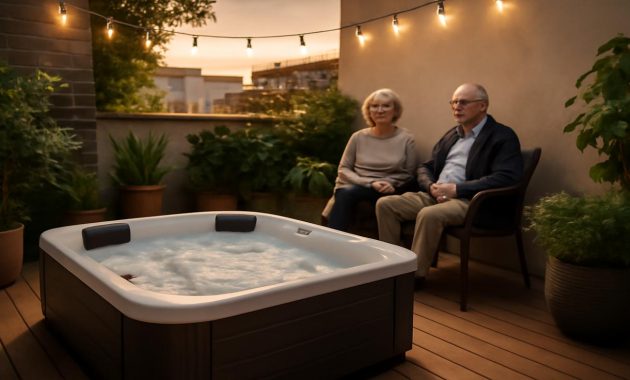
The first time Evelyn stepped into her new, smaller bathtub, she laughed out loud. Not because anything was funny, exactly, but because the water slipped around her like warm silk, filling quickly, staying hot, and—most surprising of all—making the tight little bathroom feel like a private retreat. She had dreaded this whole downsizing business: the boxes, the memories, the letting go. But somewhere between choosing which dishes to keep and measuring the new living room, she’d made a decision that would ripple through the rest of her life in an unexpected way. She swapped her old, deep, energy-guzzling tub for a shorter, smaller model. Her plumber had mentioned, almost casually, “You know, smaller tubs can cut your hot water energy use by up to twenty percent.” She’d nodded, half listening. Now, standing in that pool of perfectly warm water, her eyes drifting to the smaller windows and the lower bills taped to her fridge, it hit her: this wasn’t just a smaller life. It was a lighter one.
When “Less” Starts to Feel Like More
Downsizing after sixty often begins with loss: less space, fewer things, a smaller footprint on a world that once seemed to demand expansion. There’s the house where children grew up, the garden that once earned compliments from neighbors, the hulking appliances and oversized furniture built for a life of gathering and chaos. Letting go can feel like shrinking.
Yet, for many older adults, that shift toward less is quietly transforming into something richer. The stories rarely make it into the glossy brochures for retirement communities. You hear them over tea at the kitchen table, in the waiting room at the doctor’s office, or while standing in the lighting aisle at the home improvement store, overhearing two strangers debate wattage and “warm light.”
It’s here, in the subtle details of daily living, that people begin to uncover an unexpected freedom. Fewer rooms to heat. Fewer stairs to climb at 10 p.m. More predictable bills. More time not spent cleaning or mowing or wondering whether the roof will survive another winter. And in the middle of that quiet revolution sits something you might not expect to matter much at all: the bathtub.
The Humble Bathtub, Reimagined
At first glance, a tub is just a tub—a vessel that holds water and a place to soak tired bones. But if you were raised in a world where “bigger” equaled “better,” your bathroom might still be built around that old idea: a long, deep bathtub, made for stretching out, filling, and reheating with another blast of hot water when the first warmth slips away.
The math behind a bathtub doesn’t sound very poetic, but it tells a powerful story. A full-size, traditional tub often needs anywhere from 60 to 80 gallons of water to give you that hotel-style, shoulder-deep soak. That’s 60 to 80 gallons your water heater must warm—every single time. Contrast that with a smaller model that holds 40 to 50 gallons. Less water to heat means less energy burned. For many households, that difference can trim energy use for hot baths by as much as 20 percent over time.
It’s not just about kilowatt-hours or cubic feet of gas. It’s about what those numbers feel like. A smaller tub fills quickly. The water stays hotter because the surface area is tighter and there’s less room for the heat to simply drift away. Instead of endlessly topping up with scalding water, you settle in and stay put, wrapped in a steady, even warmth.
There’s a certain intimacy to it too. The walls of the tub are closer. The sound of the water is softer, less echoing. You can reach the faucet without stretching your lower back. For someone over sixty, these little shifts add up to comfort, confidence, and safety.
Over 60: Bodies Change, So Should the Bath
If you quietly take inventory of your body in the mirror after sixty, you may notice subtle negotiations happening. Knees that protest stairs. Hips that appreciate a sturdy handhold. Shoulders that don’t twist quite as easily as they used to. It dawns on many people during this season of life that the environment around them either works with these changes—or against them.
Bathtubs are truth-tellers in this regard. That long, luxurious tub you once sank into without a second thought can suddenly become a hurdle. Stepping over a high edge while balancing on one leg may feel more like an Olympic sport than an evening ritual. Reaching for a distant faucet can twist the spine in ways your vertebrae simply don’t celebrate anymore.
Smaller tubs, especially when chosen thoughtfully, whisper a different story. The shorter length means you can brace your feet against one end and lean comfortably without sliding around. Many models designed for compact bathrooms pair a modest footprint with a slightly higher backrest, so you sit supported rather than sprawled. There’s less distance between you and the edges, giving you natural points to steady yourself when getting in or out.
Other thoughtful tweaks often come along with the decision to downsize the tub: a lower step-in height, textured bottoms that resist slipping, strategically placed grab bars that actually match the way you move, and lever-style handles that are gentle on arthritic hands. It’s like the bathroom finally begins to recognize the reality of your body and responds with a kind of quiet respect.
The Quiet Power of Using Less
It’s one thing to talk about energy savings in the abstract—quite another to feel it humming through your monthly budget. Take a moment to imagine your old life in that bigger house. The large water heater tucked into a corner of the basement, working tirelessly to feed multiple showers, a big tub, maybe even a second bathroom you rarely used. Every time someone turned the handle to “hot,” that system kicked into gear.
Now imagine the new space. One bathroom. A smaller tub. Maybe a slightly smaller water heater, or just one that doesn’t have to roar to life as often. The math doesn’t need to be perfect for the pattern to be obvious: using less hot water uses less energy. Less energy used means lower bills and a gentler tug on the planet.
For many older adults, that last part—the planet—isn’t some abstract cause. It’s personal. You’ve watched seasons shift in your lifetime: winters milder than they once were, summers heavier and longer. Maybe you’ve noticed your grandchildren talk about climate change with a steady, worried awareness that pierces right through you. Choosing a smaller tub might feel almost laughably insignificant in the face of all that. But it isn’t nothing. It’s a daily decision to live within a smaller, more mindful circle.
The savings also accumulate quietly, the way interest once did in a healthy savings account. A few dollars shaved off each bill may not feel dramatic. Over a year, and then over a decade, the reduced energy use and water consumption can become a meaningful sum—money that can be funneled into travel, hobbies, or simply the security of a fully funded “just in case” envelope in your desk drawer.
How Smaller Tubs Lighten the Load
To make the picture clearer, imagine two versions of the same evening. In the first, the old, full-size tub gurgles to life. The hot water streams in, and you watch it creep up the porcelain sides. You test it, wait, add a bit more hot, then more again when it cools. The water heater in the background is a silent, unseen furnace chewing through energy.
In the second version, the smaller tub fills quickly, the sound almost cheerful as it rises to your preferred depth. You ease in, and by the time you’ve taken your third deep breath, the water is already as high as you like it. No topping up. No anxious glances at the clock wondering how much hot water is left for the dishes or for tomorrow morning’s shower.
Here’s a simple comparison to bring these differences into sharper focus:
| Feature | Traditional Larger Tub | Smaller Downsized Tub |
|---|---|---|
| Typical water per full bath | 60–80 gallons | 40–50 gallons |
| Hot water energy use | High, frequent reheating | Up to ~20% less, depending on use |
| Fill time | Long; more likely to cool while filling | Short; stays hot more easily |
| Ease of entry/exit | Higher step, more reach | Often lower step, closer support |
| Space required in bathroom | Dominates the room | Leaves room for storage and movement |
The numbers and phrases here are simple, but they represent something intimate: the texture of your evenings, the ease with which you move, the gently shrinking footprint of your life on the world.
Designing a Smaller Sanctuary
Downsizing a tub doesn’t mean downgrading your experience. In fact, many people discover that when they stop chasing length and depth, they start paying attention to everything else: the angle of the backrest, the feel of the rim beneath their fingers, the way light bends across the surface of the water at dusk.
The smaller the canvas, the more intentional each stroke must be. With a more compact tub, you might decide to invest in better fixtures—solid, weighty handles that turn as smoothly as a well-oiled door hinge. You might choose a tub with a slightly textured interior that feels secure beneath your feet yet still smooth to the touch when you run your hand along it.
Then there’s the question of how the tub lives in the room. A tub that doesn’t hog the entire wall leaves space for things you might never have considered before: a slim cabinet to hold your favorite bath salts and soft towels, a small bench where you can sit to dry your feet, or simply more open floor where you can move without bumping into cold porcelain.
Lighting becomes part of the ritual too. In a smaller space, a single warm-toned light can bathe the room in a golden hue that rests easy on older eyes. A dimmer switch can turn the room from practical to spa-like with a gentle slide of your thumb. A small, leafy plant on the windowsill can turn the act of bathing into something that feels almost like stepping into a forest pool, even if your view is a quiet suburban street.
The Emotional Shift of Shrinking the Soak
There is something deeply symbolic about willingly choosing a smaller tub. For many, it marks a turning point—one that says, “I don’t need to stretch to the edges to feel at ease.” It’s an act of acceptance and, oddly, of reclamation. You are no longer fitting your body and life into a mold that belonged to a different chapter.
When you slip into that smaller oval or rectangle of water, you’re saying yes to a form of luxury based less on excess and more on fit. The water reaches exactly where it needs to. Your feet find the far edge without searching. Your hands rest easily by your sides. Nothing feels wasted: not space, not heat, not effort.
Many people over sixty describe a similar shift in their inner worlds as they downsize their outer ones. Fewer obligations. Smaller circles of friends, but deeper conversations. Less clutter on shelves and counters. The tub, in this sense, becomes just one more symbol of a life distilled down to what matters and what truly supports you.
Stories from the Smaller Side
Consider Harold, who traded in his four-bedroom house for a modest condominium with a view of the river. When he first toured the unit, he frowned at the compact bathroom. “I’m a tall guy,” he complained. His daughter persuaded him to keep an open mind. The first winter after the move, he noticed something startling: his energy bills were nearly half of what they’d been in the old house. Part of that was the smaller space and better insulation. But part of it, his plumber pointed out, was that the new, compact tub simply didn’t gulp down hot water the way his old one had.
“I thought I’d miss stretching out,” Harold said later, “but what I don’t miss is the shock of cold porcelain under my shoulders. The new tub fits me like a good chair.” He found himself using it more often, especially on chilly nights when his joints ached. Each time, the water felt like a modest but meaningful luxury—easy to draw, easy to enjoy, easy to pay for.
Then there’s Lena and Marco, who moved from a rambling farmhouse to a small cottage after their sixties crept into their seventies. They used some of the money from selling the farm to redo the cottage bathroom, choosing a shorter, deeper soaking tub designed for compact spaces. “It’s like a tea cup instead of a soup bowl,” Lena joked. Stepping into it is simple. Getting out doesn’t require a strategy session. They added a single wooden stool beside it, a woven basket of white towels, and a shelf for candles. “We thought we’d be missing our old clawfoot tub,” Marco said. “Instead, we gained this little ritual space that feels like it was made exactly for who we are now.”
Downsizing as an Ongoing Conversation
If you are somewhere on this path—considering a move, already in a smaller place, or just daydreaming about what a simpler life might look like—it can help to think of every choice as part of a longer, ongoing conversation with yourself. What do you truly need now? What do you want your days and nights to feel like? How do you want your home to hold you?
A tub is one decision among many: smaller fridge or full-size, one bedroom or two, tiny balcony or patch of yard. But it’s a uniquely intimate one, because it’s where you unclench. It’s where the dust and sweat of the day dissolve. It’s where you listen to the small sounds of your own breathing, the faint echo of water against enamel or acrylic, the creak in your shoulders as they slowly release.
In that space, decisions about energy use and monthly bills and carbon footprints connect to something more immediate and tender: your body, your comfort, your sense of ease. That’s the heart of this story. A smaller tub isn’t merely an appliance. It’s a daily companion that shapes how you meet yourself at the end of the day.
Choosing Your Own “Just Right”
Over sixty, the question isn’t “How much can I fit into my life?” but “What fits me now?” For some, that may still mean a fairly long tub—but with better support, safer access, and a more efficient water heater. For many others, especially those downsizing into apartments, cottages, or accessory dwellings, a smaller tub offers the sweet balance between comfort and conservation.
When you stand in a showroom or scroll through photos online, try to imagine not just how the tub looks, but how a winter evening will feel when you turn the tap. Picture your knees, your balance, your favorite bath oil. Picture the utility bill arriving in the mail, and your quiet nod when you open it. Picture the grandchild who visits and splashes around in the smaller tub, oblivious to the fact that this simple rectangle of water is part of a bigger, gentler way you’ve chosen to live.
In the end, downsizing isn’t about giving up the good parts of life. It’s about refining them. A smaller tub that cuts your energy use by up to twenty percent is one of those rare decisions that supports both your wallet and your well-being, your comfort and your conscience. Step carefully over its lowered edge, lower yourself into that compact pool of heat, and listen to the soft tap of droplets against the side. Smaller can feel, in its own quiet way, like exactly enough.
Frequently Asked Questions
Do smaller tubs really save up to 20% on energy?
They can, depending on how you use them. Because smaller tubs hold less water, your water heater doesn’t have to work as hard to produce a full bath. Over time, this reduction in hot water use often translates into savings of up to about 20% for bath-related energy use, especially if you bathe regularly.
Will I still be comfortable in a smaller tub if I’m tall?
Many compact tubs are designed with a more upright seating position and a gently sloped back, which can be surprisingly comfortable even for taller people. You may not fully stretch out, but you can often sit more supported and secure. Whenever possible, it helps to “test sit” a model before buying to see how it feels for your body.
Are smaller tubs safer for older adults?
They often are. Shorter tubs frequently have lower step-in heights, closer edges for support, and designs that pair well with grab bars and textured bottoms. All of these features can make it easier and safer to get in and out, especially for people with balance or mobility concerns.
Do I need to replace my water heater if I get a smaller tub?
Not necessarily. A smaller tub will work with your existing water heater. Some people choose to downsize or upgrade their water heater later to gain additional efficiency, but it isn’t required. Even with your current heater, using less hot water per bath will reduce energy use.
Will a smaller tub hurt my home’s resale value?
In many markets, having a functional, attractive tub—regardless of its length—is what matters most. With more buyers looking for efficient, low-maintenance homes, a well-designed smaller tub can actually be a selling point, especially in compact spaces or age-friendly homes.
Can I still use a smaller tub for showers?
Yes. Most smaller tubs are designed to work well as tub-shower combos. With a good curtain or glass panel and a thoughtfully positioned showerhead, you can have the flexibility of both a soak and a shower in the same compact space.
How do I know what “size down” is right for me?
Think about how you actually bathe now. Do you like to sit upright, or recline? How high can you comfortably lift your legs? Measure your current tub and notice what feels too long, too deep, or too awkward. Then look for a model that eases those issues while still giving you enough room to relax. The best size is the one that fits your body, your bathroom, and your life today.