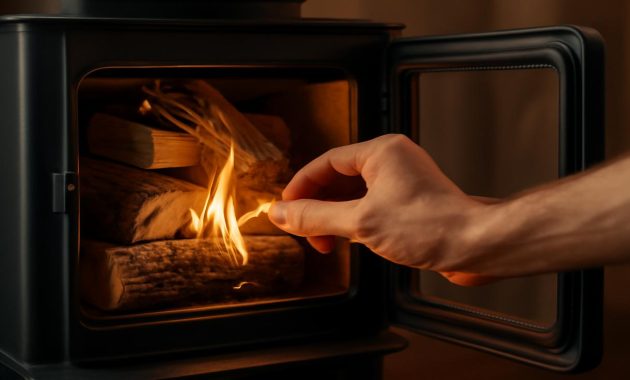
The trick arrived the way good fire wisdom often does: passed across a garden fence, in the last light of a cold afternoon. My neighbor, red‑cheeked and grinning, pointed at my sulking little stove through the open back door. The fire inside was doing its best—flames licking, logs crackling—but the room still held a sharp, unwelcome chill. “You’re wasting half your heat,” he said, brushing wood dust off his hands. “I’ve been doing it since this week and I’ve seen a real difference. It practically doubles the heat from the same logs.”
I laughed. Of course he had a trick. There’s always someone with a trick: a new firelighter, a magic log shape, some complicated stacking method that sounds more like architecture than staying warm. But as the evening drew in and the kettle took forever to boil, I found myself crossing the lawn to his shed, where his woodpile glowed gold in the weak winter sun—and where I learned that his “trick” wasn’t really a trick at all, but a simple shift in how you think about wood, flame, and air.
The Quiet Secret Hidden Inside Every Log
Let’s start with what you can’t see when you lift a log from the basket: its hidden weather. Every piece of wood carries a memory of rain, fog, and sap. That memory is moisture—and moisture is the thief of heat.
When you put a damp or only half‑seasoned log on the fire, the first thing the flames have to do isn’t warm your house. It’s boil water. Before the wood can properly burn, all that moisture has to be driven out as steam. You can sometimes hear it: a hissing, faint but insistent, as the fire spends its energy evaporating rather than heating.
The difference between a log that warms your hands and one that sulks in the grate comes down to three things, working together like a small, invisible orchestra: moisture, surface area, and air. And the “trick” my neighbor showed me touched all three at once, with almost embarrassing simplicity.
The Trick, In One Breath
Here it is plainly: pre‑heat and pre‑dry your logs near (not in) the fire, then split them smaller than you usually would and stack them so air can move through. That’s it. Not sorcery, not a fancy gadget. Just letting wood, warmth, and air talk to each other before the log ever touches flame.
“I’ve been doing it since this week,” my neighbor said, pulling open the stove door. A row of small, neatly split logs lay on a rack just above the hearth, quietly soaking up radiant heat. The ones already burning inside were half the size of mine at home, stacked in a criss‑cross that glowed like a miniature log cabin made of embers. “Same wood,” he added, “but it feels like twice the heat. The room warms up faster, and the fire doesn’t sulk.”
How A Log Turns Into Heat You Can Actually Feel
Sit close to any good fire and you can feel the story of physics unfolding on your skin. The air warms, the surfaces around you slowly soak up radiant heat, and your body relaxes into that deep, bone‑level comfort that only real flame can bring.
But not all fires tell that story equally well. A big, impressive log that burns slowly might look satisfying, yet leave the room chilly for an hour. A smaller, well‑prepared fire can feel like it’s working twice as hard, sending heat out into the room instead of up the chimney.
Here’s what’s happening, in plain terms:
- Moisture content: Drier wood means less energy wasted on boiling water inside the log.
- Surface area: The more faces and edges exposed to flame and hot air, the faster and more completely the wood can burn.
- Airflow: Fire is a hungry animal; without enough oxygen, it smolders instead of blazing.
By pre‑heating, pre‑drying, and splitting your logs smaller, you’re boosting all three of those factors at once. The result: the same basket of wood produces noticeably more warmth, and it does it faster.
The Pre‑Heat “Shelf” That Changes Everything
Most modern stoves and many open fireplaces have some unused space around them—a hearth edge, a side shelf, a nearby brick ledge. My neighbor had turned his into a simple staging area: a place where tomorrow’s logs spend a few hours gently warming before they become tonight’s fire.
Placed close enough to feel the stove’s radiant heat but far enough away to stay safe, the logs were warm to the touch. Not hot, not scorching—just pleasantly dry and ready, like towels left over a radiator. In that short time, the outer layers of the wood give up a surprising amount of moisture. Any chill trapped in the grain is lifted. When those pre‑warmed logs finally meet flame, they skip the sluggish, smoky stage and leap almost straight into bright, efficient burning.
“It’s like starting the race halfway round the track,” he said, nudging one of the warmed logs with a knuckle. “The fire hasn’t got to do the boring bit. It gets to go straight to the good part.”
Smaller Logs, Bigger Heat
If you grew up believing that big, thick logs were the mark of a “proper” fire, this part feels counterintuitive. There’s something undeniably grand about a huge round of oak cracking slowly open as it burns. But if what you want is heat rather than just spectacle, size is not your friend.
A thick log has relatively little surface area compared to its volume. Only its outer layer is exposed to the rush of hot air and flame. Inside, a lot of wood waits its turn, slowly drying and then catching light. That’s why big logs burn for ages but often give a sort of background warmth rather than that quick, room‑filling heat.
Split that same log into two, four, or even six smaller pieces, and suddenly you’ve turned one slow‑burning cylinder into a bundle of bright‑burning facets. More edges, more angles, more surfaces for fire to work on—all of it meaning more of the wood’s stored energy becomes usable heat in your room, and less disappears as unburned gases or thick smoke.
The Criss‑Cross that Feeds the Flames
Now there’s the way you lay those smaller pieces. Instead of packing them tight in a flat row, try stacking them in a loose criss‑cross: two pieces north‑south, two east‑west on top, and so on. This simple pattern does two important things:
- Creates small air channels that feed oxygen right into the heart of the fire.
- Exposes more of each log’s surface to both flame and hot air.
The result is a fire that looks alive—flame moving through it, not just sitting on top. It burns hotter, more completely, and with less smoke. You can feel the difference in the room within minutes: the air seems to thicken with warmth, and the cold corners retreat.
Putting It All Together: A Simple Before‑And‑After
On a cold night, I tried it my neighbor’s way. I brought in an armful of logs the afternoon before, stacking them along the edge of the hearth where the stone stayed warm but never hot enough to scorch. The next evening, I split each log one extra time—turning my usual chunky quarters into slimmer wedges—and built a small criss‑cross stack over a glowing bed of embers.
The difference was obvious long before I thought about words to describe it. Instead of that familiar phase where the fire seems half‑awake and reluctant, the newly added wood caught quickly, like kindling with confidence. Within ten minutes, the air in the room shifted from tolerable to deeply, almost luxuriously warm. I turned down the air controls a touch to keep things steady, and the stove glass stayed clear, the flames clean and lively.
The next morning, looking at the wood basket, I noticed something else: I’d used fewer logs than usual to feel properly warm. The “trick” hadn’t just changed how the fire looked or how quickly it started; it had quietly stretched the energy of each piece of wood.
| Fire Setup | Typical Result |
|---|---|
| Large, cool logs placed straight from outdoors onto the fire | Slow to catch, more smoke, room warms gradually, more logs used |
| Smaller, pre‑warmed, well‑stacked logs (criss‑cross with airflow) | Quick ignition, hotter burn, clearer glass, room warms faster, fewer logs needed |
The Sensory Difference You Can Actually Feel
There’s a quiet pleasure in noticing what changes when a fire is working well. The flue draws with a soft, steady whisper instead of a restless roar. The glass front shows flames in long, bright ribbons, not the dull orange blur of half‑burned gases. When you open the door to add a log, you feel a wave of dry, comfortable heat, not a blast of heat mixed with thick, biting smoke.
Sit back with a mug of something hot. Watch how the flames move through your carefully stacked, pre‑warmed logs: licking along edges, slipping between gaps, finding fresh wood at every turn. The sound is different too—less angry snapping, more a steady, contented crackle as pockets of resin and trapped air meet flame without the resistance of extra moisture.
Outside, on a still night, the chimney tells its own story. Instead of a dense plume hanging low in the air, you see a lighter wisp that quickly dissolves. That means more of the wood’s energy is being used where you want it—inside your walls, in your bones—instead of drifting away as wasted smoke.
Safety and Common Sense
Pre‑heating logs isn’t about cooking them; it’s about giving them a head start. Keep these simple points in mind:
- Always keep wood at a safe distance from flames or hot stove surfaces, so nothing can ignite accidentally.
- Aim for warm and dry to the touch, not hot or scorched.
- Use a proper log store or basket to keep everything tidy and off the floor.
- Ensure your stove or fireplace has good ventilation and is regularly maintained.
Within those boundaries, the practice is both simple and quietly transformative. You’re not burning more; you’re burning better.
Why It Feels Like “Double the Heat”
People who switch to this way of tending a fire often describe the effect in the same way my neighbor did: “It’s like I doubled the heat.” Strictly speaking, you can’t pull more energy from a log than it contains. But you can decide how much of that energy becomes useful warmth in your home rather than vanishing as unburned gases, excess moisture, or smoke.
By pre‑heating and splitting smaller, you shorten the time your fire spends doing “preliminary work”—drying and warming the wood—and lengthen the time it spends in the bright, efficient burning phase. That concentrated period of high‑quality heat feels dramatically different in a real room with real people trying to get warm.
It also changes your relationship with the ritual of fire. You become, in a small way, a collaborator with the flame rather than just its audience. Bringing in tomorrow’s logs today, giving them a place by the hearth, paying attention to how you split and stack them—these are quiet acts of care that repay you in comfort.
Making It Part of Your Daily Rhythm
After a week of “doing it since this week,” as my neighbor joked, you may notice that the new way feels less like a trick and more like the obvious thing you should have been doing all along. It takes no extra technology, no special tools beyond a decent splitting axe or maul, and just a little forethought.
In practice, it looks like this:
- Bring in an extra armful of logs earlier in the day.
- Stack them near the stove or hearth where they can gently warm.
- Split larger pieces down one more size than you normally would.
- When you refuel, build a loose criss‑cross that invites air between the logs.
- Watch how quickly the room responds—and adjust your log use down if necessary.
Before long, you’ll likely find yourself reaching for smaller pieces by instinct, noticing when a log feels too cool or too heavy with moisture, and taking a small, quiet satisfaction each time the room fills with that deep, satisfying warmth faster than it used to.
FAQs
Does this trick work with any type of wood?
Yes, the principle works with hardwoods and softwoods alike. Well‑seasoned hardwood (like oak, ash, or beech) benefits the most, as its higher energy content really shines when burned hot and efficiently. Softwood will also burn better when pre‑warmed and split smaller, though it burns faster overall.
How close can I safely pre‑heat logs to my stove or fire?
Keep logs at a distance where they feel warm and dry to the touch but never hot. As a simple rule, do not place wood directly against a stove body or within any manufacturer‑specified safety clearance. Use a hearth, side rack, or nearby wall space that stays comfortably warm, not scorching.
Won’t smaller logs just burn up too quickly?
Smaller logs do burn faster individually, but because they burn more completely and hotter, you typically need fewer of them to reach and maintain a comfortable temperature. Many people find they use the same or even less wood overall, because the room warms faster and holds heat better.
Can I do this with an open fireplace, or only with stoves?
You can use the same approach with both. With an open fireplace, focus on splitting a bit smaller, pre‑warming logs on the hearth, and using a loose criss‑cross stacking pattern so air can reach the fire from below and between the logs. Just be extra mindful of sparks and always use a fireguard.
How dry should my firewood be for best results?
For efficient, clean burning, aim for wood with a moisture content below about 20%. Many people use a simple moisture meter to check. Properly seasoned wood, stored under cover with good airflow, will usually reach that level after 1–2 years depending on species and climate. Pre‑heating by the fire helps the outer layers drop even further just before burning.
Is this really better for the environment?
Burning drier, smaller, well‑aerated logs produces a hotter, more complete combustion. That usually means less smoke, fewer unburned particles, and more of the wood’s carbon being turned into heat instead of drifting away as pollutants. While any wood burning has an environmental impact, efficient burning is almost always cleaner than a smoky, inefficient fire.
Do I need any special equipment to start doing this?
No special gadgets are necessary. A safe place near your fire to warm logs, a decent splitting tool to create smaller pieces, and a bit of observation are enough. If you want to refine things further, a low‑cost moisture meter and a simple log rack or basket by the hearth can help you keep everything organized and consistent.