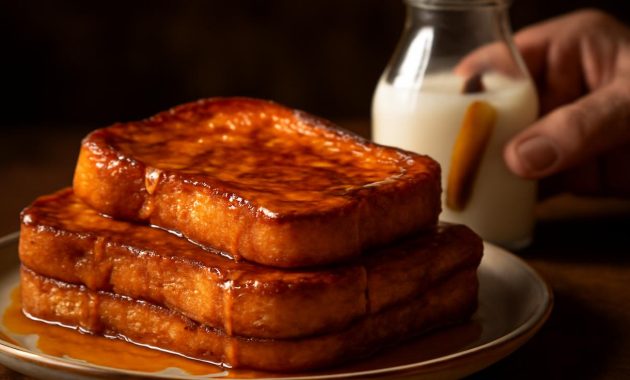
The first time I watched an old Andalusian grandmother make torrijas, I was so sure I already knew the secret that I almost missed it. Of course it’s about the bread, I told myself. Every blog, every cookbook, every eager food writer repeats the same refrain: “Use stale bread, the right crumb, the perfect thickness.” But as the Holy Week sun filtered through the lace curtains of her tiny kitchen in a whitewashed village above Málaga, it became obvious that whatever magic was about to happen in that pan of shimmering olive oil had very little to do with the loaf on the table.
The Holy Week Scent That Fills the Streets
In Spain, Holy Week doesn’t just pass; it seeps into everything. It’s in the slow drumbeat of processions, the flicker of candle wax on stone, the sound of brass bands echoing between narrow streets. But more than anything, it’s in the air you breathe. Orange blossom, incense, a hint of wax… and then, from some hidden courtyard kitchen, a warm, irresistible wave of sugar, milk, cinnamon, and fried bread. Torrijas.
If you’ve never had them, imagine French toast that’s decided to grow up: deeper, softer, more perfumed, more indulgent. Bread soaked in sweetened, scented milk, dipped in egg, fried in olive oil and rolled in sugar and cinnamon. It’s a dessert, a breakfast, a late-night snack after the procession finally ends. It’s also, for many Spanish families, the taste of memory itself.
So when I showed up in that village kitchen, camera ready, pen in hand, I was prepared to document the perfect, definitive “torrijas bread.” I asked the grandmother—a small, bright-eyed woman in a faded apron—what loaf she used. She shrugged at the question as if I’d asked what brand of water she drank.
“Pan del día anterior,” she said. Yesterday’s bread. Nothing special.
And then she smiled mischievously and leaned closer, like she was about to share a very old, very well-kept secret. “No es el pan,” she whispered. “Es el silencio.” It’s not the bread. It’s the silence.
The Trick Hidden Between Bubbles and Steam
At first, “the silence” sounded poetic, mysterious, maybe even metaphorical. But as the afternoon slowly unfolded in that warm little kitchen, I realized she meant it in the most practical, literal—and surprisingly powerful—way.
She began the way generations of Andalusian grandmothers have begun, without consulting a recipe card or scale. A pot of milk went onto the stove with a few thick ribbons of lemon peel, a strip of orange peel, a cinnamon stick, and a couple of spoonfuls of sugar. The milk shivered just below a simmer, releasing a gentle, floral steam that softened the whole room.
“Here,” she said, pointing at the barely-trembling surface, “aquí empieza la torrija. Pero aún no es el truco.” This is where the torrija begins. But the trick is still coming.
We sliced the bread—simple, soft white bread, a little dry but not rock-hard—into generous slabs. Not fancy brioche, not some special artisan loaf. Just what the little village bakery made every day. She turned off the gas and left the milk to rest with its citrus and cinnamon, letting them infuse, mingle, sink in.
Then came the soaking. Each slice of bread was laid gently in a deep tray and bathed in the warm, scented milk. She didn’t rush. The slices drank up the liquid slowly, the way parched earth pulls in rain. A few broke; she didn’t mind. “Las que se rompen, se comen en la cocina,” she laughed. The broken ones are for the cook.
And then she did something that almost no rushed home cook ever does: nothing.
She left them alone.
Not for two minutes, not for five. For a long, patient, almost sacred pause.
“Si hablas mucho, se te enfrían,” she teased, wiping her hands on her apron. “Y si las mueves, se asustan.” If you talk too much, they get cold. And if you move them, they get scared.
I watched as the soaked slices sat in their quiet pool. The milk around them grew cloudy, thicker, almost velvety. The scent of citrus and cinnamon deepened. Somewhere in the distance, church bells chimed the hour; in the kitchen, time stretched out like soft dough. The bread didn’t just soak—it surrendered.
It’s Not the Bread: It’s the Rest
That, it turned out, was her “silence.” Not a magical ingredient, not a secret spice, but a space. A pause. A deliberate slowness where the bread is allowed to fully absorb the milk and aromatics, to relax into its new form before it faces the harsh heat of the pan.
Most of us, in our impatient modern kitchens, rush through this step. We pour the milk, count to thirty, and move on. But for her, that quiet resting time was non-negotiable. It transformed the texture from merely dipped to deeply infused—custardy right through to the center, yet still capable of holding its shape.
“No son tostadas francesas,” she said firmly, as if sensing my mental comparison. This is not French toast. “La torrija tiene que tener alma de flan.” A torrija must have the soul of flan.
And like flan, it needs time for the custard to form, for the flavors to marry, for the structure to stabilize. That is where the secret lives—not in the variety of bread, but in how gently and patiently you treat it once it meets the milk.
Later, she explained it even more simply: if you rush, the center stays dry and the outside becomes soggy or tough. If you hurry from soaking to frying, you end up with bread coated in custard, not bread transformed into custard.
The Little Table of Quiet Details
When I asked how I could remember all these tiny steps, she said, “Es fácil. Déjalas respirar.” It’s easy. Let them breathe. Below is a simple way to see how her “silence” fits into the process.
| Step | What Happens | Grandma’s Note |
|---|---|---|
| Warm the milk with citrus, cinnamon, sugar | Flavors dissolve and perfume the milk | “Nunca hiervas la leche.” – Never let it boil. |
| Turn off heat and let milk infuse | Cinnamon and peel deepen the aroma | This is the first “silence.” |
| Soak bread thoroughly | Bread absorbs warm, flavored milk | Don’t fear over-soaking; fear dryness. |
| Let soaked slices rest | Texture stabilizes, custard forms inside | The true trick: give them time. |
| Dip in egg and fry | Outside crisps, inside stays creamy | Hot oil, but never smoking. |
The Sound of Oil and the Smell of Memory
When the resting time was finally over—only she seemed to know how long that should be, by instinct rather than clock—she cracked eggs into a wide bowl and beat them with a fork. The soaked slices, now heavier, more fragile, were turned quickly in the egg and slipped into a pan where olive oil quivered, just shy of smoking.
This, too, had its own sound. Not the aggressive crunch of deep-fried potatoes, not the furious hiss of overcrowded food in too-cold fat—just a gentle, steady conversation between bread and oil. Tiny bubbles wrapped themselves around the edges of each torrija. The air filled with the smell of toast and citrus and cinnamon, layered over the deep green, fruity aroma of the olive oil.
She turned each slice with a deft flick of her wrist, browning them to the color of dark honey. On a tray beside the stove, a mixture of sugar and ground cinnamon waited like soft sand. Each torrija, lifted from the oil and allowed a second to drip, fell into that fragrant sugar bath and came out sparkling, granular, irresistible.
We ate one while it was almost too hot to touch, the sugar scraping lightly against the roof of the mouth, the inside collapsing into a warm, barely-structured custard. The crust provided the faintest resistance, then gave way. It was everything you want from comfort food: bold and tender, crisp and soft, rich but not cloying.
And again, the bread itself? Unremarkable. You would walk past it in any bakery without a second glance. This was the revelation: the transformation was not about starting with excellence, but about paying attention in the middle. The silence. The rest. The refusal to rush.
Why Silence Tastes So Good
There’s a quiet science under her poetry. When you give soaked bread time to rest, the starches in its crumb fully absorb the liquid, hydrating evenly rather than in patches. The proteins in the milk and egg begin to form a delicate network throughout the slice, which will later set into a custard-like interior when exposed to heat. If you skip or shorten this rest, you wind up with layers: a wet surface, a dry core, an uneven mouthfeel.
Her “silence” also has another effect: it slows you down. It insists that you stay in the room long enough to notice the smell of orange peel, the way the light shifts across the tiled floor, the distant toll of bells outside. It turns cooking into a small ritual rather than a task to check off. In that unhurried space, something softens—not just the bread.
Adapting the Trick in Your Own Kitchen
You can take that grandmother’s secret into any kitchen, anywhere, without trying to recreate her exact setup. You don’t need Spanish village bread. You don’t need her stove, her tiles, her procession passing outside the window. You only need three things: warmth, patience, and respect for the pause.
Warmth, in the milk and its flavors. Patience, in giving both the infusion and the soaking time to settle. And respect for the pause—her precious “silence”—between that soaking and the frying.
Try this rhythm the next time you make torrijas, wherever you are:
- Warm the milk gently and turn off the heat the moment it approaches a simmer.
- Let the cinnamon and citrus sit in the milk for several minutes, still and silent.
- Soak your bread thoroughly, even if it looks like it might fall apart.
- Lay those slices in a single layer on a tray, and walk away for 10–15 minutes.
- Only then dip them in egg and fry in hot, confident oil.
You’ll taste the difference. Not just in flavor, but in the way the slice holds together on your fork, the way the center trembles like custard instead of crumbling like bread. It will feel richer even if you haven’t added a single extra gram of sugar.
Holy Week Without a Procession
Maybe you don’t live in a place where Semana Santa brings processions to your doorstep. Maybe your Holy Week is quieter, or your spring holidays look different. Still, you can borrow a little of that Andalusian spirit by turning torrijas into your own seasonal ritual.
Make them on a day when you’re not in a hurry. Open a window if you can, let whatever sounds your city or town offers drift in: traffic, birds, a neighbor’s radio. While the bread rests, resist the urge to scroll a screen. Lean against the counter. Smell the milk. Listen to the oil barely beginning to tick as it warms.
You will find, tucked in those small moments, the same wisdom that old kitchen carried: it’s not the bread. It’s how you treat the ordinary things you already have—the way you let them breathe, soften, become more than they were.
When Simple Things Become Sacred
Before I left her house that afternoon, the grandmother wrapped a few cooled torrijas in paper for me to take on the bus. The sugar had melted slightly into a fine, sticky crust; the citrus perfume had mellowed and deepened. They tasted even better hours later, eaten on a rattling seat with the landscape blurring past: olive groves, white houses, a sky that seemed too big for its frame.
“Te acordarás de mí cada Semana Santa,” she’d said with a wink. You’ll remember me every Holy Week.
She was right. But I don’t just remember her when I make torrijas. I remember her every time I’m tempted to rush a pot, to crank up the heat, to skip the resting time a recipe suggests. I hear her voice—“No es el pan, es el silencio”—and I put the spoon down. I let it rest. And the food, almost always, thanks me for it.
That’s the real lesson tucked into those slices of sugar-dusted bread. Not just a new technique, but a different tempo. An invitation to imagine that the best things you cook, and maybe the best things in your life, arrive not because you found the perfect ingredient, but because you learned to honor the quiet space in between.
This Holy Week, if you decide to make torrijas—whether in a city apartment, a countryside house, or a tiny dorm kitchen—remember that Andalusian grandmother. Don’t obsess over which loaf to buy. Choose something simple and sturdy, yes, but then turn your attention to what she knew mattered most: the warmth of the milk, the patience of the pause, and the silence that lets simple bread become something almost sacred.
Frequently Asked Questions About Torrijas
Can I use any type of bread for torrijas?
Yes. While many people prefer a soft white loaf, brioche, or a slightly dense country bread, the true key is that it’s at least a day old and able to absorb liquid without disintegrating instantly. The technique and resting time matter more than the exact type of bread.
How long should I soak the bread?
Soak until each slice is fully saturated—usually a few minutes per side. It should feel heavy and moist all the way through. Then let the slices rest in a single layer for about 10–15 minutes before dipping in egg and frying.
Do torrijas have to be fried in olive oil?
Traditionally, yes—especially in Andalusia, where olive oil is central to the cuisine. It gives a distinctive flavor and aroma. However, if you prefer, you can use a neutral oil, but you’ll lose some of that classic character.
Can I make torrijas ahead of time?
Absolutely. Many people enjoy them at room temperature or even the next day. The texture becomes more compact and the flavors deepen. You can rewarm them gently in a low oven if you like, or enjoy them cold.
Are torrijas always made with milk?
Milk-based torrijas are very common, but there are also versions soaked in wine or a mixture of wine and syrup, especially in certain regions. The same principle applies: warm, flavored liquid, thorough soaking, and a quiet resting time before frying.