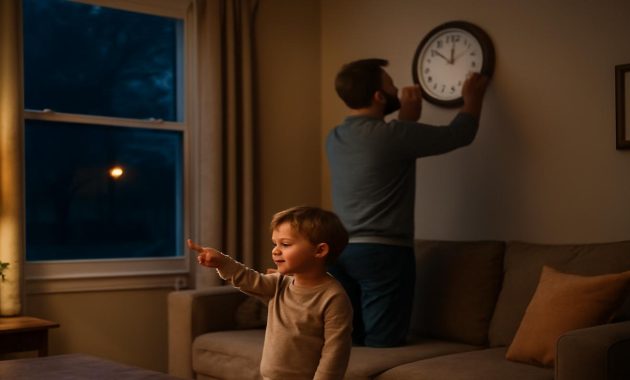
On an ordinary Tuesday next spring, the light will change before you’re ready. You’ll glance at the clock and feel a small jolt of disbelief: is it really that late already? Out the window, the sky will be doing something unfamiliar for that date on the calendar—gold pooling earlier along the horizon, shadows stretching like sleepy cats across the street while your day still feels half‑finished. In kitchens, in offices, in classrooms and on trains across the UK, this quiet little time-jump will ripple through routines that once felt solid. The clocks will have changed earlier in 2026, and the sun will be telling a slightly different story about what “evening” means.
When the Clock Leaps and the Sky Lags Behind
Every year, the ritual seems simple enough: one hour forward, one hour back. A twist of the wrist on an old radiator dial clock. A nudge of the digital oven timer. Most of our devices now update without asking, silently syncing to a decision made far away by people we’ll never meet. Yet those invisible choices leave fingerprints all over our days—especially when the shift comes out of step with what we’re used to.
In 2026, that fingerprint will be a little deeper. The clocks will move earlier in the season than many people instinctively expect, yanking sunset forward on the calendar in a way that will feel oddly abrupt. We’ll step out of work or school and find the light already sinking. The familiar rhythm of late winter and early spring—those weeks when we start saying, “It’s staying lighter in the evenings now, isn’t it?”—will feel compressed, fast‑forwarded, as if someone has skipped a track on the playlist of the year.
There’s a physical sensation to it. You might notice it first in your body before your brain catches up. The cup of tea you usually crave around four o’clock might feel more like an evening comfort at what is technically the same hour. The dog will sit patiently by the door, baffled that walk time now arrives under a different sky. Children will be hustled into pyjamas while there’s still a faint glow at the window, arguing that it can’t possibly be bedtime because “it’s not dark yet.”
The odd part is that, technically, nothing about the planet has changed. The Earth turns as calmly as ever. But the way we’ve chosen to label that turning—those neat numbers glowing on our phones, the timetables, the appointment slots, the school bells—will shift in a way that puts us briefly out of step with the light we’ve grown used to. It’s like re‑arranging the furniture in a familiar room: you know it’s the same space, but you’ll still bump your knee in the dark for a few nights.
How Earlier Clock Changes Tug at Daily Life
Imagine a typical UK street in late March 2026. Commuters are spilling off buses, shoulders hunched against a lingering chill. Only now, the sky is already flirting with dusk when it would usually still be in afternoon mode. The glow from shop windows suddenly feels less like daytime commerce and more like warm pockets of refuge.
Inside one terraced house, a family’s evening choreography begins to tilt. The parent who usually starts cooking at “when the light looks like this” finds themselves chopping onions earlier because the sky has leapt forward without their permission. The washing that was pegged outside in what felt like a late afternoon is now being rushed in with dew already forming. Schoolbags are emptied under lamplight rather than sun slanting through the glass.
Our days are full of these tiny negotiations with the sun, even if we pretend we live by the clock. The earlier change in 2026 will expose that secret dependence, making us more aware of how we time our lives not just to numbers, but to colour, angle and shadow. We wake more easily when there’s a smear of pale light at the curtain’s edge. We feel braver about evening errands if there’s still a hint of blue in the sky. An earlier shift shuffles those cues like a deck of cards.
Some people will feel it in their productivity, that gentle but insistent tug of “it looks like the day is over” arriving sooner than expected. For those working from home, the line between work and rest might blur further as sunset creeps into hours that used to feel firmly “daytime.” For shift workers, the new timing could mean heading to work in brighter light, but returning under a more sudden darkness than they’re used to at that point in the year.
Listening to the Body’s Quiet Protests
Our bodies are old-fashioned creatures. They were shaped by countless generations who measured time not with clocks, but with dawn, noon and dusk. Inside you, a circadian rhythm ticks along like a soft, internal metronome—coordinating hormones, body temperature, hunger and alertness with the waxing and waning of natural light. When the clock changes earlier in the year, that ancient metronome and our modern schedule fall out of sync for a while.
Sleep specialists sometimes compare the transition to a subtle kind of jet lag, even though you haven’t gone anywhere. Move the clock forward an hour and your internal body time drifts behind, still clinging to yesterday’s pattern. For a week or two, mornings can feel heavier, evenings more restless. An earlier change only exaggerates that, arriving when many people are already delicate from the long, dark stretch of winter.
Picture a March morning in 2026. The alarm goes off at what looks, on paper, like a reasonable time. But your body bristles in quiet protest—it still thinks it’s earlier in the season, and that morning should arrive later and later as the weeks slip by. Instead, you’re up, stumbling through a house that feels like it’s shrugging on dawn’s coat too quickly. Outside, the birds adjust faster than we do. Robins and blackbirds will treat the new time with indifference, still tuning their songs to the true light rather than the human version.
The Dawn Commute and the Early Sunset: A Tale of Two Journeys
By the second week after the change, certain patterns begin to stand out. On the morning commute, trains and buses fill with that familiar, bleary silence, but the windows now show a different world. Where last year’s commuters might have peered out into a heavy blue-grey, 2026’s travellers could find the landscape already loosening into daylight, or at least a paler, more forgiving sky.
But it’s the return home that will feel most different for many. Those few minutes when the sun hangs low over suburban rooftops, or brushes a weak gold along the river, will arrive earlier on the clock than instinct says they should. Parents doing the school run may see the playground emptying under a sunset that feels too early for that date on the calendar. Supermarket car parks will be lit up long before six, the glow of halogens competing with a sky that hasn’t quite decided whether night has truly begun.
There’s a subtle psychological shift in this. Light, even more than temperature, teaches us what part of the day we’re in. This kind of light is for errands; that kind of light is for cooking; the very last scraps of colour are for curling into the sofa. When those categories are reshuffled, our sense of pace and priority wobbles. The temptation to “call it a day” comes sooner. The urge to rush, to fit one more thing in before the sun goes, tightens.
The Family Evening, Rearranged
Inside homes, the impact is intimate. Dinner times shift, sometimes without anyone consciously deciding. You might find yourself serving food half an hour earlier simply because it looks like dinner time outside. Children’s homework, once done in a soft pool of natural evening light, now happens under the hum of a desk lamp. Board games and bedtime stories creep into what feels like late afternoon rather than full evening, at least in the memory of previous years.
For some, this offers a hidden gift: a chance to reclaim the evening as a slower, gentler space. If sunset nudges people indoors earlier, there’s more time for long baths, for reading, for unhurried conversations. Yet the transition rarely feels luxurious in the moment. Instead, it arrives as a bundle of small frictions: the toddler whose sleep routine jolts sideways, the teenager who insists they can’t possibly sleep while there’s still a faint glow beyond the curtains, the adult who lies awake insisting they’re not tired yet—even as the clock insists it’s midnight.
New Timetables for Old Habits
The earlier change will also ripple through the public timetable of the country. School start times will suddenly sit under a different sky than parents are used to. Morning drop‑offs might happen in brighter light than expected, while after‑school clubs could finish in what feels like deeper, earlier darkness. Sports on local fields, evening meet‑ups at community centres, that habitual post‑work jog in the park—all will need renegotiation with the new sunset.
It is easy to think of time as a straight line marching forward, neat and unwavering. In reality, our lived experience of time is more elastic, expanding and contracting with light, with weather, with the stories we tell ourselves about what each hour is “for.” The earlier shift in 2026 will pull this elasticity into view. People will find themselves saying, “It feels later than it is,” or “It can’t be that time already,” far more than usual.
Workplaces may also feel the tremor. In offices, open‑plan spaces will slide into twilight sooner, prompting debates about overhead lighting and screen strain. Those with flexible hours might begin earlier or finish sooner, not because of any written policy, but because their bodies and minds quietly negotiate with the light outside. Cafés and small businesses that rely on passing foot traffic will watch closely, noticing that familiar peaks and lulls have shifted by half an hour, perhaps more.
A Snapshot of Shifting Sunset Times
To picture the change more clearly, it helps to look at it as you might glance at a train timetable pinned up at a station: a simple guide to when things come and go. Of course, actual times can vary slightly by location within the UK, but the general pattern tells a story of its own.
| Date (Approx.) | Sunset in 2025 | Sunset in 2026 (Clock-Adjusted) | Everyday Feeling |
|---|---|---|---|
| Late March | ~18:30 | ~19:30 | Evening light stretches unexpectedly |
| Early April | ~19:45 | ~20:45 | Feels like “summer evenings” have arrived early |
| Late October | ~17:45 | ~16:45 | Afternoons dissolve into darkness faster than memory expects |
| Early November | ~16:30 | ~15:30 | “Is it really this dark already?” becomes a daily refrain |
These numbers are more than facts; they are the clockwork behind human habits. Each earlier or later sunset tugs on dog‑walking times, gym visits, school runs, even the moment someone decides to start making dinner. The earlier change in 2026 will compress and stretch those habits in new ways—small adjustments that, taken together, alter the country’s whole after‑work and after‑school mood.
Nature Doesn’t Check the Clock
While we fumble with our routines, the non‑human world will carry on following its own calendar. Blackbirds won’t sing an hour earlier because your phone says it’s time. Buds won’t open because we’ve declared that “evenings are lighter now.” The great reassurance—and quiet challenge—of these seasonal clock changes is that they remind us we live inside two systems at once: the human grid of numbers and timetables, and the unhurried cycles of light, growth and rest.
On a footpath across the downs or through a city park, you’ll notice this disconnect most clearly. Runners check their watches, calculating pace and distance. Meanwhile, the hedgerows and trees are doing math of an entirely different kind—measuring day length, not clock time, deciding when to bud or shed leaves based on actual minutes of light, not the version we’ve agreed to print in diaries.
There’s something oddly beautiful about this clash. You might find yourself walking home in what the clock insists is early evening, even as the quality of the light feels like late afternoon to your senses. Birds shift from feeding calls to roosting sounds. Air cools. Somewhere between the numbers and the shadows, your body makes its own quiet compromise about what time it really is.
Finding Small Rituals in the Shuffle
One of the ways people cope with these clock jolts—especially when they arrive earlier than feels “natural”—is through ritual. A particular mug for the first “after work” tea in the new light. A short walk at the same time every day, just to watch how the sky behaves. Families might mark the early change with an evening meal that feels celebratory, acknowledging the disruption instead of pretending it hasn’t happened.
These rituals act like ballast in the shifting sea of time. They say: yes, the clocks will move; yes, sunset will turn up suddenly at a different hour than nostalgia insists it should—but here is something steady. A lamp always switched on at the same point in the day. A few minutes by the window to notice how the light has already changed since last week. A promise to go outside on the first evening when it truly feels long again, no matter what the clock claims.
Leaning into the New Evenings
As the weeks after the 2026 change unfurl, the shock will soften. The earlier disruption will nestle into habit. People will stop saying, “I can’t get used to this light,” and start planning around it instead: barbecues scheduled a bit earlier, runs started with more confidence, after‑school trips to the park slotted into that new, rediscovered seam of brightness.
There is a chance here, hidden in the confusion. When the familiar pattern of sunsets is nudged out of line, we have to pay attention again. The sky stops being background and becomes something we notice, measure ourselves against. Neighbours might stand at garden fences comparing how “strange” the evenings feel. Friends will swap sleep tips and morning strategies, laugh about getting caught out with no coat because it “looked” earlier than it was.
Little by little, routines will rewrite themselves. The pub that opens its garden a few weeks sooner. The family that declares a new tradition of early‑season evening walks. The commuter who chooses to walk that last bus stop home just to keep hold of the thinned‑out daylight. In paying more attention to the shape of our days, we may find ourselves oddly grateful for the very disruption that first left us tired and annoyed.
Because in the end, the earlier clock change in 2026 is a reminder of something we usually try to ignore: we live inside a collage of times. There is the official time printed on timetables. There is the inner time of our bodies. And above both, there is the time of the sky—its slow‑burning arcs of dawn and dusk, its generous stretches of summer light, its tight, early winter darkness. When the clocks move, especially when they move earlier than feels intuitive, those layers slide against each other. The friction can be uncomfortable. But it also throws sparks of awareness, moments when you catch yourself thinking not just, “What time is it?” but, “What does this time feel like?”
In those moments—the early dark over the playground, the too‑bright sky at what your body swears is morning’s middle—you are, perhaps, more awake to your place on this spinning planet than usual. The clocks will keep changing. The sunsets will keep rearranging our days. But for a brief stretch in 2026, across kitchens and buses and quiet streets, the UK will collectively pause, rub its eyes, and relearn how to live with the light.
Frequently Asked Questions
Why will the earlier clock change in 2026 feel so disruptive?
Because our habits are tuned not just to the clock, but to the light we expect at certain times of year. When the clocks move earlier than we’re used to, sunset suddenly arrives on different calendar dates than memory predicts, making evenings feel out of sync with past experience.
Will the actual length of the day change in 2026?
No. The Earth’s rotation and the true amount of daylight stay the same. What changes is how we label that daylight with clock time, shifting our social schedule relative to the sun.
How long does it usually take to adjust to the new time?
Most people adapt within a week or two, though sensitive sleepers and young children may take longer. The body’s internal clock needs time to realign with the new pattern of light and daily routine.
Will the earlier change affect sleep quality?
It can, especially in the first days after the shift. People may struggle to fall asleep at their “new” bedtime or feel groggier on waking. Gradually adjusting bedtime and wake‑up time in the days before the change can ease the transition.
How can households cope better with the new sunset times?
Small strategies help: dimming screens before bed, using warm indoor lighting in the evening, spending time in natural light during the day, and consciously planning routines—like dinner, homework and walks—around the new pattern of light rather than last year’s habits.