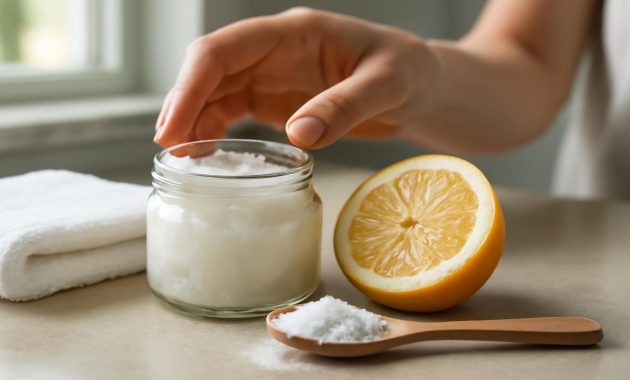
The first time I walked into my kitchen, slid open the pantry drawer, and took out the little glass jar that would replace my deodorant, I actually laughed out loud. Not a confident, I-know-what-I’m-doing laugh—more like the disbelieving sound you make when you realize you’re about to smear a baking ingredient into your armpits and then go meet your friends in public. My reflection in the microwave door looked just as skeptical as I felt. But a small, stubborn part of me—the part that was tired of plasticky fragrances and complicated ingredient lists—was ready to try something radically simple.
The Sweaty Truth I Didn’t Want to Admit
For most of my adult life, my relationship with deodorant had been like a series of awkward first dates. I’d pick out a new one every few months, seduced by words like “invisible,” “fresh,” “natural,” “clinical.” I bought rollers, sprays, gels, creams. Some promised 48-hour protection, as if my armpits were planning a weekend away from hygiene. Others came in little minimalist tubes that belonged on a curated bathroom shelf in a Scandinavian spa.
They all worked—until one day they just… didn’t.
I started noticing it during summer. I’d be sitting with friends on a cafe terrace, sunlight baking the pavement, iced coffee slowly turning to sweet brown water in my glass. I’d raise my arm to gesture mid-story and suddenly become hyper-aware of my own body: the heat, the dampness, that faint, sour question mark of a smell that didn’t quite match the “cotton clouds & sea breeze” listed on the label.
I showered regularly. I used deodorant every morning. I re-applied before social events like it was perfume. Still, there it was: the creeping feeling that my current deodorant had filed for early retirement without telling me.
One day, standing in the drugstore aisle, surrounded by a wall of neon promises and perfumed air, I turned over yet another tube to read the ingredients. Words I couldn’t pronounce. Aluminum salts. Fragrances with mysterious numbers. Preservatives that sounded like minor villains in a sci-fi movie. I had this sudden thought: I am trusting this stuff with my skin every single day… and I don’t even know what half of it is.
That night, I went down the internet rabbit hole. You know the one: “natural deodorant alternatives,” “why do I still smell,” “is sweating actually bad,” “what is my body even doing.” Among the scattered opinions, one humble kitchen hero kept popping up in quiet corners of the web: baking soda.
The Day I Put a Pantry Item In My Armpit
It sounded almost too simple. Sodium bicarbonate. The same fine white powder I used to rescue cookies from too much sugar, to gently scrub stubborn stains from mugs, to keep the fridge from smelling like last week’s leftovers. Could this really stand between me and that hot, nervous, human smell I’d tried to disguise since puberty?
I was suspicious—but curious.
The next morning, after my shower, instead of reaching for my usual stick, I reached for the squat jar with the blue lid that lived between the flour and the sugar. I unscrewed the top, inhaled that faint, chalky nothing-scent, and dipped two fingers in. The powder felt soft, silky, almost shy. I tapped a bit into my palm, added just a drop of water from the tap, and rubbed until it turned into a thin, cloudy paste.
Then I did it. I lifted my arm and cautiously smoothed the mixture into my skin.
I expected it to sting. It didn’t. I expected it to smell strange. It didn’t—it smelled like nothing, like the air between sentences. There was something weirdly grounding about it. No artificial coconut-crisp-linen-lavender-floral-fantasia. Just me, warm from the shower, skin still slightly damp, the faint metallic smell of water and tile and morning.
For a moment, I stood there in the bathroom, arms raised like I was waiting to be painted. Somewhere between ridiculous and liberated, I watched as the paste dried into invisibility.
“Okay,” I said out loud, to the plant on the windowsill. “Let’s see what happens.”
The Day My Friends Actually Noticed
If this story were a commercial, the next scene would probably show me triumphantly running up a mountain, sweat glistening delicately, the narrator declaring that I had discovered “confidence in every moment.” In real life, I went to a small, crowded bar to meet my friends, where the air smelled like old wood, lime wedges, spilled beer, and the collective humidity of too many bodies in one place.
It was, in other words, an excellent testing ground.
By the time I arrived, the place was already full. Warm bodies. Laughter. Music a little too loud to hear clearly but just right for leaning in close. I felt the first bead of sweat slide from my hairline down my temple as I pushed through to our table. My friend Maya caught sight of me and waved me over with both arms, grinning.
“You made it!” she shouted, pulling me into a hug.
As we pulled apart, she wrinkled her nose slightly—not in a bad way—then leaned in again, almost comically, like a cat sniffing a new cushion.
“You smell… different,” she said, brows lifting. “Did you change your perfume?”
I blinked. “Nope.” I hesitated. “I, uh, changed my deodorant.”
“Well, whatever it is, you don’t smell like deodorant,” she said. “You just smell clean. Like… you.”
I laughed it off, but inside, something unknotted. For the first time in a long time, no one was commenting on a new scent I’d bought—they were noticing the absence of one. The absence of that sharp, artificial top note I’d come to think of as “acceptable me.”
Later, squeezed between friends on a wooden bench, my glass leaving a wet ring on the scarred surface, I lifted my arms without thinking, stretching, gesturing mid-story, waving at someone across the room. It occurred to me, halfway through a joke, that I wasn’t performing the little internal check I always did in crowded places: Is it me? Do I smell? Can anyone tell?
Instead, I just felt… fine. Human. Unmasked.
How Baking Soda Actually Worked (Without Magic)
Curiosity turned into quiet obsession over the next week. Every day, I used the same simple routine: shower, pat dry, sprinkle baking soda into my palm, add a drop or two of water, smooth the paste into each armpit, let it dry while I brushed my teeth. That was it.
There was no glamorous packaging, no marketing copy promising me a new identity. There was just a small, label-less jar that took up almost no visual space in my bathroom—and yet occupied more and more space in my thoughts.
On day three, I did what I’d promised myself not to: I sniffed. In a quiet moment at home, I lifted my arm and took a cautious breath.
Nothing. Not the ghost of yesterday’s deodorant, not a cloud of synthetic fragrance. Just skin and the faintest mineral whisper of the powder, like clean laundry that had dried in the shade instead of the sun.
I started reading more, this time not with the urgency of a desperate shopper, but with the curiosity of someone whose lived experience didn’t quite match what the advertisements had implied. I learned that sweat itself is mostly odorless; it’s when it meets the bacteria on our skin that things get interesting. Baking soda, as it turns out, doesn’t stop you from sweating (your body is still allowed to do what it evolved to do), but it does make life harder for the odor-causing bacteria by creating a less friendly environment for them.
I wasn’t sealing my pores. I wasn’t telling my body to stop being a body. I was just giving it a quiet, non-toxic ally in powder form.
Getting Practical: My Simple Baking Soda Routine
The thing that surprised me most wasn’t that baking soda worked; it was how simple and flexible it was once I found my rhythm. At first, I treated it like a delicate experiment, measuring out the tiniest pinch, adjusting the water drop by drop. Within a week, it had become an easy, unfussy ritual.
Here’s roughly how it settled into my daily life:
| Step | What I Do | Notes |
|---|---|---|
| 1. After Shower | Pat armpits completely dry. | Moisture + friction can cause irritation, so dry skin helps. |
| 2. Tiny Amount of Baking Soda | Sprinkle a small pinch (about pea-sized per side) into my palm. | Less is more—too much can feel gritty. |
| 3. Add a Drop of Water or Oil | Add a few drops of water (or a drop of mild oil) and rub into a paste. | Oil (like jojoba) makes it gentler on sensitive skin. |
| 4. Apply Gently | Smooth the paste over each armpit, thin and even. | No need to rub hard; just a light layer. |
| 5. Let It Dry | Wait a minute while I get dressed or brush teeth. | Prevents residue on clothes and helps it stay put. |
On most days, that was enough to carry me through from morning to night—commutes, coffee runs, a quick walk in the afternoon sun, even the occasional stress-sweat during a tense meeting. On particularly hot days, or when I knew I’d be rushing around, I’d simply rinse and reapply in the late afternoon. It took less than a minute.
There was no white cast on my black shirts, no sticky film that made fabric cling in summer, no perfume-dueling with whatever scent I was actually wearing. I started to appreciate the quiet of it—the way it just did its job without announcing itself every time I lifted my arms.
When Nature Fights Back: Irritation, Sensitivity, and Adjustments
Of course, like any real-life story involving skin, it wasn’t all smooth sailing. Around the second week, I noticed a faint pinkness in the fold of one armpit. It felt a little tender, like I’d shaved too fast or worn a seam that rubbed the wrong way. Baking soda, I learned quickly, can be a bit too alkaline for some people’s skin, especially if you’re heavy-handed with it.
I adjusted. Instead of abandoning the experiment, I listened to my body.
I cut the amount I was using in half—just the tiniest veil of powder, not a full paste. On days when my skin felt even slightly irritated, I skipped baking soda altogether and used nothing after my shower except a drop of jojoba oil to soothe the area. The pinkness faded. The tenderness disappeared.
Sometimes I paired a little cornstarch with the baking soda, like a buffer—more absorbent, less intense. It turned into this small, daily act of collaboration with my own skin: a tiny adjustment here, a gentler touch there. No product telling me it was “one-size-fits-all.” Just a humble ingredient that was willing to meet me halfway.
That’s what I came to love most about it. Baking soda didn’t demand loyalty. It didn’t come with a brand persona. On days when my skin wanted a break, I gave it one. On cooler days, I used even less. I started to notice my own internal weather as closely as the sky outside the window.
What My Body Smelled Like When I Stopped Hiding It
Somewhere in the middle of all this, something subtle shifted in my relationship with my own scent. For years, I’d layered products in an attempt to overwrite whatever I’d been told was “too much” or “too human.” Shower gel, deodorant, perfume, scented body lotion—the goal was to smell like something else.
With baking soda, there was no “fresh meadow” or “ocean rain” fantasy. There was just… me. Not in an unwashed, musky way, but in a grounded, quiet, almost neutral way. My natural scent became a soft background note instead of something I was in constant battle with.
On walks through the park, where the air smelled of damp soil and cut grass, I noticed how my body joined the chorus instead of fighting it. After a yoga class, lying in savasana, I no longer caught whiffs of the chemically floral fragrance wafting in clouds from my own underarms. Instead, I smelled the rubber of the mat, the faint incense from the corner, the salt of my own skin—and nothing more.
My friends noticed, subtly at first.
“You stopped wearing that really strong deodorant, right?” one asked me one afternoon, as we walked side by side under a row of plane trees.
“Yeah,” I said. “Was it that obvious?”
“Not in a bad way,” she replied. “You just… smell more like yourself now. Softer. Less like a product.”
And there it was—that word again. Myself.
Why This Tiny Swap Felt Bigger Than My Armpits
It didn’t take long for me to realize that swapping my deodorant for a spoonful of baking soda was about more than odor control. It was about trust—trusting my body enough to stop micromanaging it with products that promised to fix it, improve it, transform it.
For years, I’d treated my underarms like a problem area: something to be tamed, masked, and chemically managed. I never questioned that until I stood there one morning with baking soda dusting my fingertips, thinking of how this same unassuming powder scrubbed my sink, softened my laundry, and fluffed up pancakes.
There was a quiet rebellion in using it on my body—a refusal to believe that I needed something highly engineered just to be acceptable in close quarters with other humans.
I’m not here to claim baking soda is perfect for everyone. Some people’s skin simply doesn’t like it. Some folks adore the ritual of their favorite deodorant scent. Bodies are wildly individual, and that’s the beauty of them. But this tiny kitchen experiment nudged me into a different kind of relationship with mine—one where my first impulse, when something felt off, wasn’t to run to the store for a stronger, more high-tech fix, but to ask: Can this be simpler? Gentler? Closer to what my body already knows how to do?
In the end, the biggest difference wasn’t just that my friends noticed I smelled “clean” or “like myself.” It was that I noticed how much I’d underestimated my own body’s quiet competence.
Will I Ever Go Back?
It’s been a while now since that first tentative morning with the jar from my pantry. The novelty has worn off; baking soda is just part of my routine, as unremarkable and reassuring as the mug I drink my tea from or the towel I reach for after a shower. Some days, I skip it altogether, especially in winter, and trust that my body won’t betray me for a few hours of unsupervised sweating.
Will I ever use a conventional deodorant again? Maybe. Life changes. Travel happens. There might be days when convenience wins, when I’m living out of a tiny bag and a pre-packaged stick makes more sense. I’m not interested in turning this into a purity contest.
But something fundamental has shifted. I know now that I have options that don’t come from a bright plastic aisle. I know my skin can be fine—better than fine—without fragrance and foam and promises. I know that sometimes the answer is already sitting, quietly, between the sugar and the flour.
Most of all, I know this: the moment my friends started noticing not what I’d added to my scent, but what I’d taken away, was the moment I realized I was finally starting to smell like myself again.
Frequently Asked Questions
Does baking soda work as a deodorant for everyone?
No. Many people find it very effective, but some have skin that’s too sensitive for daily use. If you notice redness, burning, or persistent irritation, stop using it or reduce the amount and frequency. Every body is different.
Will baking soda stop me from sweating?
No. Baking soda is not an antiperspirant. It won’t block your sweat glands; instead, it helps neutralize odor by making the environment less friendly to odor-causing bacteria. You’ll still sweat—just with less smell.
Can I apply baking soda directly to my skin without mixing it?
You can, but it’s usually gentler to use a very small amount and either mix it with a drop of water or a mild oil. Applying it dry and heavily can increase the chance of irritation, especially with friction from clothing.
What if my underarms get irritated?
Stop using baking soda immediately and give your skin a break. Soothe the area with a simple, unscented oil or moisturizer. If irritation persists, speak with a dermatologist. If you try again later, use less baking soda, dilute it more, or use it only a few times a week.
Will baking soda stain my clothes?
Used in small amounts and allowed to dry fully, baking soda usually does not stain clothing. However, using too much or not dissolving it well can leave a light, powdery residue. Applying a thin, well-rubbed-in layer and letting it dry helps avoid this.
Can I add essential oils to make it smell nicer?
You can add a drop or two of skin-safe essential oil if your skin tolerates them, but it’s not necessary for effectiveness. Always dilute essential oils and patch test first—some can cause sensitivity, especially on freshly shaved skin.
Is it safe to use after shaving?
Right after shaving, your skin is more vulnerable. If you want to use baking soda then, be extremely gentle, use a tiny amount, and consider mixing it with a soothing carrier oil. If you feel any stinging or discomfort, rinse it off and wait a day before trying again.