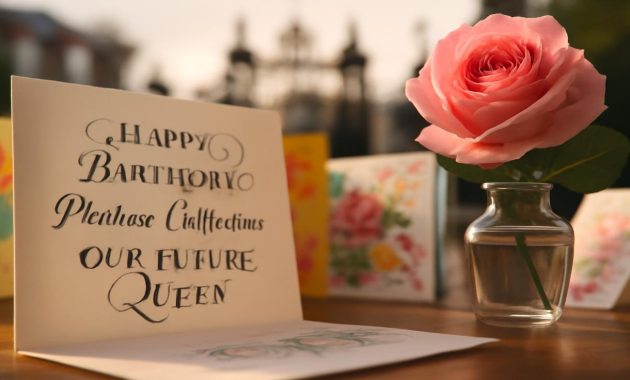
The first January light drizzles like pale honey over London, and somewhere behind honey‑stone walls and quiet security gates, a woman who has spent nearly half her life in the spotlight is blowing out birthday candles. She is a daughter, a wife, a mother of three, a future queen – and, to millions, still “Kate,” the girl who walked down a university hallway and into history. Today, the country whispers with an oddly intimate chorus: happy birthday, Princess Catherine. And beneath that greeting, unspoken yet thunderous, hums another thought – how remarkable that we feel we know her at all.
A Birthday Wrapped in Cameras and Candlelight
Birthdays, for most of us, are private little islands of celebration – crumb‑flecked cake plates, melted wax on the tablecloth, a lopsided chorus of “happy birthday” sung slightly off‑key. Catherine’s birthday is different. Her day arrives through a telephoto lens, through careful palace statements, through newspaper spreads and breathless television segments. Yet the core of it, if you strip away the fanfare, still seems disarmingly ordinary.
You can almost imagine it: the clink of cereal bowls in a sunlit kitchen, a child’s quick scramble up onto a chair to hang a hand‑drawn card with tape that doesn’t quite hold. Perhaps the smell of toast, the familiarly domestic chaos of a school morning. Somewhere in the swirl, a quiet kiss on the cheek: “Happy birthday, Mummy.”
What makes this particular birthday so compelling is not just the woman at the center of it, but the moment we find ourselves in. Public fascination with Princess Catherine has never been more intense, more dissecting, and yet more affectionate. We turn to her not only as a royal figure but as a kind of national mirror – someone in whom we read our worries about tradition and change, privacy and spectacle, resilience and vulnerability in an age where nothing truly stays hidden.
Why We Can’t Look Away
The Windsor story has always been part fairy tale, part cautionary tale, part endlessly unfolding serial drama. But Catherine’s arrival injected something different into this centuries‑old narrative: a slow‑burn character arc. She wasn’t a sudden starlet, but a steady presence – a young woman photographed with textbooks and shopping bags long before tiaras and carriages.
Over the years, the nation has watched her timeline unfold almost like a carefully scripted novel:
| Year | Milestone in Catherine’s Journey |
|---|---|
| 2001 | Meets Prince William at the University of St Andrews |
| 2010 | Engagement announced with the iconic sapphire ring |
| 2011 | Wedding watched by hundreds of millions worldwide |
| 2013–2018 | Birth of Prince George, Princess Charlotte, and Prince Louis |
| 2022 | Becomes Princess of Wales when Charles III ascends the throne |
Each of these milestones arrived in the age of instant commentary. Social media didn’t just amplify interest; it democratized it. Suddenly, reactions to a dress, a gesture, a speech didn’t flow solely from the traditional gatekeepers of newspapers and broadcasters. They pulsed up from millions of screens, from bedrooms and buses and lunch breaks, a crowd‑sourced chorus of admiration, critique, obsession.
On this birthday, that chorus is louder than ever. There are fan‑made video montages and photo threads, reflective think pieces and tiny, heartfelt posts from people who will never meet her: “She got me through postpartum depression,” “Her openness about mental health made me feel less alone,” “I named my daughter after her.” For a woman whose life is so bound to pageantry, it is this quiet, personal relevance that feels most striking.
The Magnetism of Poise in a Fractured Age
In a world that often moves at the speed of outrage, Catherine’s public demeanor is almost old‑fashioned. She smiles more than she speaks. She listens more than she lectures. At engagements, she leans forward, hands folded, eyes soft but steady. It’s an understated style of presence that might, in another era, have gone relatively unnoticed. Today, it seems almost radical.
There’s a reason videos of her kneeling to a child’s eye level, or gently steadying an anxious parent’s hand, ricochet around the internet. They offer an image of calm attention – one person attuned quietly to another – in an age desensitized by noise. Whatever else can be said about monarchy, this kind of focused, human exchange is still stubbornly powerful.
Behind the Balcony: The Invisible Labor of a Future Queen
We see the balcony poses, the glitter of state banquets, the tailored coat dresses in jewel tones against grey British skies. What we rarely see is the discipline and emotional labor that underpins the life of a future queen. It’s not just the precision of etiquette or the rehearsed choreography of public appearances; it’s the inner negotiations that come with living every adult year in a glass house.
Consider the paradox: Catherine is expected to be both utterly ordinary – a relatable working mother – and utterly extraordinary, a symbol of centuries of tradition polished to a near‑mythic shine. She is asked to project stability while navigating the same messy, unpredictable realities everyone else does: sick children, family tensions, exhaustion, self‑doubt.
Yet she moves through it all with a steadiness that seems less about perfection and more about practice: a habit of calm. On the days when the headlines are harsh or speculative, she still has to kneel on a classroom carpet and coax a shy five‑year‑old into painting; she still has to sit through briefings on early childhood development or mental health statistics and then translate them, on the spot, into words that will land with a listening parent or a nervous young volunteer.
The monarchy, in many ways, is theater. But the empathy required to connect with a grieving family or a frightened teenager isn’t easily faked. It comes from somewhere more strenuous and vulnerable. Watching Catherine over the years, you see a woman training that muscle, refining it, stretching it – and doing so under an intensity of observation that would buckle most of us.
Motherhood Under a Microscope
If fascination with Catherine is unprecedented, fascination with Catherine as a mother is doubly so. Every school‑gate drop‑off, every balcony interaction, every small hand tucked into hers is zoomed, cropped, analyzed. Was that a stern look? A soft rebuke? A playful wink? People parse these tiny moments with the scrutiny once reserved for constitutional crises.
There’s something deeply human in that. In a time when parenting has become a minefield of advice and anxiety, Catherine’s approach – calm but not rigid, affectionate without performative oversharing – offers a narrative people can latch onto. She is both impossibly resourced (who among us has help at home and a palace garden?) and reassuringly normal (the child who sticks out a tongue at an event, the toddler wriggling in royal arms).
On her birthday, you can imagine the handmade cards that probably matter more to her than any official message. Crayon crowns, stick‑figure families, maybe a wobbly “Happy Birthday Mummy” in big block letters. It is in these unseen, unphotographed corners of her life that the whole extraordinary enterprise of royalty becomes, fleetingly, just another family story.
Style, Symbol, and the Quiet Power of Rewearing a Coat
Few public figures have sustained such intense, enduring scrutiny of their wardrobe as Princess Catherine. Every hemline, every color choice, every tiara selection has been catalogued like a living archive. It would be easy to dismiss this as frivolity – and sometimes, of course, it is. But there is also something quietly strategic unfolding in the fabric and seams.
Over the years, her style has evolved from “girl‑next‑door in a borrowed hat” to a visual language that’s almost diplomatic. When Catherine chooses local designers on overseas tours, she is sending a message. When she appears in the same coat again and again, despite the global spotlight, she is sending another. In a culture wired to consume and discard, rewearing becomes a small, almost subversive gesture: a reminder that even amid opulence, choosing restraint is possible.
Her clothes are also part of how people claim a piece of her story. High‑street brands sell out in hours after a sighting. Copycat dresses appear overnight. In a sense, all those women stepping into a “Kate‑inspired” coat are stepping into a shared narrative: of composure, of aspiration, of wanting to feel put‑together in a world that often feels anything but.
When Fashion Becomes a Conversation
What’s more intriguing is how Catherine uses simplicity to redirect attention. A plain white blouse, a ponytail, minimal jewelry – these choices often appear on days when the focus should be the people she’s meeting, the cause she’s championing, not the princess herself. The more important the subject, the quieter her outfit often becomes. It’s as if the clothes are whispering: look beyond the surface, listen to what’s being said.
That paradox – a woman known worldwide partly for how she dresses, using that very visibility to erase herself from certain frames – is subtle but telling. On this birthday, the tributes to her style will pour in, but underneath lies a more interesting truth: her wardrobe has become a working tool, not simply an adornment.
The Weight and Light of Public Love
There is a particular intensity to the affection directed toward Catherine. It is protective, sometimes fiercely so. Criticism of her can provoke a defensive wave from admirers who feel, in some ineffable way, that they know her. But the reality is that we know as much about her inner life as she allows – which is to say, not much at all.
What we do know is that she has chosen, within the constraints of a rigid institution, to lean into work that pulls her into some of society’s tenderest places: hospices, children’s wards, mental health projects, addiction services, early‑years interventions. These are not glamorous landing spots. They are complicated, emotionally draining, often heartbreak‑laden spaces.
It matters that, year after year, she returns. The cameras catch a few seconds – a hand on a shoulder, a bent head, a nod. The rest happens off‑screen: the debrief in the car ride home, the heaviness that lingers after meeting a parent who doesn’t know how long they’ll have with their child, the weight of stories that settle somewhere in the body and do not leave.
Public fascination can be prurient, but it can also, at its best, be galvanizing. When millions are paying attention, a softly spoken sentence from a princess about the loneliness of new motherhood, or the importance of children’s mental health, can ripple outward much further than the same truth uttered by a less‑watched figure. The attention becomes a current; she tries to bend it toward something useful.
Vulnerability, Carefully Measured
In recent years, we’ve seen a carefully calibrated willingness to share glimpses of vulnerability – conversations about the pressures of early parenthood, about the strain that comes with constant scrutiny. These moments land with a resonance amplified by the contrast: a royal, trained for composure, daring to acknowledge the cracks.
On her birthday, the public narrative is all soft‑focus admiration. But threaded through it is a sharper question: how do you protect a person everyone feels they own a little piece of? There is no easy answer. The palace walks a tightrope between sharing just enough to satisfy a voracious public and holding firm to a private core that is non‑negotiable. The fascination is not going away; the task now is to shape it rather than be devoured by it.
The Road to Queenship in a Restless World
Calling Catherine “our future queen” once felt comfortably distant, like saying “one day, perhaps.” The last few years have changed that. With the passing of Elizabeth II and the coronation of Charles III, the line of succession has shifted visibly forward. Catherine is now not only Princess of Wales but the next queen consort in waiting – a role she has been quietly rehearsing for in public view.
This unfolding happens against a backdrop of flux: questions about the very relevance of monarchy, debates over funding, reckonings with the past, shifting generational attitudes. The institution she’s walking toward is not solid marble; it’s more like a great old ship mid‑refit, creaking under the weight of history while being stripped, painted, and re‑rigged for choppy 21st‑century waters.
In that context, her birthday is less a simple celebration and more an annual marker: another year closer to a future where she will be an anchor point in a storm. You can sense, in the way she’s taken on more substantial speeches, more senior roles, a deepening seriousness. The sparkle of youth has given way to something steadier: a woman learning how to occupy power without letting it consume her.
The Quiet Craft of Continuity
What Catherine represents to many is continuity without stasis. She is the connective tissue between the memory of a queen who reigned for seventy years and a generation of schoolchildren who have only known smartphones and streaming. She appears at village fêtes and global summits, at rugby matches and royal tours, stitching these wildly disparate worlds together with a consistent persona.
It’s not a simple task. Every step she takes has to hold two truths at once: that tradition matters, and that it cannot be immutable; that symbolism is powerful, and that it must be backed by substance. The work she has chosen – especially in early childhood and mental health – is not a decorative hobby. It is the scaffolding of a legacy she seems determined to root in real‑world impact, not just ceremonial presence.
A Birthday Candle in the Storm
So here we are: another January, another photograph issued, another round of commentary, another year of her life folded neatly into the public record. The fascination swirling around Princess Catherine shows no sign of ebbing. If anything, it intensifies as the future edges closer and the world grows more unstable.
But birthdays are, at their heart, small, nearly sacred pauses. For all the noise outside, there will be, somewhere inside those palace walls, a moment that belongs only to her and to the handful of people who know her not as Princess of Wales or future queen, but as Kate: the woman who laughs at private jokes, who changes out of heels into worn‑in trainers, who watches a TV show with a cup of tea gone cold beside her.
Perhaps that is why this particular birthday draws us in so much. We sense, dimly, that behind the regimented images and crafted statements is a whole, complicated human being doing something almost unimaginably hard: growing older, raising children, nursing worries, making mistakes, learning, all while walking toward a throne that cannot, by its very nature, ever truly belong to a private self.
And yet, when the candles are lit and the children lean in, when the chorus of “happy birthday” rings a little too loudly in the kitchen and someone forgets a verse, the future queen is – for a soft, flickering instant – just a woman at her table, wishing as we all do each year for enough strength, enough love, enough grace to meet whatever comes next.
Happy birthday, Princess Catherine. Amid all the unprecedented public fascination, may there still be quiet corners of your day untouched by our gaze – where the only crown is the circle of small arms around your waist, and the only duty is to close your eyes, make a wish, and let the candles go out.
Frequently Asked Questions
Why is there so much public fascination with Princess Catherine?
The fascination stems from a blend of factors: her “ordinary” beginnings, her long and visible journey into the royal family, her role as a modern mother in a very traditional institution, and her increasingly influential position as future queen. Social media has amplified this interest dramatically, turning every appearance into a global talking point.
What makes Catherine different from previous royal consorts?
Catherine entered the royal family in an era of 24/7 news and online scrutiny, which previous consorts did not face to the same degree. She also brings a focused, long‑term commitment to issues like early childhood development and mental health, shaping a more issue‑driven role rather than a purely ceremonial one.
How does Princess Catherine balance public duty and private life?
While details are rightly kept private, it’s clear she and Prince William prioritize a stable, grounded upbringing for their children. They limit their children’s public appearances, maintain routines like school runs, and release carefully curated family photos instead of allowing constant access.
Why is her work on early childhood so significant?
Early childhood is widely recognized by experts as a crucial period for shaping lifelong mental and physical health. By focusing her platform here, Catherine is channeling royal visibility toward a foundational social issue that often receives less attention than it deserves.
Will Catherine become Queen one day?
Yes. As the wife of Prince William, the heir apparent after King Charles III, Catherine is expected to become queen consort when William accedes to the throne. Until then, she continues to step gradually into more senior responsibilities as Princess of Wales and future queen.