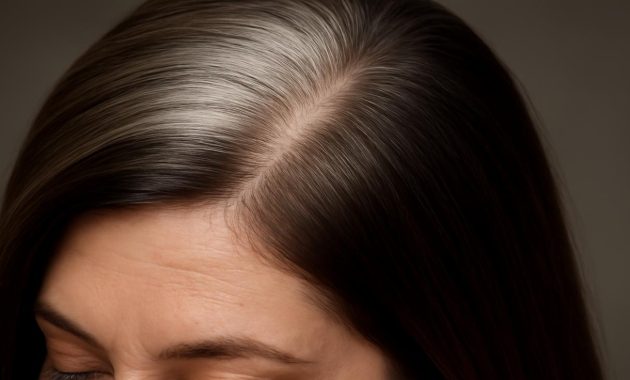
The stylist twisted a silver-white strand between her fingers, letting it shimmer in the salon light like a thin stream of moonlight. “You know,” she said, “the goal isn’t to hide your gray. It’s to make it look intentional.” Around us, blow-dryers hummed, brushes whispered through hair, and the smell of coffee and hair color hung in the air. I’d come in asking for a change—something that felt like me, but fresher, lighter, maybe even younger. What I got instead was a new way of looking at aging, a trick of color and light that didn’t erase my years, but made them gleam.
When Gray Starts Telling a Story You Didn’t Choose
There’s a moment, sometime in your late 40s or early 50s, when gray hair stops being a few rebellious strands and starts becoming part of your face—almost like an accessory you didn’t exactly sign up for. You catch your reflection in a shop window and think: When did I start to look… tired? Not old, exactly, just like the color in your hair has drained a little of the energy from the rest of you.
And yet, gray and white hair can be breathtaking—soft like frost on morning grass, bright like sea foam on rocks. But without the right cut and color strategy, it can also flatten your features, wash out your skin, or add a heaviness around your eyes and mouth. Many people respond by coloring everything one shade: dark brown, deep auburn, inky black. For a few weeks, it feels familiar and safe.
Then the roots grow in—stark, bright, marching down the part like a little silver highway of truth. The contrast gets harsh, the touch-ups get frequent, and one day, you catch a glance in the mirror and think: This looks more old-fashioned than the gray ever did.
Somewhere between “totally covered” and “totally natural” is where a quiet revolution is happening, especially for people over 50 who are done apologizing for their age—but not done having fun with their hair.
Reverse Coloring: When the Roots Become the Highlight
Reverse coloring is one of those phrases that sounds like a magic trick—and in a way, it is. Instead of fighting your gray at the roots and keeping the ends dark, it flips the script. The roots are kept lighter—close to your natural gray or white—while the darker or richer tones are woven through the mid-lengths and ends. Think of it as letting your natural color be the “light source” and using artful color below it to add depth, movement, and youthfulness.
In classic coloring, the roots are the most saturated, the darkest, the densest. That structure can cast a kind of “shadow” over your face, particularly with strong, opaque shades. With reverse coloring, the opposite happens: the lightest part of your hair is closest to your skin, brightening your features like a built-in ring light. The color deepens gradually as it moves away from your face, mimicking how the sun might naturally lighten hair at the top and front.
The result isn’t “you at 30,” but “you at your sharpest, your most awake.” Skin tones look fresher. Eyes stand out. Lines soften not because they disappear, but because your hair stops dragging attention downward.
It’s a subtle trick, almost invisible to someone who isn’t looking closely. They might just think: You look good. Did you change something?
Why Reverse Coloring Feels So Modern
Part of what makes reverse coloring so powerful after 50 is that it doesn’t cling to the old formula of “cover, hide, deny.” There’s no solid helmet of color, no obvious regrowth line shouting your age every four weeks. Instead, the gray itself becomes a key character in the story of your hair. It’s invited in, not battled.
Reverse coloring leans into:
- Translucency instead of opacity – softer, sheer tones that let some of your natural color show through.
- Dimension instead of a flat block of color – lowlights and soft depth that mimic natural variation.
- Harmony with your skin tone – warmer or cooler tones chosen not from a box name, but from your actual complexion.
The look is less “trying to look young” and more “at ease in my own skin, but still very much awake.”
How Reverse Coloring Actually Works in the Chair
In the salon, reverse coloring feels surprisingly gentle, like someone repainting your portrait with better lighting rather than re-drawing your entire face. You sit down with your stylist, and instead of asking, “What color do you want to be?” they might ask: “Where do you want light, and where do you want depth?”
For someone with a lot of white at the front and salt-and-pepper at the back, a typical reverse-coloring approach might look like this:
- Roots and hairline: Left close to natural, sometimes toned slightly with a translucent glaze—silver, pearl, champagne, or soft beige—to neutralize any harsh yellow or dullness in the white.
- Mid-lengths: Woven lowlights one or two shades deeper than your gray—cool ash, smoky taupe, mushroom brown, or soft cocoa—applied in fine, irregular sections.
- Ends: A mix of slightly deeper tones and some brighter pieces to keep movement and avoid a blunt “dip-dye” effect.
The key is that nothing is drawn in a solid line. Color flows. Shimmers. The gray at the root blurs into richer strands, which blend again into lighter ends. There’s no harsh beginning or end—just a soft gradient, like the sky changing color at dusk.
Small Shifts, Big Difference
One of the beautiful parts of reverse coloring after 50 is that it doesn’t demand a huge leap. You can start small. Maybe your stylist only adds a few lowlights around the mid-section of your hair to ground the gray, or glazes your white roots with a cooler tone so they don’t clash with the rest.
Over time, you can adjust:
- More depth through the ends to make fine hair look thicker.
- More brightness near the face for an extra lifting effect.
- Warmer or cooler tones based on how your skin is changing with age and seasons.
You’re not locked into one single version of yourself. Instead, your hair evolves with you, step by step.
Choosing Your Color Story: Cool Moonlight or Soft Candlelight?
Walk into a forest at dawn and you’ll see grays everywhere—on rocks, tree trunks, clouds—yet none of them are truly just gray. They’re tinged with blue, green, violet, brown, gold. Your hair is no different. Even “white” has a temperature. And matching that temperature with your skin is where the magic lives.
For reverse coloring, the tones you and your stylist choose can roughly be divided into two families: the cool moonlight family and the warm candlelight family. Both can be stunning, but one will usually feel more like home on your face.
| Color Mood | Best For | Typical Tones Used |
|---|---|---|
| Cool “Moonlight” Reverse Coloring | Skin that looks better in silver jewelry, pink or blue undertones, easily flushed cheeks | Pearl, ice, soft silver, smoky taupe, ash brown, cool beige, steel lowlights |
| Warm “Candlelight” Reverse Coloring | Skin that glows in gold jewelry, peach or golden undertones, olive or warm beige complexions | Champagne, honey pearl, sand, warm beige, light caramel, soft cocoa lowlights |
Imagine your white roots as the sky. Are you going for a crisp winter morning or a soft late-summer evening? Cool tones sharpen and clarify; warm tones soften and glow. Both can reverse that “old-fashioned” vibe that heavy, flat color can create, especially when your natural gray is already peeking through.
The Secret Role of Translucency
Most of the time, we’ve been trained to think that more pigment equals better color. But with gray and white hair, especially after 50, translucency is often more flattering. Semi-permanent glazes, sheer toners, and soft lowlights allow the hair to catch light instead of swallowing it.
That shimmering, multi-dimensional result doesn’t scream “dyed”; it whispers “luminous.” The color is in conversation with your gray, not in competition with it. And that delicate transparency is what keeps the end result from feeling heavy or old-fashioned.
Cut, Texture, and Movement: Color’s Silent Partners
Reverse coloring alone can revive gray and white hair, but when paired with the right cut, it becomes something else entirely—almost like switching from a flat photograph to a moving film. After 50, hair texture often shifts: it can become drier, finer, or more wiry. A blunt, heavy style that once looked glamorous can suddenly start weighing your face down.
The colors of reverse coloring work best when there’s:
- Soft layering to show off the shift from light roots to richer ends.
- Movement near the face—a fringe, curtain bangs, or gentle face-framing angles—to pull the lighter root color toward your eyes and cheekbones.
- Respect for natural texture: waves enhanced, straight hair smoothed but not flattened, curls defined instead of stretched.
Picture the way sunlight brushes through leaves: some areas gleam, some sink into shadow, but everything feels alive. That’s what you’re going for with your hair—color and shape working together, catching light as you move.
Letting Go of “Age-Appropriate” Rules
The old rules whispered things like: “No long hair after 50,” “No bright tones,” or “Always cover gray completely.” Reverse coloring ignores that static. Instead, it asks: What makes your features sing? What makes you feel awake when you look in the mirror?
Maybe that means:
- Keeping your hair long but adding airy layers and cooler, moonlit lowlights.
- Wearing a bob with soft, champagne-toned roots and hazelnut lowlights at the ends.
- Letting your curls stay wild and silver at the top, with smoky beige and cocoa weaving through the lengths.
There is no single “after 50” template anymore. There is only what makes you feel like your favorite version of yourself.
Caring for Reverse-Colored Gray: Keeping the Glow, Skipping the Dullness
Gray and white hair are like pale fabric: beautiful, but quick to show stains and wear. Add color into the mix—even soft, translucent tones—and you need a little bit of ritual to keep everything luminous rather than faded.
Think of your hair as a landscape you’re tending, not a problem you’re fixing.
- Use gentle, color-safe shampoos: Look for formulas that are sulfate-free and hydrating. These help maintain both your glaze and your natural gray shine.
- Add a tonal refresher: Purple or blue-based shampoos or conditioners (used sparingly) can keep whites bright and prevent brassiness in both gray roots and lowlights.
- Hydrate like it’s a habit: Gray and white strands can be drier and more porous. Lightweight masks or leave-in conditioners help protect the delicate cuticle and keep your reverse coloring soft and reflective.
- Shield from heat and sun: Think of UV and hot tools as the harsh noon sun on delicate cloth. Use heat protectant sprays and, when you can, hats or UV-protective products to keep toners from yellowing or fading too quickly.
Maintenance for reverse coloring is often more forgiving than traditional full coverage. Because the roots are intentionally light and closer to your natural gray or white, regrowth is less dramatic. You may find you can stretch appointments to eight, ten, even twelve weeks—just touching up toners and lowlights rather than repainting everything.
Talking to Your Stylist: Words That Help You Get What You Want
Walking into a salon and saying, “I want reverse coloring” is a strong start—but language can be slippery. Showing photos of hair with light roots and deeper, dimensional ends can help. Even more powerful is describing how you want to feel and look, not just the technique.
You might say things like:
- “I want my natural gray and white to show at the roots, but to look intentional and bright, not dull.”
- “I don’t want a solid color. I’d like depth through the mid-lengths and ends so my hair doesn’t look flat.”
- “Please avoid anything that will create a harsh line as it grows out. I want a soft, lived-in blend.”
- “I’m okay with my age showing. I just don’t want to look tired or washed out.”
A good colorist will hear these cues and translate them into the right mix of glazes, lowlights, and placement tailored to your base color, skin tone, and haircut.
Rewriting the Story of Growing Older—One Strand at a Time
Reverse coloring is more than a salon technique. It’s a quiet refusal to see gray or white hair as a sign to fade into the background. It says: Yes, the years are here, written in silver on my head—but watch what else I can do with them.
There’s something deeply moving about seeing a head of hair where the gray isn’t buried under opaque dye but transformed into a glowing halo at the roots. It hints at wisdom, experience, and at the same time, an undimmed curiosity. Much like a winter landscape lit by low sun, there is contrast and clarity, but also a softness that makes you want to look twice.
The stylist from that first scene stepped back when she was done, and for a heartbeat, I didn’t recognize myself. Not because I looked radically younger, but because I looked lighter. Not in years, but in weight. My white roots had become a kind of crown; the lowlights in the lengths hinted at the darker hair I once had, but in a way that felt like an echo, not an imitation.
Hair, after all, is not just decoration. It’s a record of weather: stress and joy, illness and recovery, losses and late-night dances. With reverse coloring, you’re not erasing that record. You’re editing the lighting, choosing where to cast shadow, where to invite brilliance, and how to let the story of you be told—clearly, boldly, and beautifully—at every age.
Frequently Asked Questions
Is reverse coloring suitable for all levels of gray or white hair?
Yes. Reverse coloring can work whether you have a few gray streaks or are almost completely white. Your stylist will simply adjust how much of your natural root is left visible and how deep or soft the lowlights need to be. The more white you have, the more your roots can act as a bright, luminous base for the rest.
Will reverse coloring damage my already fragile gray hair?
When done thoughtfully, it can actually be gentler than all-over permanent dye. Colorists often use semi-permanent glazes, low-ammonia formulas, and place lowlights sparingly instead of saturating every strand. Coupled with good at-home care—hydrating products and heat protection—your hair can stay healthy and resilient.
How often will I need to touch up reverse coloring?
Because regrowth is less obvious, many people find they can go 8–12 weeks between appointments. Often, you’ll just need a toner refresh at the roots and some lowlight maintenance in the mid-lengths and ends, rather than a full recolor every visit.
Can I transition from fully dyed dark hair to reverse coloring?
Absolutely, but it may take a few sessions. A stylist might first soften your solid dark color with highlights or a gentle lightening process, then gradually introduce reverse coloring. The goal is to slowly bring your roots closer to your natural gray or white while building a more dimensional, blended look through the lengths.
Is reverse coloring only for women over 50?
No. Anyone with gray or white hair—at any age—can benefit from reverse coloring. That said, it has a special resonance after 50 because it offers an alternative to the “cover everything or go completely natural” dilemma. It’s an in-between path that honors age while still playing with style, light, and personality.