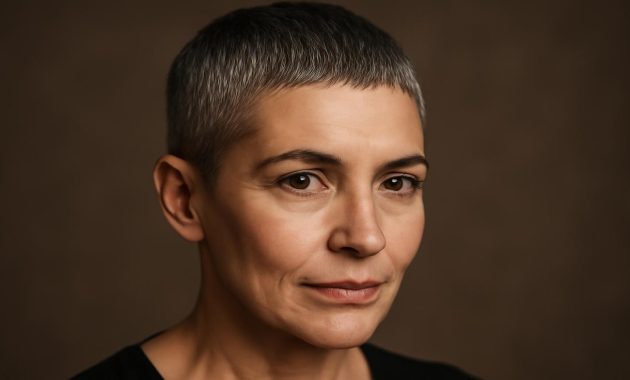
The first silver hair didn’t arrive with a fanfare. It showed up quietly, like a polite stranger at the edge of a crowded room. Maybe you spotted yours in the bathroom mirror under unforgiving morning light. Maybe it shone back at you from a shop window, threaded through your ponytail, glinting like a thin strand of moonlight. For a while, you pulled them out, fought them, hid them under home dyes that always seemed just a shade off. But somewhere after 50, the battle started to feel…tiring. Not just for your hair, but for your spirit. And that’s usually when the question starts whispering: what if, instead of fighting this, I made it beautiful?
The Quiet Confidence of Salt and Pepper
There’s something quietly arresting about salt and pepper hair. It’s not the glossy uniformity of salon brunette or the drama of a platinum pixie. It’s softer, like a landscape at dusk. Charcoal, pewter, soft dove gray, a hint of lingering brown or blond at the temples. It tells a story without saying a word: of laughter lines earned, seasons weathered, mistakes survived, joys repeated.
But there’s also a tricky truth. If the cut isn’t right, that beautiful mix of tones can skew dowdy or tired. A shapeless bob, long straggly ends, or an outdated cut can make even the most striking salt and pepper palette look older than you feel inside. What you wear on your head becomes a mismatch to the person you know yourself to be—curious, alive, busy, still changing.
That’s where the “micro contour crop” slips into the conversation, like a stylist friend who finally says what you needed to hear: you don’t need more dye; you need a smarter cut.
What Exactly Is a “Micro Contour Crop”?
Imagine a haircut that behaves like good lighting. It doesn’t shout for attention, but once it’s there, everything looks somehow fresher, sharper, more awake. The micro contour crop is a short cut—usually between ear-length and just brushing the nape—but it lives in the details: tiny, deliberate “micro” adjustments around your face and head shape that create subtle contouring effects.
If “contour” reminds you of makeup, you’re on the right track. Where bronzer subtly carves shadow under your cheekbones, this cut uses length, angles, and texture to visually lift the face, open the eyes, and soften jawlines or neck areas you might feel self-conscious about. It’s hair as soft architecture.
On salt and pepper hair, it becomes a kind of living sculpture. Those tiny flecks of white catch the light along shorter layers; darker strands sink into shadow and create dimension. Instead of seeing “gray,” people see movement, shine, and shape.
Why It Works So Well After 50
Hair in our 50s and beyond behaves differently. It can thin at the temples. The overall texture often gets coarser, drier, or more fragile. It may refuse to lie flat where it once obediently did. Long hair can start to drag your features down, especially if it’s lost volume at the roots.
The micro contour crop works with these changes instead of wrestling them into submission. It doesn’t depend on thick, heavy lengths or hours of styling. Instead, it borrows from what your hair is already doing:
- Natural root lift gets harnessed into soft volume at the crown.
- Coarser strands become texture, not “frizz to be tamed.”
- Thinner areas are softened by strategic layering and direction, not exposed.
It’s as if the cut says, loudly but kindly, “Nothing about you has to pretend it’s 32.” It just makes 55, 62, 71 look luminously intentional.
How the Micro Contour Crop Rejuvenates Your Features
Walk into a good salon with this idea, and your stylist won’t just glance at your hair. They’ll watch how your face moves when you talk, where your eyes naturally draw attention, how your jawline sits, how your neck meets your shoulders. The micro contour crop is not a one-style-fits-all cut; it’s more like a custom sketch over your own bone structure.
Soft Lifts and Gentle Lines
The magic lives in millimeters:
- A whisper-shorter length at the nape that makes your neck look longer and more elegant.
- Side layers that graze the cheekbones, creating the illusion of lift (like a tiny, invisible sling).
- A little extra texture at the crown to visually push everything upward instead of downward.
Instead of heavy, horizontal lines—like a blunt bob that can drag the face down—you get diagonals, soft curves, and gentle angles that guide the eye upward and inward, toward your features, not away from them.
Working With Your Natural Gray Map
Every head of gray hair has a unique “map”: maybe you’re lighter at the front and darker at the back, or have a striking silver streak by one temple. The micro contour crop invites these patterns to become features, not flaws.
For example:
- If you’re very silver around the face, shaping shorter, feathered pieces there can create a halo of brightness around your eyes.
- If you’re darker at the crown, keeping it slightly fuller on top adds depth and makes hair look denser overall.
- If you have a single white streak, your stylist can frame it so it becomes your signature, not something you’re trying to hide under dye.
On gray hair, “rejuvenating” doesn’t mean pretending you’re not gray. It means arranging what you naturally have so it lights you up.
The Feel of Short Hair Freedom
There’s a physical sensation people rarely talk about when they go shorter after 50: lightness. The first time you step out of the salon with a crop, the air hits the back of your neck, and there’s that micro-second of shock, like you’ve forgotten your coat somewhere. But then you look in the mirror and suddenly your earrings matter again. Your collarbones show. Scarves become style, not insulation.
The micro contour crop adds something else to that feeling—ease. It’s short enough to be low maintenance, but not so severe that you’re locked into a boyish or edgy look if that’s not your thing. It can be styled sleek, tousled, soft, or structured. On a busy Tuesday morning, a little styling cream and a quick finger-ruffle might be all it needs.
Texture: The Secret Ingredient
Salt and pepper hair tends to have more “grip” than the silky strands of youth. Instead of fighting that texture, the crop uses it. Tiny point cuts, soft razored edges (when done gently and appropriately for your hair type), and internal layering shape the hair so it almost styles itself. The pieces fall into place because they’ve been cut to belong there.
You know that feeling when you’re trying to coax a heavy, shoulder-length cut into a flattering wave, but it keeps collapsing into limp, uneven sections? The micro contour crop rarely does that. Its shorter length means gravity isn’t constantly dragging it down, and your natural growth patterns are baked into its design.
How to Talk to Your Stylist About a Micro Contour Crop
Most stylists won’t have “micro contour crop” listed on a menu. It’s a concept, not a trademarked style. What matters is how you describe what you want it to do for your face and your gray—not just how short you’re willing to go.
Key Points to Discuss
- Length comfort zone: How much neck do you want to show? Are you okay with ears peeking out, or do you like them softly covered?
- Your gray pattern: Show your stylist where your hair is lightest and darkest when dry. Ask how they’d place layers to highlight that.
- Daily styling time: Be honest. If you have five minutes, say five, not “oh, whatever it needs.” The cut can be adapted.
- Face focus: Tell them what you like most about your face—eyes, cheekbones, lips—and ask them to contour the cut around that feature.
Instead of walking in with a single reference photo and saying, “Make me look like her,” it’s more powerful to say, “I want a short, face-contouring cut that makes the most of my salt and pepper. I still want softness, movement, and something that lifts my features.”
A Handy Comparison Table
Here’s a simple way to see how the micro contour crop stacks up against other common short cuts on gray hair:
| Style | Best For | Pros | Considerations |
|---|---|---|---|
| Micro Contour Crop | Salt & pepper hair, 50+, wanting lift and softness | Face-contouring, highlights natural gray, low to moderate styling | Requires a skilled, detail-oriented stylist |
| Classic Pixie | Those who love very short, chic, defined looks | Bold, easy to wash, exposes features beautifully | Can feel too severe or “boyish” for some tastes |
| Short Bob | Wanting some length and classic femininity | Familiar, versatile, works with waves or straight hair | Blunt lines can drag down the face if not layered well |
| Shaggy Crop | Liking a relaxed, tousled, modern edge | Great texture, playful, hides uneven density | Too much layering can make fine gray hair look wispy |
Caring for Salt and Pepper Hair in a Short Cut
Once you’ve got the cut, the care becomes part of the story. Gray and salt and pepper hair is like a favorite linen shirt: strong, beautiful, but prone to dryness and a little extra texture. It needs thoughtful, not complicated, care.
Hydration, Not Heaviness
Because shorter cuts lose that weight of length, heavy conditioners and oils can easily flatten them into the dreaded helmet effect. The sweet spot is lightweight moisture:
- A gentle, hydrating shampoo every few days (not daily, unless your scalp really needs it).
- A light conditioner focused on mid-lengths and ends rather than scalp.
- Once- or twice-weekly masks that rinse clean without residue.
When you run your hands through your hair, you want it to feel springy and soft, not coated. The more you can keep strands supple, the better your micro contouring will show.
Keeping the Silver Bright
Salt and pepper hair loves sunshine but doesn’t always love what it does to tone. Yellowing can creep in from UV exposure, mineral-heavy water, or old color molecules left from years of dye.
Short hair gives you a fresh start. With more frequent trims, older, stained ends don’t hang around as long. To keep your silver crisp:
- Use a gentle purple or blue-toning product occasionally if you see brassiness.
- Consider a light, non-greasy heat protectant if you use a dryer or styling tools.
- Wear hats or scarves in strong sun—not just for your skin, but for your shade.
You don’t need to chase a blinding white. The goal is clarity: letting your natural mix of tones show, not be dulled by buildup.
The Emotional Shift: Letting Your Gray Lead
There’s a story behind almost every woman who decides to cut her hair short and let the gray sing. Often it starts in small, private moments—the annoyance of dye appointments, the pang when the roots pop through after two weeks, the creeping suspicion that the color on your head doesn’t quite belong to your face anymore.
Then something shifts. Maybe it’s a grandchild picking out your silver strands like fairy threads. Maybe it’s a friend whose natural gray looks unexpectedly stunning. Maybe it’s just a morning when you feel done with pretending. The micro contour crop steps into that moment as a kind of celebration cut. It doesn’t mark “giving up”; it marks “choosing differently.”
When you finally see your salt and pepper arranged in a way that frames your face, lifts your expression, and catches the light, there is often a quiet, disarming thought: Ah. There I am.
You notice practical changes—you get ready faster, products last longer, your bathroom drain sighs with relief. But the deeper change is this: your hair is no longer running from time. It’s moving with it, shaping it, wearing it with a kind of elegant defiance.
FAQs About the Micro Contour Crop and Salt & Pepper Hair After 50
Is the micro contour crop suitable for all face shapes?
Yes, if it’s customized. On round faces, your stylist might add more height at the crown and a little length near the jaw to elongate. On long or narrow faces, they can keep more softness at the sides and avoid too much height. The key is that “micro contouring” is tailored—not a cookie-cutter cut.
Will a short crop make my thinning hair look worse?
Usually it does the opposite. Long, thinning hair can emphasize sparse areas and flat roots. A well-cut crop uses layering, direction, and color variation in your gray to create the illusion of density. Avoid over-texturizing very fine hair; ask for subtle, controlled layers instead of aggressive thinning.
How often will I need to get it trimmed?
For most people, every 5–8 weeks keeps the shape crisp without feeling high-maintenance. Because the cut depends on subtle contours, letting it grow out for months at a time can blur those lines and make it look shapeless.
Can I still color my hair if I choose this cut?
You can, but many find they need far less color—sometimes just soft lowlights or a semi-permanent glaze to enhance their natural mix. The beauty of the micro contour crop is that it’s designed to showcase your existing salt and pepper. If you do color, ask for gentle, low-commitment techniques that don’t fight your gray, but blend with it.
What if my hair is very curly or very straight—does it still work?
Yes, but the approach differs. On curls, the cut focuses on sculpting shape and avoiding bulk at the sides, while keeping enough length for the curl pattern to show. On very straight hair, micro layering and texturizing become more important to avoid a flat, helmet-like look. Bring photos of your hair in its natural state so your stylist can plan accordingly.
Will going short make me look older?
Length alone doesn’t decide “younger” or “older”; shape does. A long, outdated or heavy style can age you far more than a fresh, face-framing short cut. The micro contour crop tends to look youthful not because it hides age, but because it adds energy—movement, lift, and a sense of modern intention.
How do I style it on busy days?
Most micro contour crops are designed for minimal fuss. Often, it’s enough to:
- Towel-dry gently.
- Work in a pea-sized amount of lightweight styling cream or mousse.
- Blow-dry with fingers, lifting at the roots, or let it air-dry and tousle the top.
A quick touch-up at the fringe or face-framing pieces is usually all it needs to look deliberate instead of bedhead.
In the end, the micro contour crop isn’t just a haircut. It’s a subtle recalibration between who you are inside and what the world sees at a glance. For salt and pepper hair after 50, it’s a gentle but unmistakable statement: this isn’t about going back. It’s about going forward, lighter, sharper, and beautifully, unmistakably, yourself.