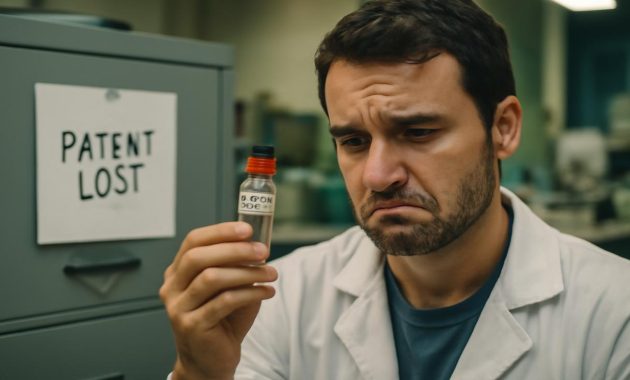
The mouse wakes up with a start. A few minutes earlier, it couldn’t move its back legs at all. Now, on a narrow acrylic platform in a quiet Rio de Janeiro lab, it hesitates, twitches—and then, astonishingly, takes a shaky step. A scientist in a wrinkled lab coat leans closer, hardly breathing. Another step. Then another. In the dim glow of the monitor, the room erupts in whispers that sound suspiciously like joy.
How a Jelly-Like Molecule Changed Everything
In the early 2000s, deep inside the Federal University of Rio de Janeiro (UFRJ), a small team of researchers was quietly working on something that sounded almost like science fiction: a substance that might help “cure” paralysis caused by spinal cord injury.
It wasn’t a miracle drug, exactly. It wasn’t even a drug in the traditional sense. It was a kind of engineered scaffold, a matrix protein that belonged to a family of molecules called laminins—important components of the extracellular matrix, the complex web that surrounds and supports our cells. This new version, created in the lab, came to be known as polylaminin.
Imagine the spinal cord as a busy multilane highway of nerve fibers, each one carrying signals that tell your body how to move, feel, and respond. A serious injury is like an earthquake that rips that highway apart—lanes ruined, bridges collapsed, and traffic permanently blocked. Most treatments focus on protecting what’s left or reducing the chaos after the quake. Polylaminin set its sights on something more ambitious: rebuilding the broken highway so signals could travel again.
In animal models, polylaminin did something remarkable. When applied to damaged nervous tissue, it seemed to create an environment that welcomed regrowth. Nerve cells that usually gave up after an injury began to extend new branches. Axons—the slender fibers that send electrical impulses—found something to cling to, a biological “guide rail” that showed them where to go. Mice and rats with severe spinal cord injuries, previously stuck in place, began to show movement again, even walking.
For people living with paralysis, the implications were enormous. Imagine being told that your spinal cord injury was permanent, that the damage was, in essence, a one-way street with no return. Now imagine hearing that a substance exists—developed in your own country—that might help your damaged nerves reconnect. Not in an abstract future, but soon. Maybe even in your lifetime.
The Long, Slow Road of a Breakthrough
Science, however, rarely moves at the speed of hope. Polylaminin’s journey from petri dish to potential therapy ran into a familiar obstacle: time. And another, more brutal one: money.
Brazil, for all its scientific talent, has long wrestled with chronic underfunding of research. Budgets change with political winds. Laboratories halt and restart projects like flickering lights. Promising ideas often stall not because they fail in the lab, but because they run out of fuel before they can even reach clinical trials.
Although early experiments with polylaminin were promising, scaling up to human trials required something more than microscopes and dedication. It needed a robust patent strategy, investment partners, and a timeframe that reached far beyond a typical research grant. The team at UFRJ did what scientists everywhere do when they realize they’re holding something that could reshape medicine: they filed patents, including international ones.
The strategy was clear. If they could secure intellectual property rights around the world, they could attract industry partners, pharmaceutical companies, and international funding. Those partners, in turn, could help transform a brilliant idea into a therapy that might one day be used in hospitals from São Paulo to Seoul.
But there was another system that moved slowly, painfully slowly: Brazil’s INPI, the National Institute of Industrial Property, the office responsible for examining and granting patents. While other countries handled patent applications in a handful of years, Brazil’s backlog stretched out like a desert horizon. For polylaminin, the wait would end up lasting nearly 18 years.
The Patent Clock That Ran Out
Patents are like sand timers. From the day you file, grains of legal protection begin to fall. Wait too long for the patent office to approve it, and the clock can run down before you ever get a chance to use what’s inside.
UFRJ’s researchers had filed internationally through systems like the Patent Cooperation Treaty (PCT), hoping to secure market protection in key regions: the United States, Europe, and beyond. But patent applications cost money—filing fees, translations, legal assistance, renewals. Those costs don’t care if your lab’s budget got slashed or if your funding agency delayed transfers.
As public science budgets in Brazil were cut and delayed, UFRJ faced an impossible choice: pay to maintain international patents for a therapy not yet approved, or redirect that money to keep the labs running and the basic research alive. Year after year, as INPI delayed examining the patents inside Brazil, the costs of maintaining rights abroad piled up.
Eventually, the money simply wasn’t there. Some international patents weren’t renewed. Deadlines passed. The protection that would have allowed Brazil to own and negotiate the global use of polylaminin quietly expired.
It’s the kind of loss that doesn’t make a sound but echoes for years: a country at the cutting edge of a potential cure for paralysis, gradually losing control over its own invention because the bureaucracy meant to protect it moved too slowly, and the budgets meant to support it were too thin.
What Exactly Is Polylaminin, and Why Is It So Special?
To understand why this story matters so much, it helps to know what polylaminin actually is—not just as a term in a patent, but as a living, working substance.
Our nervous system is built in part on laminins, a family of proteins that help cells attach to each other, migrate, and grow. Think of laminins as part of the invisible “soil” in which nerve cells plant their roots. During development—when a human is still just a fetus—these molecules play a starring role in guiding the growth of the nervous system.
After birth, especially after injury, the adult nervous system becomes far less generous. The capacity for regeneration—especially in the central nervous system—is limited. Scar tissue, inflammation, and inhibitory molecules form a kind of hostile terrain for any nerve that dares to regrow. It’s as if, after the earthquake on that neural highway, the landscape is littered with spikes and walls.
What UFRJ researchers did with polylaminin was to engineer laminin fragments in a way that made them easier to produce, more stable, and more effective at coaxing nerve cells to grow and reconnect. When applied in spinal cord injury models, polylaminin supported:
- Axon regeneration across damaged areas
- Better organization of newly growing nerve fibers
- Improved functional recovery in movement tests
It wasn’t magic. It was biology, carefully guided. But to a mouse taking its first steps after paralysis, the difference may as well have been miraculous.
Researchers began to imagine more: combining polylaminin with stem cell therapies, using it in nerve grafts, applying it in other neurodegenerative conditions. The name started to travel beyond Brazil, carried by scientific articles and conference presentations. Each step forward in the lab added weight to a growing conviction: this wasn’t just another interesting molecule. This was a platform—something that could transform how we think about repairing the nervous system.
A Country Rich in Brains, Poor in Protection
Here is where the story turns from hopeful to painfully familiar, especially for scientists working in the Global South.
Brazil produces world-class science in many fields—immunology, tropical diseases, biodiversity, neuroscience. Yet the infrastructure supporting that science—funding stability, patent management, technology transfer—is often fragile. Laboratories that could be long-term powerhouses are forced to live project by project, political cycle by political cycle.
When budgets are cut, as they were repeatedly over the past two decades, the first things to go are often the “less urgent” expenses: conference travel, equipment upgrades, and yes, the quiet, boring, absolutely essential costs of maintaining international patents.
In the case of polylaminin, this meant that while Brazilian scientists created a molecule with the potential to revolutionize spinal cord repair, Brazil as a state gradually lost the legal tools to ensure that it would benefit fully—financially, strategically, and symbolically—from its own discovery.
Meanwhile, the INPI backlog kept dragging on. For polylaminin, the patent process became a marathon run in mud. The exam that should have taken a few years stretched to 18. By the time some protections were finally defined, the international race was already reshaped. Any delay in turning a patent into a product—especially in a field as competitive as biotech—can mean losing out to better-funded groups abroad who are watching, learning, and sometimes racing ahead.
Who Loses When a Patent Is Lost?
On paper, a lost patent is a line in a database. In real life, its ripples are intensely human.
Parents of paraplegic teenagers who followed the polylaminin research with cautious optimism are left in a confusing limbo. The science exists. The molecule exists. But the path to turning it into an accessible therapy is now longer and more uncertain. Without strong patent protection, Brazil has less leverage to negotiate manufacturing, pricing, and access.
Researchers who poured decades into the project face another kind of loss: the knowledge that their country might watch others develop, market, and profit from something born in Brazilian labs. They might still be cited in the scientific literature, but the contracts, factories, and international deals could be signed elsewhere.
And then there’s the wider public. In a world where countries compete not just in sports but in science, technology, and innovation, every lost patent is also a dent in national self-confidence. Brazilians love telling the story of how they helped crack the Zika virus puzzle or pioneered certain vaccines. They could have told the story of how they led the world in spinal cord repair. But with polylaminin, that narrative is now tangled in “what ifs.”
| Aspect | Ideal Scenario | What Happened with Polylaminin |
|---|---|---|
| Patent Timing | Examined and granted within 3–5 years | Exam took around 18 years at INPI |
| Funding Stability | Regular support for research and patent fees | Budget cuts at UFRJ limited patent maintenance abroad |
| International Patents | Protected strategically in major markets | Several international protections lapsed over time |
| Global Position | Brazil as central owner and negotiator | Risk of foreign groups advancing commercialization |
The Patients Waiting in the Wings
Walk into any rehabilitation center that treats spinal cord injuries and you’ll notice the same mix of determination and quiet grief. People learn to live in new bodies, to move with wheels instead of legs, to turn everyday tasks into carefully planned maneuvers. They adapt, and often with extraordinary courage—but many never stop asking: “Is there anything new? Anything that might help me move again?”
For these patients, polylaminin represents both a beacon and a frustration. On the one hand, the science suggests that regeneration in the central nervous system is not as impossible as we once believed. On the other, the political and economic machinery surrounding that science has slowed its translation into reality.
Had Brazil been able to nurture and protect polylaminin from the start—with fast patent exams, strong funding, and coordinated support—clinical trials might be further along by now. Perhaps they would already be recruiting patients. Perhaps data would be emerging not just from mice and rats, but from humans.
Instead, the project sits at a crossroads: scientifically impressive, legally complicated, and financially fragile.
What This Says About Science, Justice, and the Future
Stories like polylaminin’s are not only about molecules and money. They’re about what kind of future we allow ourselves to build.
On one level, this is a cautionary tale about bureaucracy. An 18-year delay at a patent office is not a technical detail—it’s a structural failure with real consequences for innovation. If the systems that are supposed to protect ideas are too slow, they end up burying them instead.
On another level, it’s a story about inequality in global science. When a breakthrough happens in a well-funded lab in a wealthy country, there are armies of lawyers, technology transfer offices, venture capital firms, and pharmaceutical giants ready to move. When the same level of brilliance appears in a lab that struggles to buy reagents or repair equipment, even a world-changing idea can falter.
But there’s also a quieter, more hopeful layer. The fact that polylaminin exists at all—that Brazilian scientists engineered a substance capable of coaxing damaged nerves back to life—shows that scientific excellence is not the property of any one country. It is everywhere. It blooms in places that the global spotlight often ignores.
The question is whether we build systems capable of recognizing and protecting that excellence before it slips through our fingers.
Could the Story Still Change?
Polylaminin’s tale isn’t over yet. The science continues. New experiments, new formulations, new combinations with other therapies are still possible. Partnerships can be renegotiated. New investors can step in. Patents, even if partially lost abroad, can still support some forms of protection and development at home.
More importantly, the lesson of polylaminin is already reshaping conversations around policy and innovation in Brazil. There is growing pressure to speed up INPI procedures, to shore up funding for strategic technologies, and to treat intellectual property not as an afterthought, but as a central pillar of national development.
Somewhere in Rio, in a lab that has seen lean years and late nights, another group of researchers may already be working on the next breakthrough. Maybe it’s a vaccine, a biomaterial, or a way to regenerate heart tissue. The question is whether the country that nurtures that idea will also protect it in time.
Outside the lab, people living with paralysis keep moving through their daily routines: steering wheelchairs through narrow sidewalks, navigating elevators, transferring from bed to chair, reimagining independence every day. They don’t have the luxury of waiting for systems to fix themselves. For them, hope is measured not in acronyms like INPI or PCT but in the possibility of feeling a toe twitch, a leg move, a body stand.
In that sense, polylaminin is more than a molecule. It’s a mirror. It asks Brazil—and, by extension, all of us—what we are willing to invest, protect, and fight for, when the stakes are nothing less than the chance for a paralyzed person to take a step.
FAQ
Is polylaminin really a “cure” for paralysis?
“Cure” is a strong and often misleading word. In animal studies, polylaminin has shown the ability to promote nerve regeneration and partial recovery of movement after spinal cord injury. It suggests powerful therapeutic potential, but it is not yet a proven, widely available cure for human paralysis. Clinical trials in humans are still needed to confirm safety, effectiveness, and realistic outcomes.
Has polylaminin been tested in humans?
As of the latest public information, most of the solid data on polylaminin comes from preclinical studies in animals. Moving into human trials requires regulatory approval, funding, and clear intellectual property strategies—areas that have been slowed by bureaucratic delays and funding issues in Brazil.
What exactly went wrong with the patents?
Brazil’s patent office (INPI) took around 18 years to fully examine certain polylaminin-related applications, far beyond typical international timelines. During this prolonged process, combined with budget cuts at UFRJ, maintaining international patents became financially difficult. As a result, some protections abroad expired or were not renewed, weakening Brazil’s ability to control and benefit from the technology globally.
Does losing international patents mean polylaminin is useless now?
No. The scientific value of polylaminin remains. What’s affected is Brazil’s strategic and commercial position: the country has less leverage to negotiate global use, and other groups may be able to develop related products with fewer restrictions. But the knowledge, expertise, and potential for local development still exist inside Brazil.
Can other countries now freely use polylaminin?
It depends on the specific claims, jurisdictions, and remaining protections. Some aspects of the technology may now be easier for others to explore if related patents have lapsed, while other parts might still be protected in certain countries or through new filings. Intellectual property law is complex, but the general risk is that Brazil’s early advantage has been diluted.
What needs to change to prevent stories like this in the future?
Several things: faster patent examination at INPI, stable and sufficient research funding, dedicated support for maintaining strategic international patents, and stronger technology transfer structures within universities. Together, these measures would help ensure that breakthroughs born in Brazilian labs don’t slip away before they reach the people who need them.
Is there still hope for people with spinal cord injuries?
Yes. Around the world, multiple avenues are being explored: biomaterials like polylaminin, stem cell therapies, gene editing, electrical stimulation, and rehabilitation advances. Polylaminin is part of a larger, growing field that increasingly challenges the idea that spinal cord injuries are untreatable. Progress may be uneven and slower than anyone wants, but it is very real—and ongoing.