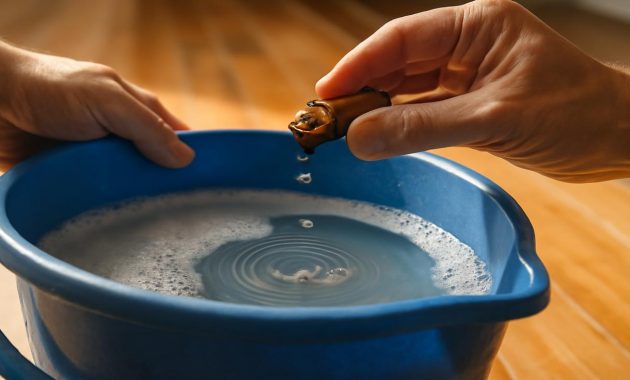
The first time I tried it, the house felt different before I even finished mopping the hallway. It wasn’t that sharp, nose-wrinkling tang of vinegar, or the citrusy blast of lemon that fades before you’ve put the mop away. It was softer, rounder—like walking into a quiet boutique hotel lobby or stepping into a sunlit cabin with freshly washed wood. Two tiny drops swirling in a cloudy mop bucket, and suddenly my entire home smelled as though I’d been deep cleaning for days instead of half an afternoon.
The Day My Mop Bucket Turned into a Tiny Apothecary
I used to treat mopping as a purely functional act. Water, some generic floor cleaner, a quick swish around the room—done. It smelled like “clean,” in the same faceless way a waiting room smells clean. No character, no warmth, just the faint chemical echo that tells you something has been sanitized.
But one damp Saturday, with the sky hanging low and gray over the street, I’d had enough of that sterile feeling. The house felt heavy. It wasn’t dirty, but it didn’t feel alive either. I craved that deep, satisfying sense that the air itself had been rinsed out and wrung dry.
I remembered a friend once saying, “You don’t need a new cleaner, you just need a scent you actually love.” Not the harsh vinegar that sneaks into your sinuses and lingers like a lecture, not the lemon that’s tried so hard it’s become a caricature of “fresh.” Something gentler. Warmer. More personal.
So I walked into my kitchen and did something I’d never done before: I treated my mop bucket like a mixing bowl. Warm water, my usual mild floor cleaner—unscented this time—and then, almost impulsively, I reached for a small amber bottle sitting by the kettle.
Two drops. That was it. The second they broke the surface of the water, the scent rose on the steam—slow, curling, inviting. It felt like stepping into a story, like a forest and a bakery and a library had all agreed to share the same air.
The Secret in the Bucket: Why Just Two Drops Work
The “secret” itself couldn’t be simpler: it’s all about concentrated, high-quality essential oils—specifically those that carry beautifully on damp air and cling gently to surfaces long after the floor has dried. Not vinegar. Not lemon. No harsh, overpowering sharpness. Just two drops of the right oil blend in your mop bucket, and your home can smell softly, consistently amazing for days.
Why only two drops? Because pure essential oils are incredibly potent. A single milliliter—barely more than a raindrop—can hold the aromatic expression of an entire handful of plant material. When those molecules meet warm water, they spread into the air with surprising intensity.
Use too much, and your home can smell like a perfume accident. Use just enough, and the effect is something altogether different: a quiet, cohesive atmosphere that wraps itself around you in the background, like a favorite sweater you forget you’re wearing until you notice how comfortable you are.
What makes this trick so satisfying is that you can personalize it. No two homes smell the same, and they shouldn’t. Your home can smell like a sunlit forest, a coastal breeze drifting through open windows, or a cashmere blanket in a cedar chest—simply by changing what goes into the bucket.
The Best Kinds of Oils for That “Days-Long” Effect
Some fragrances burn out quickly, like a match. Others glow slow and steady, like embers. For a scent that hangs around for days, you want oils that are a little heavier, more grounded—notes that cling to floorboards, baseboards, and the fibers in mats and rugs nearby.
Here are a few types of oils that tend to linger gracefully when used sparingly in mop water:
- Woody oils like cedarwood, sandalwood, or cypress add warmth and grounding, and they hang on surfaces for a long time.
- Resinous or balsamic oils such as frankincense or benzoin bring a deep, cozy sweetness that makes rooms feel hugged.
- Herbal oils like lavender or rosemary brighten the air without becoming sharp or sour, especially when mixed with woods.
- Soft floral notes like geranium or ylang-ylang add a whisper of elegance, not a perfume counter blast.
Mix them well, and you’ve got your own personal “home smell”—the one guests notice as soon as they cross your threshold and can’t quite identify, only that it feels good to breathe.
Crafting Your Signature Mop-Bucket Blend
The ritual began to grow on me. Instead of dreading mopping day, I started to look forward to it because it meant I could curate the mood of my house like a playlist. A rainy afternoon might get something deeper, more introspective. A bright morning, something green and breezy.
Think of your mop bucket as a little alchemy bowl: water, cleaner, and a quiet swirl of transformation. You don’t need thirty oils or a lab coat. Two or three carefully chosen oils and a gentle hand are enough.
Here’s a simple comparison of blends you can imagine using, and how they feel once they bloom across the floors and into the air:
| Blend Style | Example Oils (for 2 drops total) | How Your Home Feels |
|---|---|---|
| Calm Forest | 1 drop cedarwood, 1 drop lavender | Like a cabin with open windows and clean wooden floors. |
| Cozy Library | 1 drop sandalwood, 1 drop frankincense | Soft, warm, slightly resinous, like old books and polished wood. |
| Fresh Meadow | 1 drop geranium, 1 drop rosemary | Airy, green, and bright without smelling like cleaning spray. |
| Rainy-Day Comfort | 1 drop benzoin (or vanilla-like resin), 1 drop lavender | Softly sweet, comforting, like blankets and quiet music. |
The beauty is in the restraint. Two drops. Not five. Not ten. The scent should feel like it lives in the wood and tiles, not like it’s trying to escape your floors and shout at your nose.
How to Add Those Two Drops the Right Way
The process is simple, but each little step nudges the scent into the air in a gentler, more even way:
- Fill your bucket with warm (not boiling) water and your usual mild floor cleaner.
- Take your chosen oil or blend. Start with just two drops. You can always adjust next time.
- Drop the oil into the water after the cleaner is in; some cleaners help disperse the oils.
- Stir the water with the mop a few times, watching the surface turn slightly iridescent where the oil sits.
- Mop as usual, paying attention to how the scent follows you from room to room.
As the water dries off the surfaces, tiny aromatic particles remain, loosely bonded to the microscopic texture of your floors and baseboards. For the next few days, every time the room warms with sunlight, or a breeze moves through and stirs the air, the scent rises again—quiet but unmistakable.
The Way Scent Changes How a Home Feels
There’s something profoundly intimate about a home’s smell. Within a fraction of a second, it bypasses your sensible, logical brain and heads straight for memory, emotion, and instinct. A single breath can feel like a whisper from the past—your grandmother’s hallway, a childhood summer house, a friend’s kitchen where you always laughed too late into the night.
When you start using scent deliberately—not as a mask for odors, but as a gentle thread weaving through your daily life—it changes your relationship with your own space. Suddenly, mopping isn’t just a chore. It’s a chance to adjust the emotional temperature of your home.
Think about the rooms where you spend the most time. The living room where you curl up at the end of the day. The hallway that greets you first when you step through the door. The bedroom where you wind down, or the kitchen where mornings really begin. Imagine each of those spaces having a slightly different character, but all connected by the same underlying “you-ness.”
The best part about relying on your mop bucket for this quiet magic is that the scent is anchored to something real: clean surfaces. It’s not a plug-in humming away in the corner or a spray that hangs in the air for a grand total of six minutes. It’s literally built into the bones of the room, into the places you touch and walk and live.
No Vinegar, No Lemon, No Apologies
There’s nothing wrong with vinegar or lemon as cleaning companions. They’re classics. But they’re loud classics. Vinegar announces itself like a stern aunt who means well but does not know how to whisper. Lemon, especially in synthetic cleaners, often tips into that artificial, over-perky brightness that feels more like a commercial than a home.
When you skip them and choose quieter notes, your home starts to smell less like “something was cleaned here” and more like “someone thoughtful lives here.” You’re no longer covering up yesterday’s cooking smells or the ghost of wet shoes by the door; you’re inviting in warmth and ease in a way that doesn’t call attention to itself.
The air becomes a backdrop, not a headline. You walk through your own front door after a long day, and without registering why, your shoulders loosen. You breathe in, and your nervous system gets the message: This is a safe place. This is yours.
Tiny Ritual, Big Return
What surprised me most about the “two drops in the mop bucket” ritual wasn’t how good the house smelled. It was how grounding the act itself became. It’s such a small decision—unscrew a cap, tip the bottle, watch the glimmering drops fall—but it becomes a quiet promise to yourself and to the space you inhabit.
Instead of blasting the house with something you bought in a hurry and hoping nobody hates it, you’re choosing with intention. You’re asking questions each time:
- What kind of week have we had?
- Are we restless, tired, overstimulated?
- Do we need comfort, clarity, calm, or a little gentle uplift?
And then you answer, not with words, but with a tiny aromatic nudge. A resin here. A forest note there. A breath of something floral, or a whisper of herbs. A home is made of such quiet decisions: which corner gets the reading chair, which mug becomes the favorite, which lamp stays on late into the evening. Now, your mop bucket joins that list—not a chore tool, but a small, steady contributor to the mood of the place.
And for something that takes less than ten extra seconds and no extra physical effort, the return is almost suspiciously generous. Days later, you pad across the kitchen in bare feet and catch a faint echo of cedar or lavender rising from the boards, and you remember: I did that for us.
Listening to Your Home’s Nose
Every home has its own nose. Old houses with deep wooden bones like different scents than airy, modern apartments with sun bouncing off every white surface. Humid coastal homes cradle aromas in their walls differently than dry, mountain-side cabins.
Pay attention. Maybe the sandalwood that felt glorious in a tiny studio feels too heavy in your open-plan space. Maybe the geranium that was perfect in spring feels a little too floral at the heart of winter, when you’re craving smoke and resin and spice.
Use your mop bucket as your testing ground, not your final verdict. Two drops cost you almost nothing in terms of time or effort, but they tell you a lot. If, after a day or two, you find yourself still inhaling with pleasure when you step into the room, you’ve found a keeper. If not, adjust. Tilt more wood, less floral. Try an herb in place of a resin. Follow your nose the way you follow light when you’re choosing where to put a chair.
Frequently Asked Questions
Can I use any essential oil in my mop bucket?
Not quite. You want pure essential oils or high-quality blends meant for home use, not synthetic fragrance oils labeled only as “perfume oil.” Some synthetics can leave sticky residues or overwhelming scents. Start with reputable essential oils and always use them sparingly.
Will two drops really make a difference?
Yes. Essential oils are highly concentrated. Two drops in a bucket of warm water are often enough to scent several rooms subtly. If you don’t notice anything at all after mopping and the floors have dried, you can experiment with three drops next time—but increase slowly.
Is it safe for pets and children?
Safety depends on the specific oils and how sensitive your household is. Some oils are not recommended around certain pets (for example, some can be problematic for cats or small animals). Always research each oil first, use the smallest amount possible, and ensure good ventilation. If in doubt, choose very mild options like lavender and avoid strong, medicinal oils.
Can I skip the regular cleaner and use just water and oils?
Essential oils may smell wonderful, but they aren’t a full replacement for proper cleaning agents. It’s best to use your usual gentle floor cleaner for actual cleaning power, and treat the oils as a fragrant bonus, not the main act.
How often should I use oils in my mop bucket?
You can use them every time you mop, as long as you’re using tiny amounts. Many people find that once or twice a week is enough to maintain a consistent, pleasant background scent in their home.
Will the oils damage my floors?
In the tiny amounts described (two drops in a full bucket of water), most sealed floors are fine. Avoid pouring undiluted oils directly onto any surface, and if you have delicate materials like unfinished wood or specialty stone, test your mop solution on a small, hidden area first.
What if someone in my home is sensitive to smells?
Go extremely light, use the gentlest oils (like a single drop of lavender or a soft wood), and see how they respond. The goal is not a strong fragrance, but a hint of atmosphere. If even that is too much, it’s better to skip scented additions entirely and prioritize everyone’s comfort.
In the end, this tiny ritual—two drops in a mop bucket—becomes less about making your home smell “nice” and more about making it feel like a place you’ve truly listened to, cared for, and quietly tuned to match the life unfolding inside it.