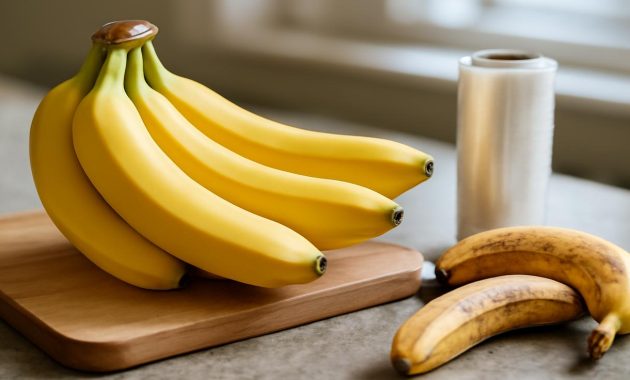
The bananas on my counter were dying in slow motion. You know that sickly, mottled brown that creeps in overnight? One evening they were sunshine-yellow, the next morning they looked like they’d lived three hard lives. I’d bought them with virtuous intentions—smoothies, oatmeal toppers, maybe even banana bread if I was feeling noble. Instead, I was staring at a bunch of fruit that had crossed from “perfectly speckled” to “only good for baking” in what felt like a blink.
That’s when a friend told me something that sounded like pure folklore: “You know,” she said, casually, “bananas can stay fresh for up to two weeks if you keep them with one simple household item.”
I laughed. Of course they can. And next you’ll tell me my basil will live forever if I whisper compliments to it. But curiosity is a loud thing, and later that night I found myself doing what we all do when a claim sounds too ridiculous to ignore: I tested it. One bunch of bananas went on the counter like always. The other bunch? That one got paired with a very ordinary item most of us already have at home.
Fourteen days later, I was still peeling bright yellow bananas from the “experiment” bunch. The control bunch, sitting naked and alone on the counter, had surrendered days earlier—sad, soft, and destined for the freezer bag of good intentions. The difference was almost absurd. One normal household item. Two extra weeks of fresh, firm fruit.
The Quiet Enemy Sitting Beside Your Fruit Bowl
To understand why this works, you first have to meet the invisible troublemaker that’s been running the show: ethylene gas. You can’t see it. You can’t smell it. But your bananas are producing it constantly.
Ethylene is a plant hormone, a natural chemical signal that says, “Ripen now.” Bananas are what horticulturists call “climacteric” fruit—once they’re harvested, they keep ripening off the plant, thanks to a burst of ethylene production. That’s why a green banana on Monday can be perfectly yellow by Thursday and starting to spot by Saturday.
Left to themselves, bananas are fairly reasonable about this process. But add other fruits into the mix—especially apples or already-ripe bananas—and things start to accelerate like a runaway train. Ethylene builds up around them. The peel turns freckled, then blotchy. The fruit softens, sugars intensify, and before you’ve even decided what to cook this week, they’ve gone over the edge.
The trick, then, isn’t to stop bananas from ripening. That’s their job; that’s what they’re meant to do. The trick is to slow them down. To nudge nature from “sprint” into “gentle walk.” And that’s where our humble household item enters the story.
The One Household Item That Buys You 2 Extra Weeks
Here it is, stripped of mystery: activated charcoal (often sold as activated charcoal odor absorbers or bags) can keep bananas fresh and yellow for up to two weeks by quietly soaking up ethylene gas and excess moisture from the air around them.
Not charcoal briquettes, not whatever’s left from last summer’s barbecue—this is activated charcoal: ultra-porous carbon, usually sold in small breathable pouches or canisters that people stick into closets, fridges, or shoes to absorb odors. Those millions of microscopic pores don’t just pull in smells; they’re incredibly good at grabbing stray molecules from the air—including the ethylene that bananas release as they ripen.
When you place one of these little charcoal pouches near your bananas, you’re essentially putting a sponge in the air. As ethylene builds up around the fruit, the charcoal quietly drinks it in, lowering the concentration of that ripening hormone around your fruit bowl. Your bananas are still alive. They’re still ripening. They’re just doing it at half-speed, as if someone turned down the volume on time.
The first time I tried it, I used a small cloth bag of activated charcoal I’d originally bought to de-funk my refrigerator. I set it right next to a bunch of just-turning-yellow bananas and left another bunch a few feet away on the same counter, no charcoal, nothing fancy. Within five days, the control bunch was dotted all over with brown freckles, soft to the touch, and leaning toward that familiar “use-me-now-or-regret-it” stage. The protected bunch? Still bright, firm, and utterly defiant.
How to Set It Up at Home
You don’t need any special contraptions. Here’s the simple setup that works in most kitchens:
- Get a small activated charcoal pouch or odor absorber (the kind made for closets, refrigerators, or shoes).
- Place your bananas on a cool counter or hang them on a banana hook.
- Set the charcoal pouch right beside them—within 5–10 centimeters is ideal.
- Keep them away from other ethylene-heavy fruits like apples, pears, or ripe avocados.
- Check your bananas every day or two; you’ll see them ripen slowly instead of racing ahead.
If your kitchen gets a lot of sun, tuck the bananas into a shaded corner. Sunlight and heat are like an enthusiastic cheerleading squad for ripening; charcoal can slow time, but it can’t rewrite physics.
What Two Weeks of “Slowed Time” Really Looks Like
Numbers don’t fully capture how satisfying this is, but they help tell the story. This is roughly what I observed over repeated trials—bananas with activated charcoal nearby versus bananas left on the counter with nothing but good intentions.
| Day | Bananas with Activated Charcoal | Bananas Without Charcoal |
|---|---|---|
| 1–3 | Green to just-yellow, firm, no spots. | Turning yellow, a few faint freckles by day 3. |
| 4–6 | Bright yellow, very firm, rarely any browning. | Medium spotting, softening noticeably. |
| 7–10 | Fully yellow, just starting to freckle at the tips. | Heavy browning, strong smell, often too mushy for eating fresh. |
| 11–14 | Lightly speckled, still sliceable and pleasant to eat. | Overripe, collapsing, good only for baking or freezing. |
Of course, your exact timing will depend on how ripe the bananas were when you brought them home and how warm your kitchen is. But the pattern is remarkably consistent: with activated charcoal nearby, bananas behave like they’ve entered a slightly cooler, calmer world—where they’re in no rush to leave their perfect-yellow phase.
The Sensory Difference You Can Actually Taste
This isn’t just a visual trick. You can feel, slice, and taste the difference. Think about the banana you like best. Maybe it’s that moment when the peel is a pure, matte yellow, the fruit inside still with a little bite, sweet but not syrupy. Without any intervention, that stage might last a day or two at best—blink and you miss it.
With charcoal quietly working in the background, that “sweet spot” stretches. Peel a banana on day eight and you’re still rewarded with that soft snap as the stem breaks open, not the reluctant tear of a fruit already collapsing into itself. The flesh slices neatly for topping yogurt or toast, the edges holding their shape instead of turning watery and translucent.
Even the smell is different. Bananas in full, rapid-ripening mode have a heady, almost fermented aroma that fills the kitchen. Bananas ripening slowly retain a gentler perfume—sweet, yes, but restrained. It’s the difference between a fruit that’s relaxing into ripeness and one that’s rushing toward decay.
Pairing Nature and Habit: A New Rhythm for Your Kitchen
Once you start buying yourself two extra weeks with every bunch, your whole rhythm with bananas changes. No more mental calculus in the grocery aisle, squinting at the shades of green and yellow, trying to guess what state they’ll be in next Tuesday. No more resigned sigh when you realize three bananas have crossed the point of no return while you weren’t looking.
The slow-ripening effect gives you room to be casual again. You can buy a full bunch without worrying you’re making a commitment. You can keep bananas on hand for breakfasts, snacks, and spontaneous baking without having to plan your week around their moods. And you can waste a lot less food.
There’s also a small but profound psychological shift that happens when the things you buy last longer. Food waste carries a quiet weight. Every time we toss something soft and brown and unused, there’s a faint sting of guilt: money lost, potential meals never made, a tiny nod to the sheer effort it took to grow that fruit in the first place. Stretching your bananas’ life by two weeks won’t fix the food system, but it does gently bend your daily life toward respect—for what you buy, what you eat, and what you throw away.
Simple Extras That Make the Trick Even Better
Activated charcoal does the heavy lifting, but a few tiny habits can help it work even better:
- Hang your bananas if you can. A hook keeps bruises away and lets air move freely around them.
- Keep them out of the fruit bowl if that bowl holds apples, pears, or ripe stone fruit. Those neighbors are ethylene factories.
- Move them away from the stove. Every degree of warmth hurries the process.
- Rotate the bunch every day or two so no single side gets too much warmth or pressure.
- Replace or “recharge” the charcoal according to the package directions—most can be refreshed by leaving them in the sun for a few hours.
None of this is fussy. You’re not building elaborate contraptions or wrapping each banana like a fragile artifact. You’re just setting up a tiny, invisible buffer between your fruit and the forces that want to hurry it along.
What About All the Other Banana Hacks?
Maybe you’ve heard of some of the common banana-saving tricks, and you’re wondering how this one fits in. You’re not wrong to ask. The internet is crowded with half-true, sometimes contradictory banana lore.
Tape on the Stems
Wrapping the crown of the bunch in plastic wrap or tape does help—a little. Most ethylene is produced and released from the stem area, so covering it can slow the spread to the rest of the fruit. But it doesn’t remove ethylene from the air; it just reduces how much escapes from the top. The bananas will still eventually produce and bathe in their own gas. It’s like closing a door in a room where the heater is already on—it slows the draft but doesn’t shut off the source.
Fridge or No Fridge?
Refrigeration is another half-truth. Cold slows ripening inside the fruit, but damages the peel, causing it to turn dark and sometimes almost black. You can absolutely put fully ripe bananas in the fridge to stretch their life—the inside often stays fine while the peel looks catastrophic—but it’s not ideal if you want attractive, cheerful-looking fruit on the counter.
With activated charcoal, you don’t have to hide them. They can sit right where you’ll reach for them most, visible and inviting, without racing straight to mottled brown.
Paper Bags and Traps You Don’t Want
A classic tip for ripening hard fruit is to trap them in a paper bag with an apple or an already-ripe banana. That’s great when you want to speed things up, but it’s the opposite of what you’re doing here. Paper bags keep ethylene in; charcoal takes it out. One is the accelerator, the other the brake.
The Small Ritual of Choosing Your Bananas
Now that you know the science and the trick, there’s one last piece of the story: how you choose your bananas in the first place.
The market is a forest of greenish curves and golden crescents. Maybe you’re the person who hunts for the just-beginning-to-blush bunch—the ones with a hint of green at the tips that promise a future, not just a present. Or maybe you like them already bright yellow because you have a smoothie to make tomorrow at dawn.
With activated charcoal waiting at home, you get to choose freely. If you prefer a slower, more graceful ripening, choose greener bananas and give the charcoal even more time to work. They’ll come into themselves quietly over days, not hours, and hold that sweet stage far longer than you’re used to seeing.
And if you buy them already yellow? You’re still buying time. When we’re not managing a daily race between perfect and overripe, we suddenly have space to enjoy the fruit instead of outsmart it. You might find yourself adding slices to cereal more often, or eating them plain at the window in the afternoon light, unhurried, unplanned.
That’s the secret joy hidden inside this one small trick: it doesn’t just change your bananas. It changes your relationship with ripeness, with planning, with waste. It gives you a long, quiet two weeks with a fruit that usually rushes through your life like a brief, bright guest.
FAQ
What is the household item that keeps bananas fresh for up to 2 weeks?
The item is activated charcoal, usually sold in small breathable pouches or odor absorber bags. Placed near your bananas, it absorbs ethylene gas and excess moisture, slowing down the ripening process and keeping them yellow and fresh for much longer.
Can I use regular charcoal from my grill instead?
No. Regular charcoal briquettes for grilling are not suitable. They’re often treated with additives and don’t have the same ultra-porous structure as activated charcoal. You need food-safe or household-grade activated charcoal designed for odor absorption.
How close should the activated charcoal be to the bananas?
Keep the pouch very close—ideally within 5–10 centimeters. You don’t need to touch the bananas with it, but it should share the same small “bubble” of air so it can absorb the ethylene they release.
Is it safe to keep activated charcoal near food?
Yes, as long as the charcoal is in a sealed, breathable pouch or container intended for household use and not in direct contact with the edible part of the food. Don’t open the bag or sprinkle the charcoal onto your fruit. Just let it sit nearby.
Do I still need to avoid keeping bananas near other fruits?
It’s a good idea. Apples, pears, ripe avocados, and some stone fruits release a lot of ethylene, which can overwhelm the charcoal’s capacity. For best results, give bananas their own space with the charcoal pouch beside them.
Will this work for other fruits and vegetables too?
Activated charcoal can help slow ripening and reduce odors for other ethylene-sensitive produce, but the effect and timing vary by fruit or vegetable. Bananas are especially responsive because they produce significant ethylene and ripen quickly, so the difference is easiest to see with them.
How long does the charcoal pouch last?
Most activated charcoal odor absorbers last for several months, sometimes up to a year, depending on the brand and conditions. Many can be “recharged” by placing them in direct sunlight for a few hours to release trapped gases and moisture. Check the instructions on your specific product.
Will this stop bananas from ever turning brown?
No. It won’t freeze them in time. Bananas are living fruit and will eventually ripen and brown. Activated charcoal simply slows the process dramatically, often stretching the “perfect eating” window and delaying heavy browning by many days.
Should I still put ripe bananas in the fridge?
You can. If your bananas are at peak ripeness and you want to hold them for even longer, you can move them to the fridge. The peel may darken, but the inside usually stays good. Using charcoal on the counter first, then refrigerating if needed, gives you the longest useful life overall.
Do I need to wrap the banana stems if I’m using charcoal?
You don’t have to. Wrapping stems with plastic wrap or tape can provide a small extra benefit, but activated charcoal already does most of the important work by absorbing ethylene from the surrounding air. If you like simple routines, charcoal alone is usually enough to see a clear difference.