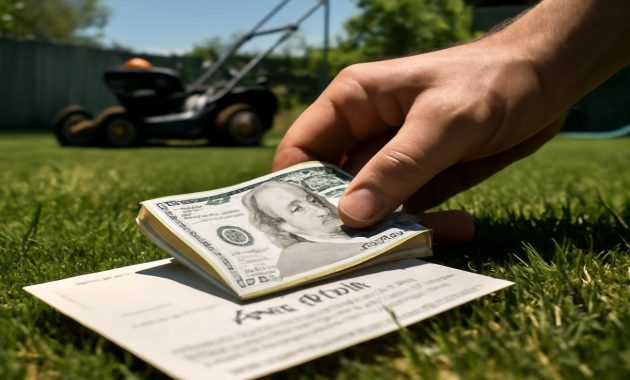
The first thing you notice is the silence. It’s a bright Saturday in late February, sun hanging high like a spotlight, and for the first time in as long as you can remember, the neighborhood is not roaring. No two-stroke engines, no distant grumble of ride-ons circling fenced yards, no sharp whine of trimmers shaving along sidewalks. Between noon and 4 p.m., the soundscape has changed—and not by accident. A new rule, fresh on the books as of February 15, has swept through your town and others like it: lawn mowing is now banned in the peak midday hours, and fines are no longer a vague threat. They’re real, enforceable, and coming to a yard near you.
The Rule That Stopped the Mowers
When the ordinance passed, it felt at first like a rumor, the kind of neighborhood gossip that grows a little more dramatic every time it’s shared. “They’re banning lawn mowers,” someone said. “You’ll get fined if your grass is over three inches,” said another. The reality is more precise—and stranger in its own way. You can still coax your lawn into manicured submission; you just can’t do it between noon and 4 p.m. from now on, at least not without risking a ticket.
The new rule, taking effect on February 15, is simple on paper: no motorized lawn mowing, edging, or trimming between 12:00 p.m. and 4:00 p.m. on any day. Violate it, and you may face a fine, escalating with repeat offenses. Municipal inspectors, code‑enforcement officers, and occasionally even police are empowered to issue citations. What was once a personal weekend ritual has suddenly become a matter of public timing.
On the surface, it sounds like another piece of bureaucratic meddling. But spend a little time in this enforced quiet, feel the way the air shimmers undisturbed over sun‑struck lawns, and a more complicated story begins to emerge—one about heat, water, noise, wildlife, and the uneasy future of the American yard.
Why Noon Matters More Than You Think
If you stand in the middle of your yard at 1:30 p.m., you’re standing in the crucible of the day. The sun is high, shadows are short, and the grass under your feet is doing its best impression of a living solar panel, absorbing light and converting it to energy. It’s a fragile, intense moment in the daily rhythm of your little ecosystem, even if you’ve never thought of it that way.
Scientists and city planners have been thinking about it a lot. Midday is when heat stress peaks—for people, for pets, and for plants. Lawns cut during the hottest hours experience more evaporation and water loss. Each clipped blade exposes tender, shaded tissue suddenly to direct UV radiation and dry air. Grass doesn’t “bleed” the way we do, but it does respond, closing tiny pores, curling slightly at the tips, going into protective mode. Mowing then is like asking someone to run wind sprints at high noon in August.
Think, too, about what powers most lawn mowers. Gas engines running under a blazing sun spit out exhaust close to the ground layer where children play, dogs sniff, and pollinators hover. The heat they emit adds to the local temperature in a small but very real way. On streets already trapped in the urban heat island effect—where asphalt, rooftops, and concrete hold and radiate warmth—these little bursts of engine heat and emissions matter more than you might guess.
The noon‑to‑4 window is also when air quality can be at its most fragile. Ozone forms more easily, particulates linger, and the layer of air you actually breathe becomes thicker with invisible stress. Add hundreds or thousands of little engines going at once, and you get an avoidable spike at exactly the wrong time of day. The new rule aims a quiet, targeted blow at that problem.
Heat, Water, and the Hidden Cost of a Perfect Lawn
Walk barefoot on a lawn that was mowed at 7 a.m.—the blades are soft, cool, maybe still beaded with dew. Touch that same lawn at 2 p.m. right after a fresh cut; it’s pricklier, sharper, and often browner by evening, especially in dry spells. That’s not just your imagination. Grass that’s cut in peak heat loses moisture more quickly, making it more dependent on your sprinkler system to recover.
In many communities, this timing ban is part of a broader strategy to reduce water use without explicitly telling people they can’t have lawns at all. By pushing mowing into cooler hours, cities quietly nudge homeowners to treat their yards more gently, which reduces the urge to overwater. Less midday mowing means less midday watering, too—because you can’t run your sprinklers during or immediately after cutting without turning your yard into a muddy mess.
Consider the small, daily decisions that add up: an extra half‑hour with the hose “just in case” after you mow in the heat, a second cycle on the automated system when the grass looks stressed at sunset. Heat‑stressed turf almost begs you to compensate with water, and many of us do it without thinking. Changing when we mow can break that feedback loop.
Some cities ran the numbers before proposing the rule. They looked at patterns of water use, spikes in energy consumption from air conditioners trying to compete with radiating yards, and the days with the worst heat indices. Noon to 4 p.m. was the hotspot—literally and figuratively. Move the mowing, and you shave a little off several curves at once: water, electricity, emissions, and even noise complaints.
The Sound of an Afternoon Without Engines
It’s easy to forget how loud we are until we stop. When you stand still in the newly quiet hours, you can suddenly hear everything else: the raspy rattle of cicadas, the squeaky chatter of sparrows flitting through a hedge, the low murmur of wind pushing through the canopy of a maple. There’s still noise—car doors, distant traffic, maybe a basketball thudding in a driveway—but the continuous, droning hum is gone.
Noise is not just an annoyance; it’s a form of pollution. Studies have shown that chronic exposure to loud mechanical sound can elevate stress hormones in humans and disrupt the behavior of birds, insects, and small mammals. That weekend symphony of blowers, edgers, and mowers may seem trivial compared to jet engines or highways, but in suburban soundscapes, it’s often the dominant note.
The new rule doesn’t silence the neighborhood completely. Morning and late afternoon may still buzz with the familiar chorus of yard care. But it carves out a protected quiet zone in the hottest part of the day, a sacramental pause in which the non‑human world has a little more room to breathe, feed, and communicate. Birds that had grown used to shouting over machinery can reclaim the sonic space for courtship songs and alarm calls. Bees and butterflies, already vulnerable to pesticides and habitat loss, can forage without the sudden blast of an engine a few feet away.
Ask someone sensitive to sound—the work‑from‑home parent on endless video calls, the night‑shift nurse sleeping at noon, the elderly neighbor who spends her afternoons on the porch—and you’ll hear another layer of relief. “I didn’t realize how much it was wearing me down,” they might say. “I just thought that’s what Saturdays sounded like.”
The Fine Print: What Homeowners Actually Face
Of course, not everyone is listening to birdsong. Some homeowners are listening for the creak of a code officer’s car door and worrying about their wallets. Fines turn a gentle suggestion into a hard rule, and that changes the mood fast.
While the exact dollar amounts and enforcement methods differ by municipality, the broad outlines are similar. A first offense may earn you a warning or a modest ticket. A second offense can grow steeper, and chronic rule‑breakers can find themselves in genuine financial trouble, especially if citations stack across a season.
| Violation | Typical Consequence |
|---|---|
| First offense (noon–4 p.m. mowing) | Written warning or small fine |
| Second offense in same season | Moderate fine; notice on record |
| Multiple repeat offenses | Higher fines, potential hearing |
| Commercial operator violations | Larger fines; business citation risk |
For lawn‑care companies, the stakes are even higher. Many built their whole business around the midday window when residents are at work and yards are free of kids and pets. Now they’re scrambling to rearrange routes, starting earlier, ending later, or switching some clients to different days. Some crews talk about “racing the clock” in the morning, trying to squeeze in as many lawns as possible before the noon cutoff. That rush brings its own safety concerns and pressures.
Homeowners, meanwhile, are adjusting to a different rhythm. The retiree who always liked to mow after lunch must now rise earlier or wait until late afternoon. The weekend warrior who once powered through yard work between 1 and 3 p.m. before heading to a soccer game finds those habits colliding with the new reality. There’s a sense of loss, of something taken away, even if what’s gone is the freedom to make noise at a particular slice of the day.
Annoying Rule or Unexpected Gift?
Yet in conversations over fences and on neighborhood message boards, another tone is emerging—something like reluctant curiosity. What if this rule, for all its annoying precision, is an invitation in disguise?
With the no‑mowing window in place, some people are discovering a strange luxury: four hours when they simply can’t do that one chore that always hangs over the weekend. You can weed in the shade, sure, or clip a few branches by hand. But the main event is off the table. You’re free, in a narrow, specific way. Free to sit on the porch and watch the sunlight move across the lawn, to listen to the afternoon settle in without the competing roar of small engines.
You might notice things you never saw before. The way the neighbor’s oak casts a lattice of shadow that creeps over your yard by 2 p.m., creating a gradient of green from bleached lime to deep emerald. The tiny city of ants under the stepping stone you always meant to reset. The goldfinch that lands on the highest stem of a dandelion, bobbing there like a bright, living exclamation mark.
There’s a mental shift, too. When mowing is confined to cooler hours, you start planning around dawn light and evening calm. The work becomes a little more intentional, less of a default midday obligation. You may find yourself asking: how short do I really need this grass? Could I let a corner grow a bit taller for the bees, or replace a swath with native perennials that don’t need such constant trimming?
Rethinking What a “Good” Yard Looks Like
The classic lawn—close‑cropped, uniform, bright green, and almost eerily tidy—was born in a climate of cheap water, cheap fuel, and a cultural obsession with control. That picture is starting to blur at the edges. The new mowing rule doesn’t outlaw that ideal, but it does gently tug at it, reminding us that every postcard‑perfect yard has a cost beyond the price of fertilizer.
Spend any time with landscape ecologists, and you’ll hear a theme: diversity. A yard that hums with life rarely looks like a golf green. It has edges, textures, layers. Taller grass in some spots, clover mixing with turf, a patch of milkweed or coneflowers where monarchs and bees wobble from bloom to bloom. These yards use less water, need fewer chemicals, and, crucially, require less mowing. When you mow less often—and at cooler, more forgiving hours—you align your rhythms with the land’s, rather than constantly fighting them.
The noon‑to‑4 ban nudges homeowners to ask: Could I live with a different kind of neat? One where a lawn is not a carpet, but a canvas. Not a flat, controlled surface, but a living, shifting community. As deadlines slide to early mornings and dusky evenings, some people are experimenting: raising mower blades a notch, skipping a week, letting a strip along the fence grow into a whisper of meadow.
There’s irony here, of course. A law framed as “bad news for homeowners” could, over time, become a backdoor into a more relaxed, less perfectionist relationship with our yards. The grass doesn’t have to be an enemy encroaching on our control; it can be a partner, a softly breathing green ally that asks a little less of us when we ask a little less of it.
The Bigger Climate Story in Your Backyard
Looked at in isolation, banning lawn mowing between noon and 4 p.m. is a small, almost fussy adjustment. But your yard is not isolated. It’s a tile in a vast mosaic. Multiply your decisions by thousands of households, and suddenly the pattern shifts.
Each lawn mowed at dawn instead of 1 p.m. means slightly cooler afternoon surfaces, slightly less strain on air conditioners in the house nearby. Each skipped midday mow prevents a little burst of emissions in an hour when the sky is already struggling to keep its chemistry in balance. Each homeowner who rethinks their lawn because the new timing is inconvenient might plant a tree, add a rain garden, or shrink the turf footprint by a few feet. None of those actions alone will rewrite the climate story—but together, across cities, they can change the script.
Meanwhile, the silence settles in. The noon sky pulses with heat, but the yards rest. Grass blades hold their water a bit longer, wildflowers tilt toward the light, and a dragonfly hangs in the still air over an uncut strip of clover. Somewhere, a code enforcement officer drives past yet another quiet block and makes no notes at all. The bad news for homeowners turns out to be, in many ways, good news for the little patch of earth we call home.
Frequently Asked Questions
Why was lawn mowing banned between noon and 4 p.m.?
The rule targets the hottest, most polluted part of the day. By banning mowing from noon to 4 p.m., cities aim to reduce heat stress on plants and people, lower emissions from small engines, protect air quality, cut water use, and reduce noise during a sensitive time for both humans and wildlife.
Does the rule apply every day, including weekends?
Yes, in most areas adopting this approach, the restriction applies seven days a week. However, exact details can vary by municipality, so it’s important to check your local ordinances or homeowner association guidelines.
Can I use manual tools like reel mowers or hand clippers during the ban?
Typically, the rule focuses on motorized equipment such as gas and electric mowers, trimmers, and blowers. Non‑motorized tools are usually allowed, since they don’t generate noise or emissions. Always confirm with your local regulations to be sure.
What happens if I accidentally mow during the restricted hours?
Most communities issue a warning for the first violation, especially early in the season as residents adjust. Repeat offenses are more likely to result in fines, which can increase with each additional violation. Ignoring citations can lead to more serious penalties.
How can I adjust my routine to comply with the new rule?
Plan your mowing for early mornings or late afternoons, when temperatures are cooler and the grass is under less stress. Consider mowing less frequently, raising your mower height, or converting some lawn areas to low‑maintenance plantings that need minimal cutting.
Is this rule permanent or just a seasonal measure?
Many communities introduce it as a season‑long or permanent ordinance, especially in regions facing chronic heat and water issues. Some areas may limit it to peak summer months. Check the effective dates in your local law to know when it applies.
Will this really make a difference for the environment?
Individually, shifting your mowing time seems small. Collectively, across thousands of homes and businesses, it can significantly reduce noise, localized heat, emissions, and water use during the most vulnerable hours of the day. Your single yard is part of a much larger landscape, and the timing of your mower now plays a subtle but meaningful role in its health.