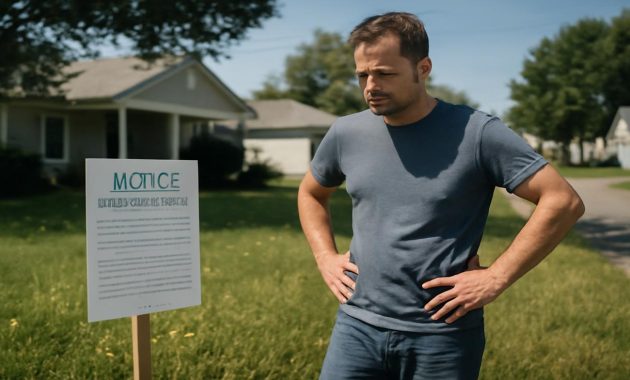
The sound you don’t hear is the first thing that feels strange. It’s a Saturday in late February, the sun is climbing high, and somewhere a song sparrow is testing out its spring voice. The air smells faintly of wet soil and thawing leaves. Cars roll by, kids shriek in distant backyards, a delivery truck groans up the hill. But the one noise that has defined suburban afternoons for decades—the sharp, buzzing snarl of a lawn mower—is conspicuously missing. Noon slides past, then one, then two. The quiet holds like a new kind of weather.
The Rule That Turned the Lawn Mower Off
On February 15, a change that had been simmering for months quietly took effect: a new rule banning lawn mowing between noon and 4 p.m., with fines waiting for anyone who ignores it. No more mid-day mow-and-blow marathons. No more revving up the mower at lunchtime because the forecast says rain at five. No more “I’ll just squeeze it in real quick” while the sun is at its brightest and the neighborhood is at its loudest.
To many homeowners, it landed like bad news wrapped in bureaucratic language. Another restriction. Another thing to remember. Another reason to double-check the clock on a Saturday. The comfort of habit—step outside, start the engine, walk neat lines across the lawn—suddenly has a time limit, one that cuts straight through a window that used to feel like prime yardwork time.
The rule is simple on paper: no mowing between 12:00 p.m. and 4:00 p.m., enforced with fines that can sting enough to get your attention. For some municipalities and communities, it came via local ordinance. For others, it’s baked into HOA regulations or environmental noise rules snapping into stricter focus. However it arrived, the effect in neighborhoods is startlingly similar: a quiet, almost eerie pause in the daily soundtrack of suburban life.
It feels, at first, like a punishment. For years, the lawn has been a chore you could fit into the odd corners of the day. Many people work early, commute long, shuttle kids around. Those four hours often felt like one of the few predictable windows where sun, time, and energy lined up. Now, the law says: not anymore.
The Backstory: How a Lawn Became a Problem
To understand why a rule like this would even exist, you have to step back and look at the ordinary American lawn the way a biologist, a climate scientist, or a sleep-deprived neighbor might see it.
On a summer weekend, walk down almost any street. Mowers growl, leaf blowers howl, trimmers whine against fences and stone. Grass clippings dust the air, and that sharp, green smell of chlorophyll-overdrive hangs in the sunlight. It’s normal. It feels inevitable. But normal doesn’t always mean harmless.
Gas-powered mowers—still the backbone of yard care in many areas—emit a mix of pollutants: carbon monoxide, volatile organic compounds, nitrogen oxides, and fine particulates. The engines are small, often inefficient, and frequently poorly maintained. Some studies have suggested that an hour of mowing with a gas push mower can produce emissions comparable to driving a car for hundreds of miles. When those mowers are roaring in the early afternoon, under intense sun and heat, the air chemistry shifts, and those emissions help cook up ground-level ozone and smog.
Noise is its own kind of pollution. The whine of a two-stroke engine can cut through walls and windows, driving pets wild, interrupting naps, jarring nerves. If you’ve ever tried to put a baby down for sleep at one in the afternoon and heard your neighbor’s mower spring to life, you know how long a twenty-minute mow can feel.
Then there’s the grass itself. Mowing in the brightest, hottest part of the day can stress lawns, especially as summers turn hotter and drier. The blades lose moisture faster, soil dries out more quickly, and the plants get hit with a one-two punch of mechanical injury and intense sunlight. A once-weekly ritual becomes a subtle contributor to the slow decline of the very lawn you’re trying to maintain.
The rule that now bans mowing between noon and four isn’t just about noise, or air, or grass. It’s about all of those at once. It’s a lever that policy makers, local councils, and environmental boards can pull to nudge people’s habits into a shape the landscape can better tolerate.
What Homeowners Are Really Worried About
Yet most people don’t think in terms of particulate matter or soil moisture when they drag the mower out of the shed. They think in terms of time—and the chronic lack of it.
If you work a typical weekday schedule, weekends are your window. If you’re juggling kids’ sports, errands, and maybe a few minutes of something you actually enjoy, lawn care doesn’t politely schedule itself at dawn or dusk. It ends up whenever you can squeeze it in—often between noon and four.
Now, with fines in the picture, the stakes feel higher. Some towns have set penalty structures that escalate quickly: a warning, followed by a modest fine, and then steeper numbers for repeat offenses. Others are leaving enforcement largely complaint-based. Your neighbor hears your mower at 1:30 p.m., calls it in, and suddenly your Saturday project is also a line item in your budget.
There’s also the emotional layer. Yards are personal. They’re where you teach your kid to ride a bike, where the dog patrols the fence line, where you set up a grill under the maple tree. A rule that seems to pry into what you can do, and when, within your own patch of green can feel like an intrusion.
Imagine: it’s late May. The grass has gone from pleasantly shaggy to undeniably unruly. A stretch of forecasted rain looms. Your morning gets eaten by a last-minute work email and a grocery run that turns into a half-day event. By the time you’re ready, the clock reads 12:07. Your mower waits there, staring at you like a dare. Do you risk the fine and mow? Or watch the grass gain another two inches by Tuesday?
Suddenly, being a “good neighbor” and a “law-abiding homeowner” and someone who doesn’t live in a jungle of fescue starts to feel like a three-way tug-of-war.
A Quiet Afternoon: What the Rule Changes on the Ground
Walk through a neighborhood now, just after lunch, and you can feel the shift. Without the drone of engines, other sounds sharpen into focus. The ticking of cooling car engines. The hum of an air conditioner. The clatter of a screen door. A crow arguing with a squirrel. The world seems, in a subtle way, more three-dimensional.
For wildlife, that quiet isn’t just pleasant—it can be a lifeline. Birds communicate more easily without constant mid-day mechanical noise. Pollinators buzz through clover and dandelions without having their territory periodically flattened. Even small mammals—from rabbits to chipmunks—get a break from dodging steel blades during the hottest, most stressful part of the day.
Humans feel it too. Naps last longer. Outdoor lunches on patios don’t have to compete with the soundtrack of combustion engines. Residents who work night shifts find a little more daytime dark and quiet. Nurses coming off twelve-hour shifts, warehouse workers heading home with ringing ears, new parents patting colicky babies—this rule, for them, is less a burden and more a kind of permission to rest.
And for all the talk of lawn health, it does make a difference. Mowing in the cooler hours—early morning or late afternoon—causes less stress to turf. Grass loses less moisture, recovers faster, and is less prone to sunburn at the freshly cut tips. Lawns may, ironically, look better under a regime that tells you not to mow in the middle of the day.
Finding New Rhythms for an Old Chore
Still, the reality is that the grass will keep growing, rules or no rules. So homeowners are doing something humans are very good at when pressed: adapting.
Some have shifted their schedules earlier, trading in lazy weekend mornings for dew-damp mowing sessions. You can see them at 7:30 a.m., jackets zipped against the lingering chill, pushing mowers through mist that rises like breath from the lawn. Others have migrated to the golden hours—those long, leaning rays of late afternoon—letting the sun slide lower before pulling the starter cord.
A surprising number of people are experimenting with something they used to dismiss as a novelty: electric mowers. Quieter, cleaner, and often lighter, they slip more easily into neighborhood soundscapes. While the new rule doesn’t care what kind of mower you use between noon and four—gas, electric, or the old-fashioned reel—it does nudge people to think about the broader impact of that machine resting in the garage.
And then there are the people who are rethinking the lawn itself.
Instead of fighting for a perfect, closely shaved expanse of uniform grass, more homeowners are letting clover creep in, planting native groundcovers, or allowing small strips to grow just a bit wilder. The less manicured the yard, the less often it needs to be cut. The less often it needs to be cut, the fewer scheduling gymnastics this rule demands.
For some, it starts with a small experiment. A side yard left to grow taller. A front corner where wildflowers get a chance. Maybe a soccer-ball-sized patch of lawn converted into a herb bed or pollinator garden. One tiny escape route from the relentless push to mow everything as short as possible, as often as possible.
When you’re no longer able to fire up the mower whenever it suits you, you start asking better questions: How much of this grass do I really need? Who am I maintaining it for? And is there something more interesting, more beautiful, and more alive that could live here instead?
How the Fines Actually Work (And Who’s Watching)
The specter of fines is often what gets everyone’s attention, but the reality on the ground is more nuanced. While details vary by locality, a typical pattern has emerged.
First, enforcement is usually complaint-driven. That means no one is prowling the streets at 1:05 p.m. with a stopwatch and citation pad, listening for muffled engine noise behind your azalea hedge. Instead, your neighbors become the unofficial first line of enforcement. If someone is bothered enough to report you, that’s when your name may land on a list.
Second, many areas use a tiered system of consequences. A first violation might generate a warning—a letter, an email, or a polite but firm notice. Only if you repeat the behavior do actual fines swing into place. Those fines vary, but they’re often calibrated to hurt just enough that you don’t shrug them off.
To give you a simplified picture of how this can look, imagine something like this:
| Violation Count | Typical Response | Approximate Fine Range |
|---|---|---|
| 1st Violation | Written or verbal warning | No fine or a small administrative fee |
| 2nd Violation | Formal citation | Modest fine (often in the low double digits) |
| 3rd Violation | Escalated citation | Higher fine, potentially recurring |
| Repeated Offenses | Possible additional penalties per local rules | Substantial fines; may accumulate by day |
This is not a universal template, but it reflects a common approach: start gentle, then sharpen. The message is clear: this isn’t a suggestion. It’s a new norm.
That complaint-based model, however, also reveals something else: this rule isn’t just between you and a law book. It’s between you and the people whose windows look out on your yard, whose kids play on the sidewalk in front of your house, whose porches sit within earshot of your Saturday to-do list. It’s a social contract thinly veiled as an ordinance.
From Bad News to a Different Kind of Afternoon
In the first weeks after February 15, the conversations at hardware store counters, HOA meetings, and backyard fences leaned heavily toward frustration. “Who comes up with this stuff?” “What are we supposed to do, let the grass take over?” “We work during the week—when else are we supposed to mow?”
Yet as the calendar flips forward, something else begins to surface alongside the grumbling: a strange, reluctant sense of relief.
Because when the law tells you that you can’t mow right now, something else quietly opens up: time you no longer feel guilty about not spending behind a mower. A block of hours that used to be the default for yardwork gets handed back to you, wrapped in a “you’re not allowed to” that feels, if you tilt it just right, suspiciously like “you’re off the hook.”
Suddenly, noon to four becomes a zone reserved for other things. A slow lunch on the back steps, watching sunlight move across the fence. A book in a patio chair, the pages ruffling in the mild breeze. A game of catch on the grass that, yes, is a bit taller than you’d prefer, but softer underfoot. A nap with the windows open to birdsong instead of engines.
And if your lawn does grow taller between Friday and Monday? The earth does not fall out of orbit. Your neighbors may not even notice. The dandelions might, but they’re thrilled. Bees, too.
Bad news for homeowners, at first glance, often means bad news for the routines we’ve grown used to defending. This rule challenges the story that the lawn must always come first—that its tidiness is a moral obligation rather than a cultural habit. It invites you, awkwardly and a bit uncomfortably, to imagine afternoons shaped by something other than engine noise and grass clippings.
The mowers still have their place. Early mornings will hum. Evenings will buzz. But the middle of the day—those four hours of newly enforced stillness—now belongs to something quieter, slower, and, if you give it a chance, gentler on your nerves, your neighborhood, and the small patch of living earth under your feet.
Frequently Asked Questions
Why was the noon to 4 p.m. window chosen for the mowing ban?
This time of day typically combines peak heat, higher air pollution formation, and the greatest potential for noise disturbance. Cutting mowing during these hours reduces stress on lawns, limits the role of small engines in mid-day smog formation, and creates a quieter period for residents and wildlife.
Does the rule apply to electric and battery-powered mowers too?
In most cases, yes. The rule is usually written around the act of mowing—regardless of the type of mower. However, electric mowers still help overall by reducing emissions and often generating less noise outside the restricted hours.
What if I accidentally start mowing right before noon and run a little over?
Local enforcement practices vary. Some communities may show leniency if it’s a short overrun and not a regular pattern, especially for first-time issues. Others may interpret the rule strictly. To avoid misunderstandings and potential fines, it’s safer to plan mowing so you finish well before noon.
How can I manage my lawn if I work during the day on weekdays?
Many homeowners are shifting mowing to early mornings or late afternoons on weekends, or splitting the job over two days. Others reduce the area of high-maintenance turf, switch to slower-growing or native plantings, or occasionally hire services that can work during permitted hours.
Will this rule actually improve lawn health?
Yes, in many cases. Mowing during cooler times helps grass retain moisture and recover more quickly from cutting. Combined with proper mowing height and less frequent cuts, lawns often become more resilient and less stressed under a schedule that avoids the hottest part of the day.
Can I be fined if no one complains?
If enforcement is complaint-based, you’re most at risk when neighbors report violations. Some areas, however, may conduct periodic patrols or respond to obvious, repeated infractions. Even if fines are unlikely without complaints, following the rule supports broader benefits for your community.
What are some alternatives to traditional high-maintenance lawns?
Options include clover lawns, native groundcovers, mixed wildflower patches, ornamental grasses, and small garden beds. These alternatives typically require less frequent mowing, less water, and fewer chemicals—while offering more habitat for pollinators and a more resilient yard overall.