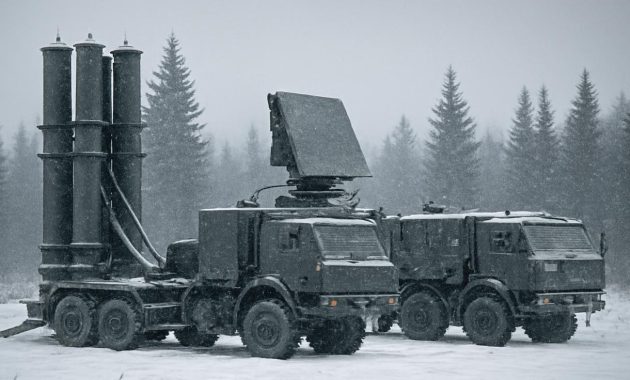
The rain over Oslo felt more like a fine mist than a storm, beading on the gray water of the fjord and on the shoulders of the officials walking briskly toward the press podium. Cameras clicked, translators hovered, and somewhere behind the rows of microphones, an invisible line in global power politics quietly shifted. Norway—small in population, vast in territory, and strategically vital at NATO’s northern flank—was about to say something that would echo loudly in Washington and Paris alike. The numbers alone were enough to make anyone’s eyebrows rise: 7.9 billion euros on the table, and the winner was not the United States.
A Nordic Choice That Stung Across the Atlantic
The decision itself, on the surface, sounded technical: Norway would acquire the SAMP/T air and missile defense system—jointly developed by France and Italy—instead of an American alternative. Defense procurement typically hides behind dense acronyms and brochures filled with diagrams of interceptors arcing across sky-blue backgrounds. But inside that jargon is real power, real money, and real symbolism.
For years, the United States has been the default shop for many European countries seeking advanced defense systems, especially in the field of air and missile defense. Systems like Patriot have guarded the skies over countless allies, weaving a familiar pattern of dependence. When a NATO country goes shopping at the Pentagon’s store, nobody is surprised. It reinforces an old story: America as the arsenal of the West.
This time, however, the script veered suddenly. Norway, after long and careful evaluation, decided that its future upper-layer air and missile shield would not be American. Instead, it would be European—specifically, the SAMP/T (often called “SAMP/T NG” for the new generation), built around the Aster family of missiles and shepherded by French and Italian industry. In political shorthand, it looked very much like a French triumph, and to many in Washington, alarmingly like a 7.9 billion euro slap in the face.
You could almost hear the unspoken questions ripple through the corridors of power in DC: If a close Nordic NATO ally, geographically hugging Russia’s northwestern frontier, was willing to bet its aerial safety on a European system, what did that say about America’s hold on the alliance’s hardware choices?
The Sky Shield Over a Long, Cold Border
To understand why this choice matters, you have to feel the geography in your bones. Stand on a Norwegian cliff in winter, the wind knifing up from the Barents Sea, and the map stops being abstract. Norway stretches along Russia’s northwestern border, brushing up against the Kola Peninsula—the heavily militarized home of Russia’s Northern Fleet and strategic submarines. This is not just any frontier; it’s one of NATO’s most sensitive seams.
For Oslo, air and missile defense is not a prestige item. It’s survival gear. In an era of hypersonic posturing, swarms of drones, and long-range cruise missiles hugging the contours of the terrain, the sky above Norway is no quiet dome—it’s a potential battlefield. The Nordic country’s decision, then, is less about symbolic messaging than about an urgent question: What system can best watch, track, and, if needed, intercept what comes over that gray horizon?
In that context, SAMP/T arrived not as a flamboyant political gesture but as a serious candidate with serious credentials. Developed by Eurosam—a joint venture drawing strength from French giant Thales and Italy’s MBDA—it offers 360-degree coverage, high mobility, and missiles designed for both aerodynamic threats (like fighter jets and cruise missiles) and ballistic missiles. Norway knew it wasn’t just buying a product; it was buying into a networked philosophy of defense that spoke a distinctly European language.
The Anatomy of a 7.9 Billion Euro Statement
The number—7.9 billion euros—is not just a line item. It is a signal. That kind of money carries political gravity, bending narratives around it. To Washington, losing a contract of this magnitude to a European competitor inside NATO territory is more than a business disappointment. It’s a reminder that the era of automatic American selection is over.
Quietly, in conference rooms lined with screens and coffee cups, Norwegian officials spent years weighing options, running simulations, and listening to engineers dissect radar cones and engagement envelopes. They compared American offers—heavily advertised, thoroughly battle-proven—with the evolving European alternative. In the end, it was the balance of capability, integration potential with other European systems, and strategic autonomy that tipped the scales.
European leaders, especially in Paris, saw in this decision a confirmation of a dream that had long felt fragile: European defense sovereignty. Not independence from NATO, but a greater capacity to stand on its own feet inside the alliance. France has pushed this idea for decades, sometimes to rolled eyes, sometimes to nods of approval. Norway’s decision felt like one of those rare moments when a speech turned into a contract, and a contract into a quiet, steel-and-silicon statement.
The United States, for its part, is no stranger to losing foreign tenders, but it tends to take particular notice when the loss coincides with political headwinds—talk of “Buy European,” murmurs about overdependence on Washington, renewed anxiety about the reliability of US politics. In that sense, Norway’s choice came not as a thunderbolt out of nowhere, but as another data point in a trend line that American strategists have long feared.
What Makes SAMP/T So Persuasive?
Pull the discussion away from geopolitics for a moment, and you find yourself in the technical heart of the matter. The SAMP/T system is essentially a layered orchestra of sensors, command modules, and missile launchers. Its signature performer is the Aster missile—slim, agile, and famous for its “hit-to-kill” mentality, steering directly into incoming threats with remarkable precision.
SAMP/T’s radar can scan widely and react quickly, identifying multiple targets—fast jets, low-flying cruise missiles, short- and medium-range ballistic missiles—and assigning interceptors to each. The system is modular and road-mobile, an important trait for a country like Norway, where winding roads, tunnels, and rugged terrain are part of daily life. Defense infrastructure here cannot rely solely on giant fixed installations; it has to be able to move with the landscape and the threat.
Another key attraction is interoperability—how well the system talks to others. SAMP/T has been designed to mesh within NATO’s integrated air and missile defense architecture, exchanging data with AWACS aircraft, allied radars, and command centers. For Oslo, already deeply plugged into alliance networks, choosing a system that doesn’t isolate it technologically is non-negotiable.
The decision table Norway faced looked something like this:
| Factor | SAMP/T (France–Italy) | Typical US Alternative |
|---|---|---|
| Primary Role | Air & ballistic missile defense | Air & ballistic missile defense |
| Missile Family | Aster (hit-to-kill focus) | Patriot-class interceptors |
| Coverage | 360° engagement, highly mobile units | Wide coverage, semi-mobile batteries |
| Industrial Return | European co-production and tech sharing | Limited local industry role |
| Strategic Signal | Boosts European defense autonomy | Reinforces US-centric model |
When you stack the rows like this, it becomes easier to see why Norway, with its deep roots in European cooperation and its desire for technological participation, leaned toward SAMP/T. This wasn’t a sentimental allegiance to Paris or Rome. It was a calculation: Which system best serves our security, our industry, and our role inside a changing NATO?
Why This Hurts in Washington
In the United States, the sting is not only about money. It’s about influence. Defense exports have long been one of Washington’s most potent tools for shaping alliances. When a nation’s pilots fly American jets, when its radars speak in US protocols, when its missile batteries rely on American software updates, that country’s security conversations tend to include a lot of American voices.
When a European country of Norway’s stature chooses a different route, those voices inevitably share the stage. French engineers, Italian defense planners, European Union security coordinators—they all gain a little more volume. For a superpower used to its central role in NATO procurement, that change echoes louder than the clink of champagne glasses at a contract-signing ceremony in Paris.
There is also the question of precedent. Norway is not an outlier state or a habitual rebel. It is a trusted, conventional NATO contributor. If Oslo can deviate from the expected American track, who might follow? Other Nordic neighbors? Eastern European states recalculating their long-term needs? Perhaps even countries that have historically been firmly in the US procurement orbit.
A French Triumph with a Nordic Accent
In Paris, the mood was understandably different. For decades, France has argued that Europe must be more than a customer; it must be a maker, a shaper, and a guardian of its own security. French leaders love the language of “strategic autonomy”—a phrase that can sound abstract until a real contract lands on a minister’s desk, stamped with billions in long-term commitment.
The SAMP/T victory in Norway feeds directly into that narrative. It shows that European technology, when funded, developed, and marketed with discipline, can compete head-on with American systems in the most demanding of markets: frontline NATO states facing a real and proximate threat.
But this triumph also has a Nordic accent. The Norwegians brought their own conditions to the table: industrial participation, technology transfer, compatibility with existing NATO infrastructures, and adaptation to their specific geography. This wasn’t a one-way story of French salesmanship; it was a negotiation where Oslo made it clear that it would not just plug in a foreign system and call it a day. The coming years will likely see Norwegian engineers working alongside French and Italian counterparts, learning, modifying, and integrating the SAMP/T architecture into a uniquely Nordic shield.
In that sense, the deal is not merely a purchase; it is a partnership. And partnerships, especially those born under the northern lights and inked in euros rather than dollars, help redraw the mental map of who protects whom in Europe.
How Europe Quietly Rewrites Its Defense Story
The story of Europe’s defense posture has long been overshadowed by a simple fact: the United States spends more—much more—on its military than any individual European country. That financial weight translated into hardware dominance. US-made planes, tanks, missiles, and networks wove themselves into the continent’s defense fabric.
But in the last decade, three pressures have converged to alter that equation. First, the return of high-intensity war to the continent’s edge, with Russia’s actions in Ukraine, has jolted Europeans into rethinking their reliance on distant guarantees. Second, political turbulence in Washington has made some leaders wonder what happens if American commitments wobble. Third, European industry itself has matured, offering systems that, in niche areas, can match or even surpass American options.
SAMP/T sits at the crossroads of those pressures: a system designed in Europe, proven in real operations, compatible with alliance structures, and politically attractive to governments eager to demonstrate that Europe is not merely a customer, but a co-author of Western security. Norway’s decision broadcasts that message with unusual clarity.
Inside EU capitals, defense officials will read the Norwegian case study line by line. They will see how Oslo justified the choice technically, how it packaged the political narrative, how it negotiated industrial participation. And some, perhaps many, will wonder if a similar path makes sense for them. The quiet rewriting of Europe’s defense story happens not in loud declarations, but in procurement decisions like this one.
The New Balance Inside NATO
Does this mean NATO is splitting into camps—an American camp and a European one? Not quite. The reality is subtler and, in some ways, more interesting. The alliance’s strength has always come from a tapestry of capabilities woven together by shared standards and procedures. In that tapestry, some threads have historically been overwhelmingly American. What we are now seeing is not the removal of those threads, but the introduction of more European strands in key areas.
From the alliance’s operational perspective, a Norwegian SAMP/T battery that can plug seamlessly into NATO’s command and control is a win, regardless of whose logo is on the crate. American soldiers on a joint exercise in the High North will care less about the brand name on the launcher and more about whether the radar picture is clean, the communication links secure, and the interceptors reliable.
Yet symbolism matters. Washington will have to adapt to a NATO in which its equipment is no longer the automatic default in every category. Paris and Rome, flush with this victory, will push harder for further European-centered projects. Berlin, Stockholm, Warsaw, and others will watch carefully, calibrating their own blend of US and European systems. The alliance, in other words, is not weakening—it is diversifying.
Beyond the Price Tag: What This Means for the Future
Norway’s choice says something important about how small and medium powers navigate an age of giants. Faced with the gravitational pull of the United States and the growing assertiveness of Russia and China, they look for ways to secure both hard protection and political room to maneuver. Buying SAMP/T does not turn Norway away from America; it simply anchors Oslo more firmly in a web of European capabilities.
That, ultimately, is why this decision resonates far beyond procurement circles. It reveals a Europe that is incrementally more confident in its own engineering, more willing to invest in common projects, and more determined to ensure that when it looks up at the sky in a moment of crisis, the systems blinking back are at least partly of its own making.
On a rainy day in Oslo, framed by fjords and low clouds, that future came a little closer. A contract was signed, a missile system chosen, and somewhere in Washington, someone likely closed a folder with a faint scowl. In Paris, perhaps, another folder closed with a quiet, satisfied smile. Between them, in the cold northern air, a new balance in Western defense quietly took shape—measured not only in euros and interceptors, but in the evolving story of who guards the European sky, and on whose terms.
FAQ
Why did Norway choose the SAMP/T system over US-made alternatives?
Norway chose SAMP/T after a detailed evaluation of performance, mobility, interoperability with NATO, and industrial participation. The system’s ability to counter both air-breathing targets and ballistic missiles, combined with strong European industrial collaboration and technology sharing, made it especially attractive.
Is this decision a sign that Norway is turning away from the United States?
No. Norway remains a committed NATO member and close US ally. The choice of SAMP/T reflects a desire to diversify suppliers, deepen European defense cooperation, and secure the system that best fits national requirements, rather than a political break with Washington.
What makes SAMP/T different from other air and missile defense systems?
SAMP/T uses the Aster family of missiles, known for high agility and precision, and offers 360-degree coverage with mobile launchers. It is designed for integration into NATO’s air and missile defense networks and can engage a wide range of threats, including short- and medium-range ballistic missiles.
How significant is the 7.9 billion euro value of the contract?
The amount is significant both economically and politically. It represents a long-term commitment to the system and sends a strong signal about European industrial capabilities in a field often dominated by the United States.
Does this weaken NATO’s overall air and missile defense?
On the contrary, NATO benefits from members fielding modern, interoperable systems regardless of origin, as long as they are integrated into alliance networks. SAMP/T is designed for such integration, so Norway’s choice is expected to strengthen NATO’s collective defense, especially on its northern flank.