The wind had that clean, rinsed smell you only get after rain in the hills, the kind that somehow makes colors brighter—moss greener, sky bluer, cheeks rosier. You could hear the soft crunch of wet grit under boots, the quiet trickle of water escaping from peat and stone, and, over it all, the low hum of people chatting as they wound along a damp Peak District trail. It was the sort of late afternoon that makes phones stay in pockets and eyes look up. Until, that is, someone realized the woman walking a few feet ahead—with her ponytail, her navy gilet, her polite, easy smile—was the Princess of Wales.
A Chance Encounter on the Moor
For most of the morning, the walk had felt like any other wellbeing ramble: a loose knot of people in fleeces and waterproofs, some local, some visitors, all moving at that unhurried pace that says, “We have nowhere better to be than right here.” The air still held the taste of yesterday’s rain, cool and metallic, and the path, a ribbon of gritstone and mud, twisted between sheep fields and heather banks veined with water.
The Princess of Wales had joined quietly, almost anonymously, wrapped in the same sort of practical layers as everyone else. No formal entourage, no polished cars edging along dry stone walls. Just a couple of discreet security shadows, hanging back enough that you could almost forget who they were there for.
There’s something disarming about meeting a global figure in muddy hiking boots. People quickly stopped whispering her title and started using her name: “Catherine said…” “I was just chatting to Catherine about…” She listened more than she spoke, tilting her head in that intent way of people who really are interested, not just performing it. Mental health, sleep, the stress of school runs and shift work, aging parents and anxious teenagers—these were the subjects that slipped into conversation as easily as comments about the weather.
Somewhere between a stile and a shallow stream, the walk stopped being about the novelty of royalty on the trail and became something else: a moving, breathing conversation about being human in a world that feels permanently turned up too loud.
The Selfie That Froze a Moment
The moment that later exploded online happened almost casually. The group had paused where the path widened—a kind of natural layby on the hillside. Ahead, the valley fell away in folds of muted green, the horizon smudged into a pale lavender haze. A pair of hikers, mother and teenage daughter, stood slightly to one side, clearly building up courage.
“Would it be all right… could we maybe take a selfie?” the mother finally asked, voice catching a little on the word, half-expecting to be told no, that things didn’t work like that.
The Princess laughed softly, the sound caught briefly by the wind. “Of course we can,” she said, stepping in closer, boots slipping slightly on the soft grit. At this point, everyone noticed how ordinary the scene looked: a small knot of people on a damp hillside, cheeks pink from effort, hair caught by the breeze.
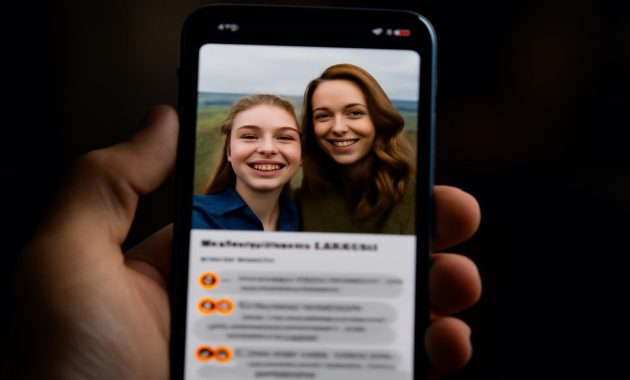
The daughter, hand shaking, held out her phone. They huddled together, three faces filling the frame: the young woman’s shy, excited grin; her mother’s proud, overwhelmed smile; and the Princess, leaning in, eyes bright, her expression not polished or posed but simply open. Behind them, a suggestion of moorland—blurry smears of heather and rock, a sliver of pale sky.
The shutter sound was barely audible over the wind, but something about the way the girl’s shoulders dropped, relief and delight mingling, stuck with the people watching. One woman later described it as “the moment the whole world felt strangely small and gentle, just for a second.”
No one knew then that this split second, captured by a regular phone in the middle of an ordinary English national park, would ignite an online storm by the following morning.
The Internet Finds the Hills
By the time most people reached the car park, the selfie had already begun its journey. The teenager, fingers still tingling, had posted it with a caption that was almost apologetically understated: “Just had the best wellbeing walk ever in the Peaks… accidentally met the Princess of Wales 😳💚.” Within minutes, friends were sharing it, disbelief trading places with envy.
Phones pinged across group chats and family threads. Someone screengrabbed and sent it to a cousin, who forwarded it to a colleague, who tossed it into a popular local community group. An hour later, the photo had sailed far beyond Derbyshire, caught in the restless, invisible weather system of social media.
What set this image apart wasn’t glamour. This wasn’t a polished balcony wave or tiara-lit gala shot. The Princess’s hair was slightly windswept; there was the faintest smudge of damp on her jacket. The mother’s freckles were visible, the daughter’s fringe imperfect, a rogue strand slicing across her forehead. They looked like any trio of walkers who had paused too long while body heat was still steaming off in the chill air.
That rough-edged authenticity was precisely what online users seized upon—some with joy, some with suspicion, many with the sort of fierce protectiveness that now seems to accompany every public image of a royal figure.
Reactions as Wild as the Weather
Within twenty-four hours, the comments had swollen into a river, frothy with opinion. News outlets lifted the image, cropping it, embossing it with logos, circulating their own interpretations. Hashtags formed like sudden cloudbursts, testing out different narratives, some affectionate, some cynical, some barbed.
Below is a simplified snapshot of the types of reactions that rippled out in those early hours:
| Reaction Type | Tone | Typical Comment |
|---|---|---|
| Supportive & Warm | Positive, emotional | “This is exactly what we need from public figures—real moments, muddy boots and all.” |
| Skeptical | Questioning motives | “Convenient timing. Feels like a PR move dressed up as a casual hike.” |
| Protective | Guarded, anxious | “Hope they had proper security. The world is intense right now.” |
| Critical of Selfies | Reflective, irritated | “Why can’t people just enjoy the moment instead of turning everything into content?” |
| Nature-Focused | Thoughtful, observant | “Love seeing the Peaks used for wellbeing walks. These landscapes heal more than we realize.” |
The comment threads under the original post became a kind of digital campfire where strangers debated, joked, worried, and reminisced. Some shared their own chance encounters with public figures on hiking trails. Others confessed they’d never be brave enough to ask for a selfie, no matter who they stumbled across between two drystone walls.
Between Mud and Myth
The intrigue wasn’t only about celebrity. It was about the collision between myth and mud—between the idea of royalty and the reality of a brisk walk in a landscape where sheep outnumber people and the wind doesn’t care about titles.
On the hillside, there had been small, telling details. The way the Princess knelt slightly to listen to an older man, his voice thin with emotion as he spoke about losing his wife during the pandemic. How she gently steered the conversation, not away from pain, but toward coping—routine, fresh air, talking honestly with friends. How she lingered at the back a couple of times, walking in companionable silence beside people who, by their own admission, didn’t have anything particular to say but clearly didn’t want to walk alone.
One participant later described the experience in a local wellbeing group: “She didn’t hover above us; she walked among us. When I forgot who she was for a second, that’s when it felt most healing.” That comment was screenshotted and shared just as widely as any official statement.
In many ways, the Peak District was the other main character in this story. The national park, with its sweeping gritstone edges and patchwork dales, has long been a place where city-weary souls come to reset. Its paths are smoothed by countless footsteps, its air seasoned by the breath of people who arrive tightly wound and leave slightly looser, quieter inside.
To see the Princess of Wales there—not behind a podium, but beneath an unsettled sky—sent a message that resonated more deeply than any glossy campaign poster ever could. It said: you don’t have to be special to need this. You just have to be human.
Wellbeing in an Age of Constant Exposure
The irony, of course, is that this soft, restorative moment became global content in hours. A walk designed to draw people away from the harsh glare of screens was pulled back into the spotlight of the internet’s unforgiving brightness. The Princess smiled from millions of devices, squinting slightly against a wind that none of those viewers could feel.
People online argued about privacy. Was it appropriate to share a spontaneous image of someone whose every public appearance is already dissected? Others countered that the Princess had willingly stepped into the frame, leaning in, smiling, no hint of reluctance. It looked, at least from the outside, like consent.
Yet the debate tapped at something more complicated: our collective hunger for proof that public figures are “real,” set against their right to moments that aren’t immediately repackaged, filtered, and measured in likes. Wellbeing campaigns encourage openness, vulnerability, presence. Social media demands visibility, constant performance, instant reflection.
The Peak District walk, for a few muddy miles, managed to hold those tensions in balance. People left their phones zipped away long enough to share stories, to exhale hard truths into the cool air, to feel their thighs burn on the steeper climbs. Then one photo, one small, bright square, brought it all roaring back into the digital agora.
The Human Behind the Title
Lost in some of the noise was the simplest truth of the day: the Princess of Wales had spent several hours outdoors, listening to people describe panic attacks, insomnia, burnout, parenting fear, and the lonely exhaustion of feeling like you have to be “fine” all the time. She had walked the same uneven ground, taken the same deep lungfuls of peat-scented air, blinked the same tiny raindrops off her lashes when a passing cloud frayed just enough to sprinkle.
At one point, standing by a moss-lined wall slick with moisture, she’d talked quietly about how nature had helped her through her own stressful periods. Not in grand, mystical terms, but in small, practical ones: a ten-minute walk near a patch of trees; the repetitive act of putting one foot in front of the other; the way birdsong can pull you out of a spiraling thought and back into your body. No headlines were being written there, just a woman describing the tools she reaches for when life presses in.
The selfie, with all its unintended reach, became a symbol not just of royal relatability, but of how fragile such unguarded humanity can be once it touches the internet. Some viewers looked at the photo and saw hope: that powerful people are taking mental health seriously, that they’re willing to lace up boots, step onto trails, and listen without judgment. Others saw choreography: a carefully curated moment meant to soften images, manage reputations, recalibrate public feeling.
Maybe, though, both can be true. Maybe a walk can be both sincere and strategic; a selfie both spontaneous and inevitably politicized. Perhaps the more useful question is not whether the moment was “pure,” but whether, for the people on that hill, it mattered. By all accounts, it did.
What the Hills Remember
By the next day, the path looked like any other in the Peaks. Boot prints blurred by new weather. Sheep back to their slow, deliberate grazing. The damp, earthy smell remained, threaded with the faint sweetness of crushed heather. If you didn’t know, you’d never guess that a small media storm had begun here, that this stretch of trail had played host to royal footsteps and an avalanche of feelings from strangers sitting in city buses and kitchen chairs, scrolling and commenting and projecting their own stories onto a frozen, smiling frame.
But landscapes remember in quieter ways. In the memory of the girl who took the photo, who now associates that slope of ground not only with fame but with courage—the courage to raise a trembling phone and exchange a moment of shyness for a lifetime of “Remember when…”. In the older man’s recollection, the one who later said, “I told a Princess about my grief, and she didn’t look away.” In the mother’s voice when she retells the story to friends, describing the sound of their laughter mingling with the wind.
The Peak District has always been a place where people lay things down: stress, sorrow, boredom, tight-chested anxiety. It receives them all the same way, with indifferent stone and patient paths. On that particular day, it also received a public figure who, stripped of ceremony and placed under a low, grey sky, looked—if only for a moment—very much like everyone else on the trail: flushed, a little tired, but lighter for having spoken and listened.
The internet’s roar has probably already moved on to other images, other stories, other storms. But something of that day lingers. A reminder that even in a world where every moment can be snapped, shared, and spun, there is still real power in walking side by side, in a place where the wind carries away your words and gives them back as a steadying breath.
Frequently Asked Questions
Was the wellbeing walk in the Peak District a public event?
Yes, the walk was organized as a wellbeing-focused event with a small group of participants, but it wasn’t a huge, open-to-all gathering. It was intimate enough for real conversations, yet public enough that word spread quickly once the selfie appeared online.
Did the Princess of Wales agree to the selfie?
According to those present, she clearly and warmly agreed. She stepped into the frame willingly, smiled, and engaged with the mother and daughter before and after the photo was taken, which suggests she understood and accepted that the moment might be shared.
Why did the selfie cause such a strong reaction online?
The image combined several powerful elements: a globally recognized figure, an unguarded outdoor setting, a focus on mental wellbeing, and the raw authenticity of a phone snapshot. In an age of heavily managed images, that combination sparked intense interest, debate, and emotional responses.
How did people on the walk describe the Princess’s behavior?
Participants described her as attentive, down-to-earth, and genuinely engaged. She listened more than she spoke, asked thoughtful questions, and moved naturally within the group rather than standing apart or dominating the experience.
What role did the Peak District itself play in the story?
The Peak District wasn’t just a backdrop; it shaped the tone of the day. The wide views, fresh air, and physical effort of walking created a setting where people felt safer sharing their struggles. The landscape helped turn a royal engagement into something more like a shared human pause—muddy boots, sore calves, and all.