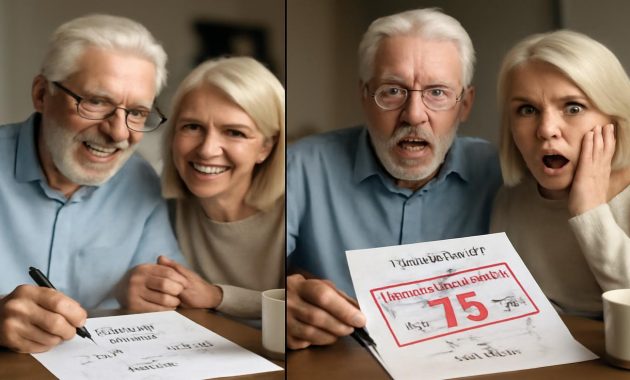
The news broke, as these things always seem to, on a drizzly weekday morning when most people were too busy to fully absorb it. Kettles were boiling, trains were delayed, inboxes were filling up—and somewhere between the headlines about weather and football scores came the sentence that landed like a stone in the stomach: the UK government had announced plans to raise the state pension age beyond 67. Not in some abstract, far-off way, but in a way that would touch the lives, bodies, and bank accounts of millions. Suddenly, “retirement at 67” felt less like a promise and more like a mirage dissolving on the horizon.
The Day the Goalposts Moved
For decades, there has been an unspoken story many people carry in their heads. It’s not written down anywhere, but it’s quietly narrated in the back of the mind: work hard, pay your taxes, watch the National Insurance contributions march out of your payslip, and one day—somewhere around 67—you ease back. Maybe you move to a smaller place by the sea. Maybe you finally have time to nurse a garden into wild colour. Maybe you just wake up without an alarm and let the kettle whistle a little longer.
So when the government announces plans to raise the state pension age again, it’s not just about numbers on a spreadsheet. It’s about that story being edited without your consent.
In living rooms and staff kitchens across the UK, that edit is already sparking conversations. A care worker in her early 50s, knees aching from years on her feet, wonders if her body can actually last as long as the government now expects. A warehouse operative who started work at 16 feels a quiet fury: “I’ve been paying in my whole life. How long do they want me to keep lifting?” A 30-year-old software engineer scrolls through the news with a frown, realising that every change now will likely echo even more loudly by the time he reaches pension age.
The move is pitched as necessary, even inevitable. People are living longer, ministers say. The country must remain “fiscally responsible,” they argue, numbers lined up neatly like soldiers on a briefing slide. But behind those phrases lie very human questions: whose longer life are we talking about? Who gets extra years of health and comfort—and who spends their extended working life waking up in the dark, shoulders stiff, counting down years rather than days?
Why the Pension Age Keeps Climbing
To understand why “goodbye to retiring at 67” is more than a catchy headline, you have to step back and look at the slow-moving tide that brought us here. Over the last few decades, life expectancy has risen, though unevenly, and the ratio of workers to pensioners has been shrinking. In government language, that’s called “demographic pressure.” In everyday language, it means fewer people paying in and more people drawing out.
It’s a story told in graphs: lines representing the state pension bill creep upward as more people live into their eighties and nineties. Chancellors and civil servants glance at those lines and feel a familiar chill. Something has to give, they mutter, and, more often than not, what gives is the age at which you’ll finally be allowed to stop.
Decades ago, you could retire on a full state pension at 60 if you were a woman and 65 if you were a man. Then came equalisation, then gradual increases, then the much-discussed path to 67. Each rise has been framed as modernisation, as keeping pace with a changing world. Now, with this new announcement, the target is moving again—further into the future, further away from the grasp of those who are already feeling tired.
The argument is all about sustainability, we’re told. Yet there’s a quiet but crucial detail that rarely makes it into the neat soundbites: life expectancy and healthy life expectancy are not the same thing. It’s one thing to say we’re living longer, quite another to insist we’re living longer well enough to work.
The Unequal Geography of a “Longer Life”
Step into a leafy suburb in the South East where terraced houses are freshly painted, coffee shops hum with laptop screens, and people talk casually about ski trips and “semi-retirement.” Here, it’s possible to believe in the story that we’re all living longer and healthier. People who have spent lives in offices, with private pensions topping up their state one, may well feel they can work a few years more, if it comes to that.
Now take a train north, or to a more deprived corner of a coastal town. Walk down a high street where the shopfronts are peeling and the benches are scuffed. Sit for a while and listen. You’ll hear a different story: of backs ruined on building sites, of nights spent on zero-hours contracts, of years navigating shift work that batters sleep and joints alike. In some of these places, people don’t just live shorter lives—they live fewer years in good health.
The new state pension age doesn’t bend to those differences. It stands firm and unblinking, like a signpost carved in stone: this is the age, no matter where you live, what you earn, or how your body feels. For the construction worker whose shoulders began to give out at 55, or the nurse whose spine is a map of lifting injuries, that single age can feel less like fairness and more like erasure.
How the New Age Shifts the Ground Beneath People’s Feet
What the government has done is, in one sense, simple: move a number. But that number underpins an entire stage of life. For a generation that grew up believing that, after a long working life, the state would be there with a safety net at a fixed moment, this change can feel like the earth tilting beneath their feet.
For those in their late 50s or early 60s, the announcement is not an abstraction. It’s immediate arithmetic. How many more years? How many more shifts? How much more can my body manage? Some will find a way to keep going. Others will quietly slip out of the workforce earlier, not by choice but by necessity—through redundancy, ill health, or caring responsibilities. They will wait, in that grey zone, for the state pension age to catch up with their reality, living off savings, benefits, or the goodwill of family.
Then there are the younger workers, those in their twenties and thirties, watching the goalposts move from a distance. For them, retirement has always been a hazy mirage. But each policy shift chips away at what little certainty they had. If it’s 68 now, they think, will it be 70 by the time I get there? 72? At what point does the promise of retirement start to feel like a story from another era, as quaint as the idea of a job for life or a final salary pension?
It is one thing to ask people to adapt. It is another to do so in a landscape where many feel they are already running on fumes, caught between rising living costs, precarious work, and housing insecurity. When you add extra working years at the far end of that journey, it doesn’t feel like simple pragmatism. It feels like a withdrawal of trust.
The Numbers Behind the Headline
Strip away the politics, and you are left with a blunt equation. More older people. Fewer working-age people, proportionally. A state pension system that was designed in another era, now straining under the weight of new realities. The official justification rests on balancing that equation without letting the pension bill swell to a politically unpalatable size.
At its core, the decision is an attempt to keep the system from buckling. Yet the way it is done—and the speed at which the age increases—can either build a sense of shared effort or deepen a sense of betrayal.
Here’s a simple way to picture the impact of moving the state pension age up the ladder:
| Birth Year (Approx.) | Previous Expected State Pension Age | New Proposed State Pension Age | Extra Years to Wait |
|---|---|---|---|
| Late 1950s – Early 1960s | 66–67 | 67–68 | +1 year |
| Late 1960s – 1970s | 67 | 68+ | +1–2 years |
| 1980s and later | Likely 68 | Potentially higher | Unclear, but rising |
These figures, and the details around them, will continue to shift as legislation is debated and refined. But the direction of travel is clear. The line is moving upward, and with it, the expectations placed on people’s working lives.
The Human Cost Hidden in Policy Language
Talk to someone who works in a physically demanding job, and you’ll hear a different vocabulary from the one tucked into official impact assessments. You hear about bad backs, worn hips, swollen ankles. You hear about the way long shifts bleed into restless nights. You hear the quiet dread in the voice of a 59-year-old lorry driver who has already seen too many friends sign off work early with heart problems and stress.
For those people, each extra year of work is not a neutral number. It’s another winter of scraping ice off windscreens at 5 a.m. Another summer spent inside, scanning barcodes or stocking shelves while the sun glows on the other side of the glass. Another twelve months of putting off long-postponed dreams—visiting friends, seeing grandchildren more often, finally taking care of their own health instead of just muddling through.
Even in white-collar roles, the cost isn’t always visible but can be quietly corrosive: burnout, creeping anxiety, the sense of life being permanently on hold. Not everyone has the luxury of stepping back gradually, of easing into a part-time glide path. For many, work ends the way a train stops in an emergency: abruptly, with a jolt, and not on their own timetable.
Trust, Fairness, and the Social Contract
Beneath the talk of life expectancy tables and fiscal pressure lies something older and more fragile: the social contract. The idea that if you contribute through your working life, the state will be there in old age with at least a basic level of security. Each rise in the pension age tests the strength of that understanding.
People do not just measure fairness in money; they measure it in time. Time with family. Time in relative health. Time not spent working for someone else. When the state asks people to surrender more of that time to the labour market, it must confront a simple question: is it taking that time equally from everyone, or more from those who already have less?
We know, from decades of research, that poorer people tend to die younger. We know that some communities see far fewer healthy years after 60 than others. So a uniform state pension age does not land uniformly. It presses hardest on those at the rough edges—those whose working lives began earliest, whose jobs wore down their bodies fastest, whose wages gave the least room to save privately.
The controversy swirling around the new announcement isn’t just about the change itself, but about the feeling that some lives are being quietly written off in order to protect an ideal of fiscal responsibility that doesn’t always feel evenly shared.
Planning for a Future That Keeps Moving
In the weeks following the announcement, financial advisers, think tanks, unions, and campaigners all began to issue their own forms of guidance and warnings. Save more, work longer, reskill, adjust expectations: the phrases pile up like leaflets stuffed through a letterbox.
For individuals, it can feel overwhelming. How do you plan for a retirement that seems to drift further away each time you look at it? How do you steady your own story when the policy background keeps rewriting the final chapters?
Some will respond with grim pragmatism: increasing their pension contributions if they can, eyeing later-life career changes that might be more sustainable into their sixties. Others will look at their payslips and laugh without humour—they are already pushed to the limit. There is nothing spare to save. For them, the change doesn’t trigger a spreadsheet adjustment; it triggers a knot of anxiety in the chest.
Communities, too, will feel the ripple effects. Grandparents who expected to help more with childcare may now still be at work. Volunteer groups that rely heavily on newly retired people to run charity shops, local clubs, and support services may see their pool of helpers shrink. Society is stitched together not just by paid work but by the unpaid, quiet labour of those who have finally stepped away from the nine-to-five. If retirement becomes a later and more fragile stage of life, those stitches may loosen.
Listening Beyond the Numbers
At some point, a bill will be introduced. Debates will unfold in Parliament. Amendments will be proposed, rejected, reworded. The machinery of policy will creak forward. But outside those chambers, the deeper conversation will be taking place in kitchens and on buses and in break rooms: what kind of old age do we want to make possible—for ourselves, for our parents, for the people who pack our food and repair our roads and care for us when we are ill?
Many will not be reading white papers and actuarial reports. They will be reading their own bodies, their own bank statements, their own family histories. They will be wondering if their story of later life is now being dictated more by columns in a budget spreadsheet than by any sense of shared dignity.
To listen properly to the public response is to hear not just anger and fear, but also a plea for nuance: a system that recognises that not all work is equal, not all health is equal, not all lives follow the same arc. Suggestions already exist—more flexible pension options, earlier access for those in physically demanding roles, better support for workers who need to transition to less intense jobs in their fifties and sixties. Whether those possibilities are taken seriously will shape not just retirement ages, but trust in the system itself.
The Road Ahead: Between Resignation and Resolve
On that drizzly morning when the headline landed, the future felt, for many, as though it had been nudged just out of reach. But policy announcements are not the end of the story. They are a chapter—one that can still be edited, argued with, reshaped by pressure and persuasion.
There is a choice, both individually and collectively, about how to respond. Some will turn away in weary resignation, assuming nothing they do or say will matter. Others will push back, through campaigns, consultations, and conversations with representatives, insisting that a longer life should not automatically mean a longer working life for everyone, regardless of the weight their years have already carried.
In the end, the question is larger than the specific number that replaces 67. It is about what we owe each other at the point when our working years draw to a close; about how we value rest, health, and the last decades of a human life. It is about whether we see older age as a period to be endured on a tightrope of financial anxiety, or as a time finally to lay down the tools of labour and pick up something gentler—a paintbrush, a fishing rod, a grandchild’s hand.
The government may have said its goodbye to retiring at 67. The public, though, is still deciding what kind of farewell it is willing to accept—for itself, and for the generations that will follow.
Frequently Asked Questions
Why is the UK government increasing the state pension age?
The main reason given is demographic change: people are living longer on average, and there are proportionally fewer working-age people paying taxes and National Insurance to fund pensions. The government argues that raising the state pension age helps keep the system financially sustainable.
Will everyone be affected in the same way?
No. Although the new state pension age is a single number in law, its impact varies widely. People in physically demanding or low-paid work, and those in regions with lower life expectancy, are likely to feel the effects much more sharply than office workers with higher incomes or generous workplace pensions.
How can I find out when I will get my state pension?
You can check your current projected state pension age and entitlement through official government tools and your state pension forecast. These services use your date of birth and contribution history to estimate when you’ll qualify and how much you’re likely to receive.
What can I do to prepare for a higher state pension age?
If you can afford to, consider increasing your pension contributions, both to workplace schemes and personal pensions. Review your expected retirement age, think about how long you can realistically stay in your current type of work, and explore options for retraining or moving into less physically demanding roles later in life.
Is there any flexibility for people in very demanding jobs or poor health?
At present, the state pension age is largely fixed, but there are separate benefits and support for people unable to work due to health conditions or disability. Many campaigners are arguing for more flexible pension rules that would allow earlier access for those in physically intensive occupations or with shorter healthy life expectancy.
Could the state pension age rise even further in the future?
Yes. Each change tends to be based on forecasts of life expectancy and public finances. If those forecasts continue to show pressure on the pension system, future governments may consider further rises, especially for younger generations who are still many decades away from retirement.
Does this mean retirement is becoming a luxury?
Not exactly, but it does mean that relying solely on the state pension is becoming riskier if you want a comfortable or early retirement. The more the state pension age rises, the more important personal savings, workplace pensions, and broader social policies become in shaping what later life actually looks like for most people.