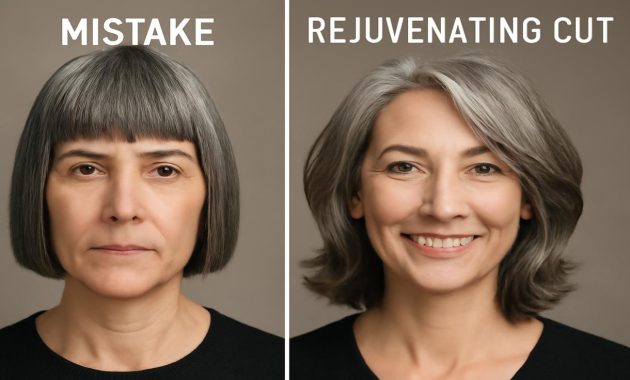
The first time you catch your reflection and notice more silver than anything else, it feels a bit like spotting the first frost on an autumn field. Familiar, but startling. You lean closer to the mirror. When did this happen? you wonder. When did your hair decide to age faster than you felt inside? The strands at your temples glint white in the light, the darker bits threading through like shadows. It’s not bad, exactly. It’s… new. And suddenly, a thought appears, steady and insistent: Maybe it’s time for a change. A cut that actually belongs to the person you are now, not the person you were ten, twenty years ago.
Why Salt and Pepper Hair Is Secretly a Superpower
There’s a quiet revolution happening in bathrooms and salons everywhere. Women and men are looking at the dye bottles lined up on their shelves, at the calendar reminders of root touch-ups every four weeks, and they’re getting tired. Not just physically, but soul-level tired. The idea of letting nature take over—of letting gray and white grow in—is no longer a whispered surrender. It’s a declaration: This is me, and I’m not hiding.
Salt and pepper hair, when you really look at it, is extraordinary. Each strand carries a soft story of time, of laughter lines and late nights and hard-earned wisdom. In the sun, the silvers sparkle; under warm indoor lighting, the darker strands deepen like dusk. The color is never uniform, never boring. It’s more like the shifting surface of a lake than a flat wall of paint.
But here’s the small catch: salt and pepper hair doesn’t play by the same rules as your old color. The texture changes, often becoming drier, more porous, sometimes coarser or wavier. The light bounces off gray and white differently; contours of your face and the sharpness of your features can look transformed. A haircut that looked effortlessly chic with rich chocolate brown can suddenly feel severe, tired, or strangely unbalanced now that your hair has gone silver.
You haven’t “let yourself go.” You’ve simply moved into a new season, and your haircut hasn’t followed.
The Two Worst Mistakes Standing Between You and a Rejuvenating Cut
So you’ve decided to embrace your salt and pepper, or at least to stop wrestling it into submission every few weeks. You’re ready for that rejuvenating cut—something fresher, lighter, more alive. And yet, there are two big traps people fall into again and again that can instantly age gray and white hair, even when the color itself is beautiful.
Mistake #1: Clinging to the “Old You” Haircut
Imagine slipping on your favorite jeans from ten years ago. Even if they technically still fit, something often feels off. The rise, the wash, the way they hit your hips—they belonged to a different version of you. The same thing happens with haircuts.
Maybe you had a long, layered style that worked perfectly with your deep brunette tone. Or a dramatic, solid bob that framed your face when your hair was jet black. Those shapes were designed around density, color contrast, and shine that have now changed. With salt and pepper hair, the eye reads volume and edges differently. Where dark hair creates clear graphic lines, gray and white tend to soften and diffuse them.
Holding on to the same cut you had in your thirties can unintentionally make you look older now, not because gray ages you, but because the cut no longer harmonizes with the person you’ve become. Length is hanging where it used to float. Layers that once looked lush now fan out like frayed ribbon. Bangs cut in the same way suddenly sit too heavy or draw attention to lines rather than your eyes.
The deeper issue is emotional. That “old you” haircut can feel like armor—a way of pretending nothing’s changed. But when you cling to it, you often create a strange mismatch: youthful energy in your eyes, modern clothes on your body, and a haircut that belongs to a different chapter entirely. People don’t think, What a great choice to keep that style. They think, without even realizing it, Something doesn’t quite fit.
Letting go of that haircut is not a betrayal of who you were. It’s a respectful passing of the torch. A way of saying to your reflection: I see where we are now. Let’s dress this moment well.
Mistake #2: Playing It Too Safe with “Practical” Cuts
If clinging to the past is one trap, the other is its exact opposite: giving up on style in the name of practicality. This usually happens after a frustrating phase. The grow-out is awkward. The texture is unfamiliar. Styling takes longer than you’d like. And so one day, in a fit of fed-up energy, you tell your stylist, “Just make it easy. Short. Low maintenance. I don’t care, as long as I don’t have to do anything to it.”
On the surface, this sounds rational. Who wouldn’t want easy hair? But here’s the quiet danger: when you ask for “easy” without asking for “flattering” and “modern” at the same time, you can end up with a haircut that’s technically low-effort… and visually aging.
We’ve all seen those generic, rounded short cuts with no movement, no texture, and no intention. Hair that hugs the head too closely, or falls into one heavy block. Or the long, shapeless length that just kind of hangs there, no layers, no lift, no sense of design. These cuts are not inherently wrong—but they can leach energy from salt and pepper hair instead of amplifying it.
Gray and white strands crave shape. They need movement, or at least deliberate structure, to look purposeful rather than accidental. A purely “practical” cut, especially one chosen in frustration, often ignores your jawline, your cheekbones, your neck, your lifestyle, and your personal style. It’s a haircut made for a category—“older,” “low-maintenance,” “good enough”—rather than for you.
What makes this mistake so sneaky is that it can feel like freedom at first. No more wrestling with blow-dryers! No more products! But over time, a dull cut starts to echo back a story you never meant to tell: that you’ve receded a little from your own life. You didn’t; your hair just forgot to show up.
What a Rejuvenating Salt and Pepper Cut Actually Looks and Feels Like
Now that we’ve named the two big missteps—clinging to the past and shrinking into “practical only”—what does it look like when you get it right?
A rejuvenating cut on salt and pepper hair isn’t about chasing youth. It’s about clarity. It sharpens what’s already alive in your face: the glint in your eyes, the curve of your smile, the strength of your jaw. People don’t think, Wow, that haircut makes you look younger. They think, Wow, you look really awake, really you.
For some, that might mean a crisp, slightly undone bob that skims the jawline, with a few soft, invisible layers to keep the silver from sitting too flat. For others, it’s a textured pixie that lets white hair spike and shimmer like frost at sunrise. For someone else, it could be a long, layered cut with face-framing pieces that sweep forward, drawing attention to the eyes and cheekbones, not the grow-out line at the roots.
Most rejuvenating cuts for salt and pepper hair share a few things:
- Intentional movement – waves, texture, or sculpted smoothness that looks designed, not accidental.
- Balance – the volume of the hair in harmony with the features of the face, not drowning them or shrinking away from them.
- Soft edges where you want them – around the hairline, near the temples, along the nape.
- Crisp edges where you need them – a clean line at the jaw, a neat fringe, a defined part.
Most of all, it feels like your outer self has finally caught up to your inner one. You see your reflection and think, There you are.
How to Talk to Your Stylist (So You Avoid Those Two Mistakes)
The relationship with your stylist becomes especially important once gray and white become the main characters on your head. You want someone who doesn’t see “aging” hair, but evolving hair—someone who understands how to cut for light reflection, texture, and movement.
Instead of walking in with a rigid request like “cut it like I used to have it” or “just make it shorter and easy,” try a different kind of conversation. Share how you want to feel: lighter, more polished, effortlessly put together, a little edgy, quietly elegant. Mention your daily routine: how much time you actually want to spend styling, whether you’re comfortable with a blow-dryer or prefer air-dry, if you wear glasses, if you’re often outdoors.
You can even acknowledge your fears: “I don’t want to end up with a generic ‘older lady’ cut,” or “I’m nervous about going too short, but I’m tired of all this length.” A good stylist listens not only to your words, but to your life. They’ll look at your hairline, the way your salt and pepper distributes—maybe you have a white streak, maybe the gray is concentrated around your face and temples—and they’ll design a cut that uses those features, not hides them.
To make this easier, here’s a small comparison you can save or screenshot before your next appointment:
| What to Avoid Saying | What to Say Instead |
|---|---|
| “Just do what we always do.” | “My color and texture have changed. Can we update the cut to suit how my hair looks now?” |
| “Cut it short, I don’t care how, I just want it easy.” | “I want low maintenance, but I still want it to look modern and intentional. What length and shape would you suggest?” |
| “Hide the gray as much as possible with the cut.” | “I’m embracing the salt and pepper. How can we cut it so the gray and white look deliberate and flattering?” |
| “I want my old haircut back.” | “Here’s a picture of a past cut I loved. Can we take what worked about it and adapt it for my salt and pepper hair now?” |
That shift—from fear and nostalgia to curiosity and collaboration—is often where the magic happens.
Letting Your Salt and Pepper Tell a New Story
There’s a moment, usually sometime after the appointment, when the day’s rush has settled. You’re at home, maybe in softer light, maybe in your comfiest clothes. You pass the hallway mirror, catch your reflection, and stop. The unfamiliarity has worn off a little. You tilt your head. You push your fingers through your hair. You smile—slowly, cautiously, and then for real.
This is where you realize that embracing gray and white was never really about hair. It was about making peace with your own timeline. We’re taught, in a thousand quiet ways, that youth is the only chapter worth dressing up for. But salt and pepper hair has other ideas. It asks different questions:
- What if this chapter is richer than the ones before it?
- What if the point isn’t to look young, but to look utterly, unmistakably like yourself?
- What if the spark people notice in you now has nothing to do with your birth year—and everything to do with the way you carry it?
When you avoid the two big mistakes—clinging desperately to the old haircut or shrinking into something purely practical—you create space for that spark to show. Your cut becomes a kind of frame: not the whole painting, but the thing that makes the colors sing.
Salt and pepper hair doesn’t demand that you stop caring. On the contrary, it invites you to care differently—to make choices that honor texture and wisdom and softness and strength all at once. It invites you to walk into a salon not as someone apologizing for getting older, but as someone ready for a new kind of beauty story.
And when the scissors finally stop, when the cape is unfastened, when the stylist turns you toward the mirror, you might suddenly understand: the silver was never the problem. It was simply waiting for the right cut to let it shine.
FAQ: Salt and Pepper Hair and Rejuvenating Cuts
Does gray or white hair always make you look older?
No. What often ages a person isn’t the color itself but the mismatch between hair, cut, and face. A modern, intentional shape that flatters your features can make gray and white look vibrant, polished, and even striking.
Is short hair always better for salt and pepper color?
Not always. Short cuts can look fantastic with gray and white, but long or mid-length styles can be equally rejuvenating if they have shape, movement, and face-framing elements. The right length depends on your features, hair density, texture, and lifestyle.
How often should I trim my salt and pepper hair?
Most people benefit from a trim every 6–10 weeks, depending on length and style. Keeping the ends healthy and the shape fresh is especially important with gray and white hair, since rough, frayed ends can look more noticeable.
My gray hair feels dry and coarse. Will cutting it shorter help?
Trimming off older, more damaged lengths can help your hair feel softer and lighter. However, care matters too. Hydrating shampoos, nourishing conditioners, and occasional masks or lightweight oils can make a big difference in how your salt and pepper hair behaves.
Can I still use styling products without dulling my gray?
Yes. Opt for lightweight creams, mousses, or serums that don’t leave a heavy residue. Avoid products that yellow or darken the hair over time, and use only a small amount—enough to define and control, not weigh down. A clarifying wash every few weeks can help remove buildup and keep your gray bright.
How do I know if it’s time to change my haircut?
If you find yourself constantly pinning it back, feeling like your hair doesn’t suit your face anymore, or noticing that your reflection looks more tired than you feel, it’s a sign. Changes in texture, increased gray, or lifestyle shifts (new job, more travel, more outdoor time) are also good reasons to reassess your cut.
What should I bring to a salon appointment when updating my style?
Bring a couple of photos—ideally of people with similar hair texture and some gray or white. Also bring a sense of how you want to feel: polished, effortless, bold, soft. Be honest about how much styling you’ll realistically do. Then let your stylist design a salt and pepper–friendly cut around you, not just around an old idea of who you were.