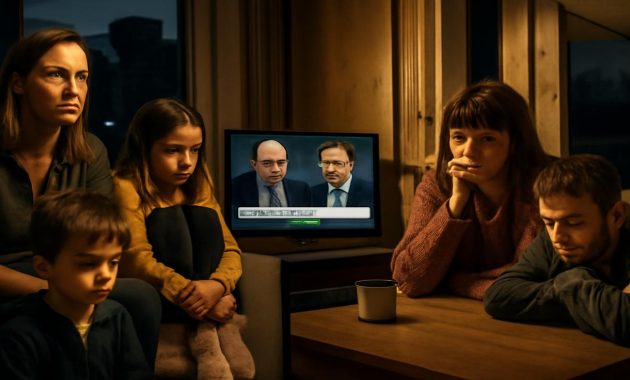
The light begins to leave the day long before most people are ready to say goodbye. On a damp November afternoon in 2026, the playground at the end of the street empties out faster than usual. A whistle of cold wind moves through the metal bars of the climbing frame, and a seven-year-old boy in a dinosaur jumper looks up at the sky, already bruising into purple-grey. “Is it bedtime?” he asks his mother, tugging at her coat. It’s only 4:10 p.m.
This is what “just an hour” looks like, translated into real life. Earlier sunsets. Longer evenings that don’t feel earned. A new national argument about what time really means when you stretch it over a country as small, as crowded, and as divided as the United Kingdom.
The year the clock became a battleground
The 2026 clock change was meant to be simple: a technical tweak, an adjustment agreed on so many times in decades past that it had become a ritual rather than a debate. But that year, it hit differently. When the clocks fell back and sunset jerked earlier than many had anticipated—some regions seeing full darkness by 3:30 p.m.—something in the national mood snapped.
At first, the fury sounded almost trivial, another minor skirmish in the endless war of British small talk. People grumbled in supermarket queues and on crowded buses. “It’s ridiculous,” said one man in a hi-vis jacket, wiping rain from his forehead. “I leave home in the dark; I come back in the dark. What’s the point of a day if I never see it?”
But as the days shortened and shadows began lapping at mid-afternoon, the conversation sharpened. Parents posted photos of children eating dinner by lamplight, eyes heavy, body clocks scrambled. Therapists reported a spike in clients mentioning low mood, anxiety, a creeping sense of dislocation. In village halls and urban community centres, the same question surfaced in different accents: Who is this system really for?
Time, it turned out, was not neutral. It had a politics, an economics, a geography. And the 2026 change had dragged all of that into the light—just as the light itself withdrew.
The hour that stole the after-school world
For families, the new earlier sunset collapsed a fragile daily rhythm that was already under pressure. School pick-up, once the buffer between structured learning and the soft, meandering freedom of play, was swallowed by advancing night.
Outside a primary school in Leeds, car headlights formed a glittering queue in the drizzle. Parents stood hunched in thick coats, speaking in low voices about schedules suddenly turned upside down.
“They used to run around in the park for an hour after school,” said Nina, mother of two. “Now it’s dark when the bell goes. Proper dark. By the time we get home, it feels like the end of the world, not the end of the day.”
Children feel time in their bodies rather than on clock faces. When the sky insists it is night, but their energy insists it’s not, everything frays. Bedtimes become negotiations; homework slides into later, more exhausted corners of the evening. Dinner, already hurried in many homes, is squashed between the commute and a creeping sense of gloom.
In narrow terraced streets, living rooms glow blue with screens turned on a little earlier “just to calm things down.” The spontaneous bits that once lived in the edge spaces—kicking a football in the cul-de-sac, chatting to neighbours on the pavement, walking home the long way just because—start to vanish.
When campaigners talked about the 2026 clock change “wrecking family routines”, they weren’t only talking about logistics. They were talking about something softer and harder to measure: the lost in-between times where families stitch themselves together, one ordinary dusk at a time.
| Aspect of Daily Life | Before 2026 Change | After 2026 Change |
|---|---|---|
| School pick-up | Late-afternoon light, time for outdoor play | Often full darkness; children go straight indoors |
| Commute home | Dim but visible streets, more walking or cycling | Increased car use, higher reliance on artificial light |
| Evening mood | Clear divide between day, dusk, and night | Compressed daylight; evenings feel long and heavy |
| Time outdoors | Short post-work walks or playground visits | Mostly confined to weekends or rushed lunch breaks |
The slow bruise on mental wellbeing
Psychologists had predicted it, but few people expected to feel it so quickly. Within weeks of the 2026 change, GPs and mental health helplines reported a familiar pattern arriving early and with more intensity: symptoms of Seasonal Affective Disorder, exhaustion that felt out of proportion, and a general sense of heaviness people struggled to name.
In one Manchester counselling room, a therapist listened as clients—office workers, teachers, delivery drivers, retirees—described the same eerie sensation: time tightening around them. “It’s like the day shuts its door in my face,” said one. “By the time I get a moment to myself, it’s pitch black. I feel cheated.”
Light, or the lack of it, is not sentimental. It works on the body like a quiet chemical argument. Blue morning light helps regulate the circadian rhythm; evening light can soothe or stimulate depending on its quality. Artificial light, humming from office ceilings and smartphone screens, tries to stand in for the real thing but never quite manages it.
When sunset abruptly drags itself into the late afternoon, the body loses something it doesn’t easily replace: the reassuring arc of a day that stretches visibly from morning to evening. Instead, life begins to happen indoors, under bulbs and backlit surfaces. The outside world becomes a brief, rushed interval between obligations.
Mental health practitioners point out that while nothing magical happens to the brain at 4 p.m. versus 5 p.m., the patterns around those hours matter. A walk at the edge of daylight, the colour of the sky filtered through bare branches, the quick hello to a neighbour—these micro-moments are not hobbies; they are anchors. Nudge them out of reach, and people drift.
By January, conversations about the 2026 change had shifted from mild complaint to something more urgent. “We talk about mental health as if it’s purely individual,” one London-based psychiatrist observed, “but then we alter the entire scaffolding of the day and act surprised when thousands of nervous systems wobble at once.”
Urban nights, rural shadows
If the earlier sunsets unsettled urban families, their impact in rural areas was sharper, and in some ways, lonelier. The divide between lit city streets and dark country lanes, always present, suddenly widened.
In a village on the edge of the Yorkshire Dales, the last bus of the day wheezed into the stop at 5:15 p.m. By then, the hills were already black outlines against a steel-coloured sky. The air carried that peculiar rural darkness: full, deep, unbroken by neon.
“You feel the time change in your bones here,” said Alec, a farmer who had watched his children grow up in this landscape of long fields and short days. “We’ve always had to work with the light. But now, by the time the kids are back from school, you can’t even see the end of the lane. They’re stuck indoors, bouncing off the walls. Town kids can at least go to a café or youth club. We’ve got four lamp posts and a lot of mud.”
In cities, the earlier sunset triggered a rush to well-lit spaces: shopping centres, gyms, transport hubs glowing like artificial dawns. Urban residents complained about the oppressive darkness, but they had options. Streetlights, late-opening libraries, community events under fluorescent beams.
In the countryside, darkness felt more absolute. Long roads without pavements became even less welcoming to pedestrians. Isolated older residents, already careful about going out after dark, found their “safe hours” shrinking further. Teenagers without cars saw their social worlds contract to the size of their bedrooms and group chats.
The government’s argument—that standardised time kept the country synchronised and efficient—rang hollow for those watching the last light leave a hillside at 3:45 p.m. “Standard for who?” one Highland resident asked in an online forum. “Up here we lose the day while office lights in London are still blazing.”
The 2026 change didn’t create the urban–rural divide, but it illuminated it in a way that was hard to ignore. The national clock treated all places as if they lived under the same sky. They didn’t.
The invisible cost to children’s relationship with nature
Before the change, many schools had embraced outdoor learning, squeezing in forest-school sessions, nature walks, and after-class gardening clubs. These were meant to counteract a growing disconnect between children and the natural world, a gap measured in hours spent outside versus hours spent looking at a screen.
After the 2026 shift, those small pockets of nature time became harder to hold onto. Teachers in northern regions described a race against the clock. “Our outdoor session now feels like a heist,” said one primary school teacher in Newcastle. “We bundle them into coats straight after lunch and hope we can get them back before the sky shuts.”
By the end of the school day, any hope of unstructured time in the local park or woods had vanished into darkness. Parents, understandably wary of letting children roam in unlit spaces, defaulted to indoor plans. Nature became something reserved for weekends, weather permitting.
For younger children especially, this altered not just how often they encountered nature, but when. Dawn and dusk—those liminal, story-rich parts of the day when birds change shift and the air itself seems different—slipped out of reach. Instead of watching crows gather on winter trees, many found themselves staring at the reflection of their own faces in double-glazed windows.
The irony was painful. At the same time as public campaigns urged families to “get outside for your mental health” and “let kids explore the outdoors”, structural decisions about time quietly shrank the portion of the day when this was realistically possible for working households.
Nature writers often talk about the importance of “ordinary wildness”—plants pushing through pavements, foxes crossing streets, the sky changing colour above a bus stop. These experiences don’t demand a national park; they need only light, attention, and a sliver of time. The earlier sunsets of 2026 sliced into that sliver.
Whose time is it, anyway?
Behind the emotional arguments lay a simpler, sharper question: who gets to decide what time feels like? The 2026 change, with its brutally early sunsets, made it clear that not all hours are experienced equally.
A banker working in a glass tower might see the earlier dusk through a panoramic view, shrug, and stay at their desk for another four hours under climate-controlled lighting. A supermarket worker on a split shift might step outside just in time to watch the last smear of colour leave the sky before heading home to cook, clean, and manage homework.
Timing shapes whose exhaustion is visible and whose is treated as the background hum of the economy. When policymakers talk about productivity and energy savings, they are often thinking in aggregates, not in scenes: not in the image of a single parent doing bedtime with a restless three-year-old who has lost their sense of when the day ends.
Campaign groups began to frame the argument in these terms: time as a social justice issue. They pointed out that families with gardens, flexible working hours, or easy access to well-lit, safe public spaces could adapt. Others, living in cramped flats with long commutes and patchy public transport, could not.
The debate that unfolded was messy, sometimes bitter, often deeply personal. Some argued that darker evenings reduced energy use and traffic accidents. Others countered that the mental health toll, the family strain, and the widening gap between those with and without control over their daylight hours carried their own, less visible costs.
What made 2026 different wasn’t the abstract idea of moving the clocks. It was the growing refusal to accept that something affecting every single person in the country had to be treated as an unchangeable tradition rather than a choice with consequences.
Towards a kinder clock
As winter wore on, the early sunsets became familiar, then expected, then, for some, almost normal. Humans are adaptors; given enough repetition, most of us will eventually bend around a new pattern. But adaptation is not the same as consent.
In kitchen-table conversations, late-night radio phone-ins, and council meetings that went on longer than scheduled, a new vocabulary began to form around time. People talked about “light equity”, about designing the day around human rhythms rather than old economic assumptions. Some proposed regional variations, letting northern communities experiment with different arrangements. Others suggested permanent lighter evenings, arguing that the benefits to family life and mental wellbeing would outweigh the complications.
None of the solutions were simple. Every shift would inconvenience someone; every gain would sit next to a loss. Farmers worried about livestock routines; religious communities pointed to prayer times rooted in natural light; safety experts raised concerns about schoolchildren walking home in dim mornings instead of dim evenings.
And yet, under all the complexity was a quieter desire: to be taken seriously when people said the earlier sunsets hurt. Not just as a preference for lighter evenings, but as a real, lived strain—on bodies, on minds, on the fragile social fabric that holds households and communities together.
On a February afternoon, with the first hint of lengthening days in the sky, that same child in the dinosaur jumper returned to the playground at the end of the street. The light was still thin, but it stayed just long enough for him to climb the frame twice, hang upside down once, and launch a small, brave argument against the darkness.
His mother checked her watch, then looked at the horizon instead. “We’ve got ten more minutes,” she said. “Let’s use them.”
Perhaps that, in the end, is what the fury of 2026 was really about. Not the mechanics of moving the hands on a clock, but the feeling that our shared time—the daylight we all live beneath—shouldn’t be shaped without listening to the people who inhabit it, breath by breath, dusk by dusk.
Frequently Asked Questions
Why did the 2026 clock change cause so much anger in the UK?
The 2026 change brought especially early winter sunsets, which many people experienced as a sudden loss of usable daylight. This disrupted family routines, limited time outdoors after work or school, and appeared to worsen seasonal low mood. The anger grew because it exposed deeper issues around work patterns, regional differences in daylight, and who gets a say in how national time is organised.
How does an earlier sunset affect mental wellbeing?
Earlier sunsets reduce exposure to natural light, which helps regulate sleep, mood, and energy through the body’s circadian rhythm. When it gets dark soon after school or work, people often have fewer opportunities for outdoor activity, social contact, and decompression time, all of which can buffer against anxiety, depression, and seasonal affective symptoms.
Why are rural communities hit differently by clock changes?
Rural areas tend to have less street lighting, fewer indoor social spaces, and more limited public transport. When darkness falls earlier, travel feels riskier, social options shrink, and children and older people may feel more confined to their homes. While cities can partially offset darkness with artificial light and late-opening venues, rural areas often cannot.
Do earlier sunsets really “wreck” family routines, or is that exaggerated?
For some families the impact is mild, but for many—especially those with long commutes, limited outdoor space, or young children—the change seriously compresses the usable part of the day. After-school play, walks, and errands often move indoors or disappear, and bedtimes, screen time, and general mood can all be affected. What looks small on a clock can feel large in daily life.
Could changing how the UK handles clocks improve wellbeing?
Potentially, yes. Options like keeping lighter evenings year-round, experimenting with regional time arrangements, or aligning work and school hours more closely with daylight could help many people access more natural light and outdoor time. Any change would bring trade-offs, but treating time as a public wellbeing issue rather than a fixed tradition opens space for more thoughtful, inclusive decisions.