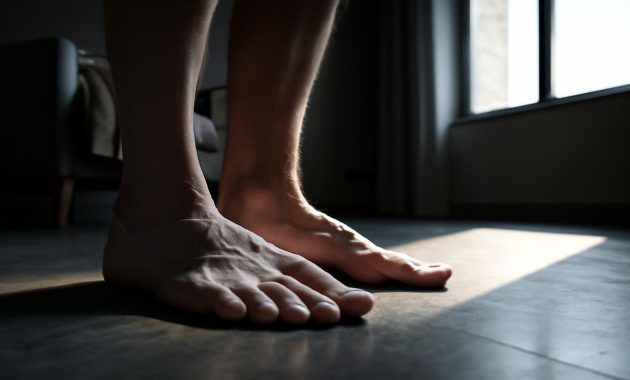
The first shock always starts in the feet. You shuffle out of bed, half dreaming, and the world is still hushed and blue with early morning. Then your toes leave the warm border of the rug and land, unprotected, on the kitchen tiles. The cold rises like a tide. Your shoulders twitch. Your breath catches. You feel it in your spine, in your jaw, in the way your fingers curl into themselves. Somehow, a few square inches of chilled skin under your soles have recruited your whole body into shivering. It feels wildly unfair—and strangely mysterious.
The Quiet Conversation Between Your Feet and Your Brain
Under the skin of your feet, there’s a hidden landscape of nerves and tiny sensors that almost never get the spotlight. We usually think of feet as blunt tools of movement—things that walk, run, balance—but they’re also exquisitely tuned reporters of the world beneath you. They are full of thermoreceptors, microscopic sentinels that notice the slightest change in temperature and whisper it up to your brain.
When you step onto a cold floor, especially with bare skin, those receptors don’t just send a mild memo. They send an urgent bulletin: It’s cold down here. A lot colder than it was a moment ago. Your brain receives that news in milliseconds and immediately broadens the story. It doesn’t limit the response to your feet; it behaves as if the entire body might be under threat of cooling.
Why such drama? Because, from your brain’s point of view, temperature isn’t just a comfort issue; it’s survival. For most of human history, an unprotected body touching cold ground could mean losing precious heat faster than you can make it. You and I might be walking from the bedroom to the coffee maker, but your nervous system thinks in older, harsher landscapes—wet soil, icy stone, frigid riverbanks. In those places, cold ground was a serious warning sign.
So the message leaps from the nerves in your feet, up through your spinal cord, and into your brain’s temperature control center, the hypothalamus. And from there, a quiet panic begins: conserve heat, slow the loss, protect the core. What started as a simple barefoot step turns into a whole-body negotiation with the cold.
How a Cold Floor Turns On Your Body’s Emergency Heating System
Imagine your body as a house with an overprotective thermostat. The core rooms—the brain, the heart, the lungs—must stay warm. The extremities, like your hands and feet, are more like drafty hallways and porches. They’re exposed, expendable in a pinch. When those outer edges complain of cold, the thermostat tends to overreact.
Stepping onto a chilled floor triggers a chain reaction:
- Blood vessels in your feet constrict. Tiny muscles around those vessels tighten, narrowing the flow like a hand squeezing a garden hose. Less warm blood reaches the skin, so less heat leaks out into the floor.
- The constriction spreads upward. It doesn’t stop neatly at your ankles. The signal rolls through your legs, into your hands, up toward your ears and nose. Areas that are usually warm begin to feel oddly distant and cool.
- Your muscles get involved. You might start to shiver ever so slightly. Even if you don’t notice obvious shivering, your muscles may tighten in small, ongoing contractions that burn fuel and generate heat.
- Your perception of temperature shifts. The brain, freshly reminded of the cold, dials your awareness toward discomfort. You feel colder, more vulnerable, more awake than you did two seconds ago.
All of this happens because heat prefers to escape through the edges. Your feet, in direct contact with a cold surface, become an open door. And when one door is open, your body acts as if every window might be next.
There’s a physics side to this too. A hard, dense surface like tile or concrete doesn’t just feel a little cool; it’s a heat thief. Those materials pull warmth away from your skin far faster than, say, wood or carpet. The soles of your feet have rich blood flow and not much insulation. Put them on an efficient heat sink, and it’s like pressing a warm hand against a block of ice: the change is sudden and dramatic.
The Strange Power of Feet in Your Sense of Comfort
Here’s an odd truth: your overall sense of “Am I warm or cold?” is partly decided by how your feet feel. It’s not the only factor, but it’s surprisingly influential. You’ve probably had this experience: your torso is wrapped in a sweater, the room is a reasonable temperature, and still you feel deeply uncomfortable—until you put on socks or slippers. Then, as if by magic, your whole body seems to exhale.
This isn’t just in your imagination. The nervous system pays a lot of attention to the hands and feet because they are our primary explorers. They touch ground, water, air currents, objects. These constantly updating reports strongly color your mood and bodily awareness. If your feet are cold, your brain interprets the environment as “cold,” even if a thermometer disagrees.
Consider this subtle daily drama: you’re working from home, sitting at a desk. Your upper body is still, your legs are mostly motionless, and your bare feet are resting on a hardwood floor. Over time, that slow, steady conduction of heat through the soles begins to cool you down. You may find yourself hunching your shoulders, rubbing your arms, maybe reaching for a sweater. The room hasn’t changed, but your body’s interpretation has shifted.
We tend to think of temperature as a single number: 18°C, 20°C, 73°F. But your body experiences it as a patchwork of local climates. Warm lap from the laptop. Cool draft around the ankles. Neutral forehead. Slightly cold toes. When enough of those peripheral signals tilt toward cold, your brain revises the forecast: We are cold.
That’s why warming your feet can feel disproportionately comforting. A pair of thick socks, a small rug, or just sliding your feet under a blanket can instantly recalibrate your sense of safety and ease, even if the air around you hasn’t budged a single degree.
What’s Really Happening in Your Skin and Blood
Under the surface, an intricate dance of biology is unfolding every time your bare feet meet a cold floor. It’s not just about nerves complaining; it’s about circulation, insulation, and heat distribution.
Your feet are structurally different from much of the rest of your body. They’re built to handle pressure, friction, and movement. The skin is thicker. The fat is arranged to cushion rather than insulate. Blood vessels are embedded in a way that helps control temperature exchange with the ground—useful if you’re moving, less so if you’re standing still on icy tiles.
Here’s how your body’s built-in temperature management kicks in:
- Vasoconstriction and vasodilation: When cold hits your soles, the small arteries narrow to slow heat loss. In some people, this response is so strong that their toes turn pale or bluish. Later, the vessels may briefly reopen (vasodilation), giving a rush of warmth or even redness. This alternating pattern helps prevent tissue damage but can make you feel as if your temperature is fluctuating wildly.
- Core versus shell: Your body prioritizes keeping the “core” warm—where your vital organs live. The limbs and skin become the “shell,” allowed to cool more. Cold feet are often a sign that your body is defending the warmth of your center.
- Metabolic response: In deeper cold, your body will increase its metabolic rate to produce more internal heat. You may crave food, especially carbohydrates or fats, as your system looks for extra fuel.
Meanwhile, your mind weaves its own story about what all this means. That story can amplify the physical realities. If you’re already tired, anxious, or stressed, being jolted by a cold floor can trigger a stronger whole-body reaction. You might feel tense, irritable, or suddenly impatient, as if the day has started with a minor act of betrayal. The body and mind read the same signal—cold—and agree, a bit dramatically, that this is not okay.
An interesting twist: if you regularly expose your feet to cold—say, walking barefoot in a chilly house all winter—your body can adapt somewhat. The blood vessels learn to constrict a bit less aggressively. The nerves become less alarmed, like city dwellers who stop jumping at every car horn. You may not feel as distressed by cold floors over time, even if the temperature is the same.
How Different Surfaces Steal Your Heat
Not all floors are equal in their chilly ambitions. The way a surface feels under your bare feet depends on how quickly it can draw heat away from you. That’s why a wooden floor and a stone floor at the same temperature can feel so different.
| Floor Type | How It Feels Barefoot | Reason |
|---|---|---|
| Tile or Stone | Very cold, even in a warm room | High thermal conductivity pulls heat quickly from your skin |
| Concrete | Cool to cold, especially in winter | Dense material stores and absorbs heat efficiently |
| Hardwood | Mildly cool, often tolerable | Lower conductivity; doesn’t drain heat as fast |
| Laminate / Vinyl | Moderately cool | Thin layer over subfloor can still pass heat away |
| Carpet / Rug | Warm or neutral | Traps air, acts as insulation between your feet and the floor |
So when you say “The kitchen floor is freezing,” you’re really noticing how ruthlessly that particular material conducts your heat away. The floor isn’t generating cold; it’s just very good at borrowing your warmth and not giving it back.
Cold Floors, Ancient Bodies, Modern Lives
Walking barefoot on a cold surface is such a small, everyday moment that it’s easy to overlook the story it tells about who we are. Beneath your reaction lies the entire history of humans learning to navigate harsh landscapes with fragile, warm-blooded bodies.
Our ancestors learned quickly that cold ground is not a neutral partner. Bare feet on frozen earth could mean numbness, slower movement, vulnerability to injury. Over time, those who responded quickly to the warning signs—who covered their feet, who sought shelter, who listened when cold crept inward—were more likely to survive and pass on their genes. Your strong reaction to a morning step on a cold kitchen tile is a faint echo of those older struggles.
Yet we now live in a world where the cold floor is inside the house, not outside the cave. We have heating systems, socks with soft interiors, slippers with memory foam, thick rugs that transform a room’s entire mood. We’re able to play with this old relationship between our feet and the ground—sometimes choosing to toughen ourselves with barefoot walks, sometimes luxuriating in layers of fabric and warmth.
There is a certain intimacy in noticing how quickly your body reacts. The slight cringe of your toes. The instinctive desire to move, to find a mat, a rug, a patch of sunlight. These small behaviors are part of a larger choreography: a body constantly adjusting, defending, seeking comfort. You may not think of them as wise, but they are. They are your oldest intelligence, honed across thousands of winters.
And there is, perhaps, a hidden gift in this sensitivity. That burst of cold under your soles wakes you up to the present moment. You become sharply aware of where you are standing, of the line between indoors and outdoors, between safety and the indifferent chill of stone. Even as your shoulders hunch, you are suddenly and completely here.
Simple Ways to Keep Your Body from Chilling Through Your Feet
You don’t need to wage war against your floors, but you can negotiate with them. A few small choices can keep that “cold underfoot, cold all over” feeling from taking over your day:
- Keep a “landing pad” beside your bed. A small rug or mat where your feet first touch down can soften the transition from warm sheets to cool air.
- Use house socks or slippers as tools, not afterthoughts. Think of them as jackets for your feet—put them on before you start moving around, not after you’ve already been chilled.
- Layer your environment, not just your body. A narrow runner in a hallway, a kitchen mat in front of the sink, even folded blankets on the floor near your favorite chair can keep your feet from becoming tiny radiators feeding heat into the house.
- Move more when you’re barefoot. If you love the feel of bare feet, keep them in gentle motion. Wiggle toes, do calf raises, pace a bit. Movement floods the area with warm blood.
- Experiment with brief, controlled cold. Some people enjoy short bouts of deliberate barefoot walking on cool surfaces to build tolerance. Just be kind to yourself—this is adaptation, not punishment.
Each of these small shifts changes the conversation between your feet and your brain. Instead of sending constant alarm signals, your soles report something gentler: We’re okay down here. And when the feet are reassured, the rest of the body often follows.
Listening to the Messages Under Your Soles
The next time you step barefoot onto a cold floor and feel that instant, whole-body flinch, you might pause for just a heartbeat and listen. Beneath the discomfort, there’s a layered story: physics pulling warmth from skin into stone; nerves shouting up the spine; blood vessels narrowing their gates; a brain invoking old survival rules in a modern kitchen.
You can honor that story without letting it rule you. You might slide your feet into slippers, lay down another rug, or choose to cultivate a bit of resilience by lingering an extra second before moving away. Either way, you’re engaging in a dialogue with your body’s oldest instincts.
That patch of cold tile or concrete is not your enemy, just a particularly blunt teacher. It reminds you that you are a warm creature in a world that is, at its base, indifferent to your comfort. Your warmth is not guaranteed; it is constantly created, defended, and negotiated—starting, quite often, with the thin skin on the bottom of your feet.
And maybe, as you stand there and the chill climbs your legs like a tide, you’ll feel a strange sort of gratitude. Not for the cold itself, but for the way your body notices. For the shiver that moves through you like a whisper from an older time. For the simple, stubborn fact that you are, gloriously, alive enough to feel it.
FAQ
Does walking barefoot on cold floors actually lower my core body temperature?
In everyday situations, a brief walk on a cold floor is unlikely to significantly drop your core temperature. What you feel is mostly rapid heat loss from your skin and extremities, combined with your brain’s heightened awareness of cold. In very cold environments or over long periods, though, repeated exposure through bare feet can contribute to overall cooling.
Can cold floors make me sick or cause a cold?
Cold floors themselves don’t cause viral infections like the common cold. Those come from viruses. However, feeling chilled for long periods can mildly stress your body and may influence how well your immune system functions in the short term. That’s why many people feel more worn down when they’re often cold, especially through their feet and hands.
Why do my feet get cold faster than the rest of my body?
Your feet have a high surface area, relatively little insulating fat, and are often in direct contact with heat-stealing surfaces. When your body tries to conserve core warmth, it reduces blood flow to extremities first, so your feet and hands are usually the earliest to feel the chill.
Is there any benefit to occasionally walking barefoot on a cold floor?
For some people, brief and controlled exposure to cold can help build a modest tolerance and awareness of their body’s signals. It may improve circulation responses over time. But the key is moderation and comfort; if you have circulation problems, nerve issues, or certain medical conditions, you should be cautious and consult a healthcare professional.
What’s the simplest way to avoid feeling cold all over from cold floors?
Protect the contact point: your feet. Wear warm socks or slippers, add rugs in the coldest areas, and avoid standing still for long periods on chilly surfaces. Keeping your feet warm often transforms your entire perception of the room’s temperature and helps your whole body feel more at ease.