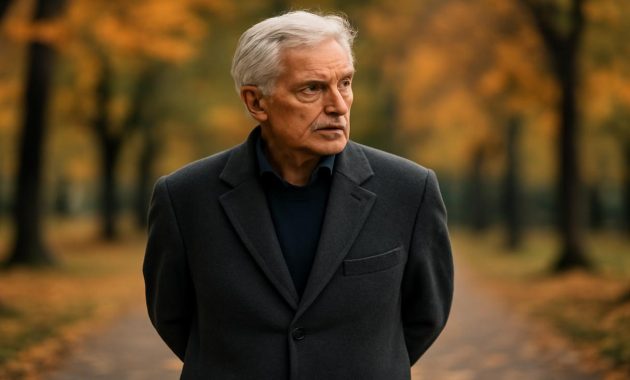
The first time you notice it, you’re not thinking about psychology at all. You’re just walking down a quiet street, or through a park, or along the edge of a lake, when you catch sight of someone in the distance moving slowly, their gaze roaming, their hands folded neatly behind their back. There’s something oddly calming about the posture. It feels thoughtful, almost old-fashioned, as if they’ve stepped out of another time—professors on university lawns, grandparents on evening strolls, poets pacing along riverbanks. And suddenly, you realize: you’ve done it too. On days when your mind is busy but your pace is soft, your hands somehow drift behind you, fingers laced, elbows loose, as if your body is quietly choosing this stance all by itself.
The Quiet Language of a Simple Gesture
Walking with your hands behind your back looks so ordinary that most of us never consider it might say anything at all. It doesn’t have the drama of crossed arms, the intensity of pointed fingers, or the clear signal of a wave. Yet, in the calm arc of swinging shoulders and tucked-away hands, there’s a whole conversation going on beneath the surface.
Psychologists have long known that the body speaks in its own dialect, revealing what the mouth keeps quiet and what the mind hasn’t even sorted out yet. Body language is not a perfect lie detector, but it is a pattern maker. Over time, some postures show up again and again in similar emotional states. Walking with your hands behind your back is one of those patterns—a subtle, wandering signpost that often points toward curiosity, contemplation, and a particular kind of quiet confidence.
Think of the times you’ve instinctively fallen into that posture. Maybe you were in a museum, drifting from painting to painting, letting your eyes drink in the colors. Or maybe you were walking around your neighborhood after a difficult conversation, replaying each sentence in your mind. Your hands slipped away behind you as if your body decided: you won’t need them for a while. No need to gesture, grab, type, tap, or defend. Just think. Just feel. Just observe.
Psychological Meanings Tucked Behind the Back
Under the lens of psychology, walking with your hands behind your back is rarely just a random habit. It can be a physical echo of what’s happening internally—a posture that matches a mental state. While people are complex and context always matters, a few themes show up consistently when researchers, therapists, and body-language observers describe this gesture.
A Posture of Thoughtful Observation
One of the most common interpretations is simple: you’re thinking. Deeply, gently, or just wanderingly thinking. This posture naturally slows your pace a little. You’re not charging ahead with swinging arms. Instead, you’re almost curating what reaches you—taking in details, noticing the way shadows fall on the sidewalk, the sound of distant traffic or birdsong, the shape of people’s faces as they pass.
Psychologically, this kind of walking often lines up with a state called “open monitoring.” It’s when your attention is relaxed but alert, scanning your surroundings without a fixed target. People in this mode may be making sense of a problem, digesting new information, or letting their mind drift into daydreams. The hands behind the back become a kind of physical bookmark: you’re not “doing” right now; you’re “noticing.”
Vulnerability and Trust, Hidden in Plain Sight
From a survival standpoint, walking with your hands behind your back is not a defensive move. Your chest is open, your throat is exposed, and your arms are not in a ready position to push away, shield, or strike. Nonverbal experts sometimes describe this as a “high-trust posture.” You are, quite literally, not guarding yourself.
This doesn’t always mean you’re consciously thinking, “I trust everyone around me.” It’s subtler than that. But on some level, the environment feels safe enough that your body doesn’t prepare for conflict. This is why you might see this posture more often in spaces where people feel protected: quiet campuses, well-known neighborhoods, gardens, museums, or corridors of familiar offices.
In psychology, this relaxed openness is sometimes associated with a calm nervous system. When your fight-or-flight response is low, your muscles soften, your breathing deepens, and postures like this appear more frequently. It’s the body’s way of saying: “You can afford to be unguarded right now.”
Subtle Confidence, Without the Show
There’s another thread woven through this gesture: quiet self-assurance. You’ll see it in leaders strolling through a factory floor, teachers moving along classroom aisles, doctors on hospital rounds, or elders in a family walking around a familiar home. Their hands don’t need to claim space in front of them; they’re not using dramatic gestures to dominate the environment. Instead, the hands rest behind, as if declaring, “I belong here; I don’t need to prove it.”
Psychologists often connect this to “non-defensive dominance”—a grounded sense of authority that doesn’t rely on threat. The posture can signal, consciously or not, that the person feels centered in their role. It’s not aggressive; instead, it can be comforting to others, especially when paired with a kind expression or attentive gaze. The message is more like, “I’m here, I’m calm, and I’m watching over things.”
An Outlet for Restless Energy
Not all hands-behind-the-back walking is pure Zen. For some people, especially those who tend to fidget, the posture doubles as a quiet container for anxious energy. Instead of tapping fingers on a table or picking at nails, they may clasp their hands behind them, interlacing fingers or gently tugging at their own knuckles as they walk.
In this case, the gesture can be both self-soothing and socially considerate. It channels restlessness into a less visible movement. The psychology here is a blend: part tension, part control, part habit. The person may be thinking hard, worrying, rehearsing a conversation, or simply dealing with an overloaded day—but they’re doing it in a way that looks composed from the outside.
Interestingly, this can sometimes mislead observers. What looks like calm reflection could actually be a quiet storm of overthinking. Context matters again: the same posture on a sunset beach might be peaceful; in a fluorescent hallway before a job interview, it might be the body’s attempt to hold itself together.
Why It Shows Up in Elders, Teachers, and “Old Souls”
If you picture someone walking with their hands behind their back, there’s a good chance your mind conjures an older person. Maybe a grandparent on an afternoon stroll or an elderly neighbor circling their garden. There’s a reason this stereotype exists, and it’s not just nostalgia.
For older adults, this posture can be partly biomechanical. As the spine ages and balance subtly shifts, placing the hands behind the back can gently counterbalance the torso, stabilize the gait, and relieve pressure on the lower back. It becomes a naturally comfortable way to move. But psychology weaves itself into this, too.
Many older people inhabit a different relationship to time. They’re less rushed, less tethered to constant phone-checking, more attuned to the pace of the day itself—light changing on walls, the smell of dinner somewhere down the block, the hum of evening traffic. Walking with hands behind the back fits this slower, more observational rhythm. It’s a posture that belongs to people who are not racing toward the next task as much as they are wandering through the present moment.
Teachers and professors often adopt the same stance, especially when moving through familiar spaces like lecture halls or corridors. They observe more than they act; they listen, scan, consider. The posture matches their mental landscape: watchful, assessing, thinking ahead while staying lightly rooted in the now. Students, picking up on this over the years, may unconsciously copy it when they themselves are lost in thought—one reason the gesture can feel like the inheritance of an “old soul” even in a young body.
Cultural Flavors of the Same Posture
Although the basic gesture looks similar across the globe, cultures tint it with their own meanings. In some countries, it’s common among police officers, security staff, or members of the military while on patrol or guard duty. There, the posture blends authority with readiness: the individual appears calm but observant, scanning their surroundings while keeping a non-threatening profile.
In other settings, especially more formal or traditional societies, it can be a sign of respect. A student might walk behind a teacher with hands tucked back, or a younger person might adopt the stance when listening carefully to an elder. Even without anyone naming it, the body falls into a pattern: “I’m not here to interrupt or interfere; I’m here to pay attention.”
| Psychological Theme | What the Posture Often Signals |
|---|---|
| Thoughtful Observation | Mind is engaged in reflection, curiosity, or gentle analysis. |
| Relaxed Trust | Environment feels safe enough to lower physical defensiveness. |
| Quiet Confidence | Sense of calm authority without needing to dominate space. |
| Contained Anxiety | Restless energy is being managed in a controlled, subtle way. |
| Cultural Habit | Learned stance from elders, teachers, or roles that value observation. |
When Your Body Knows Before Your Mind
One of the more intriguing aspects of this posture is how unconscious it usually is. People don’t typically think, “I am now feeling introspective, therefore I shall place my hands behind my back.” Instead, they simply notice, if at all, that they’ve done it: fingers threaded together, shoulders loose, weight shifting slowly from heel to toe.
Psychologists sometimes talk about this as the body leading the mind. Our nervous system responds to the world quickly, emitting micro-adjustments in muscle tension, posture, and movement long before we find words for what we feel. In that sense, walking with your hands behind your back can function like a tiny early-warning signal—or early-whisper signal—of what’s happening inside.
Maybe you’re more stressed than you realized, and your hands slip back as you walk down a hallway, searching for a place to put your nerves. Or maybe you’re more at peace than you thought, sliding into this relaxed stance while taking in a beautiful landscape, your mind idling in open curiosity. The gesture can reveal moods we haven’t consciously named yet.
This is where self-awareness can turn a small habit into a quiet tool. You might notice, over time, that you adopt this posture in particular situations: after intense conversations, while solving creative problems, during solitary walks. Paying gentle attention—not obsessively, just curiously—can help you map your own body’s grammar. What do your hands do when your mind needs space? When do you feel safe enough to open your chest? When do you hide your hands because you’re anxious about how they might betray your feelings?
Can Changing the Posture Change the Mood?
There’s also an interesting reverse possibility: instead of mood shaping posture, posture can shape mood. Some studies suggest that the way we stand and move feeds back into how we feel and think. While the research is still evolving and not every bold claim about “power poses” has held up, it’s reasonable to say that body and mind are in conversation, not a one-way monologue.
So what happens if you deliberately walk with your hands behind your back? For many people, it nudges them toward a slower pace and wider field of attention. It may feel awkward at first, especially if you’re used to walking quickly with your arms free. But a few minutes of this posture in a calm place—a park, a quiet street, a long hallway—can shift your focus from internal chatter to external detail. This is one pathway into a more mindful state: letting the body lead you into observation.
Of course, this isn’t magic. It won’t erase your problems or sudden spikes of anxiety. But the act of tucking your hands away, softening your chest, and letting your gaze roam can create a pocket of mental spaciousness. You may find yourself breathing more slowly, noticing subtler sounds, or thinking about an issue from a different angle. Sometimes, just removing your hands from the constant temptation to hold, check, scroll, and type is a small revolution in itself.
Listening to What Your Walk Is Saying
The beauty of walking with your hands behind your back is that it is almost never just one thing. It can be wise and vulnerable, confident and uncertain, serene and restless, depending on who is doing it and why. That’s the deeper truth of body language: it doesn’t hand us neat, one-sentence explanations; it offers invitations to look closer.
If you want to understand what this gesture means for you, the most useful approach isn’t to memorize a list of universal translations, but to practice gentle noticing. The next time you catch yourself or someone else walking this way, ask a few quiet questions in your mind:
- What is the emotional weather right now—stormy, sunny, or somewhere in between?
- Does the environment feel safe, familiar, or closely watched?
- Is there a big decision or dilemma being mulled over in the background?
- Is this a person who often observes more than they speak?
Over time, certain patterns will emerge. Maybe you’ll realize that you adopt this stance mainly when you’re deeply curious—on trips, in new places, around art or nature. Or maybe you’ll notice it spikes when you’re worried, especially when your worries are too delicate to talk about yet. That recognition alone can be powerful. It can prompt you to seek support, to write things down, or simply to give your thoughts the time they need to unfold.
In a world of fast scrolling and endless distraction, walking with your hands behind your back might be one of the last unhurried gestures we still carry without thinking. It’s the body’s way of easing out of doing and into being, turning attention from the glowing screen in your palm to the real, textured world around you.
So the next time you find your fingers folded softly behind you as you move through a hallway, a garden, or a city street, you might pause—just for a second—to notice. Your body could be telling you something: slow down. Look closer. You’re thinking now. You’re safe enough to wander. And for a while, at least, you don’t need your hands for anything but holding the quiet.
FAQ
Is walking with your hands behind your back always a sign of confidence?
No. While it can signal quiet confidence and comfort in one’s surroundings, it can also reflect anxiety, habit, or simple physical comfort. Context—facial expression, pace, setting—matters more than the posture alone.
Does this posture mean someone is hiding something?
Not usually. Psychologically, it more often indicates observation or reflection rather than deception. People who are actively hiding something are more likely to show fragmented, tense behaviors rather than this open, relaxed stance.
Why do older people seem to walk this way more often?
For many elders, it’s partly physical—helping with balance and easing back strain—and partly psychological. A slower pace of life, deeper habit of observation, and a sense of familiarity with their environment all encourage this posture.
Is walking with hands behind the back considered rude in any culture?
In most places, it’s neutral or even respectful, especially in formal settings. However, in very hierarchical environments, combining this posture with an arrogant expression or stance could be seen as dismissive. Cultural norms and tone of body language as a whole matter.
Can I use this posture to feel calmer or more focused?
Many people find that intentionally walking with hands behind the back—especially in a quiet space—slows their pace and widens their attention. It can gently encourage a more reflective, observant state, though it’s not a cure-all for stress or anxiety.