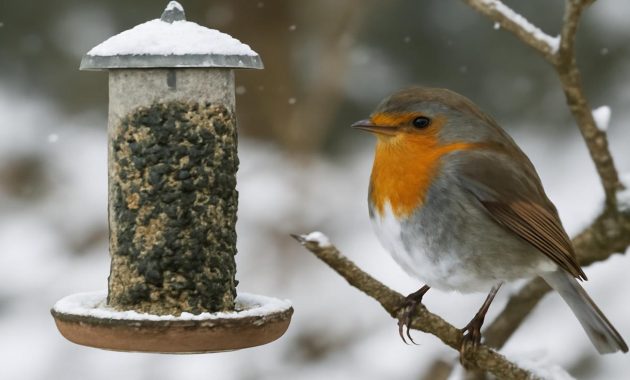
The first time I watched a robin die, it was snowing in slow, deliberate flakes, and the world was unusually quiet. Our garden looked like a postcard: frosted seedheads, a soft white lawn, and a bird table piled high with “help” I thought I was offering—generous mounds of seed, suet, and crumbs. I remember feeling oddly proud of this little buffet, as if I’d set a beautiful table for beloved guests. And then I noticed the robin.
He was fluffed up like a tiny russet pom-pom, perched beside the bird tray, head tucked low into his chest. The snow on the rail had turned to a wet slush. The seeds I’d scattered just a few hours earlier were no longer crisp and dry. They were swollen, clumped, darkened with meltwater. He pecked half-heartedly, then stopped, shivered, and closed his eyes for too long.
At the time, I didn’t know what I was really looking at. I didn’t know that “kindness,” left carelessly unattended, can quietly become a threat. Wet birdseed, I would later learn, is more than a soggy inconvenience. In winter, it can kill.
When Good Intentions Turn Lethal
Most gardeners who feed birds in winter imagine the same scene: grateful finches and tits hopping through fresh seed, a flash of color against the bare branches, a tiny burst of life in the cold. It feels like a simple equation—food plus winter equals help. But nature rarely does simple equations without fine print.
Here’s the uncomfortable truth: when birdseed gets wet—whether from rain, snow, freezing fog, or even condensation—it doesn’t just look unappetizing. It changes. Seeds swell as they absorb moisture. They crack. The outer hull softens and splits. Invisible fungi wake up and stretch their filaments. Bacteria take advantage of the buffet. Within surprisingly little time, that generous pile of food becomes a slow, silent hazard.
You might not see it at first. The seed looks just a bit darker, slightly clumpy, maybe with a faint musty smell if you lean in close. But the birds don’t lean in. They’re hungry, and in winter, hunger doesn’t leave much room for caution. They eat what they find—mold spores included.
In cold weather, a bird’s body is working at full throttle just to stay alive. Tiny hearts are hammering; metabolism is racing. A single night below freezing can be the difference between life and death for a bird with an empty crop. Now imagine layering on a dose of mycotoxins from moldy seed or a bacterial infection from decaying grains. The effect is often not dramatic or cinematic. It’s subtle. A bird becomes just a little slower. It fluffs up a bit more. It struggles a bit harder. And sometimes, it simply doesn’t make it through the night.
The Hidden World Growing on Your Feeder
Take a moment to imagine your bird table or feeder from a bird’s perspective. The snow is bright, the air is sharp, and the feeder is a crowded café that never quite closes. Beaks dip into the same tray of seed again and again. Tiny feet scratch and shuffle through hulls, dropping traces of dirt and droppings. Moisture seeps in from all sides—snow blown sideways, mist settling, your own breath hanging in the air.
To us, it still looks charming. To a microbiologist, it looks like a thriving high-rise of microscopic life. Spores of Aspergillus, Penicillium, and other molds settle onto any damp surface and begin to grow. Bacteria find a foothold in the nutrient-rich soup of cracked seeds and bird droppings. Even if you can’t see fuzzy mold yet, spores and toxins can already be present.
Some of these fungi produce poisons called mycotoxins. Birds that ingest contaminated seed may develop respiratory issues, digestive problems, and suppressed immune systems. One of the most infamous culprits, aspergillosis (a fungal infection), can cause breathing difficulties, lethargy, and ultimately death. For a bird already burning through calories to survive, an illness like this is often a final straw.
There’s another, less obvious problem with wet seed: it can freeze solid. Birds will sometimes still peck at these blocks, but frozen, water-laden seeds are harder to digest and provide less usable energy. Imagine needing a hot meal and receiving an icy brick instead—you’ll use precious calories just trying to warm up what you eat.
We rarely see these stories play out in detail. We just notice, vaguely, that fewer birds are visiting, or that one particularly familiar blackbird has stopped appearing. It’s easy to blame the neighborhood cat, or a hawk, or “nature taking its course.” And of course, predators and weather do claim lives. But sometimes, the tragedy starts in our own back gardens—with a feeder we filled lovingly and forgot to check after the snow.
Small Bodies, Narrow Margins: Why Winter Is So Unforgiving
On a bleak January morning, a blue tit weighs less than a tablespoon of sugar. Yet that tiny body may burn through up to a third of its weight in food in a single winter day just to keep from freezing. As daylight shrinks and the cold deepens, the margin for error narrows to almost nothing.
In this unforgiving season, every mouthful matters. A bird that fills its crop with low-quality or contaminated food doesn’t just miss out on needed calories—it also spends precious time and energy eating something that may actively weaken it. A bird can’t “sleep it off” the way we might after a questionable meal. By nightfall, it must have enough stored energy to endure hours of darkness and cold. If its reserves are compromised by illness or poor nutrition, the night wins.
Now, layer in another subtle challenge: crowding. Winter feeding stations tend to draw many individuals into close proximity. They jostle shoulder to shoulder at perches and trays, scattering seed and droppings in all directions. Any pathogen—bacterial, fungal, or viral—has the perfect opportunity to spread. Wet, spoiled birdseed becomes a shared risk, a common table with invisible dangers passed from beak to beak.
And so, the mistake many gardeners make isn’t “feeding birds.” It’s setting food out and leaving it. We forget that in winter, time itself becomes an ingredient in the feeder. The longer seed sits wet and undisturbed, the more fully it transforms from alimento into hazard.
How to Feed Generously Without Feeding Danger
The good news is that the solution isn’t to stop feeding birds. Far from it. Winter food can significantly boost survival rates for many garden species. The key is to feed like a careful steward, not a hopeful scatterer.
Think of yourself less as a “feeder” and more as a small, very busy café manager. Your job is not just to stock the buffet, but to keep it fresh, clean, and safe. That means paying attention to weather, portion sizes, and timing. It means watching not only who visits, but how they feed.
Here is a simple, mobile-friendly overview of what helps and what harms when it comes to winter bird feeding:
| Practice | Helpful for Birds | Risky or Harmful |
|---|---|---|
| Amount of seed | Small portions that birds finish in a day | Huge piles left for days to go stale |
| Weather awareness | Adjusting feed before/after rain or snow | Leaving the same wet seed out in all weather |
| Feeder design | Covered, well-drained feeders; raised trays | Flat, uncovered surfaces that pool water |
| Maintenance | Regular cleaning and discarding damp seed | Topping up old seed without removing it |
| Food types | Quality mixed seed, sunflower hearts, suet | Cheap, dusty seed mixes that spoil quickly |
On a practical level, this might mean you start putting out seed in smaller amounts, but more often. Instead of filling the feeder to the brim “to save time,” you give enough for a day or two, then check back. It means choosing feeders with roofs or hoods that shield food from direct rain and snow. It might mean elevating ground trays on feet or mesh to allow drainage, and sweeping up spilled seed before it can rot in damp grass.
If you tap a feeder and the seed doesn’t move freely—or if you see clumps, dark patches, or an odd smell—empty it. Don’t be tempted to mix in fresh seed on top, hoping to dilute the problem. Birds will inevitably dig through, scattering the spoiled parts back into circulation.
The Winter Routine That Actually Saves Lives
Imagine building a small ritual into your winter days. You pull on your boots, step into the sharp air, and head to the feeder with a small scoop rather than a bucket. You pause and listen—the dry rattle of seed inside, the hushed tap of a coal tit above you, the faint rustle of a blackbird in the hedge. You look closely: is the seed free-flowing? Are there damp corners, or signs of mold around the edges?
Once a week—or more often in wet, mild spells—you take a few extra minutes to wash and dry your feeders. Warm water, a brush, perhaps a mild disinfectant or vinegar rinse, then air-drying completely before refilling. You scrape droppings off perches, clear away any soggy remnants beneath, and scatter only a modest fresh offering. It doesn’t feel grand or dramatic. It feels almost mundane.
But for the birds, it’s the difference between a reliable lifeline and a risky gamble. You’re not running a lavish banquet; you’re running a clean, efficient soup kitchen in the coldest part of the year. And they come to depend on that.
Reading the Birds: Clues in Feathers and Behavior
Birds rarely show illness in obvious ways until they’re very unwell; looking vulnerable makes them a target. Still, if you pay attention, their bodies and behavior start to tell you when something is wrong in your little garden ecosystem.
An unusually fluffed-up bird that sits still for long periods, tail bobbing slightly as it breathes; one that closes its eyes frequently on the feeder; one that perches alone, away from the usual bustle—all are subtle warning signs. So are birds with stained or matted feathers around the beak or vent, or those that seem unsteady when they land.
If you begin to notice these patterns shortly after long spells of wet weather and minimal feeder maintenance, consider it a gentle accusation from the wild itself. Something in your feeding setup may be contributing to the problem. The fastest response: clear away all old, damp food, thoroughly clean your equipment, and feed only in small, fresh amounts until normal activity resumes.
It can be sobering to realize that our attempt at help might be part of the pressure wildlife quietly faces. But it’s also empowering. Unlike so many environmental threats, this one is squarely within our control.
From Habit to Habitat: Rethinking Winter Help
Feeding birds is never just about calories. It’s about relationship. It’s about the way we see ourselves in the web of life beyond the patio doors. When you learn that wet birdseed can kill, you’re being invited into a deeper, more attentive way of gardening for wildlife.
Instead of thinking, “I put out food, so I’ve done my part,” you begin to think, “How healthy is the whole system I’m creating?” You might leave some seedheads standing on perennials rather than cutting everything back in autumn, giving finches something to pick at that never sits saturated in a feeder. You might plant more winter-berry shrubs and trees, offering natural food that resists mold better in situ than in a plastic tube.
And you might start watching your birds not just as colorful decorations, but as neighbors whose lives are linked to your choices. The sound of wings at the feeder becomes a question: is what I’m offering today truly safe?
On another falling-snow morning, years after that first robin, you might find yourself doing things differently. You’ll step out just after dawn, brush last night’s snow from the roof of the feeder, and tap the sides. The seed inside will whisper and slide; you’ll see no dark lumps, no damp clumps. You’ll top it up modestly, then sweep the ground beneath with a gloved hand, removing yesterday’s soggy leftovers.
Then, as you step back, the first brave bird will land—a blue tit, perhaps, or a shy dunnock edging in from the hedge. It will cock its head, test the perch, and tuck into the fresh seed with quick, purposeful pecks. Above, a blackbird will watch, waiting its turn. Around you, the garden will hold its breath a little less tightly.
In that small moment, you’ll know: you’re not just feeding birds. You’re taking responsibility for the lives that trust your patch of earth enough to visit it every winter day.
FAQ
Why is wet birdseed dangerous for birds?
When birdseed gets wet, it swells, cracks, and creates ideal conditions for mold and bacteria. Some molds produce toxins that can make birds sick or weaken their immune systems. Damp seed can also freeze, making it harder to digest and less nutritious, which is especially dangerous in winter when birds need maximum energy.
How can I tell if the seed in my feeder has gone bad?
Look for clumps, darkened or discolored patches, a musty or sour smell, or visible mold growth. If you tap the feeder and the seed doesn’t move freely, that’s another warning sign. When in doubt, throw it out and clean the feeder before refilling.
How often should I clean my bird feeders in winter?
In wet or changeable weather, aim to clean feeders at least once a week, and more often if seed gets visibly damp. A quick rinse and scrub with warm water and a brush, followed by thorough drying, can greatly reduce disease risk.
Is it better to stop feeding birds in very wet or snowy weather?
You don’t need to stop completely, but you should adapt. Offer smaller amounts of food more frequently, use covered feeders, and remove any wet or clumped seed promptly. Check feeders after snowfalls or heavy rain and clear out anything that looks damp.
What types of bird food are safest in winter?
High-quality mixed seed, sunflower hearts, peanuts (in proper mesh feeders), and suet or fat balls are excellent choices. These provide dense energy and are less likely to spoil quickly if kept dry. Avoid very cheap, dusty mixes that contain a lot of filler grains birds won’t eat; these tend to sit, get wet, and mold faster.
Is feeding birds in winter really helpful, or does it make them dependent?
Responsible winter feeding supports birds during the hardest months and can improve survival rates, especially in intense cold or snow. Birds still forage widely and don’t rely solely on one garden, but a well-managed feeding station can be an important part of their winter strategy.
What’s the single most important change I can make starting now?
Only put out as much seed as the birds will eat within a day or two, and remove anything that becomes wet or clumpy. This one habit, combined with regular feeder cleaning, dramatically reduces the risks that wet birdseed poses to winter birds.