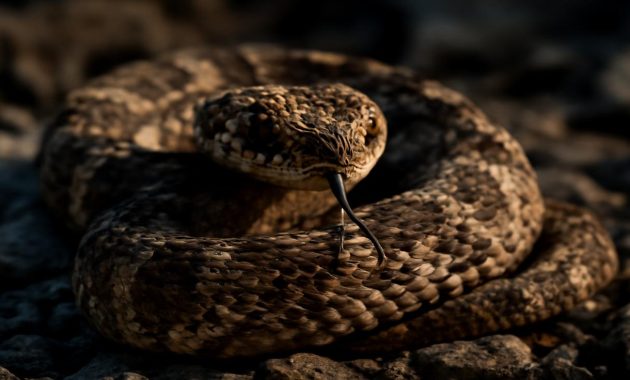
The road was still steaming from the afternoon rain when the motorbike rolled to a stop. Horns blared, tuk-tuks coughed black smoke, and the smell of fried garlic drifted from a nearby stall. A child darted between parked cars, barefoot, chasing a plastic bottle cap as if it were treasure. No one noticed the thin, brown line curled under the crumbled edge of the curb. It looked like nothing more than a discarded shoelace, darkened by the rain. But this “shoelace” could kill an adult in the time it takes to boil an egg.
The snake that prefers company
We like to imagine deadly wildlife as something that lives “out there” – in jungles, deserts, and uninhabited forests. Danger belongs, we tell ourselves, beyond the last concrete wall. Yet some of the most lethal creatures on Earth have quietly learned the opposite lesson: where humans go, opportunity follows.
Among them is a tiny, unassuming snake found from busy Indian villages to crowded fields in Bangladesh and Pakistan, from temple courtyards to half-finished construction sites. Herpetologists call it the common krait, but its Latin name, Bungarus caeruleus, has begun to carry a whispered weight in medical wards. Locals have their own names: karait, dil band, the “heart stopper.”
The krait did not ask for this life among people. Roads cut through its old hunting grounds. Mud walls became brick. Where once there were open fields, now there are houses stacked shoulder to shoulder. But with every new settlement came a gift: rats, mice, and lizards, abundant and careless. For a small nocturnal predator with a taste for such prey, busy places turned into buffets.
That is how this snake ended up hiding beneath your front step, or under the cool dampness of a bathroom slab, or in the soft, crumbling soil next to a drain. While the day belongs to people, the night is the krait’s shift. The trade-off is simple and brutal: we get comfort and food storage; the krait gets rodents and shelter. The cost is measured in accidents – and in minutes.
The silent weapon in a small body
Seen in broad daylight, a krait hardly looks like the villain of a survival story. It usually measures between half a meter and a meter in length, though some individuals grow a little larger. Its body is slender, polished-looking, almost neat. The scales are glossy, often a deep inky blue-black or brown, banded with thin white or yellow stripes that blur in poor light. Its head is only slightly wider than its neck, giving it a mild, almost modest appearance.
Yet inside that delicate frame is a cocktail so potent that just a fraction of a milliliter can shut down the body’s most vital systems. Krait venom is predominantly neurotoxic. It does not burn like some viper venoms, which rupture tissues and cause dramatic swelling. Instead, it moves quietly through the bloodstream, hunting for the nodes where nerves and muscles speak to each other.
At those microscopic junctions, the venom acts like a ruthless librarian in a chaotic archive. Messages that should pass from brain to muscle are intercepted. The signals to breathe, to swallow, to move your eyelids begin to flicker and fail. Often, the victim remains fully conscious as their muscles slowly fall silent, one after the other. Without treatment, paralysis can tighten like a net around the chest and diaphragm, cutting off breath entirely.
Doctors in rural emergency rooms sometimes describe it in simple terms: “The person looks fine, then they stop breathing.” In severe, untreated cases, collapse can come frighteningly quickly – within a matter of minutes to a couple of hours, depending on the dose of venom, the location of the bite, and the person’s size and health. It is not a dramatic, thrashing end like you might see in a movie. It is a slipping away, breath by breath.
Why so many people never feel the bite
The truly unnerving thing about kraits is not only their venom’s power, but the slyness of their delivery. At night, when the snake is active and hunting, most humans are at their most vulnerable: asleep on the floor, stretched on a cot, or dozing outdoors on a woven bed to escape the heat.
A krait searching for a mouse under a blanket has no interest in humans, but bare arms and ankles are simply obstacles in a tight, dark space. The snake may nip defensively and then vanish. The teeth are small and needle-sharp, the bite swift, almost surgical. Many victims never wake fully when it happens. They may think a thorn pricked them, or a mosquito bit. By the time the first symptoms appear – drooping eyelids, slurred speech, difficulty swallowing – valuable hours may have passed.
Even if the danger is recognized, distance can conspire against survival. Not everyone lives within a short ride of a hospital that stocks krait-specific antivenom. And speed, in this case, is everything. Venom that can begin killing within minutes leaves almost no margin for hesitation, home remedies, or denial.
Where snakes and people collide
In many parts of South Asia, the line between “wild” and “human” space is more suggestion than barrier. Goats graze on the edge of highways, banana trees bend over tin roofs, and rice paddies ripple just beyond backyard fences. Life spills in both directions, and so do the creatures that share the landscape.
The krait, shy by nature, rarely chooses to face a human directly. When disturbed, it typically tries to slip away, its smooth body flowing like a shadow into the nearest crack. Only when cornered or accidentally stepped on does it resort to its fangs. This is one of the stranger tragedies of snakebite: most people who die never meant to interact with the animal at all.
Human fear, of course, does not always read nuance. To someone who has lost a family member to a snakebite, every long, scaled body becomes a stand-in for that grief. Stories grow in the soil: tales of kraits that chase people, of snakes that leap, of bites delivered out of spite. The reality is uglier and simpler. We have built our lives on top of theirs. They navigate the gaps we leave for them. And in those narrow overlaps – the crack in a wall, the pile of bricks in a yard, the dark corner behind the water tank – accidents are inevitable.
Snake in the storeroom
Picture a village shop at dusk. The day’s last customers drift away. The owner pulls down the metal shutter, counts the rustling bills, and steps out into the settling heat. Inside, sacks of grain lean against each other, burlap against burlap. Mice have long ago chewed tiny secret doors in their corners.
When the lights go out, the krait slips in without a sound. She knows this place; the warm scent of rice dust and spilled lentils draws in the rodents she’s hunting. Her scales whisper against the concrete. She slides under the lowest sack, tongue tasting the air. A mouse freezes for a heartbeat too long; the strike is invisible in the dark. By dawn, the predator will be gone, the night’s work complete. But if the shopkeeper decides to sleep here on a mat to guard his stock, if his hand flops in the wrong direction in the small hours, that same graceful hunter might leave something else behind – a pair of puncture marks almost too small to see.
| Feature | Common Krait (Bungarus caeruleus) |
|---|---|
| Typical length | 0.5–1.0 m (occasionally longer) |
| Activity time | Mostly nocturnal; hides by day |
| Primary habitat | Fields, villages, farms, ruins, edges of towns |
| Main diet | Rats, mice, lizards, other small snakes |
| Venom type | Neurotoxic; can cause rapid paralysis |
| Bite pain | Often minimal or not noticed at all |
How minutes become the difference between life and death
To understand how deadly the krait’s venom can be, you have to imagine the body as a conversation. Every move you make, every breath you take, is a message sent across countless tiny gaps from nerve to muscle: contract, relax, now, now, now. Krait venom doesn’t shout; it cuts the phone lines.
At first, this feels subtle. The eyelids feel heavy. The face might seem slack, as if the person is very tired. Speech becomes thick, syllables blurred. Within a short time, swallowing water feels like pushing it past a stone. The victim knows exactly what they want their body to do; they just can’t make it obey.
As the venom spreads, the weakening creeps downward. Arms, then legs, then the muscles of the chest. One of the most chilling realities is that the person may remain clear-headed as their lungs lose the strength to expand. Without antivenom and, often, mechanical ventilation to breathe for them, they are fully aware while being slowly locked inside their own body.
When people say “its venom can kill within minutes,” they are describing the edge cases where the bite is heavy and treatment is delayed or impossible. For someone bit on a remote farm in the middle of the night, with no vehicle at hand and the nearest hospital hours away, that phrase becomes less an exaggeration and more a looming possibility. It is not the snake’s malice that makes it so terrifying; it is our own geography, poverty, and unpreparedness.
What actually helps if you are bitten
In many snakebite-prone regions, homegrown remedies have been passed down for generations: tight tourniquets, cutting the wound, sucking out venom, herbal pastes, chanting. Against a krait, these are not just useless; they can waste the very thing you have the least of – time.
Modern snakebite experts repeat the same calm advice:
- Stay as still as possible. Muscles act like pumps, speeding venom through the body.
- Keep the bitten limb below heart level if you can, and remove tight jewelry or clothing before swelling (if any) begins.
- Do not cut, burn, or suck the wound, and do not use strong tourniquets that completely cut off blood.
- Seek medical care immediately, even if you feel fine. Do not wait for pain – krait bites may be almost painless.
In the hospital, doctors can monitor breathing, administer antivenom, and support the body long enough for it to clear the toxins. Many people survive krait bites when they reach proper care quickly. The line between a frightening story and a fatal one is often the speed of that journey.
Living carefully with a hidden neighbor
It’s tempting to respond to the threat of a tiny, deadly snake by declaring war on all snakes. But in the same streets and fields where kraits slither, countless non-venomous species glide through the grass, quietly consuming the very rodents that chew your wires and nibble your grain. To turn every snake into an enemy would be to invite a very different set of problems.
Instead, the people who coexist most safely with kraits tend to be those who read their environment like a second language. They know that a neat, swept yard offers fewer hiding spots than a cluttered one. They lift sacks and stones with a stick first, not bare hands. They store firewood away from sleeping areas and check shoes left outside overnight. They use sleeping platforms or beds instead of the bare floor whenever possible, and they hang mosquito nets that, as a bonus, sometimes baffle wandering snakes.
Simple habits can shift the odds. Shaking out bedding before sleep. Wearing sandals or shoes after dark, even for short walks. Teaching children not to poke at holes in walls or piles of bricks. None of these are perfect shields, but together they act like layers of thin armor against a neighbor that did not ask to be feared.
The strange relief of knowing
There is, oddly, a kind of comfort in understanding the krait more clearly. Mystery is often more terrifying than reality. Once you know that this small, dark, glossy animal is shy, mostly active at night, and drawn to rodents rather than humans, you can begin to shape your behavior around that knowledge.
You may never see one in your lifetime, even if you live where they are common. They might pass under your feet a dozen times in darkness, leaving you entirely unharmed. But if you do spot a slim, banded snake coiled in a corner, knowledge turns panic into caution: step back, give it space, call someone trained if you must move it. You recognize that this creature is not a villain stalking you – it is a small, perfectly adapted predator that happens to make its living uncomfortably close to where you sleep.
In that recognition lies the fragile possibility of coexistence. Not friendliness, not affection – simply a wary understanding that both of you are navigating the same crowded, changing world, looking for food and shelter, trying not to die.
Questions we keep asking about this tiny killer
FAQ
Is every small striped snake a common krait?
No. Many harmless snakes have stripes or bands that resemble kraits. Accurate identification can be difficult, even for experts, especially at night or in poor light. If you live in a region where kraits occur, it is safest to treat any unknown small, banded snake with caution and avoid attempting to handle it.
Can a common krait really kill a person within minutes?
In severe, untreated cases, especially with significant venom injected and delayed access to medical care, krait bites can lead to respiratory failure within a very short time. More commonly, symptoms progress over one to several hours. However, the potential for rapid paralysis is real enough that every suspected krait bite should be treated as a medical emergency.
Do krait bites always hurt?
No. Many victims report little to no pain at the bite site. This lack of pain is one reason krait bites are so dangerous: people often ignore or underestimate them, delaying treatment until serious symptoms appear. Any unexplained puncture marks after contact with a snake should be taken seriously.
Why don’t we just kill all kraits near villages?
Aside from ethical and ecological concerns, eliminating kraits is neither practical nor wise. They play an important role in controlling rodent populations, which spread disease and damage crops and stored food. Removing them entirely could create new problems. A more effective approach is reducing risky encounters and improving rapid access to medical care and antivenom.
How can I reduce my risk of krait bites at home?
Keep yards and house surroundings free of clutter where snakes might hide. Store firewood, bricks, and debris away from sleeping areas. Cover gaps in floors and walls as much as possible. Use beds or raised sleeping platforms with well-tucked nets, and avoid sleeping directly on the floor. Always use a light at night, wear footwear outdoors after dark, and check bedding and clothing that has been on the ground before use.
Do kraits invade houses on purpose?
Kraits enter houses mainly in search of prey or shelter, not people. Cracks in walls, open drains, and gaps under doors provide easy entry points. Reducing rodent numbers, sealing such openings where possible, and keeping food in rodent-proof containers can make your home less attractive to both rodents and the snakes that hunt them.
What should I do first if I suspect a krait bite?
Stay calm and still, keep the bitten limb as motionless as possible, and seek emergency medical help immediately. Do not rely on home remedies, and do not waste time trying to catch or kill the snake. If it can be safely photographed from a distance, that may help doctors, but your priority is fast transport to a healthcare facility.
Somewhere tonight, under a broken tile or in the cool shadow of a wall, a tiny snake will curl into a loose loop and close its unblinking eyes. Traffic will roar past. Children will chase each other through courtyards. Light will spill from doorways onto the dust. And just centimeters away, almost invisible in the dark, waits a creature whose power far exceeds its size – a reminder that in even the busiest human places, the wild is not gone, only hiding in the cracks.