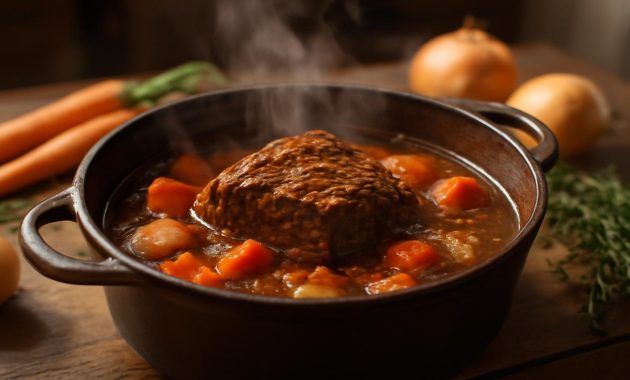
The onions went into the pot with a sound like distant rain on a tin roof—soft, steady, and full of promise. It was a gray afternoon, the kind that asks you politely to stay home, kick off your shoes, and let something fragrant and slow-cooking take over your house. Nothing fancy sat on my counter. Just a sack of onions, a few carrots, two sticks of celery, some garlic, a can of tomatoes, a scoop of lentils, and an armful of herbs that had seen better days. It didn’t look like much. But that’s the quiet magic of slow cooking: it doesn’t need fireworks to feel like alchemy. It only asks for time.
The Beauty of Starting with Almost Nothing
There is a particular kind of comfort in recipes that don’t begin with extravagance. No exotic spices you have to hunt for, no pricey cuts of meat, no specialty tools you’ll soon forget in the back of a cabinet. Just the basics—the sort of ingredients that hang around the kitchen like wallflowers at a party: onions, carrots, celery, dried beans or lentils, a few tomatoes, maybe a potato or two.
On days when life feels too loud, I find myself drawn to those wallflower ingredients. I like the way the onion’s papery skin rustles as I peel it, the way the carrots snap cleanly under the knife. There’s something reassuring about the ordinary. You don’t have to be in a certain tax bracket or live near an artisanal grocery store to make this meal. You just need a pot, a low flame, and a bit of patience.
In the world of fast everything—fast food, fast news, fast scrolling—slow-cooked food feels almost rebellious. It refuses to hurry. The flavors develop in whispers, not shouts. Minutes turn into hours, and what began as a few unrelated ingredients slowly merge into something that tastes like they always belonged together.
That’s the real transformation here. This isn’t a showpiece recipe. It’s the culinary equivalent of someone you’ve known for years suddenly telling you a story that makes you see them differently. The onions, the lentils, the tomatoes—they’ve been here the whole time. Slow cooking simply gives them space to become their fullest selves.
Building Flavors, One Quiet Moment at a Time
If there’s a secret to turning basic ingredients into something special, it lives in the small, almost invisible steps. The way you salt the onions early so they sweat and sweeten. The extra minute you take to really let the garlic bloom in the oil, just until it smells nutty but not burned. The decision to brown the tomato paste, letting it go from bright brick red to deep mahogany before you add broth.
Imagine the scene. The pot is heavy in your hands, a Dutch oven or any thick-bottomed vessel that feels like it could outlive trends and fads. You set it on the stove, drizzle in oil, and wait for that subtle shimmer. Not smoking, not spitting—just a glint that tells you the metal is ready.
The onions hit first, and the sound is delicate, almost shy at the beginning. You stir lazily, nudging the slices across the warm metal. They start smelling faintly sweet. Then you add the carrots and celery, and the scent shifts, darker and greener, like walking from a sunlit field into the edge of a forest.
This is the kind of cooking that nudges you to slow down. You don’t have to measure with laboratory precision. A handful of this, a pinch of that, a splash of wine if you have an open bottle, or just a bit more broth if you don’t. The pot accepts your decisions without complaint. It understands you’re cooking with what you have, not what some glossy photograph demands.
By the time you add the garlic, the kitchen smells like a promise. The kind that says, “Stay a while. You’re going to want to see how this turns out.”
A Humble Slow-Cooked Stew That Feels Like Coming Home
This particular slow-cooked recipe is less of a strict formula and more of a friendly suggestion. Think of it as a slowly simmered lentil and vegetable stew—a dish that can tilt toward Italian, French, or just plain “home” depending on what you add.
It begins simply:
- Onions, carrots, celery, and garlic
- Dried lentils (or beans, if you’re patient)
- Canned or fresh tomatoes
- Herbs—thyme, bay leaves, rosemary, or whatever you have
- Broth or water
- A bit of oil, salt, pepper, and time
After you’ve softened the vegetables and kissed the tomato paste with enough heat to deepen its flavor, the lentils go in, followed by a generous pour of liquid. Broth is lovely, of course, but water will do the job just fine. The aromas rising from that pot won’t check your ingredient list. They’ll simply bloom.
The miracle unfolds when the heat goes low and you step back. For the first half hour, not much seems to happen. The stew looks thin, the lentils still firm. But then, gradually, the broth thickens. The lentils relax and swell, drinking in the flavors around them. A stray carrot corner softens and melts back into the background, lending its sweetness to the whole thing.
You take a taste. It’s not ready yet, but it’s on its way. You add a pinch more salt, maybe a twist of black pepper. Maybe you drop in a crust of Parmesan rind or a spoonful of miso for deeper savoriness. You cover the pot and wait.
The Slow Magic of Texture and Time
Somewhere between “still crunchy” and “falling apart” lies the sweet spot of a good slow-cooked dish. The lentils are tender but not mush. The carrots still have a whisper of shape, but yield easily to the spoon. The broth is no longer a separate entity; it has become the very spirit of the dish, thickened by tiny starches and vegetable fibers, silky from the long dance of heat and time.
You ladle a bit into a bowl and watch the steam rise, carrying with it the story of every step you took. The browned onions. The careful stirring. The patience. None of it shows overtly, but all of it is there, layered in each bite.
A Simple Comparison of Ingredients and Their Roles
Here’s a small snapshot of how some very basic pantry items pull more than their weight in this stew:
| Ingredient | Role in the Dish | What Slow Cooking Does |
|---|---|---|
| Onions | Base sweetness and aroma | Softens sharpness into mellow, deep flavor |
| Carrots | Natural sweetness and color | Breaks down slowly, subtly thickening the stew |
| Celery | Earthy, herbal backbone | Softens fibrous texture, rounds out flavor |
| Lentils | Hearty protein and substance | Absorb flavors, release starch for body |
| Tomatoes | Acidity, brightness, color | Lose sharp edges, become gently tangy and rich |
| Herbs & Bay | Fragrance and character | Infuse gradually, tying all the flavors together |
None of these ingredients are glamorous on their own. But together, under gentle heat, they become a stew that tastes like it took intention and care—because it did.
Little Tweaks That Make It Feel Restaurant-Special
The real delight of this slow-cooked recipe is how easily you can dress it up at the last minute. The long simmer handles the heavy lifting, but those final touches? That’s where you get to play.
As the stew finishes—lentils soft, broth thick, vegetables tender—you can tilt its personality with just a few choices:
- A swirl of richness: A spoonful of good olive oil, a pat of butter, or a splash of cream at the end makes the stew feel lush and comforting.
- Freshness on top: Scatter chopped parsley, cilantro, or basil over each bowl. Their brightness cuts through the depth, like sunlight on dark water.
- Lemon or vinegar: A squeeze of lemon or a dash of red wine vinegar wakes the whole dish up, sharpening the edges of flavor.
- Texture contrast: Crusty bread, toasted seeds, or even a handful of crispy onions give a satisfying crunch against the soft stew.
- Cheese, if you like: Grated Parmesan, crumbled feta, or even a dollop of yogurt turns a humble bowl into something that feels quietly indulgent.
It’s in these details that a basic weeknight dinner starts to resemble the kind of dish you’d remember from a cozy, candlelit restaurant. You realize that sophistication doesn’t always come from complicated recipes, but from caring about the small moments—the extra squeeze of citrus, the pinch of flaky salt right before serving.
Adapting the Stew to Your Mood (or Your Pantry)
What makes this stew endlessly lovable is how forgiving it is. Have a lonely sweet potato? Dice it and let it melt into the mix. A handful of wilting spinach or kale? Stir it in near the end, and it will bring a gentle green glow. No lentils? Use chickpeas, beans, barley, or even small pasta toward the finish line.
You can steer the flavor in many directions:
- Italian-style: Oregano, basil, and a Parmesan rind simmered in the pot, finished with olive oil and grated cheese.
- Smoky and rustic: A spoonful of smoked paprika or chipotle, maybe a splash of dark beer in place of some broth.
- Herb garden version: Thyme, rosemary, bay, and a finish of lemon zest, tasting like a hillside after rain.
No matter the direction, the heart of the recipe is the same: low heat, long time, and basic ingredients stepping into their full potential.
Cooking as a Quiet Ritual
Slow cooking is less about culinary perfection and more about the ritual. The slicing, stirring, tasting—these become little anchors in a day that might otherwise feel scattered. While the stew simmers, you’re free to wander in and out of the kitchen, book in hand, laundry humming in the background, a window cracked just enough for a thread of cold air to sneak in.
Every time you lift the lid, a warm fog billows out, carrying with it a scent that feels like an embrace. You give the pot a gentle stir, as if checking on an old friend. Maybe you add a bit of water if it’s getting too thick, or nudge the heat down if it’s bubbling too enthusiastically. You’re quietly tending something, and in a small way, it’s tending you back.
There’s comfort in knowing that even if the rest of the day veers wildly off course, the stew is there, moving steadily toward done. No rush. No panic. Just an unhurried transformation happening one minute at a time.
Eating the Story You Just Cooked
By the time you sit down to eat, the day has left its marks on you. Maybe your shoulders feel heavy; maybe your brain feels overfull. But the first spoonful is a reset button. The warmth hits your tongue, and the layers you built over the last few hours unfold—onion sweetness, herbal whispers, the earthy grounding of lentils.
It’s not just dinner; it’s a series of tiny decisions made visible. You can taste the moment you decided to brown the tomato paste instead of tossing it straight into the liquid. You can sense the point when you added a splash more salt, the patience you chose not to abandon when it looked “almost done” but not quite right.
Somewhere in that bowl, time became flavor. And that might be the most quietly extraordinary thing about this recipe: it reminds you that good things still come from waiting, from tending, from staying.
Leftovers That Feel Like a Gift to Your Future Self
The only thing better than a simmering pot of stew is knowing there will be more tomorrow. Some dishes fade overnight. This one deepens. The flavors keep talking to each other in the fridge, smoothing out and thickening, like a story told the second time with more confidence.
The next day, you might reheat it gently on the stove, loosening it with a bit of water or broth if it’s grown too thick. You taste it again, adjust the seasoning, and maybe give it a new spin: spooned over rice, nestled beside roasted vegetables, or tucked under a snowy heap of grated cheese and broiled until bubbling.
It’s still the same basic ingredients. Still the same simple recipe. But somehow it feels like you’ve been gifted another small pocket of comfort, pulled from a pot that did its work quietly.
In that way, this slow-cooked recipe is more than just a meal. It’s a reminder that there is beauty in the basic, in the ordinary, in the things we think we already know. With time and care, even the simplest ingredients can surprise us—can become, against all odds, something truly special.
Frequently Asked Questions
Can I make this stew in a slow cooker instead of on the stove?
Yes. Sauté the onions, carrots, celery, and garlic in a pan first for better flavor, then transfer them to the slow cooker with the lentils, tomatoes, herbs, and broth. Cook on low for about 6–8 hours or on high for 3–4 hours, until the lentils are tender.
Do I have to soak lentils before cooking?
No soaking is required for most lentils. Just rinse them well and pick out any tiny stones. If you use beans instead of lentils, many benefit from soaking for several hours or overnight to reduce cooking time and improve texture.
What if I don’t have broth—can I use water?
Water works perfectly. The long cooking time builds flavor from the vegetables and lentils. Just season thoughtfully with salt and herbs, and consider adding a splash of soy sauce, miso, or a Parmesan rind for extra depth if you have them.
How do I keep the stew from getting too thick?
Check it occasionally while it simmers and add small splashes of water or broth as needed. Lentils and vegetables absorb a lot of liquid over time, especially if you let the stew rest and reheat it later.
Can I freeze the leftovers?
Yes, this stew freezes very well. Let it cool completely, portion it into airtight containers, and freeze for up to a few months. Thaw in the fridge overnight and reheat gently on the stove, adding a bit of water if it has thickened too much.
How can I make this recipe more filling?
Serve it over rice, barley, quinoa, or with a generous slice of crusty bread. You can also add diced potatoes, sweet potatoes, or an extra cup of lentils for more heartiness.
Is this recipe easy to adapt for different diets?
Yes. It’s naturally vegetarian and can be vegan if you use oil instead of butter and skip dairy-based toppings. For gluten-free diets, simply pair it with gluten-free bread or grains like rice or quinoa.