The cutting board in front of you says more about your kitchen than any gleaming appliance ever could. It’s etched with faint knife marks, stained from summer tomatoes, maybe carrying a ghost of garlic from last night’s dinner. It’s where onions surrender to the soup pot, where bread is sliced and fruit is halved and meat waits to be seared. It’s a stage for everyday rituals. And, quietly, it’s one of the most mistreated tools in the kitchen.
The Quiet Life of a Cutting Board
Most days, we barely think about it. We chop, slide the good bits into a pan, and swipe the crumbs into the sink. Maybe a quick rinse. Maybe a little soap. Sometimes, if we’re in a rush, the board just leans in the sink under a dripping faucet, soaking up water like a sponge. It doesn’t complain, but it does change.
Wood starts to split along the grain. Plastic warps or scars into deep grooves that never really come clean again. The board begins to carry the memory of too many meals in the form of faint smells and lingering stains. We blame age. We blame quality. Rarely do we blame the way we wash it.
The truth is simple and slightly uncomfortable: most of us have been cleaning our cutting boards wrong—too harshly, too wet, or too casually. And while it may not break in a day, it wears down, warps, and sometimes turns into a quiet health hazard right beneath our fingertips.
But there is a better way. It doesn’t involve complicated tools or expensive products. It starts with understanding this: a cutting board is not just a flat surface; it is a living material (in the case of wood and bamboo), or a scarred one (in the case of plastic). How you clean it decides how long it stays safe, beautiful, and useful.
The Golden Rule: Clean Fast, Clean Gently
Picture this: you’ve just finished slicing raw chicken on your board. Instinctively, you think, “Hot water, lots of soap, maybe even a scalding soak—that’ll do it.” But soaking is exactly what a wooden board dreads. Wood drinks; it swells, then shrinks as it dries, causing those hairline cracks that quietly collect moisture and bacteria. Even plastic, which doesn’t swell the same way, can suffer when it’s constantly blasted with heat or scrubbed with something too aggressive.
The best way to clean a cutting board begins as soon as you’re done using it. Not thirty minutes later. Not after the show you’re watching. Right away. In that small window, food hasn’t had the time to dry, stain, or lodge itself deep into the fibers or grooves.
Hold the board at a slight angle under warm—not boiling—running water. Use a mild dish soap and a soft scrub brush or sponge. Work in circles, as if you’re polishing, rather than scratching. You want to dislodge food and grease, not carve new scars into the surface.
Then rinse with intention. Soap isn’t just a cleaning hero; it can also dry and weaken wood fibers if it lingers. Let the water sheet over the board until it runs perfectly clear, no suds clinging to corners or juice grooves. That’s the baseline. That’s the everyday wash, the rhythm your board will thank you for.
Wood, Plastic, Bamboo: Each Has a Story
Not all cutting boards are born equal, and they don’t age the same way either. If you pay attention, you can feel the difference beneath your palm.
Wooden Boards: The Quiet Workhorses
A wooden board carries warmth in its grain. It smells faintly of oil and time, and when your knife touches it, there’s a soft, almost polite give. Maple, walnut, cherry—these are the woods that turn into quiet kitchen companions. They are naturally somewhat resistant to bacteria. But they are also vulnerable to the very thing we habitually use against germs: water.
For wood, fast and gentle washing is non-negotiable. No soaking in the sink. No dishwasher. No boiling water. A wooden board prefers a brief encounter with warm water and soap, then a quick, thorough dry. After washing, stand it upright or on its side, somewhere with air circulating around it. Let both faces breathe. Laying it flat on a damp towel traps moisture beneath and invites warping.
Plastic Boards: The Tough but Scarred Survivors
Plastic boards might seem indestructible. They’re lighter, cheaper, and often labeled “dishwasher safe.” And yes, they can usually tolerate more heat and water without swelling. But plastic has its own quiet flaw: it scars deep. Each knife cut creates a groove that becomes a tiny alleyway for bacteria and stains to move in. Over time, those white or colored boards go from smooth to furrowed, and no amount of scrubbing seems to restore their former self.
You can safely wash plastic boards in the dishwasher, especially after cutting raw meat, because the higher temperature and detergent help sanitize them. But if you use the dishwasher regularly, be prepared for one thing: your board’s lifespan shortens as those grooves deepen. When the cuts become too dense, it’s better to retire the board than keep chasing perfect cleanliness where it’s no longer possible.
Bamboo Boards: The Stoic Minimalists
Bamboo is technically a grass, not a tree. It resists moisture better than most woods and tends to feel harder under the knife. It doesn’t like being drenched or tossed into a scalding dishwasher either, but it’s slightly less dramatic about brief splashes of water than a classic butcher block.
Treat bamboo much like wood: hand wash with warm soapy water, rinse well, dry immediately, and store it upright. Because it’s denser and often glued from strips, it’s especially important not to let it soak—water working its way into the glued joints is the quickest path to separation and early retirement.
The Best Natural Allies: Salt, Lemon, Vinegar, and Baking Soda
There’s a small ritual that turns cleaning into something almost meditative—and it starts with everyday ingredients that smell like a pantry rather than a laboratory.
For Odors and Surface Stains
When your board holds on to stubborn smells—garlic, onion, fish—you don’t need a harsh chemical. You need coarse salt and a lemon.
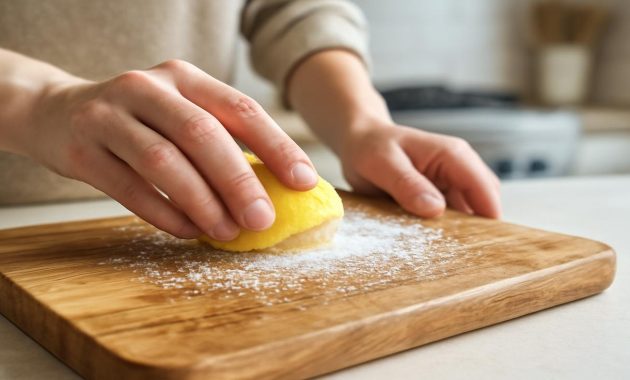
Sprinkle a generous pinch of coarse kosher or sea salt over the surface of the dry board. Cut a lemon in half and use the cut side as a scrubber, pressing and dragging it across the board in slow circles. As you move, the lemon juice mingles with the salt, creating a fragrant, slightly abrasive paste. It lifts stains, neutralizes odors, and leaves behind the feeling of a citrus grove in your kitchen. Let it sit for 3–5 minutes, then scrape or rinse it off with warm water and dry thoroughly.
For Extra Disinfection
Sometimes you want more than clean—you want reassured. Maybe you’ve just handled raw chicken, or maybe you’re cutting fruit for a child on the same board. For that extra layer of protection, white vinegar or diluted hydrogen peroxide can help, especially on wooden boards where bleach is too harsh.
After your usual wash and rinse, you can mist or wipe the board with white vinegar and let it air-dry. Vinegar is mild but effective at inhibiting many common kitchen bacteria, and it doesn’t leave a harsh chemical scent behind. Just don’t mix it directly with hydrogen peroxide or bleach; pick one method and stick with it.
For Stubborn Stains
Some marks are more persistent—beet juice, turmeric, berries. A paste of baking soda and water can gently lift stains without scratching the surface.
Make a thick paste, spread it lightly over the stained area, and scrub with a soft brush or sponge. Rinse thoroughly afterward and dry the board as usual. Over time, the stains fade, and what’s left is not perfection, but the kind of patina that feels earned.
Oil: The Secret Language of a Healthy Wooden Board
There’s a moment when a dry, thirsty board drinks oil that feels almost alive. The grain darkens, deepening from dull beige to rich caramel or chocolate, depending on the wood. The surface turns from chalky and rough to satin-smooth. It’s not vanity; it’s protection.
Wooden and bamboo boards need oil. Without it, water pushes deeper into their pores during washing and cutting, and they begin to crack or warp. With it, the surface becomes more resistant to moisture and staining, like a lightly waxed jacket shrugging off a drizzle.
How to Oil a Board Properly
Begin with a clean, completely dry board. If there’s lingering moisture, the oil won’t soak in evenly; it will bead and sit on the surface. The best time is often at night, when the board can rest untouched while you sleep.
Choose a food-safe oil that doesn’t go rancid quickly—mineral oil or a blend designed specifically for cutting boards is ideal. Avoid regular cooking oils like olive, canola, or sunflower; they oxidize over time and can leave your board sticky and foul-smelling.
Pour a small puddle of oil in the center of the board, then spread it with a soft cloth or your fingers, working with the grain. Don’t forget the sides and the back. The board will take what it needs; if after ten or fifteen minutes it still looks dry, add a little more.
Let it sit for several hours, or overnight if possible. Then wipe off any excess oil with a clean, lint-free cloth. The board should feel smooth, not greasy, and it should catch the light with a subtle, soft sheen.
How Often to Oil
There’s a simple way to tell when your board is thirsty: drip a little water onto it. If the droplets sit up like tiny glass beads, the board is still well protected. If they spread out and sink in quickly, it’s time for a drink of oil.
For most home kitchens, once a month is a good rhythm. In a busy cooking life, you might oil more often. It becomes less a chore and more a quiet pause—a way of saying thank you to the surface that holds so many meals before they ever reach the plate.
Repair, Replace, or Respect the Scars
Every cut on a board tells a story, but not all stories need to last forever. Over time, even the most carefully tended board shows wear: grooves deepen, edges round off, maybe a faint warp develops if it once sat too long in a damp sink. The question becomes: when do you fight for it, and when do you let it go?
When to Refresh
For wooden boards, minor cuts and roughness can often be reset with a little sanding. It’s like polishing a pair of old boots. Using a fine-grit sandpaper, you can gently smooth out the surface, always working with the grain, never across it. After sanding, brush or wipe away the dust, then oil as if you’re meeting the board for the first time again. The transformation can be quietly dramatic: a tired board regains its youth in an evening.
When to Let Go
Plastic boards eventually reach a point where their scars are more like wounds—deep grooves that no amount of cleaning or even bleaching can fully sanitize. If you run your fingers over the surface and feel little canyons rather than shallow scratches, it may be time to retire the board. The same is true for wooden boards that develop deep cracks running through the grain or warps so severe the board rocks when laid flat. At that point, it’s no longer just a cosmetic issue; it’s a question of food safety and stability.
A Simple Comparison Guide
Here’s a quick look at how different boards prefer to be treated:
| Board Type | Best Cleaning | Avoid | Special Care |
|---|---|---|---|
| Wood | Hand wash with warm water and mild soap, quick rinse, immediate drying | Soaking, dishwasher, bleach, extreme heat | Oil regularly, occasional sanding if needed |
| Plastic | Dishwasher-safe or hand wash; sanitize when used for raw meat | Using when heavily grooved; harsh abrasives that gouge deeper | Replace once grooves are deep and dense |
| Bamboo | Hand wash, quick rinse, thorough drying | Soaking, prolonged high heat, dishwasher | Oil periodically to prevent drying and splitting |
Turning Cleaning into a Kitchen Ritual
There’s another way to think about all of this: not as a list of rules, but as a tiny ritual woven into your cooking life. The board holds the first act of every meal; how you care for it becomes the quiet epilogue.
Imagine the sequence. You’ve just finished cooking: the air is warm with the smell of roast vegetables or seared meat. The pan is resting, the burner is off. Before you sit down, you turn to the board. A quick rinse. The soft drag of a soapy brush. A thorough rinse again. You stand it on its side to dry, perhaps near the open window where evening air moves slowly through the kitchen.
Once in a while, when the house is quiet, you take an extra ten minutes. A sprinkle of salt, the bright shock of lemon under your fingers, the scent rising as you scrub. Later, when the board is dry, a thin sheen of oil, worked in slowly like a promise: we’re not done yet, you and I. There are more onions to chop, more apples to slice, more dinners to build from this simple, faithful surface.
The best way to clean a cutting board without damaging it isn’t one dramatic trick or miracle spray. It’s a set of small, consistent, nearly tender habits: keep water brief, keep heat moderate, use gentle cleaners, dry completely, and feed the wood when it’s thirsty. In return, the board stays flat, smooth, safe, and quietly beautiful, bearing the marks of every meal without ever giving in.
FAQ
Can I put my wooden cutting board in the dishwasher?
No. Dishwashers combine high heat, strong detergents, and long exposure to water—all of which can warp, crack, and dry out a wooden board. Always hand wash wood and bamboo boards.
Is it safe to use bleach on cutting boards?
On plastic boards, a very diluted bleach solution can be used occasionally for disinfection, followed by thorough rinsing. On wooden or bamboo boards, bleach is too harsh and can damage the fibers. Use vinegar or hydrogen peroxide instead for extra disinfection.
How often should I oil my wooden cutting board?
Most boards do well with oiling about once a month, or whenever water no longer beads on the surface. If the board looks dry, pale, or feels rough, it’s likely ready for a fresh coat of oil.
What kind of oil is best for cutting boards?
Use food-safe mineral oil or a commercial cutting board oil that won’t go rancid. Avoid regular cooking oils like olive, sesame, or vegetable oil, as they can oxidize and develop unpleasant odors over time.
How do I get rid of strong odors like garlic or onion?
Sprinkle coarse salt on the board, then scrub it with half a lemon, cut side down. Let it sit for a few minutes, rinse with warm water, and dry thoroughly. This helps neutralize odors and gently refresh the surface.
When should I replace my cutting board?
Replace plastic boards when deep grooves cover the surface and are hard to clean thoroughly. Replace wooden boards if they develop large cracks, severe warping, or areas that stay damp or discolored even after cleaning and drying.
Can I use the same board for meat and vegetables?
You can, but you must wash and sanitize it thoroughly between uses, especially after raw meat. Many cooks prefer to keep separate boards: one for raw meat and another for bread, fruit, and vegetables, to simplify cleaning and reduce cross-contamination risks.