The first orange went soft in the quiet of a Tuesday afternoon. I found it hiding in the back corner of the crisper drawer, its once-bright skin now sagging in on itself, smelling faintly like regret and citrus. I held it in my hand and thought about the grocery trip where I’d bought a whole bag of them, full of conviction that this would be the week I’d start every morning with fresh-squeezed juice. It was not that week. It rarely is.
We like to imagine ourselves as the kind of people who eat everything we buy: the spinach, the herbs, the yogurt, the berries. But week after week, a quiet ritual plays out in kitchens everywhere—slimy lettuce fished from the bottom of crisper drawers, half-eaten jars of sauce furred with mold, limes that have turned into tiny, hardened stones. We don’t talk about it much, but if you listen to your trash can for long enough, it’ll tell you everything you need to know about your kitchen habits.
When I finally got tired of doing what I started to call “the weekly fridge excavation,” I didn’t set out to discover anything profound. I just moved a few things around. But that one simple organizational tweak did something surprising: it made me stop wasting food without even trying very hard. And the best part? It didn’t involve special containers, expensive gadgets, or a lifestyle overhaul—just a new way of deciding where things live in my kitchen.
The Tiny Shift That Changes Everything
The game-changing tweak is almost embarrassingly simple: bring everything that needs to be used soon into your direct line of sight, and push everything that lasts longer to the edges. That’s it.
Instead of organizing your kitchen by category (dairy here, produce there, snacks on this shelf), you organize it by urgency. The things that need attention now live front and center. The things that can wait quietly—like condiments, preserves, long-lasting veg—go to the back, the door, or the less convenient shelves.
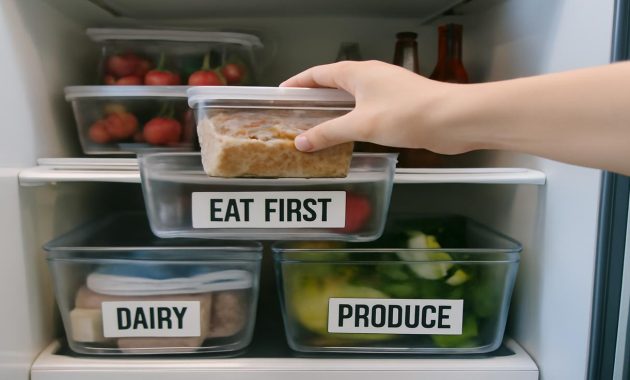
In my fridge, that meant transforming the eye-level shelf into what I now think of as the “Save Me First” zone. Anything that is open, fragile, or nearing its prime goes there: half an onion wrapped in beeswax, leftover roasted vegetables, a small bowl of cooked rice, the last two strawberries in the punnet that seem doomed to collapse by tomorrow.
The crisper drawer stopped being a place where good intentions go to die and became, instead, storage for long-lasting produce: potatoes, carrots, cabbages, beets, citrus. These are sturdy characters. They don’t need to be in my face to survive the week. The delicate things—the berries and baby greens and herbs—got promoted up to eye level.
It sounds modest. But the change did something my shopping lists and meal plans never quite managed to do: it made it almost impossible to forget what needed to be eaten next. Every time I opened the fridge, the food that was most at risk was looking right back at me, asking, “So… what’s the plan?”
Designing a “Use-First” Zone
Think of this as building a gentle, visual urgency into your kitchen—a small, daily nudge that prevents quiet spoilage. You’re designing your space so that your future, tired, hungry self doesn’t have to make heroic decisions. You’re removing friction.
Here’s the heart of the tweak: choose one shelf, basket, or section in each food area—fridge, pantry, and counter—that becomes your dedicated “Use-First” zone. That space has one purpose: it holds the foods that should be eaten soon. Nothing else lives there. It’s like a small, dignified waiting room for ingredients on their last, delicious stretch of life.
Step 1: Pick the Prime Real Estate
In the fridge, this is almost always the eye-level shelf—the one you see first when you open the door. In the pantry, it might be a middle shelf where your gaze naturally lands. On the counter, it could be a shallow bowl or tray near where you usually cook or make coffee.
You’re not adding storage; you’re repurposing it. You’re saying: this spot is for soon-to-be stars only.
Step 2: Choose a Visible Container
For many people, a simple shallow bin or tray works best. Clear is helpful, but not essential. What matters is visibility and accessibility—no lids, no stacking, no digging.
Into this bin go:
- Open jars or containers with a short life once opened
- Leftovers in clear containers
- Produce that’s starting to soften, wilt, or looks “use me soon”
- Half-used blocks of cheese, the last few slices of bread, the single lemon already zested
Suddenly, the things that would previously vanish into the cold, dim corners of the fridge are all in one, bright, obvious place.
Step 3: Make a Simple Rule
Every kitchen system falls apart without one simple rule. For the “Use-First” zone, the rule is this:
If it’s opened, fragile, or nearing its end, it moves into the Use-First zone.
You don’t need dates, labels, or a complex tracking system. You’re letting your eyes—and this one consistent rule—do the work.
What It Actually Looks Like Day to Day
Picture a Thursday evening. You come home hungry, tired, and slightly out of patience. Old you opens the fridge, stares at an undifferentiated wall of food, and ends up ordering takeout because “there’s nothing to eat.” New you opens the fridge and sees a little story laid out on the Use-First shelf:
- A small container with leftover roast chicken from Monday
- Half a roasted sweet potato in foil
- A wedge of lime starting to dry at the edges
- A handful of wilting spinach in a bag
- Half a jar of salsa
Without thinking too hard, your brain starts connecting dots: chicken + spinach + sweet potato = hearty warm salad. Lime + salsa = quick dressing. Ten minutes later, you’re eating something nourishing that used to be several lonely, slowly deteriorating items.
On a slow Sunday morning, you open the pantry Use-First basket and find:
- The last bit of rolled oats
- A nearly empty bag of walnuts
- Half a bar of dark chocolate
- A bruised apple from the fruit bowl
Suddenly, you’re not holding “random pantry debris.” You’re holding the ingredients for baked oatmeal or a quick stovetop crumble. Again, your future self doesn’t have to dig, decide, or remember. The organization is quietly doing the thinking.
The Quiet Psychology Behind It
We rarely waste food because we don’t care. We waste it because we don’t see it.
Our brains are wired to pay attention to what’s in front of us. When the most fragile foods are out of sight—in drawers, behind jars, under bags—they become out of mind. Anxiety shows up as “I should really do something with that…” but memory quietly fails. Another week slips by. Another mushy cucumber gives up.
The Use-First zone is a tiny act of environmental design. It plays gently with three forces:
- Visibility: If you see it, you’ll remember it. If you remember it, you’re more likely to use it.
- Constraint: The limited space of the Use-First bin keeps you honest. If it’s full, it’s a signal: pause the shopping, cook what’s here.
- Momentum: Once you form the reflex of moving at-risk foods into this zone, your brain starts looking for ways to combine them every time you open the fridge or pantry.
This doesn’t demand discipline so much as it invites curiosity. The question shifts from “What do I feel like eating?” to “What wants to be used today?” That small reframe, repeated over and over, changes the rhythm of a kitchen.
Setting Up Your Kitchen: A Simple Blueprint
Every kitchen is different, but the principle stays the same. Here’s one way to map it out in a small apartment or family home without buying anything extra.
Fridge Layout
- Eye-level shelf: Your Use-First zone. Leftovers, delicate produce, opened items.
- Top shelf: Ready-to-eat foods that are stable: yogurt, cheese, unopened hummus.
- Door: Condiments, pickles, sauces—things that last.
- Crisper drawers: Sturdy veg and fruit: carrots, beets, apples, cabbage, citrus.
Pantry Layout
- Middle shelf basket: Use-First dry goods: opened pasta, rice, grains, nuts, snacks.
- Top/bottom shelves: Backstock and unopened duplicates.
Counter Layout
- Visible bowl or tray: Fruit and veg to use soon—softening tomatoes, ripe avocados, bananas freckling into sweetness.
- Secondary basket (out of direct view): Tougher produce: onions, garlic, potatoes.
To make this easier to visualize, here’s a simple overview you can adapt:
| Kitchen Area | Use‑First Zone | What Goes There |
|---|---|---|
| Fridge | Eye‑level shelf + small open bin | Leftovers, open jars, softening produce, cut fruit/veg, “almost empty” items |
| Pantry | Middle shelf basket | Opened grains, pasta, nuts, half-used snacks, “one serving left” items |
| Counter | Small bowl or tray in view | Ripe fruit, soft tomatoes, avocados, “eat soon” produce |
No labels are required, but a small note taped inside the fridge—“Use Me First” above that shelf—can be a gentle reminder for everyone sharing the space.
Cooking From the Use-First Zone
Once the system is set up, the fun part begins: improvising with what shows up in your Use-First zone. You don’t need recipes to put these ingredients to work; you just need a few flexible “templates” your brain can lean on again and again.
The Big Mix-and-Match Bowls
Pick from your Use-First bin:
- Some kind of grain or carb (rice, pasta, potatoes, bread)
- Some kind of veg (raw, roasted, sautéed, wilting but salvageable)
- Some kind of protein (cheese, beans, leftover meat or tofu, an egg)
- Some flavor boosters (a spoon of pesto, salsa, herbs, a squeeze of citrus)
Throw them together in a pan, a bowl, or on a sheet tray and heat. Suddenly you have fried rice, a warm salad, a loaded toast, a grain bowl. The ingredients decide the dish, not the other way around.
The “Everything Soup” or “Tray Bake”
Soups and sheet-pan meals are where lonely carrots, bendy celery, and half an onion go to become dinner. If your Use-First zone is heavy on veg, toss them with oil and seasoning and roast, or chop and simmer in broth. That nearly empty jar of tomato sauce? Swirl in with stock. The last of the cream? Enrich the pot at the end.
The Snack Plate Rescue
On days when cooking feels like too much, the Use-First zone can become a snack board:
- That last slice of cheese
- A few olives hiding in brine
- A bruised apple, sliced
- A piece of bread toasted into crispness
Arranged together, these fragments stop being leftovers and become a small, intentional meal. You’re eating like someone who doesn’t waste food—not because you’re heroically disciplined, but because your kitchen made it the easiest option.
The Texture of a Less-Wasteful Kitchen
After a few weeks of living with a Use-First system, the kitchen begins to feel subtly different. There are fewer mysteries lurking in the back of the fridge. The Sunday purge shrinks from an entire trash bag of slimy packaging to maybe a single, regrettable cucumber.
In that quiet reduction, something else shifts too. You start to notice the life cycle of your food more closely: the way a peach moves from firm to fragrant to fragile, the way greens go from perky to faintly drooping. You become, almost accidentally, a better observer of time.
Waste shrinks not just because of organization, but because of attention. A bunch of parsley stops being an accessory and starts being a promise: chopped into eggs, blitzed into a quick sauce, stirred into soup. Grapes that won’t make it another day tumble into a freezer bag to become some future smoothie. The kitchen becomes a place where food finds its purpose sooner, rather than too late.
You can feel the difference in your trash can, of course. But you can also feel it in the ease of weeknights, in the way your shopping list shortens, in the satisfaction of opening your fridge and seeing ingredients already halfway to becoming meals. The orange doesn’t have to rot quietly in the drawer. It can sit in a bowl where you’ll grab it on the way out the door, peel it in the sun, and taste—just for a moment—how small shifts in attention can change the shape of a day.
Frequently Asked Questions
Do I need special containers to set up a Use-First zone?
No. You can use any shallow bin, basket, or tray you already own. Even a repurposed baking dish or leftover food container without its lid works. The key is that it’s easy to see into and easy to reach.
What if my fridge is tiny and always crowded?
In a very small fridge, dedicate just a corner of a single shelf and keep it strict. Even a space the size of a dinner plate can work. The limit will help you prioritize: if the Use-First spot is full, focus on eating from it before you shop again.
How often should I clean or reset the Use-First zone?
A quick check once or twice a week is usually enough. Many people like to do a five-minute reset right before they write a shopping list or right after they unload groceries—moving new items in, old ones out, and scanning for anything that’s truly past saving.
Does this system work with kids or multiple housemates?
Yes, and it can actually reduce confusion. Label the area subtly (“Eat Me First” or “Use-First Shelf”) and encourage everyone to snack from there first. It becomes the go-to place for lunchbox extras, quick snacks, and meal starters.
What if I still end up throwing some food away?
Some waste is almost inevitable, and that’s okay. The goal isn’t perfection; it’s reduction and awareness. If something keeps going bad, treat it as useful data: maybe you don’t like that ingredient as much as you thought, or you’re buying it too often. Adjust a little next time, and let your Use-First zone keep gently guiding the way.