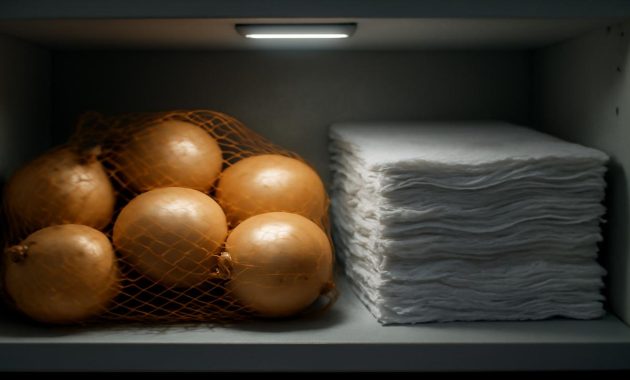
The first time I watched an onion decay, it felt strangely personal. It had been such a proud, heavy thing when I brought it home from the farmer’s market—skin taut and papery, color deep and warm like late-afternoon light. I left it in the corner of a bowl on the counter, assuming, as many of us do, that onions are hardy, unbothered, the rugged root vegetables that outlast everything else. A week later, I picked it up and my fingers met a soft, unsettling give. A faint, musty sweetness floated up. In the space of a few days, it had quietly surrendered: sprouting, softening, then slumping in on itself. I tossed it, a little guilty and a little curious. There had to be a better way.
The Pantry Corner Where Onions Actually Want to Live
Most of us underestimate onions. We think of them as immortal—those familiar brown orbs that sit in a basket somewhere until we need them. But an onion is alive, always breathing, always reacting to the space we give it. Leave it on a bright counter, in a warm, cluttered kitchen, and it will age fast: softening, sprouting, or developing those sunken, dark patches that creep in from the roots.
The trick that keeps them firm and fresh for nearly a month isn’t high-tech. It’s not a fancy container, a special gas-absorbing packet, or a refrigerated drawer that costs more than your dinner table. It’s about giving onions a tiny, carefully chosen ecosystem in your pantry—a place that mimics what they’d naturally choose if they could roll themselves to safety.
Imagine a quiet, dim corner in your pantry or cupboard. No heat from the oven. No sunlight raking across shelves in the late afternoon. Little airflow, but not a sealed, stagnant box. It’s cool, calm, and dry, the air gently moving just enough to carry away the onion’s own breath—the subtle moisture and gases it releases as it waits to become soup or stew or sizzling onions in a cast-iron pan.
This is the world onions want: cool but not cold (think 45–60°F, or 7–15°C), dark, dry, and with just enough breathing room. The pantry trick that extends their life is about shaping that environment with three simple tools: a breathable container, a bit of space, and the discipline not to crowd them with the wrong neighbors.
The Paper-Bag Secret: How to Turn Your Pantry into a Root Cellar
The heart of this trick is disarmingly humble: a plain brown paper bag. Not plastic. Not sealed glass. Just the kind of bag that crinkles softly in your hand and breathes like a miniature paper lung.
Plastic bags trap moisture. Every tiny whisper of condensation, every drop of onion sap or humidity becomes a cloud of dampness that settles right back onto the onions. That’s where the trouble begins: a slimy spot at the base, a soft patch near the neck, a sudden tangle of pale green shoots. The onion, suffocating in its own breath, panics and starts to sprout or rot.
A paper bag does the opposite. It absorbs a little moisture, lets the rest pass through, and creates a dim, sheltered cave. But the real magic happens when you help it breathe even better. Take a hole punch—or the tip of a pen if that’s what you have—and turn the bag into a constellation of tiny ventilation holes. A few on the bottom, several along the sides, scattered like stars. Enough so that light barely filters in, but air can swirl quietly around each bulb.
Slip a few onions into this perforated paper bag—no more than four or five medium onions per bag, so they’re not crushed against each other. Roll down the top loosely, just enough to close out direct light while still letting the bag exhale. Place the bag in that cool, dim corner of your pantry. You’ve just built a miniature, modern version of an old root cellar shelf, but with no stone walls or earthen floors required.
Over the next weeks, as you reach in for an onion, you’ll feel the difference. Instead of that faint give, the onion will sit firm in your palm. Its skin will stay papery, not waxy or damp. The smell, when you slice in, will be crisp, clean, and sharp, not tinged with the sour edge that comes from slow, hidden rot.
The Art of Giving Onions Their Own Space
Onions are social in the wrong way. Put them next to potatoes, and the two of them conspire against each other, speeding up each other’s decay like rowdy neighbors egging each other on. Potatoes release moisture and gases that push onions toward sprouting; onions send signals right back. Together, they go from promising to problem in a fraction of the time.
The pantry trick works best when you honor one quiet rule: give onions their own zone. Maybe it’s a dedicated shelf, a narrow crate, or the far left corner of your lowest pantry cabinet. Potatoes can stay—but they need their own district, preferably a separate basket, a separate bag, or even a separate shelf entirely.
Air, too, matters more than we think. When onions are tightly packed, stacked deeply in a bowl, or wedged in a plastic bin, each one becomes a small heat source, trapping its neighbors in a warm, humid pocket. They start to age together, like a crowded room getting stuffy.
In your paper-bag setup, think in layers, not piles. If you use a shallow basket instead of bags, keep the onions in a single layer, or nearly so. Let each bulb have its own bit of room to breathe. The same is true inside the bag: don’t overstuff it. The bag is not a suitcase; it’s a shelter. When each onion has a little personal space, you slow time down for all of them.
Touch, Smell, Notice: Becoming an Onion Whisperer
There’s a quiet pleasure in checking on your pantry, in letting your hands tell you the story of what’s happening in those dark corners. Onions, especially, reward this kind of gentle curiosity. To keep them fresh for weeks, your senses become part of the trick.
Every week or so, reach into the bag. Lift an onion, roll it in your hand, and listen to what it says without words. A good onion is firm, heavy for its size, its skin dry and rustling. The neck where the stem once was should feel tight and closed, not swollen or damp. The base, where roots once tangled into soil, should be dry and slightly rough, not darkened or sticky.
Smell it. A fresh onion at rest doesn’t smell like much at all. Maybe a faint, earthy whisper, but nothing aggressive. If you bring it close and catch a sweet, rotting, or overly strong scent, something is stirring inside.
This isn’t just about catching problems early. It’s about building a sort of friendship with the food you keep. You begin to know which onions will want to be used sooner—the one with a softening side, or the faintest hint of a sprout nudging the skin. You move those to the front of the cooking line: into tonight’s caramelized topping for burgers, tomorrow’s quick pickle, the base for a soup you’d been meaning to make. The rest return to their peaceful, cool, dark pantry nest.
Over time, this weekly ritual turns waste into intention. Instead of finding a bag full of lost onions weeks later, you’re catching stories in progress: the almost-sprouted one that becomes an onion tart, the perfectly preserved one that snaps under the knife three weeks after you bought it.
The Quiet Science Behind the Trick
Underneath this homey, almost old-fashioned routine is a bit of unshowy science. Onions are living storage organs. They were built by their plants to sit through harsh seasons underground, waiting patiently to grow again. But the way we store them can either extend that natural patience or hurry it along.
Temperature is one of the biggest forces at play. Too warm, and the onion’s internal chemistry speeds up. Its reserves of stored sugars and starches wake up, starting the engine that leads to sprouting and softening. Too cold—especially in most home refrigerators—and you trigger another kind of confusion: the starches begin converting into sugars, and the texture can turn mealy or strangely damp once the onion warms back up.
That’s why the cool pantry, not the fridge, is the star of this story. Cool enough to slow down time. Warm enough to keep structure intact.
Moisture and darkness play their parts, too. Onions, like many bulbs, are responsive to cues from their environment. Light can tell them it’s time to grow. Moisture can encourage roots and shoots. The thin, layered skins that make us tear up when we chop are actually a kind of armor, but armor that fails if constantly bathed in humidity.
The paper-bag-and-pantry method harmonizes all of these cues. It blocks light, balances humidity, and buffers temperature swings. It doesn’t demand perfection—few homes hover at an ideal root-cellar temperature year-round—but it bends your everyday pantry closer to what onions would choose if they had a say.
From Market to Pantry: A Simple Ritual to Make Onions Last
What you do in the first few minutes after bringing onions home can set the tone for the whole month. Think of it as a small, satisfying ritual—one that takes less time than scrolling through your phone, but pays you back in flavor and fewer trips to the store.
Start at the market or store by choosing well. Pick onions that feel dense and solid. Skip any with soft spots, green shoots already showing, or dampness at the base. The skins should be dry and rustling, not peeling off in patches that reveal already-damaged flesh beneath.
Back home, resist the temptation to tuck them “just for now” into that plastic produce bag. Spread them briefly on a counter or table to air off any invisible condensation from the trip. While they rest, prepare your storage:
- Take a brown paper bag (or several) and punch small holes around the sides and bottom.
- Label them if you like—“Yellow,” “Red,” “Sweet”—so you can find what you need quickly.
- Sort your onions: any that look a little less perfect go in a “use soon” bag you’ll reach for first.
Place only a few onions per bag. Roll the top loosely. Then slide the bag into your chosen pantry corner: the spot farthest from the oven, away from a dishwasher’s warm breath, shielded from any shaft of sunlight that slips through a nearby window.
Just like that, you’ve turned a random purchase into an intentional pantry resident, one that’s likely to stay firm and useful for the better part of the month. When you reach for an onion three weeks later and it feels almost exactly as it did the day you brought it home, you’ll feel that quiet satisfaction of having aligned your kitchen, however briefly, with the slow wisdom of storage traditions that stretch back generations.
Simple Onion Storage Cheat Sheet
Here’s a quick glance at how different storage spots treat your onions over time:
| Storage Method | Typical Outcome | Approx. Freshness Window |
|---|---|---|
| On counter in bright kitchen | Faster sprouting, soft spots, skin loosens | 5–10 days |
| Sealed plastic bag in pantry | Trapped moisture, risk of mold and rot | Less than 1–2 weeks |
| Loose in open basket, dark pantry | Generally good, but can dry or sprout at contact points | 2–3 weeks |
| Perforated paper bag in cool, dark pantry | Firm bulbs, minimal sprouting, slow aging | 3–4 weeks (sometimes longer) |
| Refrigerator (whole, uncut) | Can get soft or rubbery; may absorb fridge odors | 2–3 weeks, but texture may suffer |
When the Knife Comes Out: Storing Cut Onions Differently
Of course, the pantry trick has its limits. Once the knife has met the onion, everything changes. Cut surfaces expose the onion’s sugars and juices to air, inviting microbes and dryness. This is when the fridge finally earns its role.
A halved or sliced onion belongs not in a paper bag in the pantry, but in the cool, closed world of your refrigerator. Wrap it tightly—ideally in a reusable, airtight container or a snug layer of beeswax wrap or similar covering. The goal now is the opposite of what whole onions need: you’re trying to keep moisture in and outside odors out, while slowing microbial growth with cold.
In this form, onions are on a much shorter clock. Use cut onions within about a week, often sooner for the best flavor and texture. But there’s a small echo of the pantry wisdom here too: keep them away from foods that easily absorb smells, and don’t crowd them near open dairy or delicate herbs. Respect their presence, and they’ll behave better.
What’s striking is how a single ingredient asks for such different treatment at different moments of its life in your kitchen. Whole onions wish for a quiet, cool paper cave. Cut onions crave a sealed chill. Learn that simple split, and you go from occasional onion disappointment to a quiet, nearly effortless rhythm of always having what you need—firm bulbs waiting in the pantry, ready to sizzle, steam, or melt into sweetness whenever you are.
Frequently Asked Questions
Can I store onions and potatoes together if I’m short on space?
It’s best not to. Potatoes release moisture and gases that encourage onions to sprout and spoil faster, and onions return the favor. If you must keep them close, use separate bags or baskets and try to give them at least a little distance on the same shelf.
Why not just keep onions in the refrigerator from the start?
Refrigerators are cold and often humid, which can change the texture of whole onions, making them soft, rubbery, or oddly sweet. They can also absorb fridge odors. A cool, dry, dark pantry more closely mimics the conditions onions evolved to handle.
Do red, yellow, and white onions all store the same way?
Yes, the same pantry trick works for all of them: cool, dark, dry, and in breathable paper bags with ventilation. Some very sweet onions may have a slightly shorter storage life, but the method still extends it significantly.
How many holes should I punch in the paper bag?
You don’t need to be exact. Aim for several small holes on each side and a few on the bottom—enough that air can circulate but the bag still feels mostly solid and doesn’t let in much light. If the bag looks like a loose constellation of dots, you’re in good shape.
How long can I realistically expect onions to stay fresh with this method?
In a reasonably cool, dark pantry, many onions will stay firm and fresh for about three to four weeks, sometimes longer. Heat and humidity can shorten that window, which is why it helps to choose the coolest, driest pantry corner you have and check them weekly.
What should I do if an onion in the bag starts to go bad?
Remove it right away. One spoiled onion can quickly affect the others around it. Discard the bad one, check its neighbors for soft spots or strong smells, and if necessary, transfer the remaining good onions to a fresh paper bag.
Is it okay to peel onions before storing them in the pantry?
Leave the outer dry skins on for storage. They act as natural protection against moisture loss and minor bumps. Peel only when you’re ready to cook; bare onions without their papery armor will dry out and spoil much faster, even in a good pantry setup.