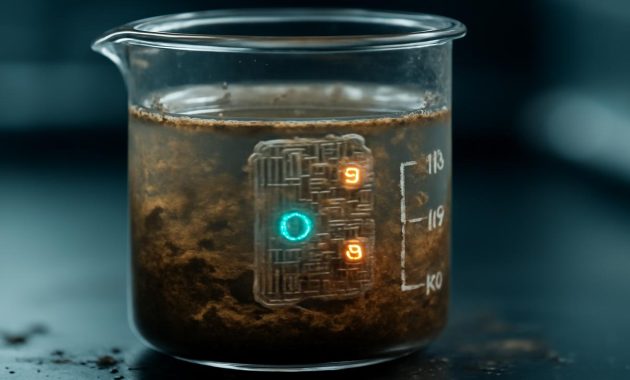
The glass looks ordinary at first—clear, slender, the kind you might cradle at a seaside bar while watching the sun drop into the sea. But in a small lab in southeastern Spain, scientists are holding it up to the light with the kind of reverence usually reserved for rare wines. This is no ordinary glass. It is 3D‑printed, wired with hidden channels and sensors, and it is quietly rewriting the way we listen to a wounded lagoon called the Mar Menor.
A Lagoon That Forgot How to Breathe
Mar Menor, on Spain’s Mediterranean coast, was once the kind of place that postcards brag about. A shallow, shimmering saltwater lagoon separated from the open sea by a slender sandbar, it was famous for its calm, bath‑warm waters. Children learned to swim here. Flamingos stitched pink across the horizon. Fishermen read the wind in the glassy surface and came home with boats heavy with mullet and sea bream.
Then, slowly, the water started to change.
From the air, you could see it first: green blooms spreading like bruises under the sun. On some days, the water turned opaque, a thick soup that swallowed the light. Local divers said it felt like swimming in pea purée. Fish began to die in panicked, silver heaps near the shore, gasping in a lagoon that had forgotten how to breathe.
For years, farmers in the surrounding Campo de Cartagena had been using fertilizers to fuel crops of lettuce, melons, and other produce that filled Spanish supermarkets and European shelves. Rainstorms and irrigation channels quietly carried nitrate‑laden runoff through the soil, down ravines, and finally into the Mar Menor. The lagoon, shallow and delicate, was overwhelmed. Algae feasted on the excess nutrients, exploding in number and starving everything else of oxygen.
Scientists and locals shouted warnings. Protests filled the streets. Laws were debated and passed. But there remained a stubborn, nagging question: How much polluted water was still reaching the lagoon—and from where, exactly? Without that answer, every plan to heal the Mar Menor felt like guesswork.
The Day the Glass Came to the Lab
In a modest university lab in the region of Murcia, researchers started thinking differently. Instead of staring only at satellite images or coarse water samples scooped from random corners of the lagoon, they wanted to get closer to the source, to the very veins of water carrying pollution from land to sea.
They needed something small, cheap, robust, and strangely enough, a little bit beautiful—something that could slip into irrigation canals, drainage ditches, or streams and quietly keep watch. The idea formed not as a bulky metal box or a humming industrial sensor, but as something more familiar, more human: a glass.
Glass, after all, is a vessel we trust. We drink from it. We raise it to celebrate. It connects people. So the team asked: could a 3D‑printed glass become a scientific ally? One that doesn’t pour water out, but instead lets us listen to it?
Their answer now sits on a bench in that lab: a clear container shaped like a drinking glass but printed layer by layer in a 3D printer, its walls thicker and more intricate than they appear. Inside, invisible to the casual eye, are micro‑channels and pockets designed for tiny sensors and optical paths. It is a glass that doesn’t just hold water; it reads it.
The Science Inside a Simple Sip
Set the 3D‑printed glass under a small flow of water from an irrigation canal and it wakes up. The water swirls into the chamber, guided through its carved‑out interior to where light and chemistry are waiting.
Some versions of the device use optical sensors: a narrow beam of light shines through the water, and the glass measures how that light is scattered or absorbed, hinting at particles, algae, or dissolved substances. Others rely on chemical indicators—reagents that shift color in response to nitrates or phosphates. The glass becomes both laboratory and witness, capturing micro‑shifts in the water’s character that would be invisible to the naked eye.
Where a traditional setup might require bottles, labels, a trip back to the lab, and days of waiting for results, this slender device aims to deliver data in near‑real time. It can be connected to portable electronics, sending measurements to a phone or logging them for later. Imagine walking along a canal, lowering what looks like a simple glass into the flow, and watching nitrate levels appear on your screen as easily as checking the weather.
To appreciate why this matters, consider the usual routine. Monitoring pollution is often slow, heavy, and expensive. Stations are fixed in place. Samples degrade during transport. By the time the numbers arrive, the water that carried the pollution may already be miles away. The Mar Menor doesn’t just need averages over months; it needs to know what is happening now, as stormwater barrels through fields and spills toward the lagoon.
The 3D‑printed glass makes water feel almost talkative. Each measurement becomes a word in a growing story of movement and change. Each reading helps scientists sketch the invisible map of polluted flows into a fragile sea.
Following the Threads of a Polluted Tapestry
The device is designed not for the open water, but for the tangled edges where land and lagoon negotiate with each other: culverts under dusty roads, narrow concrete channels between fields, shallow streams that only wake up when it rains. These are the places where pollution has always slipped through quietly, out of sight and out of mind.
Now, researchers can walk these margins with a backpack, a notebook, and their 3D‑printed glasses. They can move point to point, tracking nitrate levels like breadcrumbs. A spike in concentration reveals a hotspot: maybe a faulty drainage system, an overloaded field, or an unexpected underground spring carrying fertilizer‑rich water.
Over days and weeks, the numbers begin to form patterns. Certain channels surge after specific types of storms. Some ditches stay stubbornly “hot” with nitrates even in dry spells, hinting at slow‑seeping groundwater. Others pulse with pollution after irrigation cycles. The glass, anonymous and humble, becomes a cartographer of contamination.
To make sense of this fluid puzzle, the team logs and compares data from multiple sites. A simple table in their field notes might look something like this:
| Location | Distance from Mar Menor | Water Type | Measured Nitrates (mg/L) | Flow Condition |
|---|---|---|---|---|
| Canal A – Farm Belt | 7 km | Irrigation runoff | 42 | Post‑irrigation |
| Drain B – Ravine Mouth | 2 km | Stormwater mix | 68 | After heavy rain |
| Spring C – Subsurface | 4 km | Groundwater seep | 55 | Steady flow |
Each row is not just a number; it is a finger pointing somewhere upriver, somewhere deeper inland, toward decisions made on fields or in policy halls. The lagoon is no longer an isolated patient; it is part of a larger body, and the glass helps trace the arteries and scars.
Why 3D Printing Was the Key
There is a quiet genius in the choice of 3D printing. Instead of relying on mass‑manufactured labware, the scientists can design and refine the glass on a computer, print it overnight, test it in the morning, and adjust by afternoon.
Need a thicker wall to handle rough handling in the field? Done. Want to add an extra channel for a second sensor, or a little groove to seat a fiber‑optic cable? Also done. 3D printing turns the glass from a fixed product into a living experiment.
It also makes the device accessible. If another lab near a different threatened wetland—say, a Baltic lagoon or a North African estuary—wants to try a similar tool, they don’t need a specialized factory. A shared digital file and a basic 3D printer might be enough. In a world where environmental problems are widespread but funding is uneven, that matters.
The material itself is selected carefully. Transparent resins or plastics allow light‑based sensing. Smooth internal surfaces reduce contamination. A slight flare at the rim helps guide the flow and minimize bubbles that could interfere with readings. The whole thing is the size of your hand, easily rinsed, easily carried, and, crucially, easily replaced if lost or damaged in the field.
This isn’t just about technology. It’s about agility. The Mar Menor crisis doesn’t move at the slow pace of procurement cycles and equipment catalogs. Storms don’t wait for purchase orders. 3D printing lets the scientists move at the speed of the water.
From Data to Decisions: Giving the Lagoon a Legal Voice
While these glasses are dipping into canals, another transformation has been unfolding on paper and in parliament. In 2022, after years of protests and ecological collapse, Spain granted the Mar Menor a kind of legal personhood—a recognition of its right to exist, to be protected, to be restored. It was a historic move, hailed as a milestone in environmental law.
But rights on paper need evidence on the ground. To argue in court that the lagoon is being harmed, to demand enforcement of pollution limits, to push for changes in farming practices, you need more than emotional appeals. You need data: precise, defensible, timely.
This is where the 3D‑printed glass becomes more than a quirky gadget. Its measurements can help phrase the lagoon’s complaint in numbers. Instead of saying “the water feels worse after storms,” scientists can show how nitrate levels double or triple after certain rainfall thresholds. Instead of vague accusations, they can map specific corridors of contamination.
Local authorities and policymakers, armed with such information, can better target actions. They can reinforce certain drainage systems, regulate fertilizer application more carefully in sensitive zones, or invest in constructed wetlands to filter runoff before it reaches the lagoon. The glass, in its silent way, helps shift the conversation from blame to solutions.
And there is another, subtler shift. Environmental monitoring has often felt remote, the domain of distant labs and faceless agencies. A transparent, hand‑held device that looks like everyday glass brings the science closer to people. Farmers can see how their own channels measure up. Community groups can participate in citizen‑science campaigns, learning to read and interpret basic results. The lagoon’s story becomes shared—not just told by experts, but co‑written by those who live around it.
Listening to Water, Not Fighting It
Standing on the edge of a canal near the Mar Menor, you can smell the land before you see the sea. The air carries a dusty sweetness from newly turned soil, the faint iron tang of irrigation pipes, the sharp green of crops stretching toward the horizon. The lagoon is out of sight, but you know it is there, waiting for whatever flows its way.
A researcher kneels by the canal, dips the 3D‑printed glass into the slow current, and waits a few seconds as it fills. Sunlight catches the water line inside. Somewhere in that clear column are molecules of nitrate that, multiplied thousands of times over, can trigger algae blooms, darken a shoreline, suffocate a fish.
In the old story, the narrative would stop there: pollution as a one‑way flow, damage as inevitable consequence. But the presence of the glass—this small, deliberate act of listening—suggests a different story, one where feedback is possible.
Farmers, faced with specific readings from their own runoff, can adjust fertilization schedules or adopt precision agriculture tools that deliver nutrients more efficiently to plants instead of to rivers. Cooperatives can compare plots and practices, learning from those who manage to keep yields high but runoff low. Municipalities can monitor how new infrastructure projects impact water quality at different points. Science, in this sense, is not a scolding finger but a mirror.
There is something profoundly human about holding a vessel up to the light to see what it reveals. We swirl wine. We watch tea leaves settle. Now, with these 3D‑printed devices, we are learning to read the signatures of our own footprint in the water we have long taken for granted.
Beyond the Mar Menor: A Template for Troubled Waters
The story of this Spanish lagoon is heartbreakingly specific, but it is not unique. Around the world, shallow coastal waters are struggling with similar problems: nutrient overload, algae blooms, seagrass die‑offs, collapses in fisheries. From the Chesapeake Bay in the United States to the Baltic Sea, from estuaries in New Zealand to lakes in central Europe, ecosystems are choking on the invisible excess of our agricultural success.
The 3D‑printed glass is not a magic bullet, but it is a signal of how we can equip ourselves to respond. It is small enough for local groups to adopt, flexible enough to be adapted to different contaminants, simple enough to be replicated in other regions with access to relatively modest technology. It embodies a shift from grand, centralized solutions toward agile, distributed, open‑ended tools.
Imagine a global archipelago of such devices: each lagoon, each estuary, each vulnerable lake quietly monitored by customized versions of the same idea. Community labs sharing designs and sensor tweaks. Students printing their own monitoring glasses for school projects. Policy debates enriched with local, real‑time data collected not just by consultants, but by people with a stake in the water’s health.
In that future, the glass remains what it has always been: something we raise together, in recognition, in responsibility, and—if we get this right—perhaps one day again, in celebration.
Frequently Asked Questions
What exactly is the 3D‑printed glass device?
It is a small, transparent container shaped like a drinking glass but created using 3D printing. Inside, it has built‑in channels and spaces for sensors or chemical reagents that can measure pollutants like nitrates in flowing water.
How does it help protect the Mar Menor?
By measuring pollution in canals, drains, and streams before the water reaches the lagoon, the device helps scientists identify where contamination is coming from and how it changes over time. This information supports targeted measures to reduce runoff and improve water quality.
Why use 3D printing instead of regular lab equipment?
3D printing allows researchers to rapidly design and customize the glass for specific field conditions, add or adjust sensor channels, and quickly produce replacements. It also makes the technology easier to share and replicate in other places with similar problems.
Can citizens or farmers use this device?
Yes, that is part of its appeal. The design aims to be simple and low‑cost so that community groups, schools, or farmers can participate in basic monitoring, with appropriate training and guidance for interpreting the results.
Is this technology only useful for nitrates?
No. While nitrates from agricultural fertilizers are a key focus for the Mar Menor, the same basic device can be adapted for other sensors or reagents to track different pollutants, such as phosphates, turbidity, or even certain organic contaminants, depending on local needs.