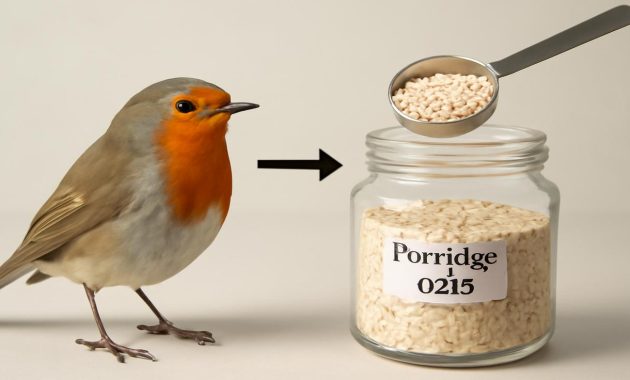
The first time you hear it on a frost-bitten morning—a single, liquid note trembling in the cold—you might pause mid-step on the back doorstep. There he is, a russet smudge against the grey, the robin on your fence post, chest puffed out as if he’s the one holding back winter. His song threads through the icy air, brave and oddly fragile, and something in you softens. You’d like to help him, you think. But how much difference can one small garden, one small person, really make when the temperatures drop and the world turns hard and hungry?
The Cold Truth About a Robin’s Winter Day
Before we get to the RSPCA’s simple winter tip, it helps to understand just how tough a robin’s day can be in January or February. On a bright summer morning, a robin is a cheerful forager, hopping along the lawn, pulling up worms and chasing off rival males with a surprising fierceness for such a small bird. In winter, though, everything changes.
The soil, once soft and full of invertebrates, turns to iron. Worms retreat deeper underground. Insects, the juicy protein-rich snacks robins love, vanish from the surface world or go dormant. That lively, bustling garden of summer becomes a quieter, leaner place. Under those frosted leaves and stiff blades of grass, there is suddenly much less to eat.
Yet the robin, like all small birds, still burns fuel at an astonishing rate. Its tiny body must stay around 40°C even when the air is hovering near freezing. Each night, as the light drains away and the temperature slides down with it, that little bird has just one shield against the cold: the energy stored inside its body. If a robin can’t eat enough during the day, it may not have sufficient reserves to survive the night. One bad cold snap, a few days of frost and ice, and the math can turn brutal.
This is why the RSPCA and other animal welfare organisations keep repeating the same winter message: the food you put out in your garden during the hardest months really can tip the balance toward survival for birds like robins. Which brings us to their top winter tip—one that begins in the simplest of places: your kitchen cupboard.
The Humble Kitchen Staple That Makes a Big Difference
Open your cupboard door and you might find it sitting there without fanfare: a modest bag of plain porridge oats. To you, it’s a quick breakfast. To a winter robin, it’s an energy-rich lifeline. The RSPCA highlights plain, uncooked porridge oats as one of the easiest, most accessible ways to help garden birds stay energised and healthy when the cold bites hardest.
Imagine your robin again: he’s fluffed up like a tiny feathered pom-pom on a fence post, trying to trap warm air close to his body. Every few minutes he darts down into the garden, searching, probing—under a pot, near a tangle of ivy, around the edges of a frozen plant pot saucer. He’s burning calories with every move, and the rewards are slim: a single spider, a half-dormant beetle, a shred of something unrecognisable.
Now picture what happens when he discovers a scattering of pale oat flakes, dry and crumbly on a frost-dusted saucer. They’re high in carbohydrates and easy to peck at. They give an immediate energy boost without the hazards that some other human foods bring. No sticky residues, no salty coatings, no hidden fats that could clog feathers or upset delicate systems. Just simple, concentrated fuel packed into a shape that a robin can manage with ease.
It’s this combination of accessibility, safety, and instant energy that makes plain porridge oats such a standout recommendation when the days are short and the nights are long. You probably already have them. They’re inexpensive. They store well. And they can be poured into your palm, carried out into the glittering morning, and transformed into a solid step toward survival for the birds in your garden.
How to Serve Oats Safely: Tiny Plates for Tiny Guests
Helping winter birds isn’t about dumping a heap of food on the lawn and hoping for the best. A few thoughtful choices can keep your feathered visitors safe while they tuck into their unexpected breakfast. Fortunately, serving porridge oats the right way doesn’t ask much of you—just a bit of attention and a few simple rules.
First, the golden rule: they must be plain, uncooked oats. No sugar, no honey, no added fruit pieces, no flavourings, no instant sachets with extra ingredients. The RSPCA stresses that birds don’t cope well with salt or added sugars, and many of the “flavoured” or “microwave” options meant for humans are loaded with these. Look for nothing more than “rolled oats” or “porridge oats” on the ingredient list.
Second, keep them dry and uncooked. Cooked porridge, however comforting it might be to us, can become sticky and gluey in a bird’s beak. It can mat their feathers or cause issues around the beak if it cakes and hardens. Dry oats, on the other hand, stay loose and easy to manage. Scatter them in a shallow dish, on a bird table, or on a flat stone or slab where they’re clearly visible.
Third, offer small, frequent servings rather than a single large pile. This helps in several ways: it keeps the oats fresh, prevents them from becoming soggy in rain or snow, reduces waste, and allows more birds to get a share throughout the day. It also discourages less welcome visitors from clearing the entire lot in one sitting.
And lastly: think about the diners. Soft-billed birds like robins, blackbirds, thrushes, and dunnocks appreciate an open, accessible feeding spot. If you can provide a spot with decent visibility—so they can watch for predators—but close enough to shrubs or hedges for a quick escape, you’ve set the stage well. That shallow saucer of oats becomes, in effect, a tiny winter café bench where tired, hungry birds can top up their energy before the next cold-stung flight.
Pairing Oats With Other Winter Treats
While plain oats are a star player, the RSPCA encourages offering a varied “menu” to support different bird species and nutritional needs. Think of your garden as a small, outdoor diner, where each dish plays a part. Some birds crave fat; others need seeds or soft fruit. Together, these options can turn your patch of grass and paving into a much-needed oasis in the leanest months.
A robin might linger over oats, but blackbirds may be drawn to chopped apples or pears past their prime—still edible, still full of moisture and vitamins. Blue tits and great tits may hop eagerly to fat balls or suet blocks hung from a branch, where they peck away with acrobatic precision. Sparrows might prefer mixed seeds, tossed into a feeder or scattered on a low tray.
You don’t need a large space for this, and you don’t need specialist equipment to start. A plant pot saucer can become a grain plate. A flat stone can be a bird table. Even a windowsill (if safely out of reach of cats) can host a small feeding station. The key is consistency and moderation. Feed little, feed often, and keep things clean. If food remnants begin to collect, clear them away before mould or bacteria get a foothold.
To give you a sense of what works well—and what doesn’t—here’s a quick comparison of common kitchen offerings and how they measure up for birds in winter:
| Food Item | Is It Safe? | Best For | Notes |
|---|---|---|---|
| Plain, uncooked porridge oats | Yes – RSPCA recommended | Robins, blackbirds, thrushes, dunnocks | Offer dry, in small amounts. Avoid flavoured or instant sachets. |
| Unsalted, crushed peanuts | Yes, if unsalted and aflatoxin-free | Tits, finches, nuthatches | Best in mesh feeders. Never give whole peanuts loose where chicks may choke. |
| Seed mixes (no salt) | Yes | Sparrows, finches, tits | Choose quality mixes without cheap fillers like dried rice. |
| Suet, lard-based fat balls | Yes, without mesh nets | Tits, starlings, woodpeckers | High-energy winter food. Avoid plastic nets—legs and beaks can get trapped. |
| Stale, plain bread | In moderation only | Gulls, pigeons, some garden birds | Fills birds up without much nutrition. Never mouldy or salted. |
| Salty, flavoured snacks (crisps, salted nuts) | No | None | Salt can be dangerous for birds. Avoid entirely. |
Morning Rituals: Turning Feeding Into a Winter Habit
One of the quiet pleasures of cold-weather bird care is the rhythm it brings to your own days. Maybe you pull on a thick jumper, wrap your hands around a mug of steaming tea, and step out into the stillness just after sunrise. The garden is rimed with frost; the hedges wear a dusting of silver; your breath hangs briefly in the air.
In one hand, you carry a small cup of oats; in the other, perhaps a handful of seed or a broken-up fat ball. The birds are already paying attention. They’ve learned the sound of your step, the creak of the back door, the clink of ceramic on stone as you set down the saucer. A shadow moves in the hedge. A robin perches on the edge of a flowerpot, head tilted, weighing the moment.
Your movements become the signal: food is coming. Within minutes of your retreat back indoors, the garden shifts. A flit of wings. A darting presence on the saucer. The robin has arrived, bouncing lightly on his skinny legs as he inspects the pale scatter of oats. He pecks once, twice, three times; soon the saucer is dotted with tiny beak marks, and the bird’s posture relaxes. He is eating.
From the warmth of the kitchen you watch, feeling somehow that your world and his have overlapped more closely than usual. The glass between you is thin; you on one side, in your wool socks and heated house, and a creature on the other, entirely at the mercy of weather and chance, doing what it can to get through one more winter’s day.
Make this a habit, and you’ll start to notice patterns. Which birds arrive first. Which ones hang back, shy or cautious. How the robin defends “his” feeding patch, chasing off rivals. How a freezing rain changes attendance compared with a dry, bright morning. Over time, those birds become more than ornaments in your view; they become neighbours whose fortunes you silently track.
Why Your Small Garden Matters More Than You Think
It’s easy to imagine that meaningful conservation must happen in distant reserves or sprawling countryside estates. But increasingly, the spaces that matter most to everyday wildlife are the small ones: pocket gardens, balconies, allotments, and tree-lined streets threaded through towns and cities. For a robin, your ten-by-ten patch of lawn, your side alley with ivy on the fence, your row of pots on concrete, can be the difference between a territory with winter food and water—and one without.
The RSPCA’s guidance on feeding birds in tough weather is rooted in a simple truth: when conditions are harsh, even minor boosts in available food can significantly improve survival rates. A scattering of oats here, a suet block there, a regularly topped-up birdbath that isn’t a solid sheet of ice—these are not grand gestures. They are small, consistent acts that, together, can echo across an entire neighbourhood’s bird population.
Think of your garden as one tile in a mosaic. Perhaps your neighbour up the street also puts out seed. Perhaps someone a few roads over leaves windfall apples under a tree. A child in the next block sticks sunflower heads on a bamboo cane for finches. None of you sees the full map, but the birds do. They trace invisible lines between all these places, building a mental blueprint of where to find food when the snow comes.
In this way, your handful of porridge oats is not a lonely offering. It’s part of a network of quiet kindnesses stretching out beyond your sightline. And when that robin sings in the half-dark of a February afternoon—when his rusty breast catches the last fragment of sunlight and he throws his whole slight body into the effort—you can hear, threaded into that song, all the invisible scaffolding that helped him get through the week.
Water, Shelter, and the Rest of the Winter Toolkit
Food is crucial, but it isn’t everything. If you truly want to give your robins and other garden birds the best shot at a healthy winter, consider the other pillars of support the RSPCA often encourages: water, shelter, and cleanliness.
Water first. In freezing conditions, natural puddles, ponds, and birdbaths lock up. Birds need water not just to drink, but to bathe and keep their feathers in good working order. A shallow dish refreshed each morning—perhaps with a little warm (not hot) water to gently melt any ice—is immensely valuable. Even on days that feel bitter to you, you may see a robin splash and fluff in an icy puddle, then retreat to a branch to preen. Those feathers are its only coat; keeping them clean and aligned is non-negotiable.
Shelter comes next. Dense shrubs, evergreen hedges, climbing ivy, and untidy corners of the garden can all provide roosting spots, windbreaks, and hiding places. That pile of twigs you didn’t get around to clearing? To a robin, it may be a small fortress against a north wind. Resist the urge to tidy everything within an inch of its life during winter. A bit of wildness is a gift.
Then there’s hygiene. Regularly cleaning bird tables, dishes, and feeders is vital to reducing the spread of disease, especially when many birds are crowding into a smaller area for food. Use hot water and a mild disinfectant suitable for wildlife, rinse thoroughly, and allow everything to dry. Removing droppings and leftover food stops harmful bacteria and mould from building up.
None of this needs to be complicated or expensive. A washing-up bowl can be a birdbath. An old plant saucer, scrubbed clean, can become the official oat dish. A single evergreen shrub or a small conifer planted near your feeding area can serve as a safe, year-round refuge. These modest adjustments, combined with your porridge-oat breakfasts, create a landscape where winter is still tough—but not quite as unforgiving.
Sharing the Magic: From One Robin Fan to Another
Once you begin, it’s hard not to talk about it. You might find yourself mentioning “your” robin in conversation: how he appears the moment you step outside, how he sometimes comes so close you can see the fine, silk-like strands of feathers around his beak. You may tell a friend how oddly comforting it feels to know that your wardrobe staple—porridge oats—has become a small but potent tool in a wild creature’s struggle to survive.
There is a quiet joy in this, and a gentle humility too. You are not saving the world. You are not single-handedly reversing climate change or habitat loss. You are simply acknowledging another life in your orbit and choosing to ease its path, grain by grain. The RSPCA’s top winter tip for robin fans—reaching for that bag of plain oats—is less about the oats themselves and more about what they represent: attention, care, and a willingness to share the comforts of home with the creatures just beyond its walls.
So tomorrow morning, when the sky is the colour of pewter and the air stings a little, you might pause at the cupboard and lift out that familiar bag. Just a handful, into a chipped bowl. Out you go, slippers brushing against the cold doorstep, to place it exactly where your robin has come to expect it. Somewhere nearby, a small shape stirs in a hedge, listening. The day, for both of you, is about to begin.
Frequently Asked Questions
Can I give instant or flavoured porridge oats to birds?
No. Only offer plain, unsweetened, unsalted porridge oats. Instant or flavoured oats often contain added sugar, salt, and flavourings that birds do not need and may find harmful.
Is it safe to give cooked porridge to robins?
It’s best to avoid cooked porridge. When wet, it can become sticky, cling to beaks and feathers, and harden as it dries. Dry, uncooked oats are safer and easier for birds to handle.
How often should I put out oats for my garden birds?
Little and often works well—once in the morning and, if you can, a small top-up in the afternoon during very cold weather. Regular, modest portions are better than large, infrequent piles of food.
Will feeding oats attract pests like rats?
If you overfeed or leave piles of uneaten food overnight, you may encourage unwanted visitors. Offer small amounts that birds can finish during the day, and clear away leftovers before dark to reduce the risk.
Do robins become dependent on being fed by humans?
Wild birds usually continue to forage naturally, even when humans provide food. Your offerings are a crucial supplement in hard weather, not a complete replacement. However, sudden stopping in the middle of a severe cold spell could make life harder, so try to be consistent in winter once you start.
What else can I put out with oats to help robins in winter?
Chopped fruit (like apples and pears), small amounts of grated cheese (unsalted), soaked raisins, soft bird seed mixes, and suitable suet products are all helpful. Always avoid salty, heavily processed, or mouldy foods.
Is it really worth bothering for just one or two robins?
Yes. For a small bird facing a long, freezing night, the energy from your handful of oats can be the difference between surviving and not. You may only see one robin, but your feeding station often supports many other species too—each one a small life made a little easier by your care.