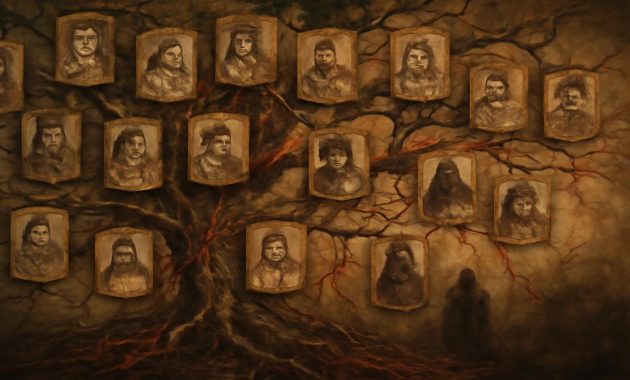
The story usually begins with a balcony. A sea of faces in the rain, a line of figures in tailored coats and twinkling tiaras, the faint flutter of Union Jacks like restless birds. Cameras zoom in, searching. Who stands closest to the monarch? Who is missing? Whose subtle glance travels sideways instead of forward? In these tiny gaps between shoulders and smiles, an ancient drama hums quietly: bloodlines, duty, jealousy, devotion—and the ever-present shadow of the throne itself.
The Roots of a Restless Family Tree
King Charles III stands today as the visible trunk of a tree whose roots run deep into centuries of conflict, compromise, and carefully managed image. It is easy to think of the royal family as a fixed picture on a commemorative tea towel, but the reality is more like a living forest—branches intertwining, some snapped clean, some deliberately pruned, others twisting in directions no one quite anticipated.
Charles, born in 1948 to the then Princess Elizabeth and Prince Philip, grew up knowing that his life’s path was already drawn. His childhood, glimpsed in black‑and‑white photographs and stiff school portraits, was less about toys and more about training. While other children learned to ride bikes, he learned to ride polo ponies beneath the watchful gaze of a nation. He became the Prince of Wales at just nine years old—an heir not just to a crown, but to an intricate tapestry of expectations and scars.
At the heart of this tree is a simple biological truth: the crown follows blood. Yet the royal bloodstream has never been a calm river. It has been disrupted by abdications, divorces, tragic deaths, and quiet exiles. Each new generation enters the story already burdened with old history, its rivalités sanglantes—not always literal bloodshed, but the more insidious cuts of emotional battle: who is favored, who is forgiven, who is forever marked.
The Core Circle: Charles, Camilla, and Their Children
When people picture the royal family today, the first image is often Charles standing beside Queen Camilla, the woman who moved from scandalous headline to crowned consort over the span of decades. Their presence together at state occasions is the result of a long and bitter chapter in the royal saga—one written in whispers, tears, and tabloid ink.
Camilla’s journey into the inner circle rewrote the emotional map of the family. Behind palace gates, loyalties fractured and recalibrated. For William and Harry, she was not just their father’s love, but the visible reminder of the marital war that tore through their childhood. Over time, rituals of public duty have softened some edges, but the story of Charles’s immediate household is inseparable from late‑night phone calls, clandestine meetings, and the ghost of Diana, Princess of Wales, whose shadow still lies across the line of succession.
Yet the tree continues to grow. From his first marriage, Charles has two sons: William and Harry. They once moved like a matched set, two figures in dark suits walking behind their mother’s coffin, two princes in uniform, two boys spoken of as “the future.” Now, they orbit the crown at very different distances. Where William has stepped fully into the role of heir apparent, Harry has stepped away—from royal duties, from the UK, from the daily choreography of the Firm. And that departure has left not just an emotional rift, but a visible gap in the traditional succession narrative.
The Line of Succession, Laid Bare
At its coldest, succession is simply math and biology: who was born when, and to whom. At its warmest—and sharpest—it is a story about identity and belonging. To see it clearly, it helps to line it up, name by name, title by title.
| Position | Name | Relation to King Charles III | Key Title |
|---|---|---|---|
| Monarch | King Charles III | Self | King of the United Kingdom |
| 1 | Prince William | Elder son | Prince of Wales |
| 2 | Prince George | Grandson | Prince of Wales’s elder son |
| 3 | Princess Charlotte | Granddaughter | Princess of Wales’s daughter |
| 4 | Prince Louis | Grandson | Prince of Wales’s younger son |
| 5 | Prince Harry | Younger son | Duke of Sussex |
| 6 | Prince Archie | Grandson | Son of the Duke of Sussex |
| 7 | Princess Lilibet | Granddaughter | Daughter of the Duke of Sussex |
From there, the list flows outwards through Charles’s siblings—the Princess Royal, Prince Andrew, Prince Edward—and their descendants, but the emotional center of the story hovers around these few names. It is here that public scrutiny is most intense, the air thinnest, the stakes highest.
William: The Heir, The Weight, and the Whisper of Rivalry
Standing first in line to the throne, Prince William carries the peculiar mix of inevitability and dread that comes with being the visible future of a very old institution. His childhood was shaped by the same winds that battered his father: press intrusions, boarding school silences, relentless ceremony. But William’s defining rupture came in 1997, with the death of his mother, Diana, in a Paris underpass—an event that not only reshaped his private life but cracked open the public’s understanding of royal vulnerability.
For years, the narrative around William and Harry was that of a united front. Two princes against the world; two brothers joking at charitable events, standing together in military uniform, remembering their mother with shared sorrow and ceremony. Yet succession has its own subtle gravity. Even in childhood, William was the one shepherded into briefings, taken aside for quiet conversations about the future, introduced gently to the machinery of state. Harry, with his irreverent grin, floated in a more flexible orbit.
This inequality is older than either of them. The “heir and spare” dynamic has haunted royal households for centuries—a built‑in rivalry coded into birth order. History is littered with brothers set against each other over crowns: feuds that really did end in blood on the battlefield, lines of succession erased by swords, daggers, or whispered accusations of treason. Today, the weapons are different: interviews, memoirs, media narratives. But the bruises can still run deep.
Now, as William raises three children of his own with Catherine, Princess of Wales, the pattern repeats in quieter form. George, Charlotte, and Louis are growing up under a softer, more protective regime than previous generations—but the shadow of hierarchy lingers. One day, George will inherit a destiny his siblings will never fully share. For now, they tumble in schoolyards and wave from car windows, but inside the palace calendar the future is already penciled in.
Harry: The Spare Who Stepped Away
If William personifies continuity, Harry represents rupture. Fifth in line to the throne, he is still firmly on the list, but his physical and symbolic distance from the crown has widened dramatically. His decision, with Meghan, Duchess of Sussex, to step back from royal duties and build a life elsewhere fractured the illusion of a seamlessly united royal front.
In another era, such defiance might have risked exile in more brutal form. Today, the battlefields are talk shows and streaming services, candid confessions and competing versions of the truth. The rivalités sanglantes here are emotional more than physical—the pain of feeling unprotected, the anger of being misunderstood, the accusation that one has betrayed “the family” versus the claim that the family betrayed you first.
Yet, even oceans away, Harry remains tied to the line of succession. His children, Archie and Lilibet, nestle just behind him in that invisible queue. Whether or not they ever attend a Trooping the Colour or stand on a palace balcony, the bloodline has placed them forever inside the story. That is the paradox of this ancient system: you can step away from the stage, but your name remains etched in the script.
The Siblings in the Shadows: Anne, Andrew, Edward
Beyond the intensely lit core of Charles, William, and Harry lie the quieter, and sometimes more troubled, branches of the family tree: the King’s siblings. Each stands as a reminder that succession, by its nature, sidelines some and thrusts others unwillingly into the spotlight.
Princess Anne, the King’s only sister, is widely respected as one of the hardest‑working members of the family. Once higher in the line of succession, she was overtaken as her brothers had children and as the rules around male preference primogeniture finally caught up with modernity. Yet the shift in ranking did not diminish her presence; if anything, it freed her to carve a role shaped more by service than by expectation of the crown.
Prince Andrew inhabits a much darker corner of the tree. Once known simply as the Queen’s favorite son, his later years have been overshadowed by scandal and allegations that led to the stripping of public duties and military titles. Here, too, rivalités sanglantes take on a modern form: the tension between preserving the monarchy’s image and protecting one of its own. The decision to push Andrew to the margins may have safeguarded the institution, but it also revealed the ruthless calculus that sometimes pulses beneath the family facade.
Prince Edward, the youngest, has moved more gently through the royal landscape, building a quieter life with Sophie, Duchess of Edinburgh, and their children. Further down the line of succession, his role is less about the possibility of kingship and more about reinforcing the web of engagements and appearances that holds the monarchy’s public role together.
Blood, Duty, and the Echo of Older Wars
To call these tensions rivalités sanglantes may sound dramatic, but the phrase reaches back to an older truth: this institution is built on a long history of real, often violent competition for power. The Wars of the Roses, the execution of rivals, the imprisonments in high stone towers—these are not just episodes from distant textbooks. They are the deep background hum behind every polite handshake and carefully staged group photograph.
Today, no one is expected to take up arms to shift the line of succession. Yet the stakes, in another sense, remain high. Reputation, legacy, mental health, marriage, and identity are all pulled into the orbit of the crown. The bruises, though invisible, can be just as lasting as any old battlefield wound.
The Invisible Cost of Being “Next”
To live inside this family is to live permanently between the intimate and the ceremonial. Birthdays come with balcony appearances. Grief comes with public processions. Even joy—weddings, christenings, jubilees—must be shared with millions of strangers. For those closest to the throne, there is almost no corner of life that is not, in some way, part of the job.
King Charles knows this intimately. His long apprenticeship as heir apparent—decades of waiting in the shadow of an exceptionally long‑reigning mother—gave him a unique vantage point on duty and delay. He watched the world change, watched public affection shift and fracture, watched his own reputation rise and fall, and then rise again, as the years folded over each other.
Now, as monarch, he carries not only the crown but the challenge of guiding the institution through a time of questioning. What does monarchy mean in a world wrestling with inequality, climate crisis, and the legacies of empire? Who, exactly, does this family represent? The answers are not simple, and the pressure concentrates most fiercely on the top branches of the tree: Charles today, William tomorrow, George someday after that.
The line of succession is a list, but it is also a corridor of expectation. Each name along it wakes every morning knowing that personal choices—whom to marry, where to live, what to say in an unguarded moment—can tilt the public’s view of the entire institution. That is a heavy awareness to carry for a lifetime.
The Future of the Crowned Forest
Look again at that balcony. The King and Queen at the center, William and Catherine close by, their children bouncing slightly on their toes, learning the practiced wave. Somewhere further along, faces that once carried more weight, now a little older, a little more distant from the core drama. Somewhere else entirely, in another country, another timezone, a prince who chose a different path checks the news on his phone and sees the same images the rest of us do.
The royal family tree is not frozen in time. It creaks, bends, sheds leaves, sprouts new shoots in surprising directions. Children are born, titles shift, roles evolve. A family argument over a private dinner might, months later, ripple out into a change in official duties or a striking absence from a key ceremony. And through it all runs that old, inescapable current: who comes next?
King Charles III’s closest family—the heir in waiting, the “spare” turned outsider, the grandchildren being gently ushered onto the public stage—are living out this question in real time, their every move watched, interpreted, sometimes misread. The rivalités sanglantes may no longer spill red onto palace floors, but they live on in more subtle forms: in lingering glances, careful seating plans, edited press releases, and the soft closing of doors.
In the end, the monarchy survives not only because of ceremony and law, but because enough people still find the story compelling. A story of duty and privilege, of fracture and reconciliation, of old traditions wrestling with new values. A story in which the family tree is both shelter and trap, blessing and burden, crown and cage.
And somewhere within that living forest, under the weight of jewels and history, stands a man who waited a lifetime to be king, surrounded by branches that reach toward an unknowable future.
Frequently Asked Questions
Who is currently first in line to succeed King Charles III?
The first in line to the throne is Prince William, Prince of Wales, the elder son of King Charles III and the late Diana, Princess of Wales.
Where do Prince George, Princess Charlotte, and Prince Louis fall in the line of succession?
Prince George is second in line after his father, Prince William. Princess Charlotte is third, and Prince Louis is fourth. Changes to succession laws mean Charlotte keeps her place regardless of having a younger brother.
Does Prince Harry’s decision to step back from royal duties remove him from the line of succession?
No. Prince Harry remains fifth in line to the throne. Stepping back from royal duties affects his role, not his place in the hereditary order.
Are Archie and Lilibet in the line of succession?
Yes. Archie is sixth in line, and Lilibet is seventh. They remain part of the succession regardless of living outside the UK or their parents’ royal roles.
Can the line of succession be changed?
Yes, but only through legislation. Previous changes, such as ending male preference in succession, required coordinated laws across the realms where the monarch is head of state.
What does “rivalités sanglantes” mean in the royal context?
Literally “bloody rivalries,” the phrase evokes the historic and emotional conflicts around succession—once fought with weapons on battlefields, now played out through media, public perception, and internal family tensions.
Will Princess Charlotte ever be queen?
It is possible but not guaranteed. For that to happen, circumstances would have to prevent both Prince George and his potential future children from taking the throne. For now, Charlotte stands firmly third in line, a heartbeat away from a destiny no one can yet fully predict.