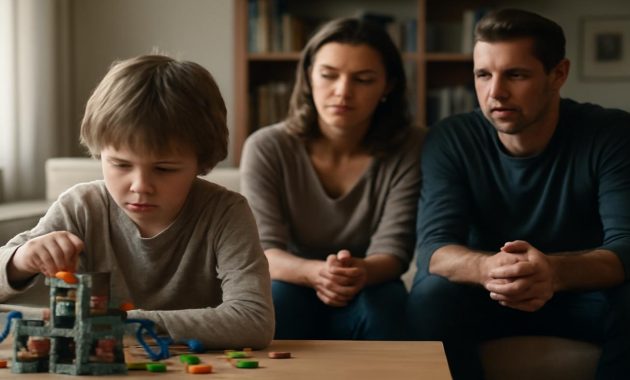
The first time I heard a mother whisper, “As long as you’re happy, that’s all that matters,” I remember feeling a strange tug inside my chest. We were in a grocery store checkout line, and her toddler was mid-meltdown over a candy bar. She sighed, caved, and handed it over with a small, apologetic smile in my direction. The child’s tears stopped instantly. Victory, purchased for $1.29. For a fleeting second, the world seemed calmer. But walking out, I wondered: what happens to a child who grows up hearing that their happiness is all that ever really matters?
The Promise of Happiness… and the Quiet Trade-Off
Modern parenting is steeped in the language of happiness. Books, blogs, gentle parenting podcasts—they all orbit that glowing central sun: keep your child emotionally secure, heard, validated, and, if possible, happy. After all, many adults are still untangling the knots left behind by harsher upbringings. We vow to be different. We say things like, “I just want them to be happy,” with a conviction that feels like love at its purest.
But psychology, in its calm, data-driven way, has been tapping us on the shoulder with a quiet question: what if a childhood built on the relentless pursuit of happiness comes with a hidden price? What if this beautiful, loving intention—prioritizing children’s happiness at almost any cost—is, bit by bit, growing more self-centered adults?
This doesn’t mean that love, warmth, or emotional openness are the problem. Far from it. Children who feel safe and cherished generally fare better in life. The trouble begins when happiness becomes not just one of many important values—but the sole compass.
When every disappointment must be quickly fixed, every boredom filled, every frustration soothed before it has a chance to deepen, children receive a powerful, silent message: uncomfortable feelings are emergencies, and the world should rearrange itself to relieve them.
The Little Emperor Effect: When the World Revolves Around the Child
In some cultures, there’s a phrase for this: the “little emperor” effect—children elevated to a place where their wishes, moods, and comforts set the tone of the household. Many parents don’t intend for this to happen. It starts small, innocently:
- Skipping a needed boundary because “they’ll be so upset if I say no.”
- Rearranging family plans again and again so the child is never disappointed.
- Rushing in to solve every conflict at school instead of letting them navigate social discomfort.
- Over-praising for minimal effort to keep their spirits buoyed.
Over time, the child begins to expect that the emotional temperature of the room will be adjusted to suit them. The people around them—parents, teachers, siblings—start to feel less like separate humans and more like supporting characters in their personal movie.
Psychologists often talk about self-focus versus other-focus. Children naturally start out highly self-focused; the big developmental task is gradually learning that other people have thoughts, needs, and limits just as real as their own. This is empathy in action. But if adults continually rearrange reality to protect the child from distress, the message is quietly reinforced: “Your feelings matter most.”
And when we say “most,” the unsaid part is: more than other people’s.
Small Frustrations, Big Lessons
Think of a four-year-old who wants the blue cup, not the red one. The meltdown is intense, real, and overwhelming—for them and for you. If the parent always swaps the cup to avoid the storm, the child does feel briefly happier. But what they don’t get is the micro-lesson hidden inside that frustration: I can survive not getting what I want. The world doesn’t end. My feelings are strong, but they pass.
Multiply that cup by a hundred small moments—bedtimes, screen time, sharing toys, waiting their turn. Each time adults bend the environment instead of helping the child stretch inside it, the child’s inner muscle for tolerating discomfort stays weaker than it could be.
Later, as teenagers and adults, this shows up as low frustration tolerance, entitlement, or brittle self-esteem that shatters at the first unsympathetic comment. If happiness was always the north star, anything less than happiness can feel like a crisis or an injustice.
The Psychology Beneath the Smiles
Psychology doesn’t demonize happiness. But it does draw a line between happiness as a byproduct of a meaningful, connected life and happiness as an expectation or entitlement. Several threads of research weave together here:
- Emotional regulation: Children don’t learn to regulate emotions by having them removed; they learn by feeling them, surviving them, and being supported through them. When parents constantly step in to “fix” feelings, they accidentally block that learning.
- Narcissistic traits: A pattern of being over-centered, over-praised, and over-protected can encourage a self-concept that is fragile but grandiose—“I’m special, and the world should confirm it.”
- Reduced empathy: When others repeatedly yield to your needs, it’s harder to see that they have needs of equal weight. Understanding other people’s discomfort requires having been allowed to sit with your own.
- Lower resilience: Children protected from disappointment often become adults less able to handle rejection, failure, or unfairness without collapsing or attacking.
None of this happens overnight. No parent ruins their child with a single extra ice cream or a soft-hearted “okay, just this once.” What matters is the pattern. Are we teaching, over and over again, that the primary job of the world is to keep you feeling good?
Happiness as a Narrow Goal
There’s another twist: the more we chase happiness—ours or our children’s—the more elusive it often becomes. When children are taught that happiness is the point of everything, they may come to see normal human emotions—sadness, boredom, envy, frustration—as proof that something is wrong.
Psychologists sometimes call this the “tyranny of positivity”: if I’m not happy, I’m failing. Adults raised on this diet of “feel good or it doesn’t count” can struggle to stay in hard but worthwhile things—like slow friendships, demanding work, or long-term commitments—because these don’t always feel good in the moment.
The paradox is gentle but sharp: by always prioritizing short-term happiness, we may be undermining the very conditions that create deeper, steadier forms of well-being later.
Table of Quiet Contrasts: Short-Term Ease vs. Long-Term Growth
It can help to see these patterns side by side. Below is a simple comparison—how choices that protect immediate happiness can ripple into adulthood.
| Childhood Pattern | Short-Term Effect | Possible Adult Outcome |
|---|---|---|
| Parents avoid saying “no” to prevent upset | Fewer conflicts, calmer days—for a while | Low tolerance for limits, difficulty with rules at work or in relationships |
| Every discomfort quickly fixed (new toy, screen, treat) | Fast return to “happy” | Impulsiveness, trouble delaying gratification, addictive scrolling/spending |
| Parents over-praise and shield from criticism | Boosted confidence in the moment | Fragile self-esteem, anger or collapse when confronted with failure |
| Adults constantly adapt around the child’s mood | Fewer tantrums, apparent harmony | Self-centered worldview, difficulty seeing other people’s needs |
| Conflicts solved for the child, not with them | Fast resolution, fewer emotional scenes | Poor conflict skills, avoidance, or aggressive entitlement |
Love Isn’t the Problem—But the Script Might Be
If you’re a parent reading this, you might feel a slight tightening in your chest. Maybe you recognize a scene: the toy bought just to stop the crying, the late-night extra screen time “because you’ve had a hard day,” the quiet surrender to a demand because you just didn’t have the energy to battle it out. These moments are human. They’re not moral failures.
The deeper question is: what script are we following about what a “good” parent is supposed to do?
Somewhere along the way, parenting in many societies shifted from “How do I raise a decent, capable human?” to something closer to “How do I keep my child emotionally comfortable?” That second question is born from love and from the painful memories of old-school parenting that dismissed feelings. Yet taken to an extreme, it asks parents to become emotional butlers, always arranging, soothing, and entertaining.
Children don’t just need warmth, delight, and safety. They also need friction, boundaries, and the lived experience of not always being the center of the circle. This is where empathy is born: the moment a child hears “no” and, supported by a calm adult, survives it. The moment a sibling’s needs come first. The moment a parent says, “I love you, but I’m tired, and I need rest too.”
The Power of “No, But I’m Here”
A boundary without abandonment is one of the most powerful gifts we can offer. Consider the difference:
- “Stop crying, you’re fine, it’s not a big deal.”
Message: Your feelings are wrong and inconvenient. - “Okay, fine, here, have it, just please stop crying.”
Message: Your feelings control what happens. - “I know you’re upset you can’t have it. It’s okay to be mad. The answer is still no. I’m right here with you while you’re upset.”
Message: Your feelings are real and welcome, but they don’t always change reality. You are not alone with them.
That last version threads a narrow path: validating emotion without centering the whole scene on the child’s happiness. It teaches something quietly revolutionary: other people’s limits are real, but so is my capacity to handle that.
Raising Humans, Not Just Happy Children
None of this means we must become stern, joyless guardians of “character.” Laughter, play, surprise ice cream nights, spontaneous trips, the sheer delight of watching a child’s face light up—these are not enemies of growth. They are the bright threads that make childhood worth remembering.
The key is not to confuse joy with policy. Joy can be abundant. Happiness can be welcomed whenever it visits. But as a guiding policy, “my child’s happiness comes first” can quietly erode the space for other crucial values: kindness, responsibility, patience, curiosity, respect for others, and the ability to stay present when life is not going your way.
Sometimes, raising a future adult means choosing the harder moment now:
- Letting them feel the sting of a lost game without rushing to distract them from it.
- Holding firm on chores or homework even when they pout, sulk, or lash out.
- Encouraging them to apologize when they’ve hurt someone, even if it makes them squirm.
- Allowing natural consequences to unfold, like returning a broken borrowed toy with an apology, instead of quietly replacing it yourself.
These are not anti-happiness acts. They are investments in a different kind of happiness: the quiet, steady satisfaction of being a capable, considerate human among other humans.
When Children See You as a Person Too
Another subtle antidote to over-centeredness is allowing children to see that parents are real people, not vending machines of comfort. When you say, “I’m disappointed,” or “I’m too tired to play right now,” you invite them into a world where other people have feelings and limits.
This isn’t the same as making them responsible for your emotions; they are still children, not therapists. But in a home where adults’ needs and feelings matter—not more, not less, but also—children learn they are part of a web of relationships, not the single, glowing center point.
Ironically, children who grow up in such homes are often more grounded, more secure, and yes, ultimately happier in the ways that last: they can maintain friendships, handle criticism, stay in difficult projects, say “no” without collapsing in guilt, and hear “no” without crumbling in outrage.
Looking Ahead: The Adults We’re Quietly Building
Every choice we make around a tantrum, a request, a limit, or a disappointment is like a tiny vote for the kind of adult this child might one day become. The goal isn’t perfection; no one parents flawlessly, and trying to do so only adds stress to an already demanding role.
But we can gently shift our inner question. Instead of asking, “How do I keep my child happy right now?” we might ask, “How do I help my child grow into someone who can handle life—with its joy and its mess—with courage and care for others?”
That shift makes space for boundaries without guilt, for frustration without panic, for sadness without seeing it as a problem to quickly erase. It also protects children from the loneliness of believing they must stay happy to be lovable—or that everyone around them exists to maintain their comfort.
The adults of tomorrow are sitting in back seats today, kicking chair backs, bargaining for five more minutes, crying over the wrong color socks, demanding the bigger slice. How we respond in these small, ordinary moments matters. It’s in these humble negotiations that we teach them, over and over:
You are loved beyond measure. Your feelings are welcome.
And you are one part of a bigger world, not the whole of it.
That’s not a denial of happiness. It’s an invitation into something richer: a life where happiness is not a fragile entitlement but a guest that comes and goes in a house built on sturdier ground.
FAQs
Does this mean I shouldn’t care about my child’s happiness?
No. Children need joy, play, and emotional safety. The point is not to ignore their happiness, but not to treat it as the only or highest goal. Balance it with teaching resilience, empathy, and respect for others’ needs and boundaries.
How can I tell if I’m over-prioritizing my child’s happiness?
Ask yourself: Do I regularly change my decisions just to avoid their upset? Do I feel anxious or guilty whenever they’re sad, bored, or frustrated? Do other family members’ needs often come second to keeping this child content? If the answer is often “yes,” it may be a sign to adjust.
Won’t saying “no” too often damage my child’s self-esteem?
Not if it’s done with warmth and respect. A firm “no” paired with empathy—“I see you’re disappointed, that makes sense”—actually strengthens self-esteem. Children learn they can handle limits and big feelings without losing your love.
What can I do instead of fixing every negative emotion?
Try staying close and curious. Name the feeling (“You’re really mad about this”), allow it to exist, and offer comfort, not solutions, when possible. Guide them in calming strategies—deep breaths, a hug, a quiet corner—rather than changing the situation every time.
How do I raise an empathetic child without making them feel responsible for others’ happiness?
Model empathy and boundaries together. Show concern for others—“Grandpa is sad today, let’s call him”—while also making it clear that everyone is responsible for their own feelings. Encourage kindness, but don’t force them to “fix” anyone’s mood, including yours.
Is it too late to change if my child is already older?
It’s rarely too late. Children and teens can adapt when the adults around them become more consistent and clear. Talk openly about changes: “We realized we were trying too hard to keep everyone happy all the time, and that wasn’t helping in the long run. We’re going to start doing some things differently, but our love for you hasn’t changed.” Then follow through with calm, steady boundaries.