The party was loud enough that the windows hummed. Music thumped through the floorboards, glasses clinked, someone laughed the kind of laugh that sounds like it’s trying too hard. You smiled, made polite conversation, floated from group to group like you knew how this whole social thing was supposed to work. And then, at some point, a tiny thought knocked on the inside of your skull: I’d really rather be home.
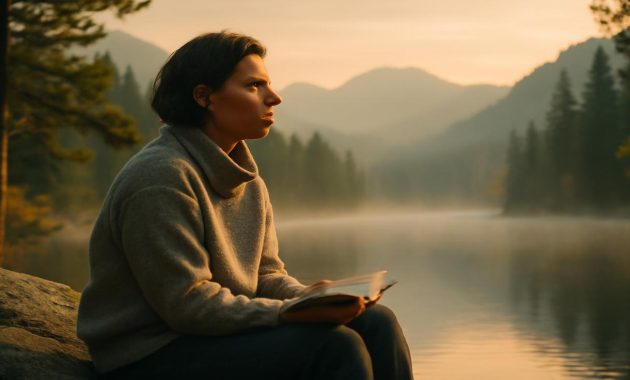
Not because you hate people. Not because you’re shy, or broken, or bad at conversation. But because your nervous system, your curiosity, your sense of meaning all seem to wake up not in a crowd, but in the quiet. Maybe it’s the walk alone at dusk. The book that pulls you in so deeply the rest of the world falls away. The simple act of making tea and listening to the kettle instead of the endless chatter.
Psychologists have been looking closely at this preference for solitude, and what they’ve found doesn’t match the stereotype of the lonely recluse. In fact, if you often choose calm over constant company, science suggests you may be carrying around a collection of powerful personality traits that people rarely recognise—sometimes, not even you.
The Quiet Pull of Being Alone
In a world that treats “busy” as a badge of honour and “networking” as a survival skill, choosing solitude can feel almost rebellious. You decline an invitation, mute the group chat, close the door—small, ordinary acts that can make you feel like you’re stepping out of the mainstream current.
Psychologists distinguish between loneliness and solitude. Loneliness is the ache of disconnection, the sense of being unwanted or unseen. Solitude, on the other hand, is a chosen state—a deliberate turning inward. Study after study shows that people who are comfortable being alone often share certain psychological strengths: stronger self-knowledge, more stable emotions, deeper creativity, and a sharper sense of personal values.
It doesn’t mean they never feel lonely, or that they don’t enjoy people. It means they’ve developed a relationship with themselves sturdy enough to sit in a quiet room without needing someone else to fill the silence. And tucked inside that simple ability to be alone are eight surprisingly potent traits.
1. Depth of Thought That Hides in the Background
Ask someone who loves their own company what they did last Saturday night, and the answer might sound unremarkable: “Stayed in. Cooked. Read.” But what’s happening internally can be anything but ordinary.
Psychologists call it reflective functioning—the capacity to turn your attention inward, to replay a conversation and notice what you felt, or to sift through an experience and ask, “What does this mean for me?” People who feel drawn to solitude tend to spend more time in this mental territory. Their lives may look quiet from the outside, but internally they’re running a rich commentary, connecting dots, re-examining choices, sensing patterns.
This depth of thought isn’t about overthinking every tiny detail. It’s more like slow-cooked insight. Given enough undisturbed time, the mind settles; pieces that felt scattered during the week start to assemble. That moment in the shower when you suddenly understand why that argument with a friend stung so much? That’s the quiet doing its job.
Over time, this habit of internal processing becomes a kind of mental compost pile. Old experiences break down into understanding, and that understanding feeds new decisions. To others, your choices may seem calm and deliberate; they don’t see the hours you’ve spent privately weighing what matters and what doesn’t.
2. Emotional Independence (That Doesn’t Mean You Don’t Care)
One of the most misunderstood traits hiding behind a preference for solitude is emotional independence. If you can comfortably spend a weekend without constant messaging, if you don’t panic when your phone is in another room, if you can hold your own opinions even when everyone around you disagrees—you may be more emotionally self-reliant than you realise.
Psychologists describe this as a secure internal base of support. Instead of needing constant reassurance from others to feel okay, you can check in with yourself. People who prefer solitude are often less driven by the immediate reactions of those around them. They can still be deeply loving and attentive, but they’re less likely to contort themselves into whatever shape will win approval that day.
This doesn’t mean they’re cold, unattached, or incapable of intimacy. In fact, many are intensely loyal. They simply don’t outsource their sense of worth to group opinion. When a crowd rushes toward the newest trend, they might hang back at the edge, observing. Not out of cynicism, but because they’ve learned to trust the quieter, slower voice inside.
In a culture that rewards performance and visibility, this kind of emotional independence is easy to misread as aloofness. Underneath, it’s often a sign of inner stability—the quiet confidence of someone who’s learned to be at home in their own mind.
3. A Sharp Filter for What (and Who) Really Matters
If you prefer solitude, you’ve probably noticed you’re picky about your social energy. You don’t want ten half-hearted plans; you’d rather have one good conversation with someone who actually shows up as themselves. Psychologists studying introversion and solitude-friendly personalities repeatedly find a similar pattern: a preference for fewer, deeper connections instead of constant broad socialising.
This selectivity isn’t snobbery; it’s a finely tuned filter. Being alone feels nourishing, not frightening, so you’re not scrambling to fill every empty hour. That freedom makes you more discerning. You might find yourself asking, sometimes unconsciously: Does this person respect my boundaries? Can I be real with them? Do I leave this interaction feeling more or less like myself?
Your calendar may look lighter than your more socially driven friends, but the meaning behind each engagement often runs deeper. You notice the small things—a friend’s change in tone, the way someone avoids eye contact when they’re struggling. Because your attention isn’t scattered across dozens of surface-level interactions, you tend to show up more fully for the people you truly care about.
Paradoxically, your love of solitude can make you an unusually present friend. You know what it’s like to listen to your own thoughts; extending that same quiet, spaciousness to someone else becomes a natural extension of how you live.
4. Creativity Fed by Silence and Space
Walk through the personal histories of artists, writers, scientists, and quietly inventive people, and a recurring pattern appears: many of them have prized solitude. Not necessarily isolation, but uninterrupted time to tinker, explore, and follow their thoughts to the end.
Modern psychology backs this up. Studies on creativity show that “incubation”—those periods when you’re not actively working on a problem but letting it simmer in the background—tends to happen most readily in solitude. That might be during a solo walk, a long shower, or a quiet bus ride with headphones in but no music playing.
If you feel most alive when sketching alone, writing in a notebook, experimenting in the kitchen, reorganising a room until it feels just right—your preference for solitude may be nurturing a creative mind. You’re giving your brain the conditions it needs to wander, combine old ideas in new ways, and notice connections that get drowned out by constant conversation.
The world often assumes creativity looks like brainstorm meetings and collaborative buzz. Yet the private, unhurried time you claim for yourself might be the real engine behind your best ideas.
5. A Strong Sense of Personal Boundaries
People who are comfortable being alone tend to know where they stop and other people begin. They’re not perfect at boundaries (no one is), but solitude has taught them something essential: they’re allowed to say no.
When you’re used to enjoying your own company, the cost of saying yes to every invitation is obvious. You feel the drain. You notice the shift in your body—the tightness in your shoulders, the jittery exhaustion after too many back-to-back plans. Over time, this physical feedback system helps many solitude-seeking people learn to set clearer limits.
You might be that friend who leaves the party early without drama, who declines a third social event in a week, who needs a day alone after a busy stretch. To some, this can look like being “difficult” or “anti-social.” But beneath it, psychologists see a healthy assertion of personal space and energy—one that many chronically overcommitted people secretly envy.
These boundaries don’t only apply to time. They can also show up in emotional and conversational lines. You may feel more comfortable stepping back from gossip, steering away from shallow small talk, or refusing to be drawn into someone else’s ongoing conflict. Knowing how good the quiet feels, you’re reluctant to fill it with noise that doesn’t serve you.
6. Heightened Self-Awareness and Inner Honesty
Solitude is like a mirror with no soft filters. When it’s just you and your thoughts, your patterns become harder to ignore. That argument that keeps repeating with different people; the way you pull back when things get too close; the impulse to say yes when you mean no—time alone gives you a front-row seat to your own inner workings.
This can be uncomfortable. It’s one reason some people avoid being alone: without external distractions, their unresolved feelings bubble up. But those who lean into solitude often develop a particular strength—self-awareness blended with honesty. They’re accustomed to watching their inner weather patterns without fleeing every cloud.
You might notice this in yourself when you catch your own rationalisations mid-sentence. “I say I’m too busy, but actually I’m anxious about failing.” Or: “I keep telling that same story about my childhood. Maybe it’s time to look at it more closely.” These small, private course-corrections are signs of a mind that’s used to checking in with itself.
Psychologists link this kind of self-awareness to better decision-making and mental health. Being honest with yourself doesn’t guarantee a problem-free life, but it gives you a clearer map. Instead of walking in circles, you gradually see where the real work is—and where you’re already stronger than you think.
7. Resilience Built from Standing on Your Own
There’s a quiet kind of resilience that often goes unnoticed because it doesn’t look dramatic. It doesn’t announce itself with speeches or declarations. It’s there when you face a hard day alone and know you can get through it. It’s there when you process a disappointment, feel it fully, and still make dinner, wash your face, and put yourself to bed.
Psychological resilience isn’t about never breaking down; it’s about knowing you can rebuild. People who prefer solitude often spend more time practicing exactly that. When something hurts, they might reach out—but they also have tools for self-soothing: journaling, walking, meditating, playing music, rearranging their space, creating something small and tangible.
Over time, this self-reliance in emotional recovery becomes a trait in its own right. You might not even recognise it as resilience because it’s so woven into your daily life. Others might describe you as “calm in a crisis” or “good at handling things alone.” Only you know the full story—the nights you sat with your thoughts until they softened, the choices you made with no cheering section and no guarantee.
None of this means you don’t need people. It means that when people can’t be there, you still have yourself. That’s not a consolation prize; it’s a hard-won strength.
A Quick Look at These Eight Hidden Traits
Here’s a simple overview of the powerful qualities often woven into a genuine preference for solitude:
| Hidden Trait | How Solitude Helps It Grow |
|---|---|
| Depth of thought | Quiet time lets you reflect deeply, connect experiences, and form your own insights. |
| Emotional independence | You learn to regulate your feelings without constant external reassurance. |
| Selective relationships | Because you enjoy your own company, you choose fewer but more meaningful connections. |
| Creativity | Uninterrupted space gives ideas room to wander, collide, and evolve. |
| Personal boundaries | You feel the cost of overcommitting and become better at saying no. |
| Self-awareness | Time alone acts like a mirror, helping you notice patterns and be honest with yourself. |
| Resilience | Facing emotions in solitude builds confidence that you can cope and recover. |
| Inner values | Stepping back from the crowd helps you live by your own principles, not just social pressure. |
Solitude as a Compass, Not a Cage
When psychologists talk about solitude in a healthy way, they’re not glorifying disconnection or suggesting you should slip away from the world entirely. They’re pointing to something subtler: the way time alone can act as a compass, spinning quietly until it settles on what actually matters to you.
In that stillness, you might notice which parts of your life feel like obligation costumes you put on for others, and which parts feel like your own skin. You might realise that certain friendships only exist in the spaces where you ignore your real opinions. Or that some old dream you wrote off years ago still lights up when you think about it in the dark.
Preferring solitude doesn’t make you superior to the social butterflies who bloom in crowded rooms. It simply means your inner garden thrives under different conditions. Some plants need full sun; others grow best in the dappled light beneath trees. Neither is wrong. The trouble starts when we force a shade-loving soul to live under fluorescent lights 24/7 and then call it “normal.”
If you recognise yourself in these descriptions, you don’t have to declare yourself an introvert or hide behind a label. You can simply acknowledge: I function better with more quiet than most people expect. And within that, there are powerful traits already at work—gifts that may have gone unnamed because they look so ordinary from the outside.
Next time you turn down an invitation, close your door, or take a long walk with only your footsteps for company, remember what psychologists are slowly piecing together: this is not you opting out of life. It may be you tuning yourself more precisely to it—hearing your own voice in the noise, choosing depth over distraction, and discovering that in the gentle territory of being alone, you’re not empty at all. You’re overflowing.
Frequently Asked Questions
Is preferring solitude the same as being an introvert?
Not necessarily. Many introverts do prefer more quiet time, but you can be an extrovert who also values solitude. Preferring solitude simply means you find time alone restorative or clarifying, regardless of how outgoing you are in social settings.
How can I tell if my solitude is healthy or a sign of withdrawal?
Healthy solitude usually leaves you feeling calmer, clearer, or more grounded. Withdrawal often comes with a sense of dread, hopelessness, or numbness. If your alone time feels like avoidance and your world is shrinking, it may be worth talking to a mental health professional.
Does enjoying solitude mean I don’t need close relationships?
No. Humans are wired for connection, even if we need less of it than others. Many people who love solitude also cherish a small number of deep, loyal relationships—they just balance them with regular time alone.
Can I develop these “hidden traits” if I’m not naturally drawn to solitude?
Yes. Even brief, intentional periods of quiet—like a daily walk, device-free mornings, or solo coffee breaks—can strengthen self-awareness, emotional independence, and creativity over time.
What should I say to people who don’t understand my need for alone time?
You don’t owe anyone a long explanation, but simple honesty can help: “I recharge best when I have some quiet time, so I’m taking the evening for myself.” Framing it as energy management rather than rejection can make your boundaries easier for others to accept.