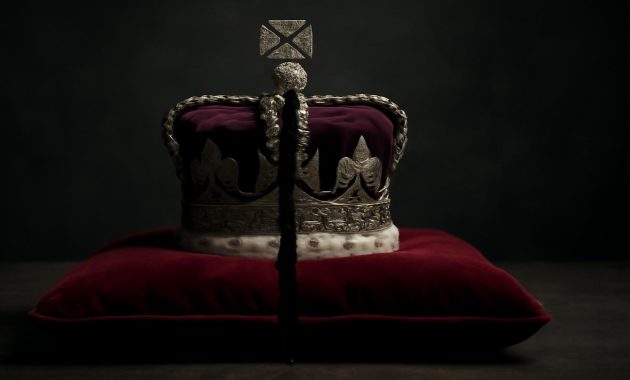
The air above Windsor this spring has felt strangely thin, as if the sky itself were holding its breath. On the Long Walk, the avenue of horse chestnuts and oaks that leads the eye toward the castle, dog walkers still chat, cyclists still glide past, tourists still raise their phones in practiced unison. Life goes on, in the way it always stubbornly does. And yet, just beneath the ordinary shuffle of daily routine, there is a tremor you can almost hear if you stand still long enough: a low hum of worry, of sympathy, of curiosity about a family that has spent generations learning how to be seen without ever truly being known.
A Prince in a Harsh New Light
When Prince William admitted that it has been a “brutal” year for his family, the word landed with a thud that echoed far beyond the palace walls. Brutal. It is not the sort of word royal watchers are used to hearing from a man raised in the vocabulary of duty, service, and stoic understatement. It’s a word you expect from a soldier, a nurse, a parent sitting in a parked car trying to gather the strength to walk back inside. It is rough around the edges, unvarnished, unspun.
In that single word, you could feel the strain of months that unfolded like one of those English winters that never quite breaks: gray day after gray day, the light always fading quicker than you remember. First came the quiet worry, the hints of illness, the vague official phrases that told you something was wrong but not how wrong. Then the confirmation of King Charles’s cancer diagnosis, the clinical syllables clattering against the centuries-old grandeur of the monarchy. Not long after, the revelation that Catherine, Princess of Wales, was also facing cancer and preventative chemotherapy, following major abdominal surgery.
To the outside world, these details appeared in push notifications and on news tickers. Inside the Wales household, they arrived like waves, crashing one after another against the fragile constructions of normal life: school runs, piano practice, lost PE kits, messy breakfasts, bedtime stories. The brutality Prince William spoke of is, in part, the brutality of trying to be both an heir to the throne and a father of three while illness quietly rearranges the map of your family’s future.
A Family Exposed, and Yet Still Hidden
There is a particular cruelty to public life when health becomes the story. Illness is, by nature, intimate; it strips a person down to their most private fears and fragile hopes. Monarchy, conversely, is built on spectacle, on polished windows and balcony waves, on the carefully choreographed reassurance that tradition will outlast any single human vulnerability.
When Catherine stepped forward in a recorded video message to share her diagnosis, the nation saw not a princess framed in pageantry but a woman speaking in a quiet room, voice steady yet edged with emotion. She spoke of shock. Of needing time. Of telling her children—George, Charlotte, Louis—in language gentle enough not to shatter them. Her statement was poised, yes, but the veneer of royal invincibility had cracked. Through that narrow split, humanity poured in.
William’s admission echoed that same shift. He has grown up under the weight of expectations so heavy they are rarely spoken aloud. He is the boy who walked behind his mother’s coffin, the teenager whose grief became a matter of global observation, the young man gently nudged into the role of modernizer-in-chief for an institution older than the country’s plumbing. But this year, he has become something else as well: the man who must navigate a fragile monarch, an ill wife, worried children, and a nation peering through the blinds, all at once.
Even in the most ordinary families, illness rearranges the household. Roles change. The strong become vulnerable. The quiet ones find new reserves of courage. In royal residences, add to that the choreography of staff, security, advisers, and the ever-present hum of the media—the knowledge that every hospital visit is a telephoto lens opportunity, every canceled engagement a headline. Brutal begins to feel like an understatement.
The Weight of a Shifting Future
Beyond the personal turmoil, there is another layer to this moment: the future of the monarchy itself feels shakier than it has in decades. Not because the institution is in immediate danger of collapse, but because for the first time in a long time, the line of succession is threaded through with medical uncertainties, emotional fatigue, and an unusually small cast of working royals.
The monarchy is, in many ways, a living story the nation tells itself about continuity. Yet right now the story has hit a jagged chapter. The image of stability—three generations on the balcony, the late Queen at the center, Charles to one side, William and Catherine with their small, waving children—is suddenly something we look at in the past tense. The anchor points have shifted; the present feels less like a stately procession and more like a family walking a narrow bridge in a crosswind.
It may help to see the moment laid out simply, stripped of ceremony and gold braid. Here’s the bare framework of the royal landscape as it stands:
| Royal | Position | Current Situation |
|---|---|---|
| King Charles III | Monarch | Undergoing treatment for cancer; public duties limited and carefully managed. |
| Prince William | Heir to the Throne | Balancing increased royal responsibility with supporting wife and children through illness. |
| Catherine, Princess of Wales | Future Queen Consort | Receiving preventative chemotherapy following major surgery and cancer diagnosis. |
| Prince George | Second in Line to the Throne | School-age child being shielded as much as possible from public scrutiny during family health crisis. |
| Princess Charlotte & Prince Louis | Third & Fourth in Line | Young children whose routines are carefully protected while parents juggle illness and duty. |
When you view it this way, without the distraction of uniforms and tiaras, what emerges is an astonishingly small nucleus: one ill king, one stretched heir, one convalescing princess, and three children whose main job—for now—is simply to grow up without being consumed by the expectations circling them.
The fragility people sense around the monarchy is less about any looming constitutional crisis and more about this human thinness. The institution that once felt like a granite building on a hill now looks more like a family kitchen table with too many empty chairs.
William Between Two Worlds
For Prince William, this year has thrust him into a strange borderland between son and sovereign-in-waiting. There is the raw, filial fear for a father facing cancer, and alongside it the cold, structural reality that his own timeline may be accelerating. There is the worry for his wife and, at the same time, the knowledge that her absence from public life leaves an even greater share of the symbolic load for him to shoulder.
In quieter moments, you can imagine him pacing the halls of Adelaide Cottage or Windsor, the corridor lights dimmed, the day’s official papers set aside. Perhaps he listens for the soft creak of floorboards, the distant hum of a dishwasher, the muffled giggle of a child who should be asleep by now. There is nothing particularly royal about these sounds; they are the familiar background music of family life everywhere. Yet layered over them are other, less familiar notes: the rustle of briefing folders, the polite cough of a private secretary waiting to run through tomorrow’s schedule, the unreal knowledge that a late-night phone call from the palace could irrevocably change his life.
William has long tried to plant himself in the soil of normalcy—air ambulance shifts, school gates, supermarket runs—small acts of ordinary life threaded through an extraordinary existence. Those efforts now meet a harsher test. How do you maintain routines for your children when the world is dissecting every grainy image of their mother? How do you comfort them when your own future, your father’s health, and your role in a thousand-year-old institution are all in uneasy motion?
His admission of a “brutal” year is partly a crack in the mask, an acknowledgment that the emotional cost of holding these contradictions is real. In that word, many parents heard their own exhaustion, many carers recognized the weary courage of someone trying to be strong in two directions at once.
The Children in the Eye of the Storm
At the center of this swirling uncertainty stand three young children whose lives have never been ordinary, but who still clutch at the same simple anchors as any other kids: stories at bedtime, comfort after nightmares, parents present at the school play. For them, the brutality of this year may not lie in the headlines, but in the shifts they can’t quite name—anxious glances, hushed phone calls, changed plans, a mother resting more, a father away more often.
William and Catherine have, from the outset, been determined to cocoon George, Charlotte, and Louis as much as possible. They moved away from the intensifying glare of central London to Windsor, choosing school runs over constant motorcades, dog walks over endless receptions. But no protective bubble is entirely impermeable when your family’s story is splashed across every front page.
Children are often more perceptive than we give them credit for. They notice when adults pause before answering, when laughter gets thinner around the edges. They may not understand the complexities of monarchy, but they understand when someone they love is unwell, when the ground beneath their small feet feels less solid. Shielding them becomes an act of daily creativity: how much do you explain? How much do you gently blur?
Against this backdrop, William’s role is not just heir, but translator—turning the cold facts of illness and duty into words his children can carry without breaking. Brutal, for him, may also mean the ache of those conversations, the sight of concern on faces that should still be carefree.
The Monarchy’s Uneasy Evolution
Zoom out from the intimate details of one family, and another question comes into focus: what does this moment mean for the monarchy itself? The institution has spent the last decade trying to cast itself as leaner, more focused, more in touch with the texture of ordinary British life. Working royals have been quietly reduced in number, peripheral figures nudged to the sidelines. For a while, it looked like a tidy narrative of modernizing efficiency—less pomp, more purpose.
But a slimmed-down monarchy is more vulnerable to shock. When two of your central figures—King and future Queen—are simultaneously forced to scale back, the absences echo loudly. A calendar sprinkled with cancellations and reassignments may not signal crisis, but it does highlight the fragility of relying on such a small group of people to carry the weight of national symbolism.
The emotional contract between Crown and public has also changed. In the age of social media, curated openness has become a survival strategy. People do not simply want to see the balcony wave; they want to sense the human reality behind it. Catherine’s candid message, William’s unguarded word “brutal”—these are not accidents. They are part of a quiet recalibration, a recognition that distance can no longer be the monarchy’s only armor.
Yet transparency is a double-edged sword. The more human the royals appear, the more we feel entitled to their humanity. Speculation grows in the silences between updates; conspiracies germinate in the gaps of official statements. The family’s attempt to carve out private space for treatment and recovery runs against a culture that expects real-time disclosure. The resulting friction is felt most keenly by those at the center: William, trying to honor both the public role he has inherited and the private life he is desperate to protect.
Resilience, Reimagined
There was a time when royal resilience meant impenetrability—the stiff upper lip, the unflinching smile, the refusal to admit that anything, ever, was truly hard. But resilience looks different in a century that has learned, often painfully, the cost of unspoken fear and suppressed grief.
This year has forced the monarchy to experiment with a new kind of endurance, one that allows for vulnerability without collapsing into spectacle. William’s choice of “brutal” suggests a willingness to speak from that place. It is not a grand speech from a palace balcony; it is a passing remark with the ring of truth, an almost offhand acknowledgment that carries the whole weight of the last months.
In the end, this moment may prove to be less about institutional fragility and more about institutional honesty: a recognition that the Crown is worn by mortal people whose bodies fail, whose resolve wavers, whose families crack and mend just like everyone else’s. Whether that recognition strengthens or weakens public support remains an open question, one that will be answered not by polls alone, but by the quieter metric of how people feel when they see William on a walkabout or Catherine re-emerge after her treatment.
What Comes After the Brutal Year
Spring in Britain has a way of sneaking up on you. One week, the trees are bare, the air metallic with cold; the next, there are daffodils pushing through the sodden lawns and a faint, almost shy warmth in the afternoon light. It does not erase the memory of winter, but it complicates it. You start to remember that the world has more colors than gray.
For the royal family, this “brutal” year is not a single storm that will simply pass. Its effects will linger—in altered workloads, in the rhythms of medical checkups, in the subtle hardness that comes from walking too long with uncertainty. Yet it may also seed a different kind of future: one in which the monarchy leans more openly into its own humanity, not as a brand strategy, but as a simple, inescapable truth.
Prince William stands at the threshold of that possible future. He is the bridge between an age that prized distance and one that insists on connection. The experience of watching his father and his wife face cancer, of telling his children enough but not too much, of speaking a word like “brutal” into microphones that will carry it around the world—these things are reshaping him long before he ever wears a crown.
For now, the path ahead remains misted. Doctors’ appointments share diary space with investitures; school holidays are planned around treatment schedules; balcony appearances are penciled in, then rubbed out, then penciled in again. The monarchy, that grand, gleaming symbol of continuity, feels suddenly like something more fragile, more fallible, and perhaps, paradoxically, more understandable.
Out on the Long Walk, the sky will keep changing its mind about the weather. Tourists will keep trying to catch the perfect shot of a castle that has outlived wars, plagues, abdications, and scandals. Somewhere behind those stone walls, a family will keep doing what families everywhere do when life turns brutal: they will adapt, they will cling to each other, they will put one foot in front of the other.
And in that slow, uneven progress—some days halting, some days surprisingly light—lies the answer to the question hovering over this strange, unsettled year. The future of the monarchy has never really been about marble statues or constitutional diagrams. It has always lived, quietly and precariously, in the hearts and bodies of the people who inherit it. Right now, that future is tired, tested, and more fragile than it once appeared. But it is also, unmistakably, alive.
Frequently Asked Questions
Why did Prince William describe the year as “brutal”?
Prince William used the word “brutal” to capture the emotional and practical strain his family has faced, particularly with King Charles’s cancer diagnosis and Catherine’s own cancer treatment. It reflects the intense pressure of balancing public duty with very personal health challenges at home.
How has Catherine’s illness affected the royal family’s public role?
Catherine’s treatment and recovery have meant a significant reduction in her public engagements. Because she and William are central figures in the modern monarchy, her absence has increased William’s workload and highlighted how dependent the institution is on a small core of working royals.
Is the future of the monarchy at risk because of these health issues?
The monarchy is not in immediate constitutional danger, but the health challenges facing both the King and the Princess of Wales have exposed how vulnerable a “slimmed-down” royal family can be. It has made the future feel more fragile, not in legal terms, but in human and symbolic terms.
How are Prince George, Princess Charlotte, and Prince Louis being affected?
Publicly, William and Catherine have focused on protecting their children’s routines and privacy. The children are still young, so their parents are carefully managing what is shared with them, trying to provide stability at home despite the pressures and worries surrounding the family.
Has this changed how the royal family communicates with the public?
Yes. This period has accelerated a shift toward greater openness. Catherine’s personal video message and William’s candid language show a move away from rigid formality toward a more human, emotionally honest style of communication, which may shape how the monarchy relates to the public in the years ahead.