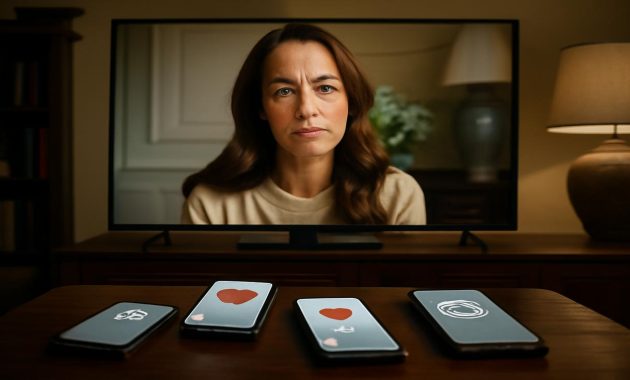
On a gray March afternoon, the kind that makes the world feel a little closer and a little quieter, a video appeared on millions of screens at once. There was no royal balcony, no red carpet, no flash of cameras. Just a wooden bench in a winter-stripped garden, soft light, and Catherine, Princess of Wales—Kate Middleton—sitting alone, hands folded, voice steady as she told the world she has cancer.
When a Garden Becomes a Global Stage
The first thing most people noticed was how gentle the scene felt. The bushes behind her were bare, fragile even, waiting on spring. The colors were muted: a soft navy sweater, simple trousers, natural makeup. It looked less like a royal address and more like the kind of honest conversation you’d have with a friend on a hard day, maybe on a quiet park bench away from the noise.
Her words were measured, her tone warm but clearly rehearsed. She spoke of shock, of processing, of telling her children that “Mummy is going to be okay.” She thanked doctors and nurses. She asked for privacy. And within minutes, the video rippled around the globe, lifted and carried by people who have never met her, but who suddenly felt as if they were being invited into something intimate and raw.
Yet even in that intimacy, you could sense the invisible scaffolding holding the moment in place. This was a message built with precision: calm framing, soft background, controlled lighting, subtle camera work. You could almost feel the presence of a nearby team—producers, advisors, communications specialists—standing just out of frame, carefully shaping how the world would see this private catastrophe.
A Carefully Crafted Confession
For a few minutes, it felt as though time slowed and the commentary stopped. People were not debating protocol or tabloid rumors. They were listening to a woman describing how her life had split into a before and after.
But behind the emotional impact was a choreography that was impossible to ignore. Nothing in that video was accidental: the choice of outdoor setting, the absence of royal uniforms or elaborate décor, the lack of jewelry beyond a simple necklace and her wedding ring, the way the camera stayed at eye level, inviting connection instead of distance.
It was vulnerability, yes. But it was vulnerability framed like a portrait.
Some commented that it felt like a new kind of royal communication—less palace press release, more modern confession. Others compared it to the slick compassion of a high-profile brand addressing a crisis. The Princess of Wales was not speaking at a podium, not standing beside her husband, not surrounded by doctors. She was alone with the camera, like millions of creators who use that same device to unpack their lives online.
And yet this was not a casual upload. It was a statement. A production. A moment that had passed through layers of approval and strategic thinking before ever touching the public.
The World Reacts in Real Time
As the video spread, the world’s first response was largely instinctive: sympathy. Politicians, celebrities, and ordinary people shared words of support. Cancer charities reposted segments and shared resources. Patients and survivors described how her announcement echoed their own late-night panics and daylight appointments. Parents wrote about explaining illness to their children, that impossible balancing act of truth and reassurance.
In many homes, the video stirred something personal. People thought of their own diagnoses, or the ones that never came but always loomed. They remembered sitting in plastic chairs under fluorescent lights, waiting for results. They remembered phone calls that changed everything. For many, seeing a princess—someone wrapped in centuries of privilege and protocol—speak the word “cancer” out loud made the disease seem both more universal and more arbitrary. If it can reach into palaces and pewter skies over London, what corner is safe?
And still, beneath the wave of compassion, another current began to move: curiosity, then suspicion, then skepticism.
Sympathy and Skepticism in the Same Scroll
The announcement didn’t arrive in a vacuum. It fell into an online world already thrumming with rumors about Kate’s health and whereabouts, a world where a digitally altered family photo had recently detonated trust between palace and public. For weeks, social feeds had been stitched together from blurry images, grainy videos, and speculative threads dissecting everything from her posture to her wedding ring.
So when the polished, emotionally controlled video finally appeared, it felt to some like the finale to a season of online mystery. The plot twist was tragic. But for certain corners of the internet, it was also…too perfect.
People asked: Why this garden? Why this timing? Why now, after weeks of silence and mounting conspiracy theories? Why no husband at her side, no doctor confirming details, no specifics about the type or stage of cancer beyond “preventive chemotherapy” and “good progress”?
Others pushed back, frustrated that even in the face of a cancer diagnosis, the reflex was to dissect, doubt, and decode. Couldn’t a woman—royal or otherwise—just be believed when she asked for privacy and understanding?
This tension, between empathy and suspicion, played out in real time in the comments and quote-posts and stitched videos. Social media became a mirror, reflecting how modern audiences respond to any moment of public vulnerability: moved, yes, but also trained to question, to look for fingerprints of spin and strategy.
The Anatomy of a Public Pain
Part of what made the video so magnetic is the strange duality at its core. Kate Middleton is a human being receiving life-altering news about her body. She is also one of the most photographed women on Earth, a senior royal whose personal story has always been part private diary, part shared narrative.
In the modern monarchy, personal struggles are rarely allowed to be purely personal. They become part of a larger, carefully managed story: duty, resilience, tradition, continuity. That bench, that garden, that measured tone weren’t just choices about aesthetic; they were choices about how to place her illness within that centuries-long narrative.
So we find ourselves in a strange place: watching a woman talk about chemotherapy while also noticing the softness of the bokeh behind her, the unhurried editing, the way her hands rarely fidget. We feel for her—and at the same time, we are aware that this feeling has been gently, but deliberately, guided.
The Modern Ritual of Public Disclosure
There is a new kind of ritual in public life now, one that barely existed a generation ago: the filmed illness confession. Politicians, actors, athletes, influencers—many of them now choose to share their diagnoses in carefully constructed videos, often alone with the camera, often with soft music or natural backdrops.
These announcements do important emotional work. They humanize. They reduce stigma. They rally support and raise awareness. But they are also, increasingly, a kind of performance—a ritualized way of saying, “Here is my suffering, translated into a form that fits your screen and your attention span.”
Kate’s video fits squarely inside this emerging genre, but with a uniquely royal twist: centuries of controlled narrative meeting the intimacy of a smartphone-era confession. The result is something that feels deeply moving and faintly uncanny at the same time—like watching a centuries-old play suddenly break the fourth wall and speak directly to the audience.
| Element | How It Appears in the Video | Impact on Viewers |
|---|---|---|
| Setting | Quiet garden bench, muted winter colors | Creates intimacy, suggests calm during turmoil |
| Wardrobe & Styling | Simple sweater, natural makeup, minimal jewelry | Signals relatability, downplays royal distance |
| Language | Plain, calm, emotionally steady phrases | Eases shock, encourages trust and composure |
| Camera Work | Eye-level framing, gentle cuts, no dramatic zooms | Feels conversational, not authoritative |
| Message | Acknowledges fear but emphasizes hope and privacy | Invites empathy while setting firm boundaries |
Why Some People Don’t Trust Anything Polished Anymore
The online skepticism is not just about Kate. It’s about the times we live in.
We inhabit an era of deepfakes and staged authenticity, of crisis PR teams and managed reputations. We’ve seen too many apologies issued only after exposure, too many “authentic” posts later revealed to be strategic campaigns. When a message looks this composed, some viewers automatically lean away, even if the subject is as grave as cancer.
There’s also the recent context: the earlier, heavily edited Mother’s Day photograph, released by the palace and swiftly flagged by global news agencies as manipulated. That moment didn’t just create a minor scandal; it eroded a reservoir of trust. If a family photo can be quietly altered, some asked, what else can be shaped behind the scenes?
So when the cancer announcement emerged, edited but unadorned, some people couldn’t help but squint. They looked for glitches in the light, unnatural cuts, signs of multiple takes. They asked if the statement should have come earlier, if prolonged silence had allowed speculation to metastasize.
Yet, ironically, the intense scrutiny also underscored something Kate clearly wanted to express: being a public figure does not erase the right to move slowly through private grief before revealing it to the world. Healing rarely fits neatly into a news cycle.
A Body, a Brand, a Symbol
There is a particular cruelty in having your illness narrated in headlines and hashtags, especially when your body is already a public canvas. For years, Kate’s image has been parsed: dresses sold out after she wears them, hairstyles copied, body language analyzed. Her body has been a trendsetter, a diplomatic tool, a story generator.
Now that same body is hosting chemotherapy—an invisible storm moving through her veins. The contrast is jarring. The woman once photographed in evening gowns under jeweled chandeliers is now quietly enduring scans, IV drips, side effects that may leave her exhausted or altered in ways we will never fully see.
At the same time, the “Kate brand”—that powerful mix of poise, approachability, and elegance—remains in motion. The video tries to reconcile these two realities: the private medical journey and the public symbol. She is both the patient who needs time away from cameras and the princess whose face is an anchor for royal continuity.
This duality raises uncomfortable questions. When does a public figure stop being an emblem and get to be simply unwell? How much does anyone owe the outside world in the midst of illness, beyond what they freely choose to share?
The Quiet Echo in Living Rooms Everywhere
Lost in the noise of speculation is a quieter story: the way this video landed in ordinary homes already marked by cancer. A woman folding laundry, pausing to watch, remembering her own first chemotherapy session. A father between school runs, suddenly blinking back tears. An adult child thinking of a parent lost too soon. A teenager who has never heard a princess speak so plainly about something this frightening.
Many felt an immediate kinship—not with royalty, but with the language of diagnosis: “We are doing everything we can,” “We needed time to process,” “We needed to explain this to our children.” These phrases float between hospital corridors and kitchen tables everywhere. Now they were in a royal garden, too.
The video also did something subtle: it made space for vulnerability in a figure so often required to appear flawless. That alone can reverberate. When someone so carefully presented can say “I have cancer” on camera, it can make it feel a little safer for others to speak those words aloud, to tell friends, to seek support groups, to admit fear.
What This Moment Says About Us
Kate Middleton’s announcement will likely be remembered as one of those cultural hinge moments—a point where private struggle, public narrative, and digital culture collided in a single, carefully composed frame.
It reveals how far we’ve come in talking about illness in the open. A future queen can now say “cancer” to the world, softly but clearly, without euphemism. The outpouring of support shows a collective willingness to listen, to care, to acknowledge that sickness does not respect status or fairy tales.
But it also reveals our frayed trust. The fact that some people instinctively dissected the lighting and scripting tells us something about the age of skepticism we inhabit. We are fluent in media manipulation and image management; we’ve been burned too often to accept even genuine vulnerability without question.
Somewhere between those impulses—compassion and doubt—lies a more difficult, more generous space. In that space, we can recognize that a video can be both carefully curated and deeply sincere. That a palace communications team can shape visuals without inventing the pain behind them. That a woman sitting on a bench in a winter garden can be both a symbol and a frightened patient trying to stay composed.
There is a final, quieter truth in all of this: when the cameras turn off, the treatment continues. The strategy meetings end; the infusions keep going. Online arguments over authenticity fade into the background; blood tests, side effects, and long nights remain stubbornly real.
In the weeks and months ahead, the video will live on as a fixed artifact—a polished confession preserved in pixels. But Kate’s illness will not be so neatly framed. It will be messy and exhausting and unpredictable, like every cancer journey. It will require of her what the video gently requested from the world: time, privacy, and the hope that, one day, she will return to those same gardens in better health, under kinder skies.
Frequently Asked Questions
Did Kate Middleton confirm the specific type of cancer she has?
No. In her video, she did not specify the exact type or stage of cancer. She explained that cancer was discovered following abdominal surgery and that she is undergoing preventive chemotherapy, but she kept detailed medical information private.
Why was the video announcement so carefully produced?
As a senior member of the royal family, any public communication from Kate is part of a broader institution. The video appears designed to balance honesty and emotional openness with a sense of calm, stability, and control—both for the public and for her family. Careful production helps shape how a deeply personal story is received globally.
Why did some people react with skepticism online?
Skepticism arose partly because the announcement followed weeks of rumors and a controversial edited photograph released by the palace. In an era of media spin and digital manipulation, some viewers have grown wary of any highly polished message, even in situations involving genuine suffering.
Is it fair to analyze the styling and setting of her video?
Public figures, especially royals, are often interpreted through visuals as much as words. While it’s natural to notice and discuss choices like setting, wardrobe, and tone, it’s also important to remember that behind every curated frame is a real person dealing with a real illness. Critical analysis and basic empathy can coexist.
How has the video impacted conversations about cancer?
The announcement has amplified global conversations about cancer, early detection, and the emotional impact of diagnosis. Many patients and survivors have said they felt seen in her words. The visibility of a high-profile figure speaking openly about treatment helps reduce stigma and encourages more open dialogue about serious illness.
Why did she ask for privacy after sharing such personal news?
Sharing the diagnosis publicly allows her to address speculation and speak directly in her own voice, but undergoing treatment is still an intensely private journey. Her request for privacy is a way to draw boundaries—thanking the public for support while protecting space to heal with her family.
What can ordinary viewers take from this moment?
For many, the video is a reminder that illness can touch anyone, regardless of status, and that vulnerability on a public stage can be both carefully shaped and deeply real. It invites us to respond with compassion rather than intrusion, and to carry that same care into our own communities, where countless less-famous stories of sickness and survival unfold every day.