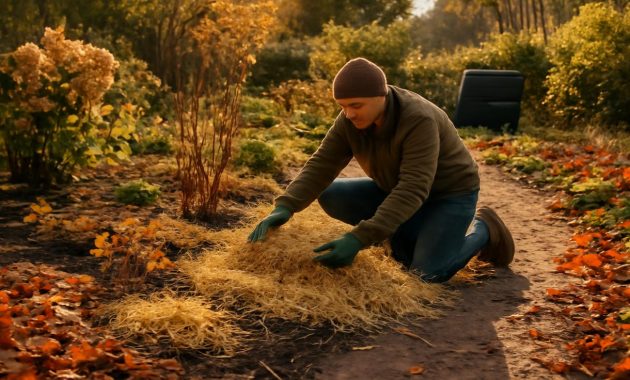
The first cold night doesn’t usually announce itself with drama. It slips in quietly, under doors and between loose window frames, frosting the edges of fallen leaves and turning the air sharp enough to notice in your lungs. Out in the garden, the dahlias slump, the basil blackens, and the soil, which only a few weeks ago felt warm and forgiving, now has a cool, distant firmness. This is the moment many people look at their beds and think, “Well… that’s it until spring.” But for a gardener who knows how autumn really works, this is not an ending at all. It’s a backstage pause before the next show—and what you do right now will decide how vibrant, abundant, and resilient your garden will be in the year ahead.
Why Autumn Is Your Secret Gardening Season
Autumn is when the garden exhales. The frenzy of summer growth slows, the light softens, and suddenly you can see structure again—where the soil is bare, where roots are exposed, where water pools after rain. It’s like stepping into a room after the party and finally noticing the floor.
This quieter rhythm is exactly why autumn is the perfect time to prepare your plants for a flourishing year ahead. While the top growth of many perennials begins to die back, something powerful is happening underground. Roots are still stretching, settling deeper into the soil, storing energy. Trees and shrubs are quietly building the foundation for next season’s flush of leaves and blossoms. Bulbs, newly planted, are knitting tiny white roots through the earth like invisible threads of promise.
Your job now is not to force growth, but to protect, support, and set the stage. Think of it as tucking your garden in for a deep, nourishing sleep—wrapping it in mulch, improving the drainage around its feet, and making small, thoughtful adjustments that will echo through the whole of next year’s growing season.
The Gentle Art of Mulching: A Blanket, A Buffet, A Shield
Walk through a forest in late autumn and look down. The ground is rarely bare. Leaves pile up in layers, twigs and needles weave through them, and fungi lace the whole mix together. Nature is mulching constantly, quietly, efficiently. In your garden, mulching is your way of mimicking that forest floor—of protecting and enriching your soil while keeping your plants more comfortable through the freeze-and-thaw drama of winter.
What Mulch Actually Does (Beyond “Looking Nice”)
Mulch is not just a decorative topping; it’s a multitasking guardian. Spread in a generous layer around your plants, it:
- Insulates the soil, reducing temperature swings that can heave tender roots and bulbs out of the ground.
- Retains moisture, keeping the soil evenly damp even as winter winds and low humidity try to pull it dry.
- Suppresses weeds, so you’re not greeted by a forest of opportunistic seedlings in early spring.
- Prevents erosion from heavy rain and snowmelt, keeping your precious topsoil where it belongs.
- Feeds the soil as it breaks down, steadily adding organic matter and creating a crumbly, living structure.
Imagine your garden soil as a living city. Worms, fungi, bacteria, tiny insects—all of them are part of a bustling ecosystem. When you mulch, you’re dropping a long, slow banquet on that city. The residents get to work, shredding, digesting, and transforming your mulch into nutrients that roots can sip on next year.
Picking the Right Mulch For Your Autumn Plants
You don’t need anything exotic to mulch effectively; in many cases, what’s already in your yard is perfect. Still, different materials behave in slightly different ways.
| Mulch Type | Best For | Key Benefits | Things To Watch |
|---|---|---|---|
| Shredded leaves | Flower beds, vegetable gardens | Free, rich in nutrients, breaks down quickly | Avoid thick mats of whole leaves that can smother soil |
| Compost | Perennials, shrubs, soil improvement | Feeds soil, improves structure, supports microbes | Spread in a thin layer under another mulch for best insulation |
| Wood chips or bark | Paths, around trees and shrubs | Long-lasting, neat appearance, good weed control | Keep a gap around trunks to prevent rot and pests |
| Straw (not hay) | Vegetable beds, strawberry patches | Light, airy, good insulation, easy to move | Choose clean straw to avoid weed seeds |
If you listen closely while spreading mulch in autumn, the garden feels different. The sharp sound of soil against the shovel turns softer as it lands on the cushioned surface. The air smells earthy—sweet and woody if you’re using bark, like a forest after rain if you’re spreading compost and shredded leaves. This is the smell of future growth.
How To Mulch Without Smothering Your Plants
There’s an art to getting mulch “just right.” Too thin and you lose many of its benefits. Too thick and you can create a damp, airless mat that encourages rot and slugs.
As a simple rule for autumn:
- Aim for about 5–8 cm (2–3 inches) of mulch around most perennials and shrubs.
- Leave a small, mulch-free ring around the base of each plant stem or tree trunk—like a tiny moat. This keeps bark dry and discourages rodents from nesting there.
- For very tender perennials or new plantings, you can add an extra “winter hat” layer later, just after the ground has cooled but before deep freezes.
It’s tempting to do one big heroic mulching session and call it finished. But there’s something special about returning in late autumn, a little colder, to adjust and top up where needed. Gardening in this season asks you to notice details: that one plant whose crown still sits a little too high, that bare patch of soil along the edge of a path where erosion might carve a channel come spring.
Drainage: Letting Your Garden Breathe Through The Rains
Stand outside during a steady autumn rain and watch your garden. Not the plants—watch the water. Where does it gather? Where does it vanish quickly? Are there spots that turn to shiny puddles and stay that way long after the rain has passed? Those glossy, persistent pools are not just a nuisance; they’re a warning.
Poor drainage is one of the quiet killers of winter and early spring. Roots that sit in cold, heavy, sodden soil for weeks can suffocate and rot. Autumn is your chance to read the patterns of your landscape and make small but powerful changes before snow and deep cold lock everything in place.
Reading The Clues Of Wet Soil
Even without a storm, your garden tells you stories about how water moves. Mossy, always-damp patches. Cracks in dry areas that never seem to hold moisture. Plants that yellow from the bottom up while the soil still feels sticky. These are all clues that drainage, not just watering, needs attention.
On a mild autumn afternoon, take a trowel and dig a small test hole about 20–25 cm (8–10 inches) deep in different parts of the garden. Fill each hole with water and see how quickly it disappears. If water lingers for more than a few hours, you’ve found a spot that may drown tender roots over winter.
Simple Ways To Improve Drainage Before Winter
Not every solution requires major landscaping. Autumn invites modest, practical steps that can dramatically change how your soil behaves:
- Add organic matter: Work compost into heavy clay areas where you can, especially in annual beds. Organic matter opens up dense soil, allowing water to move more freely.
- Raise the roots: For perennials and shrubs that hate wet feet, consider gently mounding soil or compost around them to create a slight rise. In vegetable patches, form raised rows or beds that sit a few centimeters higher than paths.
- Mulch wisely: Mulch doesn’t just insulate; it also softens the impact of rain, reducing compaction and helping water soak in instead of sheet off the surface.
- Clear channels and gutters: Make sure downspouts direct water away from beds, not straight into them. Rake out leaves from shallow swales or paths that are meant to carry water through the garden.
Sometimes the fix is as simple as shifting a plant a little higher, or noticing that the corner where you stack pots is also the corner that floods every November. Autumn rewards this kind of observation. There is more sky between the branches, more silence between bird calls, more time to simply stand and look. In that stillness, you can see how your garden really works.
Essential Care Rituals: Root-Deep, Not Cosmetic
When we think of garden care, it’s easy to picture pruning shears and neatly trimmed edges. Autumn does invite some tidying, but the most powerful work you can do now is aimed below the surface and into the future. It’s less about neatness, more about resilience.
Cutting Back, But Not Too Much
There’s a quiet debate happening in many gardens these days: how much should we cut back in autumn, and how much should we leave standing? The answer, like most things in gardening, depends.
Some plants, especially those that flop into mush at the first frost (think mildewed peonies or soft-stemmed annuals), are best cleared away. Removing diseased foliage now prevents spores and pests from overwintering and returning with a vengeance in spring. But many perennials—coneflowers, ornamental grasses, sedums—become sculptural skeletons under frost, feeding birds and catching light beautifully.
Consider this approach:
- Remove and discard obviously diseased or pest-ridden material—don’t compost it.
- Cut back plants that collapse into a slimy mat and smother crowns beneath them.
- Leave seed heads and sturdy stems where they stand upright and offer habitat and food for wildlife.
As you move through the garden with your pruners, listen. Each snip feels like an edit: this stays, this goes. You’re not erasing the season, just refining it—making space for air, for light, and for next year’s growth to emerge cleanly.
Feeding The Underground World
While heavy fertilizing belongs mostly to spring and summer, autumn is a beautiful moment to gently nourish your soil. Think of it as sending a care package to the invisible community beneath your feet.
- Spread a thin layer of well-rotted compost around trees, shrubs, and perennials before mulching.
- Scratch in a mild, slow-release organic fertilizer where soil is particularly poor, but avoid high-nitrogen products that push late, tender growth.
- Top up beds that have settled or sunk with a blend of compost and garden soil.
This is quiet work: moving wheelbarrows, scooping and smoothing, feeling the texture of the soil change from compacted to friable under your fingers. You won’t see the full result right away, but next spring, when plants rise with sturdy stems and deep color, you’ll be glad you invested in what can’t be seen now.
Caring For Different Autumn Stars: Perennials, Bulbs, Shrubs & Pots
Not all plants experience autumn in the same way. Some are retreating, some are just getting started, and others simply stand still and endure. Giving each group what it needs now is like speaking to them in their own language.
Perennials: Settling In For The Long Sleep
Most perennials appreciate a little attention before winter:
- Gently tidy around their crowns, removing thick mats of fallen leaves but leaving some protection.
- Mulch to buffer roots from freeze-thaw cycles that can push them out of the soil.
- Mark their locations with discreet stakes if they disappear fully, so you don’t disturb them come spring planting.
As you kneel beside each clump, you might notice how different they all are at this time of year. Some are still blooming bravely into the chill; others have withdrawn completely, offering nothing but a dry rosette. Trust that the life you can’t see is still very much there.
Bulbs: Planting Hope Into Cold Soil
Autumn is bulb season—the time to tuck tulips, daffodils, crocuses, and allium into cold, earthy beds with the knowledge that you won’t see their faces for months. It’s an act of faith and one of the purest joys of this season.
- Plant bulbs in soil that drains well; soggy ground is their enemy in winter.
- Follow the general rule: plant bulbs at a depth about three times their own height.
- After planting, water once to settle the soil, then add a light mulch to keep temperatures steadier.
There’s a special feeling that comes with that last pat of soil over a bulb—like closing a book you know you’ll love rereading later. You walk away into the stark, brown season, knowing that somewhere beneath your boots, a tiny packet of life is preparing to rewrite the garden in color.
Shrubs and Young Trees: Guarding The Future Shape Of Your Garden
Shrubs and young trees are the bones of your future garden. Autumn care for them is all about protection and stability.
- Water deeply before the ground freezes, especially in dry autumns. Well-hydrated roots resist cold damage better.
- Mulch in a wide circle around the base, but keep mulch a few centimeters away from the trunk itself.
- For newly planted young trees, consider a loose tree guard or wrap in areas where rodents or sunscald are a problem.
Move slowly around them, checking bark, feeling the give of the trunk, noticing how they sway in the wind. These are long-term companions; a little extra attention now can shape decades of growth.
Potted Plants: Choosing Who Comes Inside, Who Stays Out
Containers are the wildcards of autumn. Their roots are far more exposed to temperature swings than in-ground plantings. Some pots will need to come indoors or into shelters; others can be insulated where they stand.
- Group pots together against a house wall or fence to share warmth.
- Wrap containers in burlap, straw, or even old blankets covered with a weatherproof layer in colder climates.
- Shift true indoor plants back inside early enough for them to adjust gently to lower light.
There’s something tender about carrying pots to safety, brushing away leaves from the soil surface as you do. They’ve spent summer partying in the sun; now you’re the one making sure they have a calm, protected corner to rest in.
Letting Autumn Change The Way You Garden
In a culture that often treats the garden as a summer spectacle—a stage for peak bloom and glossy harvest photos—autumn asks something gentler of you. It invites you into a slower, more observant way of gardening. You’re no longer chasing instant results. You’re working for next year, and the year after that, and the one after that.
Mulching becomes less a chore and more a conversation with your soil. Improving drainage turns into a way of reading the land, honoring the paths water wants to take. Essential care—tidying, feeding, wrapping, lifting—feels like looking after old friends.
On the coldest days of winter, when the garden lies under a crust of frost or snow, you’ll remember these autumn afternoons. You’ll know that under that frozen surface, roots are quiet but safe, bulbs are nestled deep, and soil life is slowly, steadily working on the feast you left for it. When spring finally arrives and your beds fill with vigorous, healthy growth, it won’t feel like a miracle that appeared from nowhere. It will feel like the natural result of the patience, care, and attention you gave when the year was turning away from the sun.
This is the real secret of a flourishing garden: not just what you plant, but how you care for it when nobody’s watching—when the neighbors have put away their hoses, the catalogues are back in drawers, and the world outside looks bare. Autumn is where next year’s beauty begins.
Frequently Asked Questions
How late in autumn can I mulch my garden?
You can mulch right up until the ground freezes. In fact, it’s often best to wait until the soil has cooled but not yet frozen, so you trap that stable, cool temperature without encouraging late, tender growth.
Should I remove old mulch before adding new mulch?
Not usually. If the old mulch has mostly broken down and mixed into the soil, leave it—it’s improving your soil structure. Just top up with a fresh layer. Remove only if it has formed a dense, matted layer or is harboring pests or disease.
Can I use whole leaves as mulch?
You can, but whole leaves tend to mat and form a barrier that sheds water. Shredding them first—using a mower or shredder—makes a lighter, fluffier mulch that breaks down more evenly and is kinder to emerging plants in spring.
How do I know if my soil has drainage problems?
Persistent puddles after rain, plants that yellow or rot at the base, and soil that stays sticky and cold for days are signs of poor drainage. A simple test hole filled with water that drains very slowly is a clear indicator that improvements are needed.
Is it okay to fertilize in autumn?
Yes, but gently. Focus on soil-building with compost and mild, slow-release fertilizers. Avoid heavy feeding or high-nitrogen products that stimulate lush new growth, which can be damaged by winter cold.
Do all perennials need to be cut back in autumn?
No. Many perennials benefit from being left standing over winter. Their stems and seed heads provide food and shelter for wildlife and add winter interest. Remove only diseased, collapsing, or smothering growth; the rest can often wait until early spring.
How can I protect potted plants from winter damage?
Group pots together, move them against a protected wall, and insulate containers with wrapping or mulch. Hardy plants in pots may overwinter outdoors with good protection, while tender or indoor species should be brought inside or into a frost-free space.