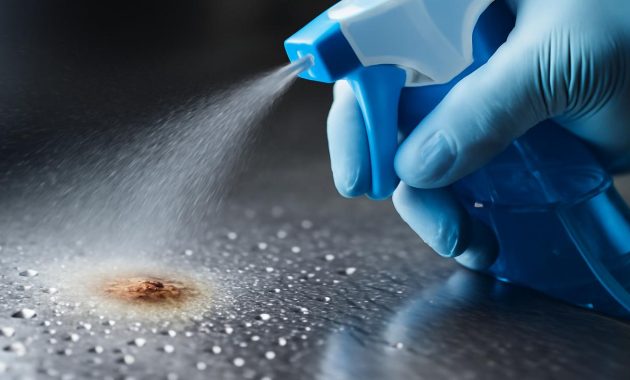
The first time I watched vinegar and hydrogen peroxide foam together in my kitchen sink, it felt a little bit like accidentally discovering a science experiment I had no business conducting. The fizzing was soft but insistent; tiny white bubbles gathered in clusters, crawling along the edge of the drain like a living thing. The smell was sharp and clean—vinegar’s familiar tang braided with the faint, medicinal sterility of peroxide. I hadn’t expected much. In fact, I’d half assumed the two might just cancel each other out. But minutes later, when I wiped the stainless steel, it gleamed in a way it hadn’t for months, as if something under the surface grime had finally let go.
The Strange Satisfaction of a Fizzing Countertop
You probably know both players in this story already. Vinegar lives in the pantry, close to the olive oil and salt, pulled out for salad dressings and quick pickles. Hydrogen peroxide waits quietly under the bathroom sink, in a brown bottle that looks like it came straight from an old apothecary. They’re both ordinary, domestic, almost forgettable. Until you put them together.
The first time you spray hydrogen peroxide on a sticky, suspiciously discolored cutting board that has survived years of garlic, onion, and raw chicken, it doesn’t look like much. A few scattered bubbles, a subtle hiss. Then, when you follow with vinegar—one after the other, never mixed in the same bottle—something changes. The surface starts to foam more aggressively, like it’s exhaling. Stains that had long since settled into the scarred plastic begin to fade. The faint odor of food and fridge and time itself seems to evaporate.
Ask people about this at-home “double-spray” trick and they’ll often describe it with the vocabulary of small magic. They’ll say it “pulls the gunk out” or “gets into the tiny places nothing else reaches.” Parents use it on grubby highchairs and lunch boxes. Gardeners use it on containers that smell like old soil and mildew. Pet owners swear by it for those mysterious stains that materialize on rugs overnight. And if you look closely at what’s actually happening, the magic turns out to be chemistry—simple, elegant, and surprisingly powerful.
The Quiet Chemistry Behind a Loud Reaction
On paper, vinegar and hydrogen peroxide look almost disappointingly simple.
Vinegar is mostly water with a few percent acetic acid. That acid is what gives it its bite—on your tongue and in your nose—and it’s also what helps disrupt the cell walls of some bacteria and loosen mineral deposits and soap scum. Hydrogen peroxide is H₂O₂, just a water molecule with an extra oxygen atom. That extra oxygen is unstable; it wants to escape, turning peroxide into water and oxygen gas, sometimes in a dramatic flutter of bubbles.
When these two meet, especially on a dirty or microbially busy surface, several things begin to happen at once:
- The acidic environment from the vinegar nudges the hydrogen peroxide to decompose faster, liberating more oxygen.
- The extra oxygen increases the oxidative stress on bacteria, essentially punching holes in their cell membranes and scrambling essential cell machinery.
- The fizzing physically disturbs films of grime and biofilms—those invisible layers where microbes shelter together in a slimy fortress.
If you could watch this at a microscopic level, it would look like a storm moving through a crowded city. Cell walls rupturing, weak chemical bonds snapping, layers peeling away from the surface they were clinging to. The bubbles you see are the visible tip of that invisible work—tiny, transient blisters lifting the dirty skin of your countertop, sink, or cutting board.
Chemists have a term for the new compound that can form in the instant when vinegar (acetic acid) meets hydrogen peroxide: peracetic acid. It’s a strong oxidizer, even more aggressive against microbes than hydrogen peroxide alone. The key is that you don’t let it build up and sit around. You create it in tiny, fleeting quantities right where you need it—on the very surface you’re trying to clean, then rinse or wipe it away.
Why Experts Don’t Flinch at This Pairing
The word “acid” can sound ominous, and “oxidizer” doesn’t feel much friendlier. Put them together and it might seem like something that belongs in a lab, not on your kitchen counter. But used correctly, vinegar and hydrogen peroxide are not only safe for the average home—they’ve earned a quiet nod of approval from microbiologists, food safety researchers, and some public health professionals.
Here’s the nuance that experts tend to emphasize when they talk about this combo:
- Used sequentially, not premixed: Spraying vinegar, then hydrogen peroxide (or vice versa) directly on surfaces lets the brief, intense chemistry happen where it’s useful. Premixing them and storing the solution is not recommended, because peracetic acid can accumulate and become too strong and irritating.
- Short contact time, long effect: Even a few minutes of contact can significantly reduce bacteria, yeasts, and some viruses on nonporous surfaces, especially in kitchens where raw meat and fresh produce live side by side.
- Less chemical clutter: Instead of a cabinet full of specialized sprays of uncertain composition, this pair trims your toolkit to two familiar, well-characterized bottles.
Food safety researchers have studied this one-two punch on cutting boards, stainless steel, and fresh produce. Again and again, they’ve found that using vinegar and hydrogen peroxide back-to-back can knock down foodborne pathogens more effectively than using either one alone. It’s not a magic force field; it won’t sterilize a surface like an autoclave. But for everyday life, it offers an unexpectedly thorough clean.
A Tiny Lab in Your Kitchen
In an era where “natural” has become both a marketing slogan and a point of confusion, the vinegar–peroxide combo sits in an interesting middle ground. Neither is harvested from a wild hillside or squeezed from a leaf. Yet both are simple, well-understood, and used in medical, laboratory, and food settings, often at higher strengths than you’d ever keep at home.
There’s also something deeply satisfying about turning your countertop into a small, controlled chemistry lab. You learn to listen for the sound of the fizz: the soft crackle that says the reaction is working its way into the invisible film of the everyday—coffee spills you wiped but didn’t quite erase, invisible smears of oil, the microscopic footprints of raw chicken.
You also learn to pay attention to timing, to contact time, to the rhythm of spray, wait, wipe. Cleaning becomes less about brute force and more about strategy: create the right conditions and let the chemistry do the heavy lifting.
To see the difference between vinegar alone, hydrogen peroxide alone, and the two used back-to-back, you can think of it like a team with complementary strengths. The table below captures how they stack up in a simple, practical way.
| Cleaner | Main Strengths | Best Uses at Home |
|---|---|---|
| Vinegar (acetic acid) | Cuts mineral deposits, soap scum, light grease; mildly antimicrobial; deodorizes. | Kettles, faucets, glass, light limescale, general wipe-downs. |
| Hydrogen peroxide | Strong oxidizer; targets bacteria, yeasts, some viruses; lifts stains. | Cutting boards, sinks, bathroom fixtures, light fabric stains. |
| Vinegar + hydrogen peroxide (used one after the other) | Enhanced antimicrobial effect; disrupts biofilms; deeper clean on nonporous surfaces. | Kitchen counters, fridge interiors, cutting boards, high-touch areas. |
How to Use the Combo Without Overthinking It
Experts tend to agree on a few practical ground rules that keep the process both effective and safe:
- Use separate bottles. Keep plain white vinegar (5% acetic acid) in one spray bottle and 3% hydrogen peroxide in the bottle it came in (or in another opaque bottle). Do not mix them together in the same container.
- Pick your order. You can use either sequence—vinegar then peroxide, or peroxide then vinegar. Some lab tests have seen slightly better results with peroxide first, but in everyday use the difference is small.
- Spray generously. Coat the surface with the first liquid and let it sit for a minute or two. You want it to have time to soak into crumbs, films, and microscopic crevices.
- Spray the second layer. Apply the second solution directly on top. This is where you’ll see the fizzing and foaming, especially on dirtier surfaces.
- Wait, then wipe. Give it a few more minutes of contact, then wipe clean with a cloth or paper towel. For food-contact surfaces, follow with a quick water rinse or a final wipe with a damp cloth.
There’s no need to leave the solutions sitting for ages or to scrub with heroic effort. The point is to create a short-lived reaction zone on the surface, then remove the residue along with whatever was hiding there.
Where This Combo Shines (and Where It Doesn’t)
Imagine walking through your home and looking not just at the surfaces, but into them. The grooves in your wooden cutting board. The rubbery seal around your refrigerator door. The plastic grain of the light switches. These are the places where daily life quietly accumulates, both visible and invisible.
Vinegar and hydrogen peroxide are particularly helpful on nonporous or lightly porous surfaces where biofilms and stubborn residues like to linger:
- Kitchen counters and islands: Particularly after prepping raw meat or eggs, when you want more than just a cosmetic wipe-down.
- Cutting boards (plastic or composite): After chopping poultry, seafood, or anything that tends to leave strong odors.
- Fridge shelves and bins: Where spills dry in thin layers and forgotten veggies quietly collapse in the back corners.
- Sink basins and drains: The fizzing finds its way into the slimy film clinging to metal and ceramic.
- Bathroom fixtures: Faucet handles, toilet handles, and other spots that are touched often but cleaned quickly.
But even a good thing has limits. This is where experts become particularly clear:
- Avoid delicate natural stone. Granite, marble, and other stone surfaces often come with sealants and mineral structures that can be etched or dulled by acids. Vinegar is not their friend.
- Don’t use on unsealed wood. Prolonged moisture and acidity can swell fibers, raise the grain, and over time cause damage. A quick wipe might be fine, but there are better options for cherished wooden pieces.
- Never combine with bleach or ammonia. This is a hard line. Vinegar and hydrogen peroxide should not be used anywhere near chlorine bleach or ammonia-based cleaners, as dangerous gases can form.
- Mind your lungs. While brief, small-scale use in a well-ventilated area is generally safe, concentrated peracetic acid vapors can be irritating. That’s why experts are insistent: don’t premix and store.
Used with this kind of care, the surprising depth of the clean becomes a quiet, dependable part of your routine—like washing your hands before dinner or rinsing apples under the tap.
A Different Way of Thinking About “Clean”
Many modern cleaning products come with scents that promise entire worlds. Ocean air. Alpine meadows. Citrus orchards. They leave behind a smell that insists: This is clean because it smells like this. The vinegar–peroxide combo offers something more modest and, in a way, more honest.
The scent, if you could call it that, is fleeting: a bite of vinegar that softens as it dries, the almost nonexistent whisper of peroxide vanishing into plain water and oxygen. What’s left is not a perfume, but the absence of something—the absence of that faint, musty suggestion that your cutting board might not be as trustworthy as it looks, the absence of the vague fridge smell that clings to containers even after a run through the dishwasher.
When experts recommend this approach at home, they’re not promising a sterilized bubble. Life will re-settle on your surfaces within hours: harmless skin bacteria, a few airborne spores, the normal, messy ecology of human spaces. What they’re offering is something gentler and more sane: a way to reduce the risk from the microbes that truly matter—those that cause food poisoning, infections, or lingering odors—without saturating your home in complicated chemical cocktails.
In that sense, every fizz of peroxide over vinegar becomes a reminder: clean doesn’t have to shout. Sometimes it just has to quietly, efficiently do the job and then disappear.
From Curiosity to Habit
Most people who adopt this little pairing do it for practical reasons. They read a note from a scientist quoted in a newspaper, or a quiet recommendation in a food safety guide, or they watch a short video of someone making their grimy sink sparkle. They try it once on a cutting board or around a faucet base. It works. They repeat it.
Over time, what begins as a neat trick turns into something closer to a philosophy of maintenance. Instead of reaching for a different bottle for every new task, they lean on a few simple, versatile tools that they understand. Vinegar. Hydrogen peroxide. Hot water. Elbow grease when needed, patience when that works better.
There is comfort in this kind of clarity. In knowing how the fizz forms, what it’s doing, where its limits are. In realizing that the most effective clean isn’t always the one that smells the strongest or burns the most on your hands. It’s often the one that you can explain in a single sentence: “The acid helps the oxidizer, the bubbles lift the grime, and then you wipe it all away.”
The next time you open the cupboard and reach past colorful spray bottles with names that sound like sci-fi planets, consider the two quiet containers that have been there all along. Pour a little vinegar into a spray bottle. Keep that brown peroxide bottle nearby. Let them meet—on your terms, on your surfaces, just long enough to do what they do so well.
You might find that the soft crackle of their reaction, the sight of that sudden, busy foam, feels not just like cleaning, but like learning to see your home through a clearer, more scientific lens. And once you’ve seen it, it’s hard to go back.
Frequently Asked Questions
Is it safe to mix vinegar and hydrogen peroxide?
It is not recommended to premix and store vinegar and hydrogen peroxide together in one container. However, it is considered safe for home use to apply them sequentially—one after the other—directly on surfaces, then wipe or rinse. This creates a short-lived reaction on the surface rather than a concentrated solution sitting in a bottle.
Which should I use first, vinegar or hydrogen peroxide?
Both orders can work. Some lab tests suggest using hydrogen peroxide first, followed by vinegar, may offer a slight edge in antimicrobial action, but for everyday home cleaning the difference is small. Choose an order you’ll remember and use consistently.
Can I use this combo on all surfaces?
No. Avoid using vinegar on natural stone surfaces like marble or granite and on unsealed or delicate wood, as the acid can damage or dull them over time. The combo works best on nonporous surfaces such as plastic cutting boards, stainless steel, ceramic tiles, and most kitchen counters that are not natural stone.
Does this replace bleach for disinfection?
Vinegar and hydrogen peroxide together can significantly reduce many common household microbes, but they are not a perfect substitute for bleach in every situation, especially where official disinfection standards are required (such as certain medical or childcare settings). For routine home use, especially in kitchens and bathrooms, they provide a strong, practical level of cleaning and microbial reduction.
Is it safe around food and in the kitchen?
Yes, when used properly. Both white vinegar and 3% hydrogen peroxide are commonly used in food-related contexts. After using them on cutting boards, counters, or inside the fridge, it’s wise to finish with a quick water rinse or a wipe with a damp cloth on any food-contact surfaces.
Can I add essential oils or other ingredients?
For most people, it’s best to keep things simple. Adding oils, soaps, or fragrances can change how the solutions behave and may reduce contact with the surface or alter safety. If you want a scent, use it separately after cleaning, not mixed into your vinegar or peroxide bottles.
Why does the mixture clean “deeper” than expected?
The combination of acidity and oxidation disrupts microbial cells more effectively than either alone, and the fizzing action helps break up films and residues that cling tightly to surfaces. This dual action allows the reaction to reach into tiny crevices and biofilms, making the clean feel deeper and more complete.