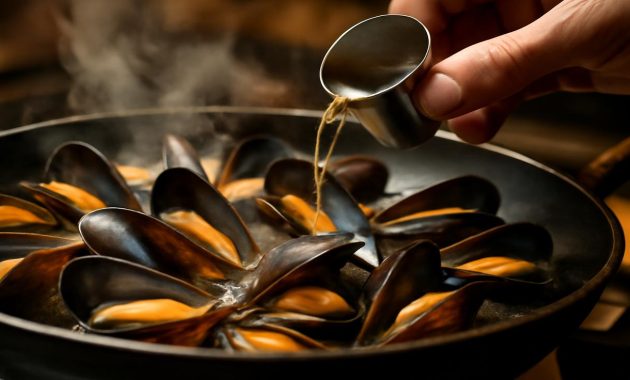
The mussels on the counter looked almost shy, their dark shells catching the kitchen light like wet river stones. Outside, San Sebastián’s morning fog still clung to the harbor, but in the warmth of the test kitchen, a different tide was rising: the rich, saline perfume of the sea. In the middle of it all stood a man who has earned more Michelin stars than most people will see in a lifetime, pinching a mussel between his fingers as if it were a delicate question waiting to be answered.
“Everyone thinks you need water,” Martín Berasategui said, glancing up with a quick, conspiratorial smile. “But water is the enemy of flavor—and sometimes of tenderness.”
He dropped the mussel into a wide pot, its base already slicked with a gleam of olive oil and the ghostly sweetness of sautéed shallot. No slosh of wine, no cup of water, no nervous splash of stock—just heat, aromatics, and the sealed memory of the ocean inside every shell. A lid went on. The kitchen quieted. You could hear the faint click and hiss of shells beginning to yield.
“The trick,” he said, tapping the lid with the back of a spoon, “is not to drown what was born in the sea.”
Steam Without Water: The Paradox That Makes Sense
At first, it feels like a contradiction. Steamed mussels without water? Without that familiar shallow pool in the pot—half wine, half water, maybe a bay leaf riding the surface like a lifeboat? But for Martín Berasategui, whose career has been built on coaxing character from ingredients rather than bullying them, the idea is elegantly simple. Mussels already carry their own treasure: brine, juice, and natural moisture locked beneath their shells.
“People forget,” he explained once in an interview, “that mussels bring their own sea with them.” Add water to that equation, and you’re not helping; you’re diluting. You’re stretching flavor until it thins, like a color washed out in the rain. You’re also asking the mussel to spend more time in the heat, waiting for that added liquid to simmer and steam. And time, in the world of shellfish, is where tenderness goes to die.
Imagine a mussel like a tightly wound spring. Heat is the key that unlocks it, releasing muscle, loosening fibers, relaxing the clutch that keeps the shell clamped shut. But too much heat for too long and that spring snaps, tightening again, rendering the flesh small, rubbery, and sullen. When you pour water in the pot—and especially if you keep topping it up, chasing some imaginary ideal of “steaming”—you delay the moment of gentle release and edge closer to that tightening snap.
Now imagine a different scene: a pot just big enough for a single crowd of mussels, a swirl of oil, maybe a faint hiss of garlic as it softens, a shower of finely cut onion. The mussels slide in, the lid drops, and within a minute you can hear them beating softly against one another as they open. Steam, born from what they carry inside, blooms out of them. The pot fogs, the kitchen smells like a rocky shore at low tide, and you’ve added not a drop of water.
In that short, intense burst of heat, the mussels cook in their own sea—a concentrated atmosphere of brine and aroma. They open quickly, release their juice, and then, crucially, you stop. Off the heat, lid tilted, they rest for a minute in the residual warmth. The flesh stays plump, moist, and tender, like a whispered memory of the ocean instead of a shouted one.
The Day I Learned to Listen to a Pot of Mussels
I didn’t fully believe this trick until I watched a pan of mussels go from rigidly shut to gloriously open in the time it takes to tell a short story. The kitchen was small, the kind of tight, efficient space where every tool has its hook and every herb has its jar. Outside, a thin rain painted the windows. Inside, we were rehearsing—over and over—the choreography of steaming without water.
We started, as Berasategui insists, not at the stove but at the sink. Mussels, for all their swagger on restaurant menus, are humble creatures: they travel with sand in their beards, tiny barnacles on their backs, stray seaweed clinging to their sides. Cleaning them is less a chore and more a slow introduction. You scrub, you debeard, you rinse in cold water. You discard any with cracked shells, any that refuse to close when tapped. Already, this feels like respect.
Then, into the pan went a spoonful of olive oil, low and lazy heat, and the gentle sweat of aromatics: garlic halved and smashed, a small shallot diced to a confetti, a sliver of leek melting to sweetness. The fragrance deepened, but we held back from browning. “Color is flavor,” the saying goes, but in this case, too much color would mean bitterness muscling into a dish that should taste clean as a tide pool.
When the first faint veil of steam rose from the pan, the mussels joined. No water. Not yet. Not ever. Lid on.
At first, nothing. Then the pot began to murmur. A faint rattle as the shells shifted, nudged by expanding steam. No roaring boil, no splashing liquid—just that soft percussion, like distant pebbles rolled by a wave. If you leaned close, you could smell the very moment the first mussel opened: a sudden, almost electric release of ozone and salt, like walking past a fishmonger’s stall at dawn when the crates have just arrived from the boats.
We resisted the urge to peek. Every time you lift a lid, you don’t just let heat escape; you interrupt the story. So we waited, listening instead. Two minutes. Then three. The rattling grew more insistent, then slowed. That’s the moment—the subtle easing of activity, the signal that most of the shells have surrendered.
Off went the heat. Lid cracked, not fully removed, letting the storm calm while the mussels finished in the gentler buffer of residual warmth. When the lid finally came off, the pot looked like a bouquet of dark flowers just opening: shells wide, flesh gleaming a deep saffron-orange, each mussel cradled in a shallow pool of pure, untampered juice.
We passed one, still warm, from hand to hand. A quick twist, shell to shell, the meat slid free. It was tender but not weak, almost creamy at the edges, with a snap of the sea in its center. Not a hint of rubber. No chew of overcooked protein. Just that full, round, oceanic sweetness that makes you think of wind-bitten lips and sun on wet rocks.
The Science Hiding in the Steam
Behind Berasategui’s trick lies a quiet, almost invisible science. Mussels, like most shellfish, cook fast. Their proteins begin to set around 50–55°C (122–131°F) and turn firm by the time they reach 60–65°C (140–149°F). Push past that, and the structure tightens. Overcook them and they shrink, squeeze, and toughen, like a sweater washed too hot.
Adding water to the pan doesn’t just dilute flavor; it complicates control. More liquid needs more time to reach the right temperature, and that extra time keeps the mussels in that danger zone where they can tip from just-done to overdone before you realize it. Cooking them in their own released juices and a whisper of oil changes that balance. The environment inside the pot heats quickly, the shells open fast, and you can pull them from the fire at the exact moment they’re ready.
There’s also a question of concentration. The liquid at the bottom of that waterless pot is one of the kitchen’s quiet miracles: an intensely flavored broth made from the mussels’ own brine and the softened aromatics. It’s the essence of the dish, captured without dilution. Swirled with a little butter, brightened with lemon, maybe warmed through with a thread of chili, it becomes a sauce that tastes like the sea written in bold, not italics.
From Boat to Pot: Respecting the Mussel’s Journey
Before they reach your pot, mussels live a life anchored to stone and rope. They filter seawater by the gallon, drawing in plankton and microscopic life, building their bodies from what the tides bring. Each one is a kind of ocean diary, recording salinity, temperature, and season in the firmness of its flesh and the thickness of its shell.
Berasategui’s method is, at heart, an act of deference to that history. When you skip the water, you’re choosing to let the mussel speak in its own dialect. You’re not covering it with a blanket of broth or drowning it in a bath it never asked for. You’re simply giving it enough heat and a little aromatic company, then stepping back to listen.
He often talks about cooking as a conversation rather than a performance. In that frame, the mussel has as much to say as the chef. You can taste the coldness of the waters it grew in, the mineral fingerprint of the rocks it clung to, the shallow bay or deep channel where it hung in dark currents. Over-season, and you drown out those nuances. Add too much liquid, and the story becomes thin.
There’s a humility to this. It’s tempting in the kitchen to keep adding: wine, cream, herbs, more, more, more. But this particular trick insists on trust. Trust that the ingredient is enough. Trust that minimalism can be generous. Trust that an ingredient treated with restraint can feel more luxurious than one dressed in excess.
A Simple Ritual: How to Cook Mussels the Berasategui Way
You don’t need a Michelin-starred kitchen to pull this off. You just need attention—and a bit of courage to leave the water in the tap.
Think of it as a small ritual:
- Rinse and sort. Under cold running water, scrub each mussel with your fingers or a stiff brush. Yank away the beard—the tufts of fiber at the hinge—by pulling firmly toward the hinge, not away from it. Discard any mussels with cracked shells or any that stay open after a sharp tap.
- Prepare your base. In a wide pot or deep pan with a tight-fitting lid, warm a splash of good olive oil over medium heat. Add finely chopped shallot, onion, or leek. Let them sweat gently until soft and translucent, not browned. If you like, add a sliver of garlic, a tiny bit of chopped chili, or a leaf of bay.
- Turn up the heat. Raise the heat to medium-high. When the aromatics are fragrant and just starting to shimmer, tumble in the mussels. Work quickly so the heat doesn’t fade too much.
- Seal and listen. Cover immediately with the lid. Do not add water. Do not add stock. Let the mussels cook in the rising steam created from their own inner moisture. In 2–4 minutes, you’ll hear them rattling as they open. Shake the pan once or twice, keeping the lid on, to help them redistribute.
- Check and stop. After about 3–5 minutes total (depending on the size and quantity), lift the lid. Most mussels should be wide open. Remove from the heat as soon as the majority have opened. Toss out any that stubbornly stay shut.
- Finish the sauce. With the mussels removed to warm bowls, return the pan with their juices to low heat. Swirl in a small knob of butter or a thread of extra olive oil, add a squeeze of lemon, taste for seasoning, and spoon the resulting glossy broth back over the mussels.
The whole thing takes less time than setting the table. But the sensory payoff—those clouds of sea-scented steam, the orange gleam of the flesh against black shells, the first briny sip of the broth with a torn piece of crusty bread—is disproportionately grand.
A Mobile-Friendly Snapshot: Key Points at a Glance
| Element | With Added Water | Berasategui Method (No Water) |
|---|---|---|
| Flavor | More diluted, lighter broth | Highly concentrated, pure sea taste |
| Texture | Higher risk of tough, rubbery mussels | Plump, tender, barely set flesh |
| Cooking Time | Longer (liquid must heat and simmer) | Shorter, faster opening of shells |
| Control | Harder to judge doneness precisely | Easy to stop at perfect tenderness |
| Sauce Base | Needs extra reduction or ingredients | Rich natural jus from mussels + aromatics |
The Basque Coast in a Single Pot
In Martín Berasategui’s corner of Spain, the sea is not a backdrop—it’s a character. It breathes salt onto the streets of San Sebastián, whispers up the river estuaries, slaps itself against harbor walls. Markets overflow with fish glinting like polished steel and shellfish piled into neat, damp pyramids.
Cooking mussels without water feels like a distillation of that landscape. The method could have been born on a fishing boat, where space is tight and water is for drinking, not wasting; where a pan of mussels cooked in their own liquor over a portable flame might be both lunch and a small ceremony. Berasategui, with his exacting standards and playful curiosity, simply carried that idea into the realm of haute cuisine, polishing it without losing its soul.
There’s a certain wildness in the aroma that rises from such a pot. It’s not tame. It smells of currents and kelp, of rope drying in the sun, of the inside of a shell held to the ear. Yet it’s also friendly, domestic: the sound of shells clinking in a bowl on a crowded table, the clatter of spoons dipping for broth, the hush that falls over a room when everyone is too busy eating to talk.
It’s in these small acts—choosing not to add water, choosing to stop cooking a minute earlier than habit suggests—that home kitchens quietly become part of a larger culinary conversation. That’s the hidden gift of a chef like Martín Berasategui. His trick with mussels isn’t a show-off move requiring rare ingredients or complicated equipment. It’s a simple adjustment, an invitation to pay attention and to trust the ingredient in front of you.
A New Way to Cook, A New Way to Taste
Once you’ve tried mussels this way, it’s hard to go back. The memory of that first, brine-bright bite clings. You start noticing all the little places in your kitchen where water has crept into recipes out of habit rather than need. You begin to ask: what happens if I let the ingredient speak first?
Maybe next time you cook clams, you’ll hold back the wine until the very end. Maybe you’ll think differently about steaming vegetables, about how much liquid they really need. Perhaps you’ll find yourself one evening standing by a pot, listening instead of stirring, letting scent and sound tell you when something is done.
That’s the real magic in Berasategui’s mussel trick. It’s not just about avoiding toughness or boosting flavor. It’s about learning, gently, to stop drowning what you love—to trust that what’s already there might be enough. You close the lid. You wait. You listen to the soft rattle of shells, the sea finding its voice in your kitchen. And when you lift the lid, the ocean answers.
Frequently Asked Questions
Why do mussels turn tough when overcooked?
Mussels are mostly muscle protein and water. When heated, their proteins tighten and expel moisture. Gentle, brief cooking keeps them plump and juicy; extended high heat causes the proteins to contract too much, pushing out moisture and making the flesh small, dry, and rubbery.
Is it really safe to steam mussels without adding water?
Yes. Mussels contain plenty of natural liquid inside their shells. As they heat, they release this moisture, creating steam in the covered pot. As long as the pot has a tight-fitting lid and you cook over medium-high heat, there will be enough steam to cook them thoroughly.
Can I add wine if I’m not supposed to add water?
You can, but sparingly and with timing in mind. Berasategui’s approach favors cooking the mussels first in their own juices, then enriching the natural broth with a splash of wine afterward, reducing it briefly before serving. This preserves both tenderness and concentrated mussel flavor.
How do I know when the mussels are perfectly cooked?
They’re ready when most of the shells have opened wide and the flesh has turned a uniform orange or yellow and looks plump. This usually happens within 3–5 minutes of active steaming. As soon as you see that most are open, remove the pot from heat to avoid overcooking.
What should I do with mussels that stay closed after cooking?
Discard them. Mussels that remain tightly closed after cooking are considered unsafe because they may have been dead before they went into the pot. Don’t force them open or try to eat them.
Do I need to soak mussels before cooking?
Soaking in salted water isn’t strictly necessary for farmed mussels, which are usually quite clean, but rinsing and scrubbing them under cold running water is essential. Remove the beard, scrape off any surface debris, and check for damaged shells before cooking.
What can I serve with waterless steamed mussels?
Crusty bread to soak up the intense broth is almost mandatory. You can also serve them over simple pasta, alongside boiled potatoes with olive oil, or with a light salad. The mussel jus can double as a sauce, so keep side dishes fairly simple to let that ocean flavor shine.