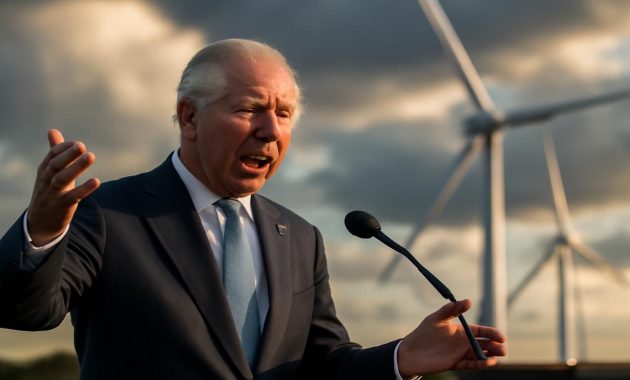
The cameras catch the faintest tremor in his hand as he shuffles the pages. The hall is hushed, a kind of shared inhalation, while outside, London’s winter air presses cold and clear against the palace walls. King Charles III looks up, the lights soft against the silver in his hair, and for a moment he doesn’t sound like a monarch. He sounds like a man who has been waiting half a lifetime to say, “I told you so,” but chooses instead to say, “We still have time—if we act now.”
The King Who Spoke to Trees Before It Was Fashionable
Long before the title “King” ever preceded his name, Charles was the slightly awkward prince who talked endlessly about soil, hedgerows, and sea birds. In the 1970s, while glam rock rattled through Britain’s radios and plastic seemed like the future, the young Prince of Wales stood at a lectern and spoke—rather earnestly—about pollution. He talked of rivers choking on waste, of the “throwaway society” chewing up landscapes it would never replace. Many rolled their eyes. Environmentalism, then, was a fringe concern, something for eccentric scientists and restless students, not for a future monarch.
Yet Charles kept going. Year after year. Speech after speech. Farm visit after farm visit. He planted trees with schoolchildren, opened organic farms when the word “organic” drew smirks, and walked windswept Scottish hills with ecologists who spent their days counting rare birds in rain-soaked notebooks. While other royals were photographed at galas, he was photographed holding muddy carrots.
Now, as King, he steps into a role he never quite waited for but for which he has, in some ways, been rehearsing his whole life. When Charles speaks about the climate, you can hear the long echo of decades spent warning, cajoling, and pleading. What’s new is not the message. It’s our ears, finally attuned to what he’s been saying all along.
The Night of the Speech: A Room Heavy with Expectation
The room is all polished wood and quiet grandeur, chandeliers catching the light like captured stars. There is the soft shuffle of programs being folded, the rustle of jackets, a whispered cough. Cameras silently blink their red recording lights. Heads of state, climate scientists, business leaders, students in borrowed suits—everyone waits.
King Charles begins not with statistics, but with memory. He recalls walking as a young man through a Scottish glen, the air “so clean it tasted almost sweet.” He remembers listening to curlews calling over the moors and watching salmon fight their way upstream. He talks about the first time he saw a stretch of coastline smeared with oil, seabirds reduced to trembling, feathered shadows.
His words are slow, carefully spaced, almost tactile. You can feel the damp moss under his boots, the tang of salt spray, the cold stone of a riverbed. He paints not a chart, but a world—disappearing in increments too small to register in a single day, but too large to ignore across a lifetime.
“We are,” he says, voice steady, “the first generation to fully understand the damage we are doing, and the last who can do something decisive about it.” There’s a stillness then—no coughing, no shuffling, just a collective awareness that this sentence will be replayed, quoted, scrutinized.
From Lonely Voice to Global Echo
For decades, Charles’s environmental advocacy made him sound like a lone bell ringing in the fog. In the 1980s, he fretted about the disappearance of hedgerows that had stitched the British countryside together for centuries. He warned of pesticides silencing birdsong in spring, of overfishing hollowing out the seas, of cities building upward and outward until the green was pushed to the far, forgotten edges.
He was mocked for talking to plants, eyed skeptically for his organic farming ventures, gently satirized by cartoonists who drew him hugging trees. But as the decades passed, the world shifted closer to his once-radical concerns. Heatwaves grew longer, forests burned hotter, and floods rose higher. What had seemed, to some, like royal eccentricity began to look uncomfortably like foresight.
Now, in his speech, he doesn’t say, “I was right.” He doesn’t need to. The news headlines, the satellite images, the thinning ice sheets say it for him. Instead, he leans into the simple, human truth that underpins his lifelong campaign: we protect what we love, and we are dangerously close to losing the only home we have.
A Monarch Speaking the Language of Soil and Sky
There is something almost disarming about seeing a king talk, not about conquest or power, but about compost. At one point, the speech dips into an image that has long preoccupied him: the health of soil. He explains, gently but firmly, that soil is not dirt. It is a living universe of roots and fungi, insects and microbes—a hidden city that quietly feeds us, filters water, stores carbon. When we exhaust it with chemicals and monocultures, we are not “using land efficiently,” he says. We are “burning through our inheritance.”
He moves from soil to sea, from forest to city. He speaks of mangroves as quiet guardians of coasts, of peatlands as ancient, spongy libraries of carbon, of forests as cathedrals of air. There’s a tenderness in the way he describes these places, as though he is introducing old friends to a room that has only just started listening.
His vocabulary isn’t the usual mix of buzzwords and slogans. Instead of “stakeholders” and “synergies,” he talks about “responsibility,” “stewardship,” and “duty.” These are old words in a new battle, drawn from the same well as oaths and coronations, but turned outward—toward rivers, birds, and the unspoken rights of future children.
Responsibility, Not Perfection: A Personal Challenge
A subtle shift in tone comes when he speaks of responsibility. He doesn’t look away from the contradictions: the ceremonies that require travel, the palaces heated in winter, the carriages, the history. A monarchy is not, by design, a minimalist institution.
He acknowledges, with quiet candor, that no one in that room—and certainly not he himself—has a spotless record. But he pushes back against the idea that imperfection is an excuse for inaction. “We cannot,” he says, “wait to be perfect before we begin. We must begin, and improve as we go.”
He offers responsibility as something more intimate than policy, more demanding than a social media post. It is the way you choose food, vote in elections, spend money, travel, heat your home, talk to your children about the future. It is, he suggests, a pattern of countless small decisions that either widen or narrow the path ahead.
| Focus Area | King’s Emphasis | Practical Actions for Individuals |
|---|---|---|
| Climate | Urgent cuts to emissions and protection of vulnerable communities. | Reduce energy use, support renewables, choose low‑carbon transport. |
| Nature & Biodiversity | Restoring habitats, protecting species, re‑weaving wild corridors. | Plant native species, protect local green spaces, support conservation. |
| Food & Farming | Soil health, sustainable agriculture, respect for seasonal cycles. | Eat more plants, waste less food, buy from responsible producers. |
| Oceans | Ending overfishing and plastic pollution, protecting coastal ecosystems. | Cut single‑use plastics, choose sustainable seafood, join beach clean‑ups. |
| Economy | Aligning finance and business with long‑term planetary health. | Support ethical businesses, invest responsibly, back green policies. |
The Weight of a Crown in a Heating World
It is impossible to miss the symbolism of this moment: a king, crowned in an age of climate alarms, standing in a gilded hall to speak of floods, fires, and failing harvests. The crown, that ancient circle of power and privilege, now sits on the head of a man who speaks more passionately about pollinators than palaces.
He is careful not to slide into party politics—constitutional lines are etched deeply into his role. Instead, he offers a wider frame: environmental responsibility as a moral question that predates and outlasts any single government. He talks of “a covenant between generations,” a phrase that hangs in the air like incense in an old chapel.
When he mentions young people, the room softens. He speaks of letters he’s received from children worried about their futures, of school visits where small hands eagerly reach up to show drawings of whales, trees, and wind turbines. “They are not asking for perfection,” he says, “only that we act as if their lives matter as much as our own.”
Linking Past, Present, and a Narrowing Future
Part of the poignancy in Charles’s speech lies in his sense of time. He is not a leader on a five-year electoral clock. His life has been measured in eras, not cycles: post-war rebuilding, the Cold War thaw, the digital age, and now, the age of climate reckoning.
He sees, and invites us to see, environmental responsibility as a long, unbroken line. The forests felled centuries ago to build ships and cities, the coal burned to fuel empires, the rivers channelled and straightened to feed industry—all of it has led to now. And what we choose today will shape the lives of people who may never know our names, but will live with the consequences of our comfort.
There is no denial of progress in his words. He celebrates human ingenuity, the breakthroughs in renewable energy, the revival of rivers once written off as dead, the communities who have rewilded abandoned land. But he warns that time has grown thin. “We cannot,” he says quietly, “simply admire pilot projects while the world burns.”
Stories from the Edges of a Changing Planet
To bring his point home, he tells stories. Not graphs. Not models. Stories.
There’s the farmer he met whose land has been hit by three “once in a century” floods in a single decade. The fisherman who has to sail farther and farther out to find the fish his father once caught near the shore. The village where older residents recall frosts that once turned fields silver for weeks; now, winters are damp, mild, and strangely silent.
He doesn’t just speak of distant, melting ice caps and far-off, burning forests. He talks about damp corners of British homes, where mould grows in houses that were never designed for storms like the ones now battering their roofs. He talks about heatwaves pressing against London’s stone, crowds seeking shade under plane trees that were never meant to bear such relentless sun.
“The climate crisis,” he says, “is not a future event. It is already written into the stories of millions of lives.”
Hope as a Practical Discipline
You might expect a speech like this to end in despair, a royal lament for a world undone. But Charles, who has spent a lifetime watching slow change unfold, reaches instead for something quieter and more demanding than optimism: disciplined hope.
He describes communities restoring wetlands and finding that, within a few years, birds return in flocks that darken the evening sky. He speaks of cities that have planted thousands of trees and found temperatures drop on their hottest days. He points to companies that have retooled entire supply chains to cut emissions and found new, unexpected profits.
Hope, in his telling, is not a mood. It is a set of repeated actions. Planting a tree and tending it for decades. Restoring a river and patiently waiting for the salmon to find their way back. Changing laws, habits, technologies—not overnight, but relentlessly, until the new normal is kinder to the earth than the old one ever was.
What His Words Ask of Us
By the time the speech draws to a close, the hall feels different—quieter, but not numb. There’s a sense of shared assignment hanging between the gilded walls and the listening faces. The King’s role, as he frames it, is to remind, to convene, to use the peculiar power of his position to keep the long view in focus. Ours is to act.
He does not offer a numbered list of personal pledges or a shiny, new slogan. Instead, he offers a simple, unsettling question: “When someone looks back, decades from now, what story will they tell about what we chose to do when we knew?”
Outside, the winter night waits, damp and dark and full of exhaust and possibility. The river slides past the city, carrying reflections of office blocks, cranes, and the odd, solitary star. Somewhere, in a quiet corner of a palace garden, a sapling stands in the cold, its thin trunk wrapped for protection. It is one of the many trees Charles has planted over the years, a small act of faith rooted in the soil of a changing world.
Whether that tree will grow into a towering presence or wither under future droughts is not, strictly speaking, up to him. It is, in the most profound and practical sense, up to all of us.
Frequently Asked Questions
Why is King Charles III so closely associated with environmental issues?
King Charles III has been advocating for environmental protection since the early 1970s, long before climate change was widely discussed. As Prince of Wales, he championed organic farming, biodiversity, and sustainable architecture, often at the cost of being labelled eccentric. Over time, many of his once-controversial concerns have become central to mainstream environmental policy.
What made this particular speech on environmental responsibility stand out?
This speech was significant because it came from a reigning monarch who has spent decades immersed in environmental advocacy. It blended personal reflections, moral urgency, and practical responsibility, framing climate action as a generational duty rather than a passing political issue.
Does the King propose specific policies or laws?
As a constitutional monarch, King Charles III avoids direct involvement in specific party politics or detailed policy prescriptions. Instead, he highlights priorities—such as emissions reduction, nature restoration, and sustainable finance—and urges governments, businesses, and citizens to align their decisions with long-term planetary health.
How can individuals respond to the message of his speech?
Individuals can respond by examining their own habits—energy use, travel, food choices, waste, and voting—and making changes that reduce environmental impact. Supporting local conservation efforts, choosing responsible products and services, and engaging in community initiatives all translate the speech’s moral appeal into practical action.
Is royal environmental advocacy just symbolic, or does it have real impact?
While the monarchy’s power is largely symbolic, that symbolism can be influential. King Charles III can convene leaders, draw media attention to critical issues, and lend credibility to innovative projects. His decades-long commitment has helped shift public conversation and encourage institutions—from farms to financial firms—to treat environmental responsibility as a serious, long-term priority.