The hiss comes first. A bright, eager crackle that rises from the pan like applause. There is flour dust in the air, citrus on the cutting board, and the kitchen at the Escuela Superior de Hostelería y Turismo in Madrid smells like warm oil and sea salt. At the center of it all stands Javier Chozas—chef, teacher, and quietly obsessive guardian of one small, perfect detail: how to turn a simple batter into a shattering, glassy, extra‑crispy coat of pure pleasure.
His students lean in as he lifts a piece of battered fish from the fryer with slow, theatrical care. Tiny bubbles cling to the golden surface. When he taps it with the back of a spoon, the sound is crisp, almost hollow. It’s the sound of every perfect bite you’ve ever wanted from fried food. He lets it cool for just a heartbeat, then breaks it open. Steam curls into the air; the interior is soft, pearly, and moist—but the crust holds firm, a fragile shell that resists, then gives way with a tidy snap.
“You hear that?” he says, smiling, not taking his eyes off the fish. “That’s not luck. That’s drying. The trick for an extra‑crispy batter is drying the food first. Everything starts there.”
The Quiet Magic of Drying: Before the Oil, Before the Batter
Drying is not glamorous. It does not sizzle, or steam, or send neighbors flocking to your door. It happens in the quiet minutes before the heat. But for Javier, those quiet minutes are where the science—and the soul—of frying live.
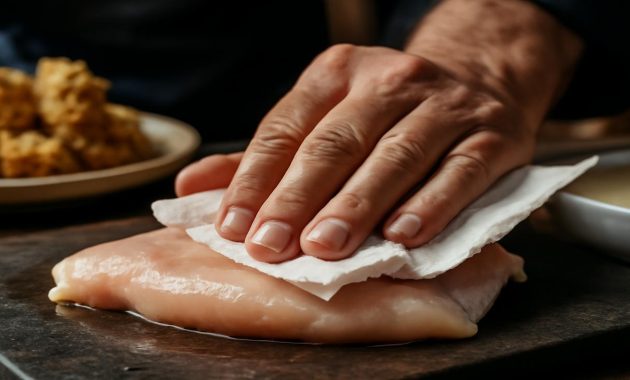
He spreads out a tray of calamari, pale and slick with sea moisture. In a world that likes shortcuts, his movements are almost stubbornly patient. Each ring gets patted with a paper towel, then laid out in a single, tidy line. No piling, no crowding, no rushed tossing in flour while they’re still glistening.
“Water is the enemy of crisp,” he says. “If you remember nothing else, remember that.”
He explains it simply, like he has dozens of times before. When wet food hits hot oil, the surface water has to evaporate first. All that water turns to steam, snapping and spitting and pushing outward through the batter. The result? Coatings that slide off, pockets where the crust separates from the food, or worse—greasy sogginess where the batter has absorbed too much oil instead of sealing it out.
Dry food behaves differently. Without surface moisture, the batter clings in a thin, even layer. As soon as it hits the oil, the starches swell and set into a delicate lattice of tiny bubbles and rigid edges. That’s the architecture of crispiness—an edible scaffolding of dryness and heat, strong enough to survive sauce, lemon juice, or a few languid minutes on a plate.
“Think of drying as giving the batter something to hold on to,” Javier says. “You’re not just removing water. You’re preparing a surface for texture.”
The Texture of Patience: Inside Javier’s Teaching Kitchen
The kitchen is bright and orderly, counters lined with bowls of flour, cornstarch, bottles of cold beer, and trays of vegetables and fish. You can feel that this is a space where mistakes are encouraged—but shortcuts are not. Javier watches as a young student, sleeves rolled past his elbows, takes a handful of shrimp straight from a colander and drops them into flour.
“Stop,” Javier calls out softly, not unkindly.
He lifts one shrimp out between two fingers. It glistens—too wet, too glossy. He presses it against a folded kitchen towel until the sheen turns matte. Then he tosses it back into the flour. The difference is immediate. The flour coats in a thin, powdery film, clinging instead of clumping.
“Now, do the same with all of them,” he says. “Cooking is thousands of small decisions. The drying is one of the important ones.”
The student nods, and the rhythm of patting and arranging begins. Shrimp line up like commas on the tray. The kitchen fills with the low murmur of conversation, knives tapping, oil slowly coming up to temperature, its surface shivering with tiny waves.
“People ask me all the time,” Javier says, turning back to the stove, “What brand of flour? Which oil? What temperature? They want numbers. But almost nobody asks, ‘How dry should the food be before I start?’ And that’s the question that matters.”
He does work with numbers, of course. 175–180°C (345–355°F) is his comfort zone for most battered fish, slightly hotter for vegetables, a touch lower for delicate items. But the foundation is always the same: dry first, then coat, then fry hot and fast.
The Sensory Checklist: What “Dry Enough” Feels Like
There’s a moment, just after patting food dry, when moisture changes from visible droplets to something subtler—coolness, tackiness, the barest hint of dampness. Javier teaches his students to look for this, not as a number on a thermometer, but as a set of small, physical cues.
- Look: The surface should be matte, not shiny. No visible beads of water.
- Touch: It should feel cool and just barely tacky, not slippery or wet.
- Sound: When dropped into flour, it should whisper, not smack—coating lightly instead of slapping wet patches into lumps.
“If you can’t tell,” he says, “you probably need another minute.”
Sometimes, he goes further. For especially watery vegetables—zucchini, eggplant, or fresh mushrooms—he’ll salt them lightly first and let them sit, drawing out liquid from the inside. Then he pats them dry again. Not just once, but twice. He compares it to wringing out a sponge before washing dishes. “You can’t wash anything with a sponge that’s already full of water,” he says. “Same with vegetables. Let them give up what they don’t need.”
Batter as Clothing: Dressing Food for the Fryer
Once drying becomes instinct, the next layer of Javier’s teaching emerges: batter not just as a coating, but as clothing the food wears into the hot unknown. And just like clothing, it needs the right fit and fabric.
He lines up three bowls on the counter. One holds a simple blend of wheat flour and a bit of cornstarch. The next cradles a loose, pale batter made with that same flour, sparkling water, and a splash of cold beer. The third glimmers like liquid silk—a tempura-style batter, almost as thin as melted ice cream.
“These are three different textures,” he says. “Same basic idea: dry food, then dress it. But look how the dryness lets the batter change character without losing its grip.”
He takes a perfectly dry piece of cod and dips it in the beer batter. It comes out coated in a light, even film, no heavy drips. Into the oil it goes. The surface erupts in a dance of bubbles, then settles into a soft, steady hiss.
“If the cod were wet,” he explains, “the batter would slide right off the smooth parts. You’d get bare patches, thick patches, and places where the steam from the water blows holes in the crust. Dry fish means an even shell.”
He moves next to the tempura batter, thinner and colder, perfect for delicate vegetables. Each slice of perfectly dried carrot or green bean slips through the liquid, comes out coated in lace, and disappears into the fryer. When it reappears, it looks almost weightless, like fried paper.
“We’re not trying to hide the food,” Javier says. “We’re building a frame around it. That frame has to be thin, strong, and crisp. Dryness makes that possible.”
Comparing Approaches: Drying and Crispiness Basics
Javier loves to show his students the difference tiny steps make. On one side of the counter, he prepares properly dried, lightly coated items. On the other, he deliberately rushes—leaving food wet, batter thicker, oil a little too cool. Then he lets them see, touch, and taste the results side by side.
| Frying Step | Common Mistake | Javier’s Approach |
|---|---|---|
| Preparing the food | Coating food while still wet from washing or defrosting | Pat dry thoroughly; air‑dry a few minutes on a rack or tray |
| Handling vegetables | Frying watery vegetables straight away | Lightly salt, rest, then pat dry again to remove excess moisture |
| Batter texture | Batter too thick to compensate for wet food | Keep batter light and cold; rely on dryness for adhesion |
| Frying temperature | Starting with oil that’s not hot enough | Preheat until a test drop sizzles instantly and floats |
| Final texture | Soft, oily crust that wilts quickly | Dry, glassy crunch that stays crisp even as it cools |
As they taste, the lesson becomes more than words. On the “before” plate, the fried pieces slump, the crust clinging a little too tightly, the first bite yielding without resistance. On the “after” plate, the crunch is bright and visible—the crust holds, then shatters cleanly, leaving the food inside almost steaming.
The Sound of Crisp: Listening to Your Frying Pan
What Javier returns to, over and over, is not the recipe but the attention. He wants his students to use all their senses—to hear when the oil is ready, to see when the batter has set, to feel the subtle stiffness of a crust finished just right.
“Frying talks to you,” he says, leaning over a pan as a new batch of battered zucchini slips beneath the surface. “If you listen, the sound of the bubbles changes. At first, it’s busy, full of high, sharp crackling. There’s still water leaving the food, steam racing out. Then it deepens, softens. When it starts to quiet just a bit, the crust is usually formed.”
He asks a student to lift one piece out and hold it to her ear. A faint ticking sound continues for a few seconds—the crust finishing its last internal dance as it cools.
“That little song,” he says, “is the sound of moisture escaping. It’s the last proof you dried it well.”
He encourages them to notice the way oil behaves too. When you drop in something too wet, the reaction is violent, bigger bubbles, sometimes even splattering—oil and water repelling each other. With well‑dried food, the bubbles are smaller, tighter, more controlled. You can feel the difference standing beside the stove.
Home Kitchen Wisdom: Bringing Javier’s Trick into Your Own Frying
You don’t need a professional kitchen, or a class in Madrid, to bring this obsession with drying into your own home cooking. What you need, Javier would say, is intention—and a little more time than you think.
- After washing: Spread food out on a clean towel or paper towels. Press gently from the top, then flip and repeat. Let it sit for 5–10 minutes while you prepare the batter.
- For frozen items: Thaw fully in the fridge or under cool running water, then drain thoroughly and dry. Half‑frozen, wet surfaces are a crispness killer.
- Use a rack if possible: Setting food on a rack over a tray lets air circulate and moisture escape more evenly than on a flat plate.
- Don’t rush from fridge to fryer: Very cold, wet food creates more condensation and splatter. Dry first, then rest a minute at room temperature.
Javier insists that once people experience the difference, they never go back. “The first time you take that bite and the crust really cracks,” he says, “you understand. It’s a small effort for a big reward.”
Beyond Technique: Respect in Every Crunch
As the class winds down, trays of golden fish, vegetables, and shrimp rest on racks, exhaling the last of their heat into the room. Students pick at the edges, testing, evaluating, laughing when a piece crunches so loudly it echoes off the tile walls.
Javier moves quietly among them, correcting grip, adjusting oil temperature, reminding them—again and again—about the small, deceptively simple act that changed everything.
“People think cooking is about showing off,” he says, wiping his hands on his apron. “For me, it’s about respect. Respect for the ingredient, for the person who will eat it, and for the process. Drying the food first is a way of saying: I care enough to do this properly. I won’t drown good fish in steam and soggy batter. I will let it be itself, just in its crispiest possible form.”
There is something almost meditative about the way he describes it. Drying is not a hack, not a viral trick to be shouted in fifteen seconds on a screen. It’s a form of attention, a pause before the rush of heat. In that pause, you commit to the kind of cook you want to be: one who notices the sheen on a piece of fish, the beading on a mushroom, the quiet matte finish that means it’s finally ready for its brief, glorious swim in oil.
Later, when the last of the pans have cooled and the floors are mopped, a few stubborn crumbs still cling to the racks. If you pick one up and crush it between your fingers, it shatters cleanly, leaving a faint trail of salt and starch on your palm. It’s almost nothing—and yet, it contains the whole lesson.
Crispness, as Javier teaches it, is not a coincidence. It is a promise kept: to the food, to the diner, and to yourself. And it begins, always, with that quiet, deliberate act—drying the food first, listening for the moment when shine turns to softness, and knowing that in that tiny transformation lies the difference between “good enough” and unforgettable.
FAQs
Why does drying the food first make batter extra‑crispy?
Drying reduces surface moisture, so the oil doesn’t have to waste energy boiling off water. Instead, the batter can set quickly, forming a thin, rigid, bubbly crust. Less water also means less steam pushing the coating away from the food, so crispness lasts longer.
How dry should the food be before battering?
The surface should look matte, not shiny. When you touch it, it should feel cool and just slightly tacky, but not wet or slippery. If paper towels still pick up visible moisture, keep drying.
Can I skip drying if I use a thicker batter?
Thick batter may hide moisture, but it won’t fix the problem. Wet food still releases steam inside the crust, making it heavy, greasy, or prone to separating. Drying first lets you use a lighter, crisper batter that actually stays crunchy.
Is air‑drying better than just using paper towels?
They work best together. Patting with towels removes most surface water quickly. Air‑drying on a rack for a few minutes finishes the job evenly, especially useful for foods with many crevices, like shrimp or leafy vegetables.
Does this trick work for breaded foods as well as battered ones?
Yes. Whether you’re using flour, egg and breadcrumbs, panko, or a wet batter, drying the food first improves adhesion and crunch. Breaded cutlets, croquettes, and even simple fish fingers all benefit from thorough drying before coating.