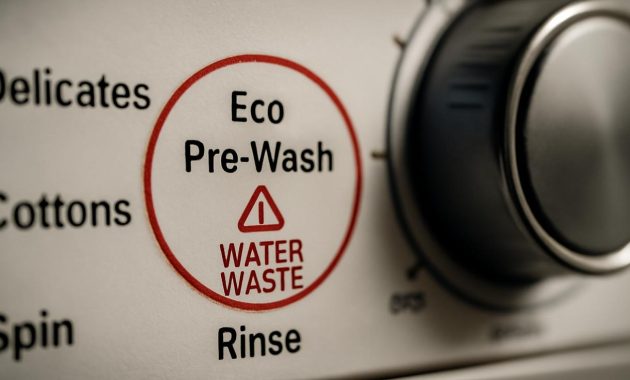
The sound is almost comforting at first—the low rumble, the soft rush of water, the gentle clink of buttons against the drum. You press start, step away, and feel that small flush of satisfaction: laundry day is officially underway. But somewhere out of sight, behind the sleek digital display and polite beeps, your washing machine might be quietly wasting staggering amounts of water and energy, all in the name of “extra clean.” And the setting most likely to be guilty? The one program even repair techs roll their eyes at: that ultra-long, overzealous cycle promising a deeper, purer, more sanitized wash than you’ve ever seen before.
The Seduction of the “Super” Cycle
Walk up to almost any modern washing machine, and the panel reads like a menu of moral choices. There’s the everyday cotton cycle, the quick wash, the eco mode. But then your eyes land on the big promises: “Intensive,” “Hygiene,” “Allergy Care,” “Baby Clothes,” sometimes wrapped into a three-hour marathon at boiling temperatures. It sounds responsible. Caring, even. Who doesn’t want their clothes, and especially their kids’ clothes, to be extra clean?
A repair technician I once spoke to described it this way: “People see ‘Hygiene’ and think if they don’t use it, they’re being dirty. But most of the time, they’re just cooking their clothes, abusing the machine, and pouring water and electricity down the drain.” He’d spent years opening up machines clogged with detergent paste and coated in grey sludge because folks thought that if normal was good, “Intensive” had to be better.
The marketing is clever. These long, super-hot programs are often framed as the responsible choice for families, allergy sufferers, gym-goers, or anyone worried about germs. But in real life, for day-to-day laundry, they’re typically the least responsible option on the panel—especially when it comes to water use.
The Cycle Repair Techs Secretly Hate
Ask a few appliance repair technicians which program they wish machines didn’t have, and a pattern emerges. It’s almost always some version of the same thing: the extra-long, super-hot, supposedly “hygienic” or “allergy” cycle. You know, the one that runs for two and a half or even three hours. The one you feel a bit guilty for not using.
That cycle is notorious. It fills and refills. It rinses and re-rinses. It soaks, tumbles, and spins until your washing machine sounds less like a helpful appliance and more like a slightly unhinged waterfall. And for what you’re putting in—everyday clothes, lightly soiled outfits, that T-shirt you wore once—it’s often entirely unnecessary.
Many techs will quietly admit they use basic 30–40°C cotton cycles at home, sprinkle in an eco mode when it isn’t maddeningly slow, and almost never touch the “Hygiene” or “Allergy” program unless they truly need it. Why? Because they see the aftermath of people choosing that overkill setting week after week:
- Blown heating elements from endless high-temperature runs
- Worn-out bearings from long, heavy, drum-straining cycles
- Soap scum buildup because people think “more wash time = more detergent,” and overdo it
- Soaked fabrics that lose color and shape faster under extreme heat
And all the while, that cycle is gobbling water. Even if your machine is technically efficient by rating, the sheer length and complexity of the program mean more fills, more rinses, and more total liters used than most households ever need for standard laundry.
Why “More Water” Doesn’t Mean “More Clean”
Water feels like the magic answer. Too dirty? Rinse it more. Add another soak. Toss in another prewash. But modern detergents are designed for specific water levels and temperatures. They’re not tiny soap grenades that just explode harder the longer they’re in there.
In truth, overshooting the water and time can be counterproductive. Clothes can float instead of being firmly pressed and scrubbed against each other. Detergent can become difficult to rinse out fully. If the load is small, that extra-long cycle can be hilariously disproportionate—like using a fire hose to rinse a coffee cup.
The worst washing-machine program isn’t necessarily the one that uses the single highest number of liters per cycle; it’s the one that creates the widest gap between what your laundry actually needs and what the machine delivers. And for most households, that gap is largest with those long, super-hot, “just-in-case” programs that make you feel safer—but do very little for your basic cottons, socks, and everyday wear.
A Quiet Waste Hiding in Plain Sight
Water waste is sneaky. There’s no dramatic spill, no river flowing down the driveway, no “oh no” moment. The pipes fill, the drum rotates, the drain hums, and you move on with your day. All you see is a pile of clean, warm laundry and a vague sense of virtue because the label said “Hygiene.”
Yet when you start comparing programs side by side, the difference adds up. Even where water-efficient machines try to meter consumption tightly, a longer, multi-phase cycle typically uses more than the regular cotton or mixed-fabric cycle. Add in the fact that people often:
- Run these heavy-duty programs with half-full drums “just to be safe”
- Choose them for items that aren’t actually very dirty
- Use extra detergent because the cycle “sounds serious”
and those liters begin to stack up alarmingly fast.
To make this easier to visualize, imagine a typical week of laundry for a family using different approaches:
| Laundry Style | Typical Program Choice | Approx. Cycles/Week | Estimated Weekly Water Use* |
|---|---|---|---|
| Heavy-Duty by Default | “Hygiene/Allergy” 60–90°C | 5 cycles | ~350–450 L |
| Balanced Everyday Use | Standard 30–40°C cotton/mixed | 5 cycles | ~250–320 L |
| Mindful Minimalist | Eco/short cycles, full loads | 3–4 cycles | ~150–240 L |
*Values are broad estimates based on common front-loading machines; actual use varies by model and settings.
Over a year, that gap between the “Heavy-Duty by Default” approach and the more mindful one can mean thousands of extra liters swirling pointlessly through the drum.
What Your Clothes Actually Need (Spoiler: It’s Not a 3-Hour Boil)
There’s something reassuring about extremes: kill the germs, blast the stains, leave nothing to chance. But most fabrics and most dirt are not that difficult. They don’t need punishing, they need consistency and the right conditions.
Wear a T-shirt for a day? It’s mostly sweat, skin oils, and environmental dust. A good detergent at 30–40°C will remove that just fine. Underwear and towels? They do better a bit warmer, yes, but not every load needs to suffer through a scalding marathon. Gym gear? That synthetic tank top is far more at risk of being damaged or losing elasticity from excessive heat and long wash times than it is from a slightly shorter cycle at a moderate temperature.
Most of the time, the real heroes are:
- The correct dose of detergent (not too much, not too little)
- A reasonable temperature suited to the fabric (30–40°C for most, 60°C occasionally)
- A drum that’s comfortably full but not stuffed
- A cycle that’s long enough to clean, but not a cinematic epic
That overkill “Hygiene” program? It’s designed for very specific situations: heavily soiled items, certain medical or high-risk contexts, maybe the occasional bed linen wash if someone in the family has been very sick. It is not designed to be the default for everything you own that has ever touched your skin.
The Environmental Cost You Don’t See
It’s easy to treat the washing machine as a self-contained world. You load, you press start, you unload. What happens in between feels like a private, domestic event. But each unnecessary liter of water pulled into that drum travels from somewhere—a river, an aquifer, a reservoir—and has to be cleaned, transported, treated, heated, used, and then treated again when it leaves down the drain.
In areas facing water stress, those “just-in-case” heavy cycles ripple outward in small, invisible ways: more load on local water systems, higher energy demand, higher treatment costs. Even if you never see a dry tap or a rationing notice, those incremental demands shape the landscape and the systems that keep your city or town alive.
The irony is sharp: the program marketed as the most hygienic and caring can quietly become the least caring option on the panel—for your machine, your bills, and the water you share with everyone else.
How to Break Up with the Worst Program (Without Losing Cleanliness)
Letting go of that high-intensity cycle can feel oddly uncomfortable. What if the clothes aren’t really clean? What if germs survive? What if the lower temperature isn’t enough? That fear is part habit, part marketing, and part misunderstanding about how cleaning actually works.
Here’s how to keep your laundry genuinely clean without defaulting to the worst, most wasteful settings:
1. Reserve the “Super” Cycle for True Exceptions
Think of the hygiene or allergy program as a specialist, not a daily worker. Use it when:
- Someone has been very ill and you’re washing bedding or towels used during that time
- You’re dealing with heavily soiled cloths from cleaning bathrooms or handling raw meat
- A medical professional has specifically recommended high-temperature washing for a condition
For most other cases—sweaty gym clothes, kids’ play clothes, everyday underwear—good detergent and a standard cycle at 40°C, with occasional 60°C loads, are more than sufficient.
2. Learn Your Machine’s “Sweet Spot” Programs
Most washers have one or two cycles that are quietly excellent: efficient, not too long, and perfectly capable. Often it’s the standard cotton or mixed-fabric mode at 30–40°C. Sometimes there’s a well-designed eco cycle that balances time and water fairly well.
Try this experiment for a month: ignore the scary-sounding heavy-duty cycle completely. Use only standard or eco programs, with correct detergent dosing and reasonably full drums. Pay attention to how your clothes actually smell and feel. Most people are surprised to discover: nothing feels less clean. In fact, clothes sometimes feel fresher because detergent is properly rinsed out.
3. Rethink What “Dirty” Really Means
We often treat all worn clothes as if they’ve been through a mud race. But your jeans from a day at a desk? That sweater you wore over a T-shirt? Much of what we wash is more “used” than “dirty.” Airing some garments, spot cleaning small stains, and reducing automatic toss-in-the-hamper habits can cut down on loads and, indirectly, on your temptation to reach for the most dramatic program.
Being realistic about soil level also helps you choose a normal cycle confidently. If your T-shirt just smells like… having lived a day, and isn’t visibly stained, you don’t need a three-hour bacterial apocalypse.
4. Let Temperature Do Its Job—But Not Too Often
Occasional 60°C washes for towels and bedding can be helpful for hygiene and for keeping musty smells at bay. That doesn’t require the full force of a marathon allergy cycle. A standard 60°C cotton program, used strategically, gives you the benefits of heat without the overkill of excessive water use and endless soaking steps.
Think of it as a rhythm: most loads at 30–40°C, some key items at 60°C from time to time, and only the rare emergency calling for the extreme settings.
5. Choose Care, Not Drama
The most sustainable laundry habits feel almost boring: steady, moderate, predictable. A correctly loaded drum, measured detergent, realistic temperature, and a sensible cycle length. No theatrics, no glowing “hygiene” icons implying you’ve just sterilized a surgical ward.
Yet this quiet, low-drama approach is exactly what preserves your clothes, protects your machine, trims your bills, and returns fewer wasted liters to the world. It’s the choice that respects the resources out there beyond the laundry room door.
Listening to the Machine—and the Water
Next time you cycle through your machine’s options, pause over that tempting, intimidating, extra-long program. Notice the timer leap forward. Notice how many extra rinses it promises, how hot it wants to go. Then picture all the water you’ll never see, surging in and out of that drum for garments that mostly just survived a day at the office or the playground.
Many repair techs quietly admit that if they could redesign modern panels, they’d hide or rename that worst-offender program—make it a buried, expert-only option instead of a shiny badge of cleanliness. Until that happens, the choice is left to the person standing in front of the machine.
You don’t have to become a laundry minimalist overnight. Just start noticing. Ask, before you press start: “Does this load truly deserve the most extreme setting this machine can offer? Or would a normal, sensible cycle do the job perfectly well?” Most days, the honest answer is the latter.
Clean clothes don’t need drama. And real care—for your wardrobe, your machine, your bills, and that vast, shared web of water beyond your front door—starts with quietly ignoring the loudest, longest, most wasteful button on the panel.
Frequently Asked Questions
Is the hygiene or allergy cycle always bad to use?
No, it isn’t inherently bad. It’s just overkill for everyday laundry. It makes sense for specific situations—like heavily soiled items or post-illness bedding—but not as a default setting for all loads.
Will lower temperatures really get my clothes clean?
Yes. Modern detergents are formulated to work well at 30–40°C, especially for lightly to moderately soiled clothes. Correct dosing and proper loading matter more than chasing very high temperatures.
Isn’t hot water better for killing germs?
Very high temperatures can kill more germs, but for everyday laundry this level of disinfection is usually unnecessary. Regular washing with detergent already removes most bacteria and dirt to a safe, hygienic level.
Do eco programs actually save water?
In many machines they do, though they often run longer. They’re designed to balance energy and water use. That said, a standard, moderate program with full loads can be just as efficient for typical households.
How can I tell if I’m using too much detergent?
If clothes feel stiff, smell strongly of fragrance, or your machine shows signs of residue or musty odor, you may be overdosing. Start with the manufacturer’s recommended amount for your water hardness and load size, then adjust down if needed.
How full should I load the washing machine?
As a rule of thumb, you should be able to fit your hand vertically on top of the laundry in the drum. That means it’s full enough to be efficient, but not so stuffed that clothes can’t move and clean properly.
How often should I run a very hot, intensive cycle?
For most households, only occasionally—perhaps when someone has been very sick or you’re dealing with particularly dirty cleaning cloths. For everyday loads, stick to standard 30–60°C programs and reserve the “super” cycle for genuine exceptions.