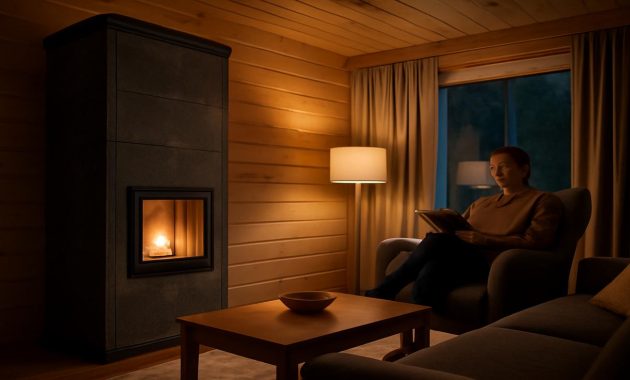
The first time I stepped into a Finnish living room in January, I braced for a wave of dry radiator heat. Instead, I felt something else entirely: a quiet, even warmth that seemed to rise from the floor, wrapping my feet, my legs, my whole body in a gentle cocoon. The air was cool enough to feel fresh, yet I wasn’t cold. There were no hissing radiators, no bulky heaters, no space-eating metal panels under the windows. Just a calm, almost invisible heat. The secret, my host said with a shrug, was something I already had at home. I looked down at the floor and understood: pipes, water, and a familiar household object—my everyday bathtub—scaled up and laid flat beneath my toes.
The Country That Refuses to Be Cold
Finland is not a place where winter arrives politely. It presses its face against the windows in November and doesn’t fully leave until May. Snow dims the edges of roads. Lakes crinkle into ice. The sun, when it bothers to appear, skims low along the horizon like a shy guest who never quite enters the room. Temperatures slip below freezing and stay there, sometimes diving into the kind of cold that makes your eyelashes frost together.
And yet, step inside most Finnish homes and you’ll find warmth so steady it almost disappears from your notice. It’s not dramatic heat, not the blast of an electric heater in a drafty hallway, not the erratic cycling of radiators groaning to life. The warmth here is subtle, grounded—literally in the floors, in the walls, in the very bones of the building.
The trick is a simple idea practiced with Nordic stubbornness: instead of heating the air fast and aggressively, you heat the surfaces slowly and evenly. Think of how long a bathtub full of hot water stays warm compared with a room you’ve just blasted with a fan heater. The tub and the water store the heat, giving it back to you over time. Finland took that everyday principle and threaded it through an entire culture of building, comfort, and survival.
Radiators, Replaced by Something You Already Know
Walk into a typical older European home and the heating system is obvious: radiators under the windows, maybe a clunking old boiler in the basement. In Finland, especially in newer houses and apartments, you often don’t see any of that. Instead, you feel it. Beneath the wooden planks, tiles, or even vinyl floors, a network of pipes carries warm water. Slowly, steadily, the floors transform into one enormous, gentle heat source that turns every room into a soft, low-temperature sauna for your feet.
This is hydronic underfloor heating, and conceptually, it’s no different from the thing hiding in plain sight in your bathroom: your bathtub or shower. When you fill a tub with hot water, the porcelain, acrylic, or metal shell slowly warms. You’ve felt it—sliding down until your shoulders touch the sides, feeling the solid warmth cradle your back. Even after the water cools slightly, the tub itself stays warm for a surprisingly long time. The heat has seeped into it, stored silently.
Now imagine your bathtub tipped upside down and stretched out flat across your living room. Instead of one deep vessel, you have wide, shallow loops of pipe running back and forth under your floor, filled with warm water, usually well below boiling—often in the range of 30–40°C (86–104°F). The floor itself becomes your tub: a giant, comfortable heat battery that warms objects, walls, and bodies rather than just the air.
The Everyday Object Behind the Magic
In essence, Finns are using something you already own—your water-based heating skills. Every time you run a hot shower, draw a bath, or wash dishes in a sink of steaming water, you’re doing it: using water as a heat carrier and storage medium. Water has a superpower you don’t usually think about: it holds an enormous amount of heat compared to air.
Take two rooms: in one, you heat the air directly with an electric space heater; in the other, you warm up a big tub of water and let it radiate slowly. The air-heated room warms quickly but cools quickly too, and the air can feel harsh and dry. The room with the tub warms more gradually, but the warmth feels deeper, softer, more enduring.
Finland has simply scaled that tub up and hidden it under the floor. The concept stays the same: a vessel (pipes and concrete or screed), filled with water at moderate temperature, holding and sharing heat over time. Your bathtub is a prototype for an entire home-heating philosophy.
The Quiet Sensations of Invisible Heat
What makes this kind of heating so beloved in a place where winter lasts half the year isn’t just efficiency or clever engineering. It’s how it feels. On a dark afternoon in January, you come in from the outside where the wind needled its way through your scarf. You kick off your boots in the entrance hall and for a split second, your socked feet land on the floor tentatively, bracing for a cold bite.
But there’s no bite. The floor is warm—not hot, not shocking, just a gentle, embracing warmth. You stand a little longer than you need to, just feeling it travel up your legs. The air in the house is cooler than many people in warmer countries would set their thermostats to, but you don’t feel chilled. Your feet, that critical sensor of human comfort, are sending a different message to your brain: we’re okay. We’re safe. We’re warm enough.
Underfloor heating changes the way you use space. Children sprawl on the floor to draw. Adults sit cross-legged to play board games. A dog melts into a furry rug, completely surrendered to the warmth radiating up. There’s no single “hot spot” that everyone competes for, no “bad seat” next to a drafty window. Instead, heat is everywhere and nowhere—an invisible presence stitched into the fabric of the home.
There’s also a kind of silence to it. Traditional radiators hiss, tick, clank as they expand and contract. Fan heaters whirr and drone. In a Finnish underfloor-heated home, you hear none of that. Just the gentle sounds of domestic life: a kettle boiling in the kitchen, the muffled shuffle of socks on a warm floor, the quiet rustle of someone turning a page.
How the System Actually Works (Without Getting Boring)
Behind the scenes, though, it’s anything but magical. It’s physics, plumbing, and thoughtful design. Somewhere in the house—often in a utility room, basement, or a small cupboard—lives the heart of the system: a heat source that warms the water. That might be a district heating connection (common in many Finnish towns), a heat pump that pulls warmth from the air or ground, a pellet boiler, or even, in some rural homes, a wood-fired system.
The water is warmed only slightly, to a temperature not so different from a pleasantly hot bath. A network of flexible plastic pipes lays embedded in a slab of concrete or a thin screed layer beneath the floor surface. These pipes loop and meander, each room zoned separately so temperatures can be fine-tuned. A small pump circulates the water, and thermostats quietly handle the rest, letting more or less warm water in as needed.
Because the floor itself becomes a huge radiator, the system doesn’t need to run very hot, making it more efficient and friendlier to renewable sources like heat pumps or low-temperature district heating. The concrete or mass of the floor works like a thermal battery, smoothing out temperature spikes, storing daytime heat to release during the night, or banking energy from a cheaper tariff period.
| Aspect | Radiators | Underfloor (Water-Based) |
|---|---|---|
| Heat Source | Hot water or electric elements | Warm water in pipes (like a flat bathtub) |
| Heat Distribution | Localized, hot surfaces, warm air rises | Even, radiant from entire floor area |
| Comfort Feel | Warm upper body, sometimes cold feet | Warm feet, balanced whole-body comfort |
| Visual Impact | Visible metal panels under windows | Invisible; no wall space used |
| Typical Water Temperature | High (60–80°C / 140–176°F) | Low (30–40°C / 86–104°F) |
Why a Country of Ice Chose Gentle Heat
It might seem paradoxical that a place this cold would lean so heavily on relatively low-temperature heating. But that’s exactly why it works. In an environment where heating is not a seasonal luxury but a basic requirement for survival half the year, you want a system that’s steady, efficient, and built to last.
Heat a room too hot and too fast and you waste energy. Your body, sweating under a blast of hot air, will crack open a window or strip off layers—then the cycle restarts. It’s a tug-of-war between heating system and human habits. Underfloor heating, paired with good insulation and triple-glazed windows, sidesteps that tug-of-war. The heat arrives gently from below, and you never feel the urge to overcompensate.
There’s also a deep cultural thread here. Finns have long embraced the idea of heating the body, not just the air, exemplified by the national ritual of the sauna. In a sauna, wood, stones, and water work together to create a soft, all-encompassing heat. Underfloor heating is a quieter, domestic cousin to that idea. The goal isn’t to blast you with intensity; it’s to surround you, whispering warmth rather than shouting it.
And just as the sauna is typically made of wood, many Finnish homes pair underfloor heating with wooden floors. The boards are chosen and installed carefully, designed to expand and contract with heat without warping. When you walk barefoot across them, you feel a kind of living warmth—the wood warmed by water warmed by something deep beneath the ground or in a central plant across town. It’s a whole chain of elements, from soil to pipe to plank to skin, all passing heat along like a quiet secret.
From the City Network to the Village Well
The way this water gets heated varies by place, but the principle stays the same. In cities and larger towns, many buildings tap into district heating: a vast, shared hot water system that snakes under streets. One central plant—these days increasingly powered by biomass, waste heat, or other lower-carbon sources—heats water and sends it out through insulated pipes to neighborhoods, blocks, entire districts. Each home pulls off a little of that heat, running it through their underfloor circuit.
In the countryside, homes might rely on a ground-source heat pump: a machine that quietly sips low-grade warmth from deep in the earth and concentrates it, raising the temperature of the water that flows through the floors. Others still burn wood pellets or logs in ultra-efficient boilers that sit in a side room or shed, feeding heat into the same underfloor pipes.
Everywhere, the pattern repeats: water collects the heat, moves it, and hands it to the floors. Just like your bathtub collects the hot water your household heater produced, holds it, and then surrenders it slowly to your body and the air. You already understand the whole chain every time you run a bath on a cold evening and test the water with your wrist. Finland has just zoomed out and applied that small act to the scale of entire buildings and neighborhoods.
Learning from Finland: Could You Live Like This?
Picture a winter morning in your own home, wherever you live. Maybe your radiators click awake, or the forced-air system coughs to life with a metallic breath. Warm air shoots from vents, rushing past your face, drying your sinuses, but somehow your toes still curl on the chilly floor tiles.
Now imagine instead that when you swing your legs out of bed, your feet land on warmth. Not intense, spa-like heat, but gentle, consistent warmth. The room is a degree or two cooler in the air than you’re used to, but you don’t mind. In fact, you sleep better in that cool-but-cosy blend. The heating system is silent. There are no radiators to dust, no vents to block with furniture, no wall-space sacrifice. The house feels calmer.
For new builds and major renovations, hydronic underfloor heating is no longer a faraway Nordic quirk. Around the world, more architects and homeowners are quietly adopting it, often powered by heat pumps. The underlying concept is identical to your bathtub: store heat in a mass (the floor), let water ferry that heat around, and give your body direct, radiant comfort instead of a roller-coaster of hot and cold air.
It does require planning. Floors need to be designed for it, heights considered, insulation layered under the pipes so the warmth doesn’t sneak downward into the ground. And it rewards patience: these systems react more slowly than a quick-blast heater. But in return, you get what Finns have come to treat as a baseline of civilized living: an indoor climate so effortless it feels like weather without the inconvenience.
The Subtle Luxury of Something Ordinary
What makes Finland’s radiator-free homes so compelling isn’t that they’re packed with futuristic gadgets. It’s that they’re grounded in a simple, everyday truth: water is a humble miracle. You already trust it to carry heat to your shower, to your teapot, to your pasta pot. You know, without thinking, that a full tub stays warm far longer than an empty room.
In a way, Finland has simply decided to honor that knowledge, to scale it up and build it into the bones of their buildings. They’ve turned entire floors into horizontal bathtubs—vessels of warmth you don’t see but always feel. In doing so, they’ve proven that comfort doesn’t have to roar. It can hum low, below the threshold of notice, under tile and wood and wool socks.
So the next time you turn on the hot tap and listen to the water rush into the tub, think about what’s happening. Heat, invisible but tangible, is sliding through pipes, pooling into a vessel, waiting to meet your skin. Somewhere far to the north, that same quiet ceremony is happening on a grander scale, under snowy roofs and dim winter skies. Homes are being warmed without radiators, held in a soft embrace by an everyday ally you already know—water, faithful and ordinary and, in its own understated way, extraordinary.
Frequently Asked Questions
Do Finnish homes really not use radiators?
Many newer Finnish homes and renovated buildings rely primarily on hydronic underfloor heating instead of traditional wall radiators. Older buildings may still have radiators, but underfloor systems are increasingly common and often the main source of space heating.
Is underfloor heating more efficient than radiators?
It can be more efficient, especially when combined with good insulation and low-temperature heat sources like heat pumps or modern district heating. Because it uses lower water temperatures and heats a large surface area, it often achieves the same comfort with less energy.
Does underfloor heating make the floor very hot?
No. In well-designed systems, the floor surface is only slightly warmer than the room air—typically in a comfortable range for bare feet. It should feel gently warm, not hot or uncomfortable.
Can underfloor heating work with wooden floors?
Yes. In Finland, it’s common to combine underfloor heating with wooden or engineered wood floors. The key is using materials and installation methods designed for slight expansion and contraction with temperature changes.
Is it possible to add this kind of heating to an existing home?
It’s easiest in new builds or major renovations, but retrofits are sometimes possible, especially during floor replacements or when adding a new extension. The feasibility depends on floor height, structure, and insulation options.
What everyday object is this heating system similar to?
It works much like a bathtub full of hot water: a vessel filled with warm water that stores and releases heat gradually. Underfloor heating spreads that concept across the entire floor, using pipes and building materials to hold and radiate warmth.
Why is this approach especially popular in Finland?
Finland faces long, cold winters, so comfort and efficiency are crucial. Underfloor heating pairs well with the country’s focus on well-insulated buildings, modern heat sources, and a cultural preference for gentle, radiant warmth rather than intense blasts of hot air.