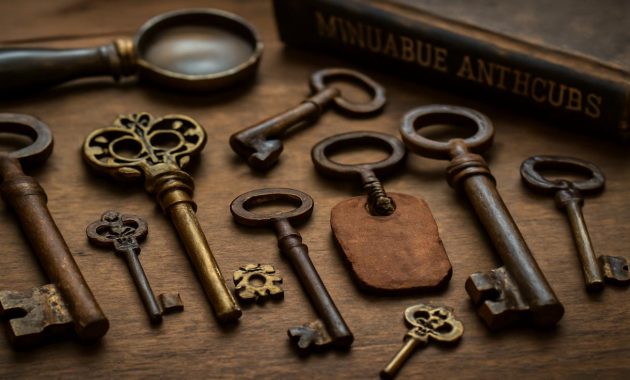
You probably have a handful of them somewhere right now—tangled in a bowl by the front door, forgotten in the junk drawer, clinking dully at the bottom of an old handbag. Keys to a first apartment. A car you sold a decade ago. A mysterious brass thing on a ring that doesn’t seem to fit anything in your current life. They sit there, mute and ordinary, until one day you pick them up and feel that strange weight in your palm. You almost throw them away. Then you pause and wonder: what if these aren’t just useless scraps of metal? What if, without realizing it, you’ve been sitting on a small hidden treasure all along?
The Quiet Life of Forgotten Keys
Old keys have a way of collecting stories the way they collect dust. They live on the edge of our routines—clattering on tables, tucked into bowls, wedged beneath receipts and batteries and rubber bands. It feels harmless to ignore them. They’re small. Faded. Not obviously valuable. Certainly not treasure.
But hold one long enough, and it starts to feel like a tiny artifact. The edges polished by thumbs and pockets. Tiny notches like a metal skyline. A word faintly stamped into its neck: “Yale,” “Corbin,” “Union,” “Ilco.” Or maybe a crest, a number, a year. Suddenly, what once seemed like junk looks more like a clue.
The surprising truth is that some of those clues lead to real, spendable money—sometimes more than you’d expect for something that once simply opened a door. Collectors, crafters, and even metal scrappers have quietly created a market for old keys, especially the interesting ones. Not every key, of course. But enough that the bowl by your front door might be worth a closer look.
Why Old Keys Can Be Worth More Than You Think
The value of an old key doesn’t come from some magic property locked inside the metal. It comes from the stories and uses people project onto it. And those stories fall into a few big categories: history, aesthetics, rarity, and raw material.
1. History Hiding in Plain Sight
Some keys are tiny time capsules. Think of heavy, old-fashioned “skeleton keys” that look like they escaped from a castle in a novel. Or brass hotel keys stamped with a room number and the name of a now-demolished building. Or keys that once opened railway lockers, post office boxes, military barracks, or steamship cabins.
Collectors love these because they’re more than metal—they’re glimpses into vanished worlds. A key embossed with a 1920s hotel logo. A key marked with the insignia of an old railway company. A key from a long-closed factory. Each one whispers about hands that turned it, doors it opened, conversations that followed.
These are the keys that sometimes surprise their owners. A nondescript brass key that sat in a drawer for thirty years might turn out to be from an early airline or an iconic theater. Suddenly, you’re not just holding “an old key”—you’re holding memorabilia.
2. The Pull of Design and Beauty
Then there’s the sheer beauty factor. Some keys are works of art in miniature: ornate bows (the top, where you grip), intricate teeth, decorative cutouts, flourishes and scrolls that could have come from a blacksmith’s daydream.
Even simple house keys can be visually striking—tiny logos, unusual shapes, heart-shaped tops, decorative initials. Vintage European keys tend to be longer and more elaborate; older American and British keys can have distinctive shapes or brand marks that feel instantly nostalgic.
Artists and jewelry makers hunt for these. A single striking key can become the centerpiece of a necklace, a charm bracelet, or a framed art piece. The more distinctive your key looks, the more someone might be willing to pay for it—not because it opens a door, but because it opens the imagination.
3. Rarity and the Odd, Obscure Key
Rarity is a quietly powerful force. Most modern house keys are fairly generic, cut from common blanks with familiar profiles. But older keys, and keys tied to specific institutions, can be uncommon or even rare.
Imagine a key from a decommissioned lighthouse, a specific steamship, or a defunct luxury train service. Or a key marked with the name of a local business that once defined your hometown but shut its doors in the 1960s. These have built-in scarcity: there were never many to begin with, and even fewer survived.
Add in keys shaped like animals, keys with unusual metals or enamel inlays, and keys manufactured by companies that no longer exist, and you have a recipe for collector interest. To the untrained eye, they’re just “weird old keys.” To the right collector, they’re missing pieces in a long, obsessive puzzle.
4. The Hidden Value of Metal Itself
Even if your keys hold no historical or aesthetic magic, they still have one solid advantage: they’re metal. And metal, especially certain types, has scrap value.
Most modern keys are brass (an alloy of copper and zinc) or nickel-plated brass. Some older keys may contain higher-quality brass or even bronze. While a single key might only be worth a few cents at a scrap yard, a heavy jar full starts to add up—especially if you separate brass keys from cheaper, lightweight alloys.
No, you won’t retire on a bucket of keys. But many people are pleasantly surprised to discover that the “dead” metal in their drawers can be turned back into grocery money simply by collecting and weighing it. It’s not treasure in the fairy-tale sense, but it is value you didn’t know you had.
How to Read the Story Your Keys Are Telling
Before you assume your key collection is treasure—or trash—it helps to know what you’re looking at. That starts with treating your keys not as clutter, but as tiny, mysterious documents.
1. Look Closely at Markings and Logos
Spread your keys out on a table. Notice which ones immediately stand out. Start reading them like you’d read a map:
- Names: Hotel names, company names, city names, railway lines, or ship names.
- Logos and crests: Wings, shields, crowns, railroad emblems, stylized letters.
- Numbers and codes: Room numbers, locker numbers, or part codes that hint at specific uses.
- Manufacturer marks: Brands like “Yale,” “Sargent,” “Corbin,” and smaller regional makers.
These markings are clues: they can date the key, reveal where it came from, and suggest who might want it now. A plain, unmarked modern key is harder to get excited about than one that proudly bears the emblem of a 1930s ocean liner.
2. Feel the Weight and Shape
Next, pay attention with your hands, not just your eyes. Older keys often feel heavier, denser. They may be longer, with more elaborate bows. Skeleton keys—those long, narrow ones with a simple bit at the end—immediately signal age and possible interest.
Compare them to a modern house key from your pocket. Notice the difference in heft, thickness, and finish. The more your key seems like it belongs in an antique film rather than a modern locksmith rack, the higher the chance that someone might value it beyond scrap metal.
3. Sort Them into Simple Categories
To keep things clear, you can loosely sort your keys into groups. This simple table can help you think about both their “story value” and their likely financial value:
| Key Type | Typical Features | Potential Value Range |
|---|---|---|
| Modern House / Car Keys | Common shapes, basic logos, light weight, standard blanks | Low (often scrap value only, unless unusual brand or age) |
| Vintage Skeleton Keys | Long shaft, ornate bow, steel or brass, may be rusty | Low to moderate; higher if marked or linked to specific building/train/hotel |
| Branded & Logo Keys | Hotel names, railway logos, company crests, identifiable institutions | Moderate to high for rare or iconic places; modest for common brands |
| Decorative / Ornate Keys | Unusual shapes, filigree, hearts, animals, intricate cuts | Moderate for individual pieces; more if sold for jewelry/craft use |
| Bulk Unsorted Keys | Mixed types, lots of duplicates, little identifiable info | Low individually; can add up as scrap metal or bulk craft lots |
Just this simple act of sorting turns a dusty pile into something legible, maybe even intriguing. It becomes easier to see which pieces might carry more than just metal value.
Where the Treasure Actually Comes From
So who’s turning these overlooked bits of metal into money? The answer reads like a cast of characters from a quiet little economy humming behind the scenes of your neighborhood: collectors, crafters, resellers, and recyclers.
1. Collectors and Nostalgists
There are people who collect keys the way others collect stamps. Some focus on specific themes: hotel keys, railway keys, early automobile keys, keys from certain regions or manufacturers. They hunt for rare logos, unusual shapes, or keys from historic buildings.
To a collector, your grandfather’s brass key from a long-closed seaside inn might fill a gap in a timeline they’ve been building for years. That emotional and historical connection is what nudges the price beyond the bare value of brass. They’re not just buying a key; they’re buying a small, tangible slice of time.
2. Artists, Jewelers, and Makers
Then there are the creatives. Spend a few minutes browsing handmade markets or local craft fairs, and you’ll see it: keys transformed into pendants, bracelets, bookmarks, wall hangings, wind chimes. Combined with beads, leather, or reclaimed wood, they get reincarnated as personal talismans.
For these makers, keys are raw material with built-in meaning. A rustic, tarnished key suggests “mystery” or “ancient story.” A sleek mid-century key might whisper “retro” or “industrial chic.” Collections of mismatched keys turn into art objects that look like they belong in loft apartments and sunlit studios.
If your old keys happen to have the right kind of look—weathered, unusual, interesting—they become valuable to this group, especially when offered in small curated bundles that match a certain aesthetic.
3. Vintage and Antique Resellers
Resellers live in the borderlands between junk and treasure. They scour flea markets, estate sales, and online listings, looking for items that are undervalued in one context but prized in another. Keys are perfect for this: small, cheap to ship, and endlessly varied.
Someone might buy a dusty metal box of mixed keys from a yard sale, sift through to find the most interesting ones, and resell them in themed sets: “Vintage hotel keys,” “Industrial skeleton keys,” “Rustic mixed brass keys for crafts.” The profit is in the sorting, storytelling, and presentation.
If you’re willing to do that sorting yourself, you step directly into this little ecosystem. Your forgotten drawer suddenly becomes inventory.
4. Scrap Metal Recyclers
Finally, at the most pragmatic end of the spectrum, there are scrap yards and metal recyclers. They don’t care about logos or history. They care about weight, purity, and current metal prices.
Brass, in particular, retains decent value as scrap. If you separate out brass keys (often yellowish and heavier) from lightweight, silvery alloys, you can bring bags of them to a scrap yard and get paid by the kilo or pound. It’s not glamorous, but it’s honest value from something you might otherwise trash.
Turning Your Keys from Clutter into Cash (or Keepsakes)
If you’re now eyeing that bowl of keys with new curiosity, the next question is obvious: what should you actually do with them? There are three main paths—keep, sell, or scrap—and each has its own quiet satisfaction.
1. Keep the Ones with Emotional Gravity
Before you think of money, think of meaning. Some keys simply matter to you, even if they’re worth nothing to anyone else. The key to your first home. A garage key from your grandparents’ house. A tiny locker key from the community pool you visited as a child.
Those are artifacts of your own story. You might:
- Frame a few special keys in a small shadowbox with labels.
- Add one to a necklace or keychain as a secret reminder of where you’ve been.
- Attach them to a journal or hang them near your desk as quiet symbols of “doors you’ve opened.”
Not every treasure is meant to be sold. Some are meant to be carried forward.
2. Sell or Gift the Interesting Ones
For keys that seem historically, visually, or thematically interesting, you have options:
- Offer them locally: Antique shops, vintage markets, or craft supply stores may be interested in purchasing small curated lots.
- Curate sets: Group keys by look—rustic, industrial, delicate, ornate—and package them attractively for crafters.
- Share with makers you know: If you have friends who make jewelry or art, you might gift or swap keys, trading your clutter for something handmade.
What matters most here isn’t just the keys themselves, but the way you present them—as materials for new stories.
3. Scrap the Rest Responsibly
For the truly mundane, battered, or duplicated keys, scrap metal recycling is a practical last chapter. Collect them over time in a jar; once you have a noticeable weight, bring them to a local scrap yard or recycling center that accepts non-ferrous metals (like brass).
You’ll clear space, reclaim some value, and know that the metal will be reborn instead of buried. In a small, satisfying way, it’s a kind of alchemy: clutter in, possibility out.
The Real Treasure: Seeing the Ordinary with New Eyes
In the end, the most valuable thing old keys give us might not be the cash they can bring, but the shift in how we see the objects around us. That battered key, long divorced from the door it once served, asks a quiet question: What else in your home looks like junk, but might be holding a story?
Maybe it’s a matchbox with a forgotten logo, a transit token, a ticket stub, a hotel tag, an old lock, a city map with creases from another life. The world is full of small, durable things that outlast the moments they were made for. They wait in drawers and boxes and jars, carrying the imprint of vanished days.
Keys make that visible. They embody a simple, powerful idea: what was once purely functional can become poetic, collectible, even valuable when enough time passes and the right eyes find it. The door it opened is gone. The story remains.
So the next time your fingers brush against the cool, uneven edges of an old key at the bottom of a drawer, resist the urge to toss it. Hold it up to the light. Read its tiny letters. Feel its weight. Ask where it’s been, and where it might still take you—whether that’s to a bit of unexpected cash, a piece of art, or simply a moment of remembering.
You may discover that the real hidden treasure isn’t just the metal in your hand, but the feeling that your everyday life is surrounded by quiet, patient mysteries, waiting for you to notice.
Frequently Asked Questions
How can I tell if an old key is valuable?
Look for three things: interesting markings (hotel names, railway logos, company brands), unusual shape or ornate design, and clear signs of age. Keys connected to identifiable places, services, or manufacturers that no longer exist are more likely to be valuable to collectors or crafters.
Are skeleton keys always worth money?
Not always. Many skeleton keys were mass-produced and are fairly common. Plain, unmarked examples usually have modest value, often just a few units of your local currency each. Skeleton keys linked to specific buildings, railways, hotels, or with distinctive maker’s marks can be worth more.
Can I sell modern house and car keys?
Modern, unremarkable house keys usually have little collectible value but can be sold in bulk for scrap or as craft supplies. Car keys with electronic chips typically aren’t desirable to collectors; they’re more useful as spares for the car they were cut for. Always remove personal keychains or identifying tags before selling.
Is it safe to sell keys that might still open something?
If there’s any chance a key still opens your current home, workplace, mailbox, or vehicle, do not sell or give it away. Either keep it as a spare or have the corresponding locks re-keyed first. Only sell or repurpose keys that no longer connect to your active security or personal access.
What’s the best way to clean old keys before selling or displaying them?
For most old keys, gentle is best. Wipe with a soft cloth and mild soapy water, then dry thoroughly. Avoid harsh chemicals or aggressive scrubbing that could remove patina, since many collectors and crafters prefer the natural aged look. If a key is very rusty, light use of fine steel wool can help, but test a small area first.
Can a single key really be worth a lot?
Occasionally, yes, but it’s uncommon. Most individual keys sell for modest amounts. Higher-value examples tend to be rare, strongly documented (linked to a famous hotel, ship, railway, or building), and visually striking. While you shouldn’t expect a fortune, you might be pleasantly surprised by what certain keys can fetch.
What should I do if I suspect a key is historically important?
Document it before doing anything else: take clear photos of both sides, any markings, and its size. Try to identify the institution or building it came from. If it seems linked to local history—an old prison, courthouse, factory, or landmark—you can contact a local museum, historical society, or archivist. Sometimes, the greatest “value” of a key is its role in preserving a shared story, not just its price.