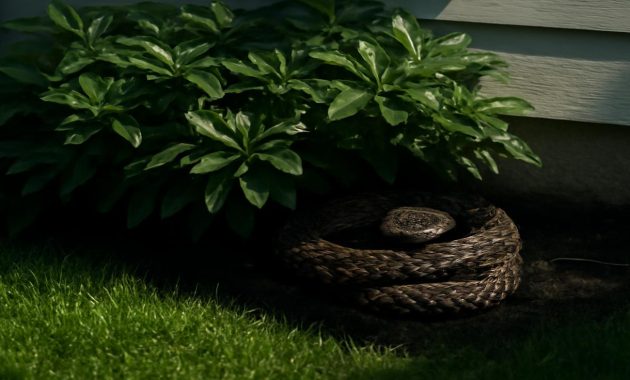
The first thing you notice is the sweetness on the air. It’s the kind of perfume that makes you stop halfway down the path and search for its source—heavy, green, a little sugary, like honey left in the sun. Then you see it: a thick wall of shiny green leaves draped along a fence, glossy as if they’ve been painted, dotted with pale, trumpet-shaped flowers. It looks lush. Safe. Almost luxurious.
You don’t see the snake until it moves.
In a quick, fluid ribbon, it slides from the dark space behind those leaves and vanishes beneath the porch steps. Your heart climbs into your throat. That was close—too close. Only later, after the adrenaline settles, do you learn what local gardeners have been whispering for years: that this innocent-looking vine is practically a “Vacancy” sign for snakes.
The plant? English ivy—along with a handful of similar dense, ground-hugging ornamentals—styled in catalogs as “low-maintenance” and “perfect for covering unsightly spots.” But for people who know their yards intimately, the story is very different. They’ll tell you that this seemingly harmless plant attracts snakes far more than most homeowners imagine—and that it should never be allowed within striking distance of a house.
The Pretty Green Problem Hiding in Plain Sight
English ivy and comparable thick groundcovers are clever salespeople. They know exactly how to talk you into planting them. They promise year-round color, fast coverage, and fewer weeds. They climb gracefully over fences, soften harsh concrete walls, and blanket the bare dirt where grass simply refuses to grow. If you’ve ever stared at an ugly foundation line and thought, “I just want something green there,” this is the plant that shows up in the garden-center cart.
But step back from the aesthetic for a moment and think like a snake. What do you need to survive? Safety from predators. Stable temperatures. Moisture. Access to food. A hidden highway that lets you move without being seen.
Dense, evergreen groundcovers like English ivy, creeping juniper, and similar tangles of leaves and stems create that world almost perfectly. Under the glossy curtain of foliage lies a shaded, humid microclimate—a kind of private, ground-level tunnel network that people rarely disturb. To us, it’s “just some plants.” To a snake, it’s a fortress.
Many gardeners discover this the hard way. They reach in to pull a weed, brush aside a mat of ivy, and suddenly they’re nose to nose with a coiled body they never knew was there. The plant didn’t summon the snake out of thin air, but it did something just as important: it made the yard inviting enough that the snake stayed.
The Micro-Jungle at Your Foundation
Imagine the strip of ground right up against a typical house: a narrow, shaded margin where sunlight is stingy and grass gives up. It’s damp after every rain, a little cooler in summer, protected from wind. Without plants, that zone dries quickly and offers no cover. Wildlife passes through but rarely lingers.
Now cover that same strip with a mat of ivy, vinca, or another thick evergreen. The soil stays moist longer. Fallen leaves build up underneath and slowly rot down into a soft, spongey blanket. Worms, beetles, pill bugs, and slugs move in. Small frogs, anoles, and skinks follow, attracted by the bugs. Mice might start darting in and out, safe from hawks and cats under the green canopy.
At this point, as far as a snake is concerned, conditions are ideal. There’s food. There’s shelter. There are hiding places under every loop of stem and every pocket of leaves pressing against foundation cracks, steps, and porch piers.
And crucially, there’s stealth. A snake can move from the back corner of the yard to the cool darkness beneath your deck without ever exposing more than a flick of its tail to the open sky. You might walk past that area every day and never realize there is an entire hidden ecosystem at your ankles.
This is why experienced gardeners wince when they see thick groundcovers hugging a home’s walls. They know that what looks like décor is functioning, in ecological terms, as a perfect little snake corridor built right up to the threshold.
Why Snakes Love a Messy, Green Tangle
Not every plant is equally appealing to snakes. A tidy patch of short ornamental grass won’t do the same thing as a matted, layered, toe-deep jungle. It’s the structure of the plant, not just its species, that matters most.
Dense vines and low groundcovers such as English ivy, Boston ivy, creeping myrtle (vinca), and even some sprawling shrubs share several traits that turn them into reptile magnets:
- Thick cover at ground level: The foliage forms overlapping layers, creating dark pockets and miniature tunnels where snakes can move invisibly.
- Consistent shade: Shade keeps soil temperatures and humidity more stable, which is vital for cold-blooded animals trying to maintain body heat.
- Moist, cool soil: Snakes lose moisture easily. Protected soil means a steady microclimate in hot or dry weather.
- Abundant prey: Insects, slugs, and worms thrive under damp cover. Small amphibians and rodents follow. Snakes follow them.
- Protection from predators: Hawks, owls, raccoons, outdoor cats, and even people have a hard time spotting a snake beneath a thick mat of green.
Gardeners who’ve spent years kneeling in flowerbeds will tell you: snakes don’t particularly care about the flowers you plant in neat, well-mulched borders where sunlight reaches the soil and air moves freely. What they care about are those neglected, overgrown edges—the corners “no one ever gets around to cleaning up.”
English ivy is particularly notorious because it doesn’t just spread across the ground; it climbs. It can scale fences, creep up foundations, and push into gaps behind loose boards or under siding. With that kind of coverage, a snake can find vertical hideouts as well, tucking into hollows in brick or small cavities under steps without ever crossing openly exposed ground.
How Close Is Too Close?
Professional landscapers and wildlife-conscious gardeners often talk in terms of buffer zones. If you live in an area where snakes are common—and many of us do, even in suburbs—you want a clear, open band of space around your home where visibility is high and hiding spots are minimal.
Within roughly 3–5 feet of your house, they advise:
- No dense groundcovers like ivy, vinca, pachysandra, or matted ornamental grasses.
- No woodpiles, stacked bricks, or rock piles pressed directly against walls.
- No thick leaf litter allowed to build up and decompose untouched.
Instead, that zone should favor low, well-spaced plants, clean mulch or gravel, and air circulation. The idea is simple: make the area immediately around your house the least appealing part of the yard for a snake to linger.
It’s not that snakes will never cross it—they can and they will—but they’re less likely to move slowly, hunt, or rest there. Without the “green tunnel” of ivy or other thick plants, your foundation becomes a transit zone, not a long-term residence.
Real Stories From Behind the Hedge
Ask around in gardening circles, and you’ll hear remarkably similar stories from very different climates and neighborhoods. Someone planted ivy against a foundation. For a few seasons, it looked beautiful—like an English cottage, they’ll say. Then one day, they decided it had grown a bit too wild and started cutting it back.
That’s when the snakes appear.
One homeowner discovered a nest of baby snakes curled together in a tight ball where ivy met a cracked concrete step. Another lifted a mat of creeping groundcover along a fenceline and watched three slender bodies slither away in different directions, each one vanishing into another pocket of green. In rural areas, these snakes are sometimes venomous; in suburbs, more often not. But the shock feels almost the same.
Gardeners who’ve had this experience often become almost evangelical about warning others: “Do not let that stuff grow near your house. Put it out by the far fence if you must, but not here.” They’re not demonizing snakes; many of them respect these quiet hunters as part of a healthy ecosystem. They simply don’t want that ecosystem pushed right up against their front door.
There is also an emotional component. Once you’ve had a surprise encounter with a snake ten inches from your bare hand in a thick tangle of ivy, you never quite look at that glossy green in the same way again. The plant becomes, in your mind, not just a plant, but a veil—a screen behind which anything could be waiting.
Not Just a Snake Problem
Focusing only on snakes almost undersells the case against English ivy and similar groundcovers near homes. These plants, especially when allowed to grow unchecked, cause a catalog of other trouble:
- Structural damage: Ivy roots can work into mortar, gaps in siding, and cracks in brick. Over years, this can weaken structures and trap moisture against walls.
- Pest havens: The same cover that hides snakes also shelters rodents, spiders, and insects—some of which may then find their way indoors.
- Tree stress: When ivy climbs trees, it can shade out bark and branches, add weight, and increase the risk of windthrow.
- Invasiveness: In many regions, English ivy is aggressively invasive, smothering native plants and altering local ecosystems.
Snakes, then, are only one visible symptom of a plant that shifts the entire balance of your yard’s ecology. Its appeal is mostly human—lush greenery, easy coverage—but its benefits accrue largely to the hidden residents of the undergrowth.
Better Choices for a Snake-Safer Yard
Refusing ivy or similar dense groundcovers near your home doesn’t mean resigning yourself to bare dirt and concrete. It just means choosing plants and designs that are beautiful without turning your yard into a reptile resort.
Gardeners and landscapers suggest a few simple design principles:
- Plant taller, airy perennials instead of thick mats: Plants with vertical form and open stems—like coneflowers, salvias, ornamental alliums—allow light and air to reach the soil, reducing the cool, dark hiding pockets snakes favor.
- Use mulch or gravel thoughtfully: A clean layer of mulch or small stone discourages burrowing and makes it harder for snakes to move unseen.
- Leave some wild, but far from the house: If you value wildlife, dedicate a corner of the yard away from structures to be wilder, with native shrubs, brush piles, and leaf litter. Let nature have that space—and keep your immediate living area tidier.
- Keep plants pruned and spaced: Good airflow and sunlight are your allies. Thick, tangled, unmaintained beds are exactly what snakes (and their prey) love.
The goal isn’t to evict every snake from your property—that’s nearly impossible and often not even desirable. Snakes reduce rodents and other pests. The goal is simple: make it unlikely that a snake will choose to settle in right where you walk, sit, or let children play.
Simple Yard Adjustments That Make a Big Difference
Even small, practical changes can dramatically shift how attractive your yard is to snakes. Gardeners who’ve struggled with unexpected reptile neighbors often end up making a series of quiet adjustments that, together, change the feel of the whole space.
| Common Yard Feature | Why Snakes Like It | Snake-Safer Alternative |
|---|---|---|
| English ivy or dense groundcover against the house | Cool, dark tunnels right at the foundation; abundant prey and cover | Open planting beds with spaced perennials and a visible mulch or gravel surface |
| Stacked firewood touching exterior walls | Tight gaps and stable temperatures; good rodent habitat | Woodpiles stored at least several yards away from buildings, elevated off the ground |
| Unmowed, tall grass around sheds and fences | Cover for traveling and hunting along structures | Regularly maintained grass with a low to moderate height near structures |
| Thick shrubbery pressed right up to porches | Shaded root zones and concealed access under steps and decks | Shrubs set back with open undersides and clear visibility underneath |
Each change is small. Together, they send a clear message to snakes: this is not the safest, most comfortable place to settle. There are better spots elsewhere—maybe just beyond the fence, where wild grass and brush take over and human feet rarely tread.
Taking Back the Green Around Your Home
If you already have English ivy or similar plants wrapped around your foundation, the solution is not to panic, but to plan. Removal should be thoughtful, steady, and done with awareness that, yes, there may be wildlife living inside that tangle.
Gardeners recommend working in sections. Start by cutting the plant away from the base of the house, creating a narrow cleared strip a foot or two wide. As you peel back mats of ivy, use a rake or long-handled tool rather than bare hands. Give any resident snakes the noise and vibration signals they need to leave. They don’t want to tangle with you; they want to escape.
Over time, as you clear and replant that space with more open, airy landscaping, you’ll notice subtle shifts. Fewer surprise rustles underfoot. More sunlight reaching the soil. The sense that you can see your yard again, not just its glossy surface.
There is a deeper reward, too. In replacing that dense, secretive green with a more thoughtfully designed planting, you begin to read your landscape differently. You start to notice where animals travel, where they feed, where they rest. You see your home not as an isolated object, but as one piece of a living network—and you gain the power to shape that network in ways that keep both you and your wild neighbors safer.
English ivy will always have its admirers. There is no denying its visual drama, its relentless determination to turn hard edges soft. But for gardeners who have knelt beside a foundation and watched a snake slip silently from beneath those glossy leaves, the plant’s beauty is always shadowed by what it hides.
In the end, it comes down to a simple choice. You can welcome that kind of mystery right up against your front steps—or you can decide that the wild tangle belongs a little farther away, where both snakes and humans can move through the world with fewer uneasy surprises.
Frequently Asked Questions
Does English ivy actually attract snakes, or is that a myth?
English ivy doesn’t attract snakes the way flowers attract bees, but it creates perfect shelter and hunting grounds. Its dense cover, cool soil, and abundant prey make snakes far more likely to stay in an ivy-covered area than in an open, well-maintained bed.
Are the snakes hiding in ivy usually dangerous?
That depends on where you live. In some regions, the snakes using ivy for cover are mostly harmless species; in others, venomous snakes use the same hiding spots. Because most people can’t reliably identify every snake at a glance, it’s safest to avoid creating dense cover right beside the house.
Is it enough just to trim my ivy to keep snakes away?
Regular trimming helps, but as long as the plant still forms a thick, ground-level mat, it will offer good cover. The most effective approach is to remove dense groundcovers from within a few feet of your foundation and replace them with more open plantings.
What plants are safer alternatives near my house?
Choose upright perennials, small shrubs with clear space under their branches, and groundcovers that don’t form deep, matted layers. Combine them with mulch or gravel so the soil surface remains visible and airy.
How far from my house should I keep dense groundcovers?
A buffer of at least 3–5 feet is a practical goal. Beyond that distance, dense plantings are less likely to funnel snakes directly to your foundation, steps, or porch, though it’s still wise to keep them pruned and monitored.