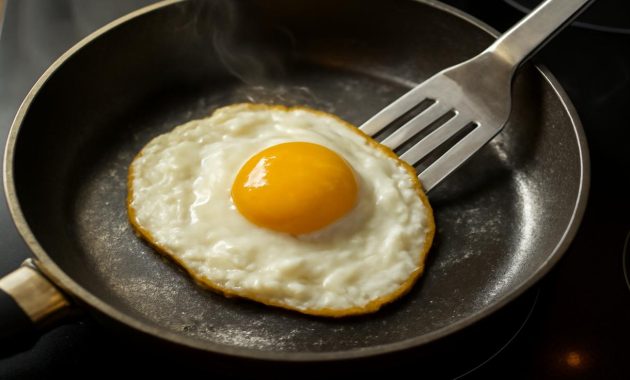
The first time I watched an egg slide, perfectly intact, across a dry pan like a golden eye on polished stone, I didn’t quite believe what I was seeing. No butter sizzling, no oil shimmering, no spoonful of water snapping in angry pops. Just a whisper of white powder, a hot pan, and an egg that behaved as if it were defying every kitchen rule I thought I knew. The smell was familiar—warm, faintly toasty—but the sound was different: no furious hiss, just a soft sigh as yolk settled into white. In that quiet, a whole new way of cooking breakfast quietly announced itself.
The Morning the Rules Broke
I grew up believing that eggs required two non‑negotiables: fat and fear. Fat, to keep them from welding themselves to the pan. Fear, because no matter how carefully I watched, some disaster always hovered nearby—broken yolks, rubbery edges, glued-on crust that needed a metal spatula and mild profanity to remove. Butter, oil, some kind of grease: these were the security blankets of breakfast.
But one morning, in a kitchen that still held last night’s scent of onions and garlic, a friend slid a pan onto the stove and did something that made me pause mid-sentence. No butter. No oil. No slick of bacon fat. Just an empty, dry pan.
“You’re going to burn that egg to death,” I said.
He smiled, reached for a small jar of what looked like flour, and dusted the pan with it. No measuring spoon, just an easy pinch between fingers—like tossing snow into a breeze. The flour hit the hot metal and released a faint, nutty aroma, the same kind of promise you get when toasting the first spoonful of roux for a stew.
Then he cracked the egg. It slid in, sizzled gently, and began to set around the edges, the way it always does. But there was something else too: a subtle, crisp border forming between egg and pan, like a layer of parchment you can’t see. When the spatula finally slid beneath it, the egg lifted cleanly, almost proudly, leaving behind nothing but a faint, ghostly pattern of cooked flour.
No butter. No water. No sticky disaster. Just flour and heat.
The Science Hiding in Your Flour Jar
To understand why this works, you don’t need a lab coat—just a bit of curiosity about what happens in that moment when white powder meets hot metal. Flour is, at its most ordinary description, ground grain. But in a hot pan it becomes something else: a fragile, micro-thin barrier that stands between egg and metal. It doesn’t so much coat the pan as it transforms into an invisible shield.
The first thing you notice is the smell: that gentle, toasty note when the flour touches the hot surface. The heat wakes up the starches. The driest flecks char just a bit, turning pale beige. They never melt, but they rearrange themselves—a dusty layer turning into a smooth, dry skin. The flour clings not to the egg, but to the pan, like a patch of dry leaves on a warm rock.
Egg proteins are clingy by nature. When they hit a hot surface, they seize, tighten, and desperately try to latch onto anything they touch—especially bare metal. That’s why eggs stick so stubbornly in dry pans: the proteins lock into every microscopic scratch and pore of the surface and refuse to let go. Butter or oil normally slip between those proteins and the pan, acting like a lubricant.
Flour does something more subtle. It fills in the pan’s tiny imperfections, like dust settling into the grooves of a record. When the egg spreads out, it doesn’t meet raw metal—it meets a dusty, dry buffer. The egg still sets, still sizzles, still takes on that golden lace at the edges if you let it cook long enough. But it’s no longer glued in place.
You end up with the best of both worlds: the character of a dry-fried egg—no greasy lips, no glossy residual film on the tongue—paired with a level of non-stick ease that feels a bit like magic.
The Simple Ritual: How to Do the Flour Trick
The method is so simple it feels suspicious, like a recipe scribbled in the margins of an old cookbook by a mischievous aunt. But it works, and once you feel how cleanly the egg releases, it’s hard to go back.
Here’s the basic ritual, step by step, tuned to feel as unhurried as a slow morning:
- Choose your pan wisely. A small to medium frying pan works best. Cast iron, carbon steel, or a well-made stainless steel pan are ideal. Even a tired non-stick pan can benefit, but it’s not required.
- Heat first, always. Set the empty pan over medium heat and give it time. You want it properly hot, not lukewarm. A simple test: flick in a tiny pinch of flour. If it lightly browns and smells toasty within a few seconds, the pan is ready.
- Dust with flour. Sprinkle in a small pinch—about 1/4 teaspoon, maybe less. Tilt and tap the pan so the flour skims across the surface in a thin, uneven veil. You don’t want a thick blanket of flour; you want a faint fog.
- Wait for the aroma. Let the flour toast for a few seconds. The white will shift toward pale cream; it might gather in faint patches. This is your runway preparing for landing.
- Add the egg. Crack the egg into a small bowl if you like precision, or straight into the pan if you want spontaneity. The white will sizzle very gently—far less aggressively than in hot oil.
- Let it be. Resist the urge to prod. Give the underside time to set and form that whisper-thin crust. You’ll see the edges turn opaque, the yolk standing like a slow sunrise.
- Slide, don’t scrape. When it looks done—edges firm, yolk as runny or set as you prefer—slide a spatula beneath it. It should lift easily, sometimes with a feeling like scooping up a leaf from glass after rain.
Choosing Your Flour and Pan: Small Details, Big Difference
One of the unexpected pleasures of this trick is how quietly it invites experimentation. The flour you choose, the pan you reach for—both change the personality of your egg in small but noticeable ways.
| Flour Type | What It Does | Best For |
|---|---|---|
| All-purpose wheat flour | Neutral flavor, light toasty aroma, very reliable barrier. | Everyday fried eggs, minimal fuss. |
| Whole wheat flour | Slightly nuttier, more aroma, a bit more color. | Hearty breakfasts, earthy flavor notes. |
| Rice flour | Very dry, crisp barrier, nearly no flavor. | Ultra-crisp edges, gluten-free needs. |
| Cornstarch | Silky, powder-fine layer, can brown quickly. | Delicate whites, light crust. |
| Chickpea or other legume flour | Stronger flavor, more aroma, distinctive toastiness. | Bold breakfasts, pairing with spices or herbs. |
As for the pan: cast iron loves this technique. Its dense heat makes the flour toast more evenly, and the egg tends to firm up with a beautifully lacy edge. Stainless steel, with its shiny unforgiving surface, suddenly softens when you use the flour trick—what was once a battlefield between egg and metal becomes a place of quiet cooperation.
The most important detail is patience. Give the pan time to heat, the flour time to toast, and the egg time to form that unseen alliance with the flour barrier. Rushing is the easiest way to sabotage an otherwise foolproof method.
The Taste and Texture of a Flour-Fried Egg
On the plate, the egg looks almost ordinary: white, slightly blistered in specks, yolk shimmering with that familiar promise. It’s when your fork slides in that you understand what’s changed. There is a certain dryness to the underside—not dry as in overcooked, but dry as in not slick. The white tastes cleaner, almost more egg-forward, because it isn’t wearing a coat of butter or oil.
If the flour has browned just right, the bottom of the egg carries a trace of toastiness, as though it’s been resting on the memory of bread. It’s not a flavor that dominates; it’s more like a faint echo that meets you halfway, especially if you pair the egg with something simple—sliced tomato, a heel of bread, or a handful of greens wilted in the residual heat of the pan.
Texturally, there is a thin crispness you don’t get from gently fried eggs in butter. It’s not a shatter; it’s a whisper, a light crunch at the very edge where the white meets the air. Closer to the yolk, things soften into that familiar custardy tenderness, and the contrast between the two provides more interest than you’d expect from a breakfast as basic as this.
For those who love the unapologetic richness of butter-fried eggs, this might feel at first like stepping into a quieter room. There’s no caramelized dairy notes, no velvet slickness. But in that quiet, the egg itself speaks up. You taste the white, the yolk, the subtle personality of the flour you chose. It’s less indulgent, more honest.
Why No Butter, No Water, No Oil at All?
A fair question is: why bother? Why chase a dry-fried egg when butter and oil have been doing a fine job for generations?
Sometimes it’s about necessity. Maybe you’re watching fats for dietary reasons. Maybe you’ve run out of butter and oil and still want a fried egg that doesn’t cement itself to your cookware. Maybe your morning is already loud enough, and the quiet of a nearly silent pan feels like a small act of kindness to yourself.
Other times it’s about attention. Cooking without fat sharpens your awareness: Is the pan properly heated? Does the flour smell toasty instead of burnt? Is the egg setting gently instead of seizing? You start to notice the small landmarks of cooking that fat often disguises—the way heat behaves, the way ingredients interact with bare metal.
Using water is another common trick to keep eggs from sticking, but it brings steam into the picture. Steam fogs and softens. It can turn the white rubbery, the yolk duller, the edges a little wan. The flour method, by contrast, keeps everything dry and precise. No sizzling butter drama, no steamy cloud cover—just a crisp little climate where the egg can be itself.
Common Mistakes and How to Dodge Them
Like any deceptively simple technique, flour-fried eggs have their small traps. But each one is easy to avoid once you’ve met it once or twice.
- Too much flour. If you haze the pan with a heavy snowstorm instead of a light dusting, you’ll taste it—chalky, dry, and slightly bitter. Solution: scale way back. Start with the tiniest pinch you can manage and add only if absolutely needed.
- Pan not hot enough. If the flour just sits there, pale and raw-smelling, it won’t form a barrier. Your egg will sink into it and grab the pan anyway. Give the pan time; a few extra seconds can change everything.
- Pan too hot. A fiercely hot pan will scorch the flour before the egg lands, leading to dark, bitter patches. Turn the heat down a notch if the flour smokes aggressively or turns brown in the blink of an eye.
- Moving the egg too soon. If you nudge the egg before the underside has set, it will tear and cling. Wait for the surface to turn mostly opaque, especially around the perimeter. Patience is non-stick’s oldest companion.
- Forgetting to season. No fat means no salted butter to buoy the flavor. A good pinch of salt—and, if you like, a crack of pepper—becomes essential.
Once you’ve made this style of egg a few times, your senses start to guide you. The faint toast of flour, the quiet level of sizzle, the way the white scoots under the spatula when it’s ready. Your kitchen becomes something like a small laboratory, but one that hums instead of buzzes.
Little Variations and Quiet Experiments
After you’ve mastered the basic flour trick, the fun begins in the margins. Maybe you swap the flour for rice flour to see if the underside crisps more cleanly. Maybe you dust in the slightest pinch of smoked paprika or ground cumin with the flour, letting the spices wake up in the heat before the egg arrives. They’ll bloom just enough to perfume the underside of the egg without overwhelming it.
You can also play with the timing. Drop the egg into the pan when the flour is just beginning to color for a gentler, softer finish; or wait until the flour is a shade deeper and the aroma fuller for a slightly more pronounced toastiness at the base. Each small adjustment has its own reward.
If you really want to explore, try this with two eggs side by side: one in butter, one on flour. Pay attention—not just to how they cook, but to the way they sound, smell, and finally, how they taste. It’s in those quiet differences that the joy of simple cooking often hides.
Cleaning Up: The Aftermath of an Unstuck Egg
There’s a small, domestic pleasure in what comes after the egg has left the pan. Where you might once have been left with a salted-on crust of egg white and burnt protein, here you’re left with something far more manageable: a whisper of toasted flour, maybe a faint ghost of egg where it met the surface most firmly.
A splash of hot water, a gentle pass with a soft sponge, and the pan is ready for the next morning’s ritual. No furious scrubbing, no stubborn rings marking the ghost of breakfasts past. Cast iron, in particular, seems to appreciate this treatment; the flour shields it from direct egg contact, letting its seasoning remain more intact.
It’s a small thing, but when a technique makes both cooking and cleanup kinder, it earns a permanent spot in the quiet choreography of your kitchen.
FAQs About the Flour Trick for Non-Stick Fried Eggs
Does the egg taste like flour?
Not if you use a light hand. With just a thin dusting, most of the flour stays on the pan, not in the egg. What you’ll notice more is a faint toasty undertone rather than a “floury” taste. If your egg tastes chalky or dough-like, you’re probably using too much flour or not letting it toast slightly before adding the egg.
Is this method healthier than using butter or oil?
It can be, depending on what you’re comparing it to. You’re not adding extra fat, so the egg stays closer to its natural nutritional profile. If you’re watching saturated fat or total calories, this method helps reduce both. Of course, overall healthfulness depends on the rest of your meal and your dietary needs.
Can I use this trick in a non-stick pan?
Yes. A non-stick pan already helps prevent sticking, but the flour trick can add an extra buffer, especially if your coating is older or slightly worn. Just remember that you still don’t need any added fat. Keep the heat moderate to avoid scorching the flour.
Will this work with scrambled eggs or omelets?
Scrambled eggs are tricker with this technique because they involve a lot of movement and contact with the pan. You can experiment with a very light flour dusting, but it’s less reliable than with a single fried egg. Omelets can work better, as long as you pour the egg over a thinly floured, preheated surface and let the underside set before folding.
What if I’m gluten-free?
You can absolutely adapt this. Use fine rice flour, cornstarch, or another gluten-free starch instead of wheat flour. Rice flour, in particular, works beautifully; it’s very dry, forms a crisp barrier, and doesn’t bring much flavor of its own.
Why not just use water to keep the egg from sticking?
Water changes the way the egg cooks. It creates steam, which can soften the white, dull the edges, and sometimes give a slightly rubbery texture. It also tends to splatter and hiss. The flour method keeps things dry and calm, giving you a cleaner texture and quieter cooking process.
How do I know how much flour to use?
Think of it as seasoning the pan, not coating it. Start with the tiniest pinch you’d use for salting food—just enough so that if you tilt the pan, you see a faint, uneven dusting across the surface. If, after cooking, you see thick white clumps of untouched flour, you used too much. Adjust downward next time.
Can I cook multiple eggs this way in one pan?
Yes, but give each egg breathing room. A crowded pan traps moisture, which dulls the crispness and can lead to inconsistent cooking. If you’re cooking for more than one or two people, it’s better to work in small batches, refreshing the flour with a tiny pinch if needed between rounds.
Does this damage or affect my pan’s seasoning?
On the contrary, in cast iron or carbon steel, it can be quite gentle. Because the flour keeps the egg from sticking directly to the surface, you’re less likely to scrape away seasoning while cleaning. Just avoid harsh scrubbing, and dry the pan well after washing.
What’s the biggest secret to success with this method?
Heat and restraint. Heat the pan properly before the flour goes in, let the flour toast just a little, then use as little as you can get away with. The rest is patience—giving the egg time to form that invisible pact with the flour before you slide your spatula underneath. Once you feel that clean lift the first time, you’ll know you’ve found the rhythm.