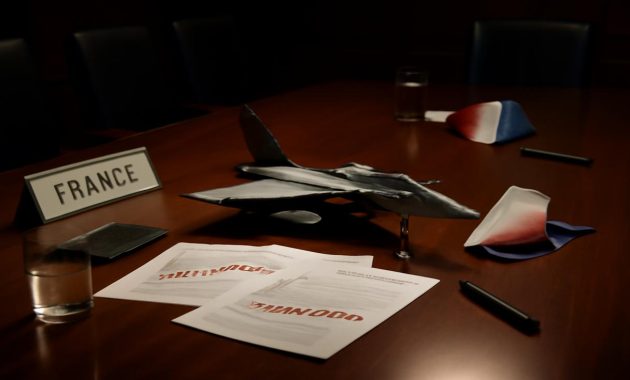
The hangar smelled faintly of jet fuel and hot metal, that peculiar perfume of modern air power, when the news crackled through the radio: the €3.2 billion Rafale fighter deal was off. Technicians paused mid-step, a pilot set down his helmet more gently than usual, and somewhere in a quiet office, a negotiator rubbed the bridge of his nose and wondered who would be blamed when the dust finally settled—France, for being “robbed,” or the buyer’s government, for finally clawing back control. The Rafale, with its swept-back wings and predatory profile, was supposed to be the centerpiece of a new era. Instead, it became a symbol of something far less glamorous: how geopolitics, money, and public anger can shoot down even the most advanced aircraft before it ever leaves the ground.
A Jet, a Promise, and a Price Tag
On paper, the Rafale was everything a mid-sized power could dream of. A twin-engine, multirole fighter born from French aerospace pride, equally at home dogfighting at high altitude or streaking low over the sea, hunting ships before they ever appeared on radar. When negotiators first sat down to talk about a €3.2 billion deal, it sounded like a story of national ambition: a rising or rearming country stepping into the big league of air forces, and France, the seasoned arms exporter, finding a new strategic partner.
The sales documents spoke a language all their own—“transfer of technology,” “life-cycle support,” “offset agreements.” Politicians heard something different: opportunity. Factories humming, jobs saved or created, regional airbases revived. The Rafale was not just a jet; it was headlines, ribbon-cuttings, and campaign talking points.
But outside the air-conditioned briefing rooms, the story felt different. Teachers in crumbling classrooms, hospital staff sharing outdated equipment, farmers counting each season’s losses—when they heard about billions being spent on high-performance metal birds, it struck a raw nerve. A nation that struggles to fix its roads or pay its doctors is always vulnerable to the question: How can we afford this warplane when we can’t afford basic dignity?
The Pressure Cooker of Public Opinion
As the deal rolled forward, the air around it began to heat, slowly at first, then with the dry crackle of true political fire. Opposition parties smelled blood. Analysts filled talk shows, some in crisp suits defending the purchase as a strategic necessity, others insisting it was an indulgent fantasy, a toy for generals and a gravy train for middlemen.
In parliamentary corridors, documents began to circulate—cost comparisons, old memos, suddenly remembered emails. The Rafale may have been cutting-edge technology, but the questions raised were ancient: Was the price inflated? Who was lobbying for what? Were there hidden commissions trailing behind the glossy brochures?
In some corners of the capital, the issue wasn’t just money. It was sovereignty. There were whispers that leaning too heavily on one supplier—France, in this case—would bind the air force’s future to foreign maintenance schedules, external politics, and the ever-present threat of embargoes and pressure. Others countered that France had a long record of strategic autonomy and reliability, a nation that often charted its own course even when larger powers pushed otherwise.
Yet as street protests grew louder, as editorials sharpened their tone, the deal began to look less like a straightforward military acquisition and more like a symbol—a lightning rod for every frustration, every unmet promise, every memory of past scandals. That atmosphere would prove as lethal as any missile.
Behind Closed Doors: The Fragile Dance of Negotiation
In a quiet meeting room far from the noise of the streets, the negotiations carried on with the precision of a high-stakes chess match. Around a polished table, French officials and defense industry representatives laid out their offer: aircraft, training, maintenance, upgrades, and, crucially, technology sharing. Across from them, the buyer’s team pored over clauses, each sentence weighed with suspicion born from history.
The sticking points weren’t always dramatic. They were often technical, almost mundane: the exact cost of spare parts, the timeline for local assembly, the degree of technology transfer that would let local engineers learn, adapt, and eventually modify the jets without calling Paris each time something went wrong. The buyer wanted not just metal, but mastery.
Meanwhile, the clock was ticking. Every delay fed the noise outside. Each rumor of cost overruns or secret add-ons deepened public distrust. The negotiators, who had started as optimistic bridge-builders, turned increasingly defensive. Were they closing a deal in the national interest, or walking into a trap that would later be torn apart in front of television cameras?
France, too, had red lines. The Rafale is the distilled result of decades of research, billions in development costs, and an aerospace ecosystem that keeps thousands of skilled workers employed. Technology, in this world, is both product and power. Giving too much away—too much access to code, manufacturing know-how, sensitive avionics—could endanger future export prospects or leak hard-earned secrets across borders.
So the dance continued, with each side circling the other, working toward a deal that could satisfy generals, accountants, parliaments, and the crowd on the street. It was a delicate balance, and one small shift would be enough to upset everything.
Numbers, Narratives, and a Growing Gap
As details seeped into public debate, the gap between the official narrative and public perception widened. Government spokespeople framed the €3.2 billion as an investment in deterrence and regional stability, a shield rather than a sword. Critics translated that into a harsher language: debt, dependency, and diverted funds.
Side-by-side comparisons of different fighter jets began appearing in newspapers and on digital platforms—charts of range, payload, cost per flight hour. The numbers were almost hypnotic, but what truly mattered was the story they told. For some, Rafale was a premium aircraft fairly priced for its capabilities. For others, it was an overpriced luxury when cheaper alternatives—or even non-military investments—seemed more urgent.
To make sense of the swirling claims, commentators began distilling the debate into simple contrasts, like this:
| Key Question | France “Robbed” Perspective | “Justice Served” Perspective |
|---|---|---|
| Was the price fair? | Yes. High-end aircraft come with high costs; the package reflected technology, training, and support. | No. The deal was bloated, with unclear add-ons and potentially better value elsewhere. |
| Was there enough transparency? | Sensitive defense deals can’t be fully public; discretion is normal. | Lack of clarity fueled suspicions of corruption and backroom influence. |
| Who bears the blame for cancellation? | Buyer’s politics shifted; France became collateral damage in domestic battles. | France misread the mood, pushed too hard, and underestimated scrutiny. |
| What about future relations? | Trust was unfairly broken; France lost a long-term partner. | Resetting the deal opens space for fairer, more balanced cooperation. |
The more these narratives hardened, the more difficult compromise became. No matter what the negotiators did inside those closed rooms, outside, the story had taken on a life of its own.
Cancellation Day: Silence, Then Shock
It didn’t happen with fireworks or a grand speech. In the end, the cancellation of the €3.2 billion Rafale deal unfolded with a handful of carefully chosen words at a press conference and a series of terse diplomatic cables. The Prime Minister, or President—depending on the country and its constitutional choreography—stood behind a podium and announced that, “after careful consideration,” the government had decided not to proceed.
There were nods to fiscal responsibility, to changing strategic priorities, to the need for “greater transparency and accountability” in major defense purchases. It was the language of damage control, designed to turn an international retreat into a domestic victory.
In Paris, the reaction was tight-jawed and formal. Official statements spoke of “regret” and “respect for sovereign decisions,” but between the lines, there was a sense of shock. Months, even years, of painstaking negotiation had vanished in a single breath. Defense planners recalculated production forecasts. Executives at Dassault Aviation reviewed order books, searching for ways to absorb the blow. Diplomats began the delicate work of preventing one failed deal from staining an entire relationship.
In the buyer’s country, the streets told a more complex story. Some celebrated, convinced a bullet had been dodged—that money would now be redirected toward schools, hospitals, or infrastructure. Others worried that the cancellation would send a message of unreliability, that future partners would hesitate, fearing that any commitment could be overturned at the last minute.
And then, almost inevitably, a new question arose: If not Rafale, then what? Defense needs do not vanish with a press conference. Threats remain. Fleets age. Pilots still need aircraft that will lift them into the sky when the alarm sounds at dawn.
France Robbed, or Justice Served?
As dust from the announcement settled, the debate sharpened into a binary that fit neatly into headlines but poorly into reality: had France been unfairly robbed of a legitimate deal, or had justice been served in the face of potential excess and opacity?
Those who argued that France had been robbed painted a picture of a dependable supplier undercut by volatile domestic politics. For them, the cancellation sent a discouraging signal not just to Paris, but to all potential partners: contracts might mean less than the winds of public opinion. They pointed to France’s willingness to negotiate technology transfer, training local crews, and integrate local industry. A deal, in their view, had been struck in good faith, only to be sacrificed on the altar of short-term political gain.
On the other side, advocates of the “justice served” narrative saw the cancelled deal as a rare moment when public scrutiny actually reshaped national priorities. Billions saved, they argued, could now be channeled into long-neglected sectors. The opacity surrounding aspects of pricing and offsets was not a minor concern to them, but a red flag that justified pulling the plug. Better to endure short-term diplomatic turbulence than lock the country into an expensive, potentially flawed agreement.
The truth, as it often does, lay somewhere in the messy middle. Defense deals are never just about money, or just about threats, or just about diplomacy. They are mosaics—part security calculation, part industrial strategy, part political theater. To reduce the Rafale saga to a simple villain-and-victim story is to miss the deeper currents that shaped it.
The Long Shadow of Trust and Power
In the months that followed, echoes of the cancelled Rafale deal turned up in unexpected places: in quiet side remarks at international summits, in cautious phrases inside new draft contracts, even in the guarded optimism of engineers pitching other systems. The deal had failed, but its ghost traveled widely.
For France, the lesson was harsh but clear. Even a technologically superb product is vulnerable if the political and social environment of the buyer is unstable or deeply distrustful. Future offers would need more than performance charts and glossy brochures; they would require a finer reading of local anxieties, a deeper sensitivity to how defense spending looks and feels to ordinary citizens.
For the buyer’s government, the cancellation was both a shield and a burden. It could be held up as proof that they listened to public outrage, that they refused to rubber-stamp what many saw as an elite-driven project. But every subsequent security challenge, every aging aircraft grounded for lack of parts, every report of regional rivals modernizing their fleets, would renew the question: Was walking away from Rafale an act of courage, or a costly hesitation?
Yet beyond specific lessons for each side, the episode illuminated a broader reality of our time: modern states exist in a constant tension between the imperatives of security and the demands of transparency. Fighter jets, submarines, missiles—all are purchased in a world where citizens are more informed, more connected, and more skeptical than ever before.
What Remains After a Deal Dies
Walk around an airbase at dusk and you’ll see something most budget spreadsheets cannot capture. Pilots move with the easy familiarity of people who trust their machines with their lives. Ground crews check panels and sensors in practiced rhythms. There’s a quiet, almost tender respect between human and metal.
The cancelled Rafale deal was, in its own way, a broken promise to that quiet world—a promise of new capabilities, new training, new roles in a shifting security landscape. Yet it was also a reminder that every such promise is made not just to soldiers and engineers, but to teachers and nurses, farmers and factory workers, who live beneath the same sky that these aircraft are meant to protect.
France was not purely a victim, nor was the buyer purely a hero. Both were actors in a story shaped by history, pressure, and uncertainty. Rafale will continue to fly in other air forces, carving contrails across other skies. The buyer will eventually find other aircraft, or other ways to safeguard its borders. Life moves on, engines roar, deals are signed and cancelled again.
But somewhere between the roar of afterburners and the murmur of budget hearings, one hard-earned truth remains: in an age of restless citizens and fragile alliances, the real battlefield for a defense deal is not just in simulation rooms or test ranges, but in the hearts and minds of the people asked to pay for it—and live under its shadow.
Frequently Asked Questions
Why was the €3.2 billion Rafale deal cancelled?
The deal was cancelled due to a combination of factors: rising public opposition, concerns over cost and transparency, political pressure on the buyer’s government, and unresolved disagreements over terms like technology transfer and long-term support. Together, these made the agreement politically and financially difficult to sustain.
Was France treated unfairly in this process?
From the French perspective, the cancellation felt abrupt and unfair after long negotiations carried out in good faith. However, from the buyer’s side, the decision was framed as a sovereign choice to protect national finances and respond to public concerns. Whether it was “unfair” largely depends on which side of the story one emphasizes.
Did corruption play a role in the proposed Rafale deal?
Public suspicion of corruption surrounded parts of the debate, especially regarding pricing and offset arrangements, but firm, universally accepted proof is often elusive in such complex deals. Allegations and doubts contributed significantly to political pressure, regardless of what was or wasn’t formally proven.
Could the deal have been saved with more transparency?
Greater transparency about costs, contractual obligations, and offset benefits might have reduced public distrust and given the government more room to defend the deal. That said, defense contracts necessarily involve classified elements, so full openness was never truly possible, which complicates the question.
What happens now that the Rafale purchase is off the table?
The buyer’s air force must reassess its modernization plans—either by extending the life of existing fleets, seeking alternative aircraft, or revisiting its overall defense posture. For France and its industry, attention shifts to other export prospects and refining how future deals are structured and communicated.
Does this cancellation damage long-term relations between France and the buyer country?
It introduces tension and disappointment, especially on the French side, but most states compartmentalize such disputes. While trust around defense cooperation may need time to rebuild, broader diplomatic, economic, and cultural ties often continue, reshaped rather than destroyed.
What broader lesson does this story offer about modern arms deals?
The cancelled Rafale deal shows that even the most advanced weapon systems cannot escape public scrutiny. Modern arms deals succeed not only on technical merits but on their ability to withstand democratic questioning, align with national priorities, and navigate the thin line between necessary secrecy and acceptable accountability.