The sea should have been breathing. Everyone along Panama’s Pacific coast knew the rhythm by heart, even if they couldn’t name it. Sometime between late March and June, the water would turn colder, greener, richer. Fishermen felt it first in the tug on their lines; pelicans read it in the sudden, frantic splashing of baitfish near the surface. The deep waters would rise like some ancient promise kept on schedule for generations. But last year, something unsettling happened. The ocean stayed warm and strangely still. For the first time in 40 years, Panama’s deep waters did not come.
The Year the Ocean Held Its Breath
By early April, Captain Luis Ortega was already uneasy. He’d been fishing off the Gulf of Panama since he was twelve, long before there were smartphone apps that claimed to predict the sea. His calendar lived in his bones—in the winds, the clouds, the feel of the water when his calloused hand slipped over the gunwale.
“By now the upwelling should be here,” he muttered to no one in particular, peering down into water the color of weak tea. On a normal year, the ocean off Panama City would have turned steel-blue and murky with life, carrying cold, nutrient-rich water from a hundred meters or more below. The arrival of that deep water flipped a switch in the ecosystem. Anchovies, sardines, and small pelagic fish would gather in enormous schools, silver rivers twisting beneath the swells. Tuna and dolphins would follow, and with them, the fishing boats.
But the water was warm. Too warm. The surface temperature hovered around 29–30°C, a tropical bath that felt pleasant to swimmers but deeply wrong to those who lived by the nuances of the sea. Luis pushed his hand under, wrist deep, elbow deep, waiting for the sudden chill he knew so well. It never came.
Along the coast, others noticed subtle shifts. The frigatebirds circled higher and wider, as if searching for something that refused to show itself. Tour guides who specialized in marine wildlife began quietly adjusting their scripts. “Some years are lighter,” they told visitors with apologetic smiles, “the ocean is… changing.” Few of them yet understood that they were living through something Panama had not seen in four decades: a failed upwelling season.
What Usually Rises from the Deep
To understand what was missing, you first need to picture what normally happens under the surface. Off Panama’s Pacific coast, the ocean is layered like a cake. Warm, sunlit water lies on top, and beneath it rests a vast reservoir of colder, darker water—dense, heavy, loaded with nutrients like nitrates and phosphates. Those nutrients are the ashes of previous lives: dead plankton, fish remains, microscopic fragments slowly drifting downward like marine snow.
When Panamanian upwelling kicks in, powerful trade winds blow from the northeast and push the surface water away from the shore. The Earth’s rotation nudges this water aside even more, like a hand sliding over silk. As the upper layer thins and moves on, the ocean must compensate. Deep water, chilled and nutrient-rich, surges upward to fill the void. The transformation is almost magical. Within days, the plankton bloom. Within weeks, the entire food web responds.
Anchovetas arrive in dense, shimmering clouds, devouring the tiny drifting plants now flourishing in the light. Above them, larger predators gather. Seabirds carve sharp lines through the air. Sharks and billfish patrol the edges of this feast. Local communities time their economies, their diets, even their festivals to the arrival of this invisible engine from below.
In a normal year, Panama’s coastal waters during upwelling can feel alive in a way that borders on overwhelming. The air smells different—brinier, thicker—with the scent of fish oil and salt. The surface turns choppier as the cooler water alters local wind patterns. You can hear it in the night: splashes, whistles, feeding frenzies in the dark. It’s not just an oceanography term; it’s a season, carved deep into the memory of people and place.
When the Switch Didn’t Flip
The year the deep water failed to rise, scientists noticed the problem in pixels long before fishermen felt it in their nets. Satellite images told a troubling story: the usual cool tongue of water that should have blossomed along the Panamanian coast remained faint and patchy. Sea surface temperatures stayed stubbornly high. The signature blue-green swirls of phytoplankton blooms were weak or absent.
In a small oceanography lab near Panama City, researcher Ana Morales watched the numbers and frowned. Decades of temperature records and wind data scrolled past on her screen. The signal was unmistakable. Since the early 1980s, Panama’s upwelling had arrived every year—strong in some, modest in others—but always present. This time, the system had faltered. The deep waters had stayed down.
The culprit was a familiar, but newly intense, character: a powerful El Niño event layered on top of long-term warming. In simple terms, El Niño is a broad rearrangement of the Pacific Ocean’s heat. Trade winds weaken, warm water piles up in the east, and the fine balance that drives many coastal upwelling systems is nudged off-kilter. Add climate change—rising baseline ocean temperatures—and the scales tip even further.
For Panama, this meant that the temperature difference between surface and deep waters shrank. The ocean became more “stratified,” its layers more resistant to mixing. The winds still blew, but the response they usually triggered was muted. The invisible switch that flipped the system from “ordinary blue” to “fertile green” sputtered and failed.
Out on the water, the consequences were immediate and tangible. Luis and his crew burned more fuel and caught fewer fish. Long days stretching across the horizon yielded empty hooks or undersized catch. “The sea is asleep,” one older fisher said with a shake of his head. In coastal markets, prices for local fish crept upward. Vendors, who once stacked gleaming piles of corvina and pargo on ice, began to spread their merchandise thin to make the display look fuller.
Echoes Through the Food Web
When a system as fundamental as upwelling falters, the effects ripple out like waves from a stone tossed in a pond—only these ripples carry hunger. At the microscopic level, fewer nutrients reaching the surface meant weaker phytoplankton blooms. The ocean’s “grasslands”—those floating pastures of tiny plants and algae—were sparse. In a world where almost every marine creature depends, directly or indirectly, on these drifters, that scarcity matters.
Zooplankton, the small animals that graze on phytoplankton, had less to eat. Their numbers dipped. Small pelagic fish, from anchovies to sardines, responded by shifting their ranges, diving deeper, or simply failing to reproduce at usual rates. Some moved toward cooler pockets of water elsewhere along the coast; others hugged shadowed depths that longlines and small nets could not easily reach.
For predators higher up the chain, strategy became survival. Dolphins were seen ranging farther, staying away from their typical nearshore feeding grounds. Seabirds that once plunged into concentrated schools of baitfish now spent more time flying, less time feeding. In some rookeries, researchers recorded thinner chicks, slower growth, and in a few cases, outright nesting failures.
Even the coral reefs—often thought of as static, rocky realms—felt the change. Without their usual pulses of colder water, some reefs along Panama’s Pacific islands endured prolonged warmth. Pale patches began appearing on once-vibrant colonies: early bleaching, a soft ghosting of color that hinted at stress behind the scenes.
None of this was dramatic enough to make international headlines. There were no massive fish die-offs floating belly-up, no single cataclysm captured in one tragic photograph. Instead, the damage was quiet, cumulative, the way a forest might slowly thin if one vital season of rain failed. For coastal communities, though, the difference was as real as an empty net hauled in at dawn.
People of the Upwelling
In a stilted village tucked along a mangrove-fringed inlet, mothers adjusted recipes. Where they once simmered pots rich with local fish and shellfish, they stretched meals with more rice and plantains. Children grew up hearing their grandparents talk about the “old upwelling times” as if they already belonged to another era.
For families who depend on small-scale fishing, even a mild downturn can unravel the edges of stability. School fees are postponed, boat repairs are delayed, and borrowed money quietly accumulates. Tour operators, too, felt the shift. Whale-watching seasons became harder to predict, snorkeling trips had to navigate poorer visibility and fewer fish. The story they’d long sold—of Panama as a crossroads of teeming Pacific life—suddenly felt harder to guarantee on any given day.
Yet, amidst the anxiety, there was also a subtle awakening. Fishermen who could read the ocean but not the climate charts began asking new questions. Why was the sea so warm, even in the months it should be cooling? Why had the upwelling—their invisible partner in survival—failed for the first time in memory?
In town halls and informal dockside gatherings, they began meeting with scientists like Ana. The conversations were not always easy. Climate change is a heavy word, and El Niño a slippery concept when your world is measured in tides and catches, not anomalies and indices. But there, between coil of nets and buckets of bait, a fragile bridge formed between lived experience and global patterns.
Listening to the Ocean’s New Language
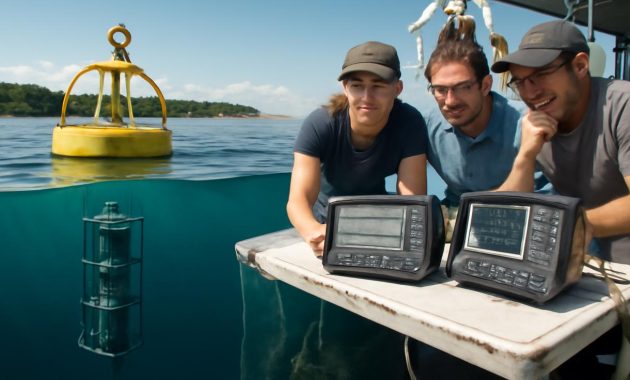
Much of what we know about this failed upwelling season comes from a combination of modern tools and old wisdom. Satellite sensors scanned the sea’s skin, measuring its temperature, color, and even surface roughness. Floating buoys recorded winds and currents. Long-term datasets, stretching back to the 1980s, revealed the shocking fact: four decades of consistent upwelling, abruptly interrupted.
But none of that would have mattered as much without the stories from people like Luis. He could describe the way the air usually felt on the morning the first cool water arrived, the faint change in smell, the sudden appearance of certain jellyfish. These observations, repeated generation after generation, are data of a different kind—rich, qualitative, and deeply tuned to place.
In many ways, the ocean is now speaking a changed dialect. Its pulses and pauses are being rewritten by the slow, relentless accumulation of heat. The failed upwelling off Panama is not an isolated quirk. Around the world, similar systems—from California to Peru, from Northwest Africa to the Arabian Sea—are feeling the pressure of a warming, more capricious climate.
For scientists, Panama’s 40-year record makes it a kind of natural experiment. It offers a before-and-after snapshot of a world crossing a threshold. How resilient is an upwelling system when you remove one vital season? How many missed breath cycles can an ocean endure before ecosystems, and the communities that depend on them, begin to fundamentally reorganize?
What Happens If the Deep Stays Down?
Imagine if this failed upwelling wasn’t a one-off, but a preview. What happens to a coast built around a seasonal pulse of abundance if that pulse grows weaker, more erratic, or disappears in some years altogether?
The first changes are often subtle. Fishermen shift their targets to more resilient species or those that can handle warmer, nutrient-poor waters. Coastal markets stock more imported fish, or tilt toward aquaculture products. Traditional recipes and cultural practices quietly evolve. Children grow up used to a different normal—a sea that delivers a little less.
Ecologically, some species adapt better than others. Opportunistic fish that can eat a wide variety of prey, or tolerate a broader range of conditions, may thrive. Specialists—those tightly tuned to a narrow temperature band or dependent on specific prey—struggle. The composition of the ecosystem edges toward a new balance, one that may be less productive, less predictable.
There is also a carbon story hidden in these waters. Upwelling regions are powerful engines of global biogeochemical cycles. When fewer nutrients reach the surface, less carbon is drawn down by phytoplankton and exported to the deep ocean. In a feedback loop that feels almost cruel, a warming climate can weaken one of the ocean’s key mechanisms for absorbing the very carbon fueling that warming.
Glimmers of Adaptation and Care
Yet, the story unfolding in Panama is not purely one of loss or inevitability. Along the coast, experiments in resilience are quietly underway. Some fishing communities are exploring seasonal closures, giving depleted stocks precious time to recover when conditions are harsh. Others are diversifying livelihoods—combining tourism, small-scale aquaculture, and traditional fishing to spread risk.
Scientists and local groups are working together to create early warning systems: if satellites and buoys indicate a weak upwelling year ahead, managers could adjust quotas, protect key breeding grounds, or support alternative income streams before crisis hits. It’s a kind of climate-informed choreography, trying to dance with an ocean that no longer keeps steady time.
In schools, children learn not just the old names of winds and currents but also new terms—El Niño, climate variability, marine heatwave. They walk home past docks where their grandparents still mend nets, straddling two ways of knowing the sea. For them, the failed upwelling will not be a singular shock but one thread in a more complicated pattern they are growing up inside.
A Table of Shifting Seasons
The changes in Panama’s upwelling can be loosely sketched in the contrast between what once was consistent and what is now uncertain. While the real story is complex, a simplified comparison helps hold it in view:
| Feature | Typical Upwelling Years | Failed Upwelling Year |
|---|---|---|
| Sea Surface Temperature | Noticeable cooling in late dry season (2–4°C drop) | Remains unusually warm, minimal cooling |
| Water Color & Clarity | Greener, murkier; strong phytoplankton blooms | Bluer, clearer; weaker or patchy blooms |
| Small Pelagic Fish | Dense, predictable schools nearshore | More scattered, deeper, or shifting away |
| Seabird & Marine Mammal Feeding | Intense feeding frenzies, high local activity | Reduced activity, wider foraging ranges |
| Local Fisheries | High seasonal catches, stable incomes | Lower catches, higher costs, economic stress |
Standing at the Water’s Edge
If you stand today on a rocky point east of Panama City at dawn, the Pacific still looks endless and sure of itself. Swells roll in, slow and heavy, catching first light. Pelicans still patrol the horizon. The sky still smells faintly of salt and mangrove mud. To the casual eye, nothing is obviously broken.
But if you listen longer—to the stories of fishers, to the logs of scientists, to the quiet absence of certain birds, to the underwater hush where once the sea crackled with feeding—you sense it: the ocean is changing its script. The failed upwelling of Panama’s deep waters is one chapter in a planetary story of heat and disruption, but it is also its own, intimate tale of a coast where the expected breath did not come.
The question now is not whether the deep waters will rise again. They will, in some form, in some years. The Earth still spins, winds still blow, the laws of physics still lean toward balance. The deeper question is how often the cycle will falter, how strong those pulses will be, and who will be ready—ecologically, economically, emotionally—to live with a sea that sometimes forgets to breathe on time.
In the end, the ocean off Panama is teaching us a lesson written in cold water that never came: that the rhythms we thought were timeless are, in fact, fragile. And that paying attention—truly paying attention—may be our best hope of finding ways to live gently with a sea whose future seasons are no longer guaranteed.
FAQ
What is upwelling, in simple terms?
Upwelling is when deeper, colder, nutrient-rich water rises to the ocean surface, usually driven by winds and the Earth’s rotation. It fertilizes surface waters, fueling plankton blooms and supporting rich marine life and fisheries.
Why is Panama’s failed upwelling significant?
Panama’s Pacific upwelling had occurred consistently for about 40 years. Its failure marks a rare and worrying disruption of a key ocean process, with impacts on marine ecosystems, fisheries, and coastal communities. It also signals how vulnerable such systems are to climate shifts.
How is climate change involved?
Climate change warms the ocean overall, making its layers more stratified and harder to mix. When combined with natural events like El Niño, this can weaken or even temporarily stop upwelling, as happened off Panama, by reducing the temperature differences and physical drivers that usually bring deep water to the surface.
Does this mean Panama’s upwelling is gone forever?
Not necessarily. Upwelling is a dynamic process and will likely return in many years. However, it may become less reliable, weaker, or more variable. The concern is not a single failed year, but a trend toward more frequent disruptions in the future.
How does this affect people who live along the coast?
Coastal communities that rely on fishing can face lower catches and higher costs, leading to economic stress. Tour operators may see changes in wildlife sightings. Over time, people may need to adapt by diversifying livelihoods, adjusting fishing practices, and working with scientists and managers to plan for more variable ocean conditions.