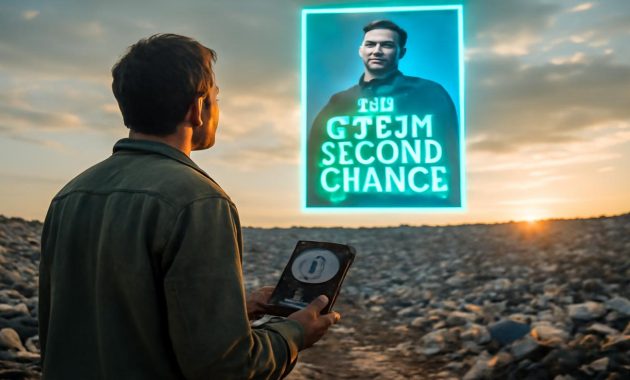
The rain had just started when the excavator’s metal teeth bit into the hill of trash. Cold, needling drizzle swept across the landfill, turning the ground into a slick layer of black-brown sludge. On the ridge, a man in a high-visibility jacket narrowed his eyes, watching, waiting, as if the next scoop might change everything. Twelve years of waiting. Twelve years of replaying a single decision made in a cluttered home office. Somewhere out there, buried beneath layers of yesterday’s life, lay a slim, dark-grey hard drive worth—on paper—more than €737 million.
The Man Who Threw Away a Fortune
His name is James Howells, and his story reads like a modern fable for the digital age—a cautionary tale about memory, money, and the strange fragility of value when it lives inside tiny squares of metal and plastic.
Back in 2009, before most people had even heard the word “Bitcoin,” James was tinkering late at night in his home in Newport, Wales. He was the kind of person who loved to take things apart just to see how they worked. Bitcoin, then a niche curiosity talked about in obscure forums, felt like a puzzle built for people like him. He mined a few thousand coins on his laptop when the process was still easy, the way someone might collect shells on a quiet beach, never thinking those shells would later be worth millions.
He stored the bitcoins on a hard drive—the kind you could hold in your palm, the kind that seems almost insultingly small when you realize what it can hold. Then life moved on. He stopped mining. The novelty faded. He dismantled the computer, tucked the hard drive away, and somewhere along the way, years later, in the midst of a clear-out—blurred by routine, boxes, and the dusty churn of everyday life—he threw it away.
The drive went into a bin bag. The bin bag went into a council trash collection. The council truck rumbled along its route. And the landfill, a heaving, layered organism of human habit, opened its mouth and swallowed his lost fortune.
The Moment Regret Hit Like a Freight Train
There wasn’t a dramatic cinematic realization at first. It came slowly, painfully, like a bruise blooming under the skin. In 2013, when Bitcoin’s value exploded, James went to look for the drive. It wasn’t in the drawer. Not in the storage box. Not in the office. He mentally retraced his steps, trying to rewind time. A nagging suspicion hardened into certainty: the drive was gone.
By then, the landfill had already begun to settle over his mistake. Imagine standing at the edge of a vast, artificial hill, where layers of soil and trash and plastic sheeting quilt over each other like an ugly geological cake. Under one of those layers—no labels, no clues—lies a 2.5-inch hard drive containing a digital key that could unlock over 8,000 bitcoins. On some days, those coins have been worth a billion dollars. On most days recently, they hover around €737 million.
James did the only thing that made sense to him: he tried to get permission to dig.
Chasing Ghosts in the Garbage
For more than a decade, James has been living in the gap between what is possible and what is allowed. On paper, the task is Herculean but not completely insane. Landfills are mapped. Loads are logged. There are records of when certain streets’ rubbish was collected, where it was tipped, on which part of which cell. You can narrow it down to a zone. You can hire engineers to assess ground stability. You can bring in environmental consultants, retrieval specialists, even AI experts to scan and sort through mountains of waste.
In reality, the Newport landfill is a living thing—compressing, shifting, rotting, draining. Liquids ooze. Gases escape. Organic matter collapses inward. Boxes disintegrate into fibrous mush. Plastics warp, crack, and fracture under sun and pressure. Somewhere inside this metamorphosis sits a drive that wasn’t designed to survive a decade in such a hellish ecosystem.
Yet James persisted. He came up with proposals costing tens of millions of euros, funded by investment firms willing to take the gamble. He offered the Newport council a share. He promised to do it safely, responsibly, with cutting-edge sorting systems and environmental protections.
Again and again, the answer came back: no.
A City That Wouldn’t Budge
From the council’s perspective, the refusal was simple: risk. Landfills are delicate from a legal and ecological standpoint. Disturbing an old site can mean releasing harmful gases, rupturing protective liners, or triggering landslides of compacted trash. If something goes wrong, the damage is hard to contain—and even harder to put back.
They weren’t just worried about environmental harm. There were insurance issues, health and safety standards, the precedent it might set. If one man could dig up a landfill for a lost fortune, what stopped others from wanting to rummage through these modern tombs of discard?
So Newport became the town that said no to €737 million. This made for easy headlines, but on the ground it meant something quieter and more awkward: James lived his life among people who knew that one of their neighbors had once owned a lottery-esque windfall in cryptocurrencies and accidentally fed it to the garbage truck.
He carried that knowledge every time he walked past a newsstand screaming about Bitcoin in giant letters, or watched another boom-and-bust cycle slash or multiply the invisible wealth buried somewhere in the earth. That hard drive became a sort of ghost—haunting not just him, but the idea of value itself. What is money, really, if it can be lost not through fire or theft, but because someone forgot which bag it was in on bin day?
The Years Stretch Out, and the Story Grows
Over time, James stopped just being a man with a problem and became a symbol. Journalists loved the story. It was irresistible: the IT worker who accidentally threw away a fortune. Articles circled the globe. Radio programs dissected his decision and its consequences. Social media turned him into a meme, a cautionary tale: Back up your keys. Don’t lose your seed phrase. Don’t be like James.
But he wasn’t a meme. He was a person who had to live with it.
He had to sit with the knowledge that if he had simply been more organized, more careful, or a bit less determined to tidy up that week, his life—and that of his family, and probably his entire town—would look radically different. Instead, he lived in a modest house, on an ordinary street, with an extraordinary what-if jingling like loose change at the back of his mind.
Every so often he would revise his plan to dig. Environmental technology improved. AI-driven sorting systems got better. Drone-based mapping became more accessible. He partnered with venture capitalists, landfill experts, data-recovery engineers. Each new proposal was more sophisticated than the last—more controlled, more scientifically grounded, more convincing. But still, the door stayed closed.
Then Came the Cameras
It’s strange how modern life works. What negotiations, letters, and technical dossiers could not pry open, a streaming series might.
Somewhere in a meeting room far from the sludge and stink of the landfill, television producers began working on a project that would turn James’s long, lonely mission into something else: a story to be told, scene by scene, episode by episode. An upcoming series, dramatizing his quest, promised what his technical documents never could—visibility, sympathy, and pressure.
For the first time in years, it felt as if time wasn’t just passing; it was gathering momentum.
Story as a Second Chance
The series, still under wraps in its finer details, promises to follow James from those early days of mining when Bitcoin was an internet curiosity, through the fateful hard-drive clear-out, to his increasingly desperate attempts to retrieve what he’d lost. It will likely show the clashes with the council, the skepticism, the late-night strategy sessions with investors, the meetings with environmental scientists who talk in the calm, measured tones of people who are aware of both possibility and risk.
But beyond the drama, something else is at work here. Stories shape public opinion. Viewers will watch James trudge through muddy fields, see diagrams of the landfill’s layers, listen to him revisiting the moment he threw the drive away. They’ll share the metallic taste of regret on his tongue. They’ll see, up close, that this isn’t just about money—it’s also about closure. About not wanting a single careless decision to define an entire life.
As the series builds anticipation, it nudges the story out of the business and tech columns and into the territory of human drama. And once people care, officials can no longer treat it as just another letter in a long inbox. If the series makes the audience lean in and ask, “Why won’t they just let him try?”, that question starts to echo in real life.
| Year | Key Moment in the Search | What It Meant for James |
|---|---|---|
| 2009 | Mines thousands of bitcoins on a personal laptop. | Just an experiment; no sense of future value. |
| 2010–2012 | Hard drive is stored, then casually discarded during a clear-out. | The fateful mistake, made quietly and without drama. |
| 2013 | Realizes the drive is gone when Bitcoin’s value soars. | First shock, first approach to the council, first refusals. |
| 2014–2021 | Refines recovery plans, secures backers, faces repeated rejections. | A long, grinding battle between hope and bureaucracy. |
| 2022–2024 | Technology improves; interest in his story surges again. | The search evolves into a global human-interest saga. |
| Upcoming | A new series brings his quest to screens worldwide. | A rare second chance—if public attention can unlock permission. |
The Harsh Physics of Hope
Even with public sympathy, one question remains hanging in the air like the mist rising off the landfill: Is the hard drive even recoverable?
Experts are split, and their opinions are laced with caveats. Hard drives are tougher than we think, they say. If the casing is intact, if the delicate platters inside haven’t cracked or corroded too badly, there might be a chance. Data recovery labs have salvaged information from drives damaged by floods, fires, even explosions. A landfill isn’t automatically a death sentence.
But this isn’t a month or a year in the ground; it’s over a decade. Over that time, layers of rubbish have pressed down with unforgiving weight. Moisture has wormed its way into every crevice it could find. Temperature cycles have expanded and contracted materials over and over. Chemicals from decomposing waste may have seeped into the drive’s innards.
In other words, James is fighting both bureaucracy and entropy. The council’s signature might one day open the gates to the landfill, but physics will have the final say.
What If He Finds It?
Imagine the moment: a worker’s gloved hands pull out a mud-caked rectangle of metal and plastic. A camera zooms in. The crowd around the pit—engineers, producers, maybe even a lawyer or two—holds its breath. Numbers and letters, once neatly printed on a label, are now smeared and faded. Someone carefully slips the drive into a padded case, as if it’s a relic from a lost civilization.
Back in a lab, technicians in white coats open the casing. They talk about platters, heads, and controllers in the same reverent tone that archaeologists use for bones and pottery. Bit by bit, they coax whatever remains of the drive’s brain into speaking again. Perhaps the directories are corrupted. Perhaps entire sectors are gone. Or perhaps, against the logic of the last twelve years, the wallet file is intact.
If they recover that file and the bitcoins can be moved, money that spent more than a decade existing as both real and unreachable will suddenly become mobile again. The story would flip in an instant—from a parable of loss to one of ridiculous, stubborn persistence. Arguments over how to divide that wealth—with investors, with the city, with whoever helped fund the dig—would begin before the recovery tools have even cooled down.
And if they don’t find it? Or if they find it, but it’s unreadable, the data gone forever? Then the value evaporates in an instant, like a mirage. The landfill keeps its secret.
Why We Can’t Look Away
There’s a reason stories like James’s grab hold of us and refuse to let go. It’s not just the very human appetite for narratives about sudden riches or catastrophic mistakes. It’s also that his situation pokes at something deeply unsettling in the way we now live.
Our wealth, our memories, our identities—so much of it now fits inside things that can fall between couch cushions or sit unnoticed at the bottom of a drawer. A USB stick can contain the only copy of a book manuscript. A phone can hold every photo of a lost parent. A password manager can make the difference between access and exile. A single 2.5-inch hard drive can be the boundary between an ordinary life and a €737 million fortune.
We like to think of the digital world as airy and abstract, but it still depends on little mortal objects that can break, be misplaced, or—like James’s drive—end up crushed under seven meters of household waste. His story is a cracked mirror we all recognize ourselves in, even if our lost files are worth emotion, not millions.
The upcoming series doesn’t just give James a second chance to dig. It gives the rest of us a second chance to look carefully at our own fragile arrangements with the digital universe. How many of us have old drives in shoeboxes, accounts we’ve forgotten the passwords to, photos slowly rotting on obsolete devices?
In this sense, the landfill isn’t just a physical place outside Newport. It’s also a metaphorical one—a vast, invisible heap where we’ve thrown away the things we didn’t know we’d one day need.
On the Edge of Resolution
As the cameras roll and contracts shuffle back and forth between lawyers’ offices, James stands again on the ridge of that landfill, still wearing high-vis, still squinting through the drizzle. To most people, this is just a mound of rubbish crowned by a few birds and the distant hum of machinery. To him, it is both grave and vault.
The series will almost certainly push his story to a global audience. Strangers across the world will find themselves rooting for him, or doubting him, or debating whether anyone should be allowed to disturb an entire landscape for the sake of a digital lottery ticket.
But strip away the headlines, the euros, the drama, and you’re left with something simple: a man who made a mistake and couldn’t let it go. Who refused to accept that one moment of carelessness had locked the rest of his life onto a track he never meant to choose. Whether the cameras capture a triumphant recovery or a final, respectful acceptance of loss, James’s long walk beside that landfill has already become part of the mythology of our era.
Somewhere under that churned-up skin of earth and plastic, electrons once arranged themselves into a cryptographic key that pointed to an unimaginable fortune. Whether we ever see that fortune move again, the story itself—told now in articles, in conversations, and soon, on screens—is the strange, enduring treasure that rose out of the trash.
FAQ
How much is the lost hard drive estimated to be worth?
The hard drive is believed to contain over 8,000 bitcoins. Depending on Bitcoin’s price, that stash has been valued at around €737 million, and at times even more. The exact value fluctuates with the cryptocurrency market.
Why can’t he just go and dig up the landfill himself?
The landfill is controlled by the local council in Newport, and it’s a regulated site. Excavating it involves environmental, legal, and safety risks. Without formal permission, any attempt to dig would be illegal and potentially dangerous.
Is it actually possible to recover data from a drive that’s been in a landfill for so long?
It’s uncertain. Some experts say it’s theoretically possible if the drive’s internal platters are intact, while others are skeptical because of long-term exposure to pressure, moisture, and chemicals. Advanced data-recovery techniques offer hope, but there are no guarantees.
What role does the upcoming series play in his search?
The series brings public attention and narrative power to his story. That visibility could increase pressure on authorities, attract more technical expertise and funding, and potentially shift the risk–reward calculation for granting excavation permission.
Has this story changed how people treat their own digital assets?
Yes. James’s experience is often cited in discussions about cryptocurrency security and digital backups. Many people now see his story as a warning to securely store keys, back up important data, and treat small physical devices with the seriousness their contents deserve.