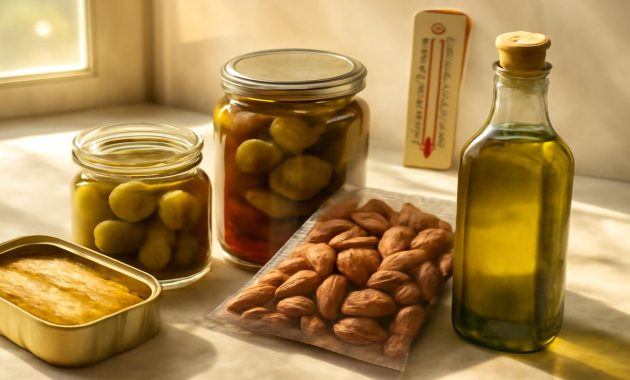
The heat arrived before sunrise—thick, breathless, and strangely metallic on the tongue. By ten in the morning, the city shimmered like a mirage. Asphalt softened; air conditioners coughed and surrendered. Somewhere between the first broken fan and the hundredth “unprecedented temperature record,” people did the same thing they always do in quiet emergencies: they opened their pantry doors and stared inside, hoping for a plan.
How Chefs Quietly Plan for Days Like This
Professional kitchens know heat better than most of us. They’re built around open flames, steam, and ovens that run long after midnight. A heatwave above 35°C doesn’t just make chefs sweat—it changes the way they think about food entirely. Gas lines can fail. Power grids can buckle. Delivery trucks can’t keep up. What you’ve actually got on your shelves becomes the difference between feeling vaguely miserable and genuinely unsafe.
Emergency planners know this too. In recent years, heatwaves have moved from “weather event” to “public health crisis.” Municipal risk reports now mention pantry strategy in the same breath as cooling centers and medical alerts. When those reports quietly crossed the desks of a few chef-owners and culinary directors, something clicked. They began cross-referencing emergency planning data with what actually works in a kitchen when the world outside feels like an open oven door.
You’d imagine the secret answer might be something exotic or high-tech. But when data from emergency planners met the instincts of heat-hardened chefs, the result was surprisingly modest: five pantry staples that keep showing up again and again. Not glamorous. Not trendy. Just quietly reliable when the temperature crosses that invisible 35°C threshold and refuses to come back down.
The Five Staples That Keep Showing Up in the Data
Before we step into each ingredient’s story, here’s how these five staples line up when you look through the lens of resilience. This isn’t a nutrition chart or a recipe index. It’s a snapshot of what chefs and planners actually count on when things get uncomfortably hot—and stay that way.
| Staple | Why Chefs Rely On It | Emergency Planning Advantage |
|---|---|---|
| Dried legumes (lentils, chickpeas, beans) | Protein-rich, flexible, comforting in heat when served chilled or room temp | Long shelf life, stable without refrigeration, good calorie-to-volume ratio |
| Whole grains (rice, barley, oats, bulgur) | Base for salads and bowls, easy to batch-cook during cooler hours | Energy-dense, low spoilage risk, compatible with limited cooking fuel |
| Shelf-stable fats (olive oil, ghee, neutral oils) | Carry flavor, create satisfying meals without heavy cooking | Compact energy source, no refrigeration, improve palatability of simple foods |
| Canned or jarred vegetables & tomatoes | Instant texture, acidity, and color; no chopping marathons in the heat | Ready-to-eat, safe without power, supports hydration with high water content |
| Electrolyte-friendly pantry items (salt, pickles, broths) | Replace minerals lost through sweat; brighten bland staples | Aid in rehydration strategies included in heat emergency guidance |
Individually, they look unremarkable. Together, they form a small, quiet riot of possibility. To understand why chefs reach for these first when the air goes thick and still, you have to stand where they stand: in a kitchen that’s already 10 degrees hotter than outside, doing triage on ingredients and energy at the same time.
1. Dried Legumes: The Slow, Steady Heart of a Hot-Weather Pantry
In a heatwave, time changes texture. Afternoons stretch, heavy and airless, and the idea of “dinner” can start to feel like a negotiation. Dried lentils, chickpeas, and beans are the opposite of that panic. They’re the long view.
Emergency planners like them because they sit quietly on a shelf for months—or years—without complaint. They don’t demand electricity. They’re compact, efficient, and astonishingly dense with protein and fiber. On paper, they’re a logistics dream. But chefs love them for a far more tactile reason: once cooked, they feel like something you can build a day around.
In one overheated coastal town, a chef running a community kitchen during a week-long grid failure started every morning with a single task: getting a pot of lentils going at dawn while the air was still tolerable. He used a gas burner when he had fuel, a camp stove when he didn’t. That one pot—earthy, fragrant, barely simmering—was his entire safety net.
By midday, those lentils were no longer “ingredients.” They were chilled salads with chopped canned tomatoes and herbs scrounged from surviving planters. They were folded into flatbreads with a splash of oil and vinegar, spooned over leftover rice, or eaten just as they were with a little salt and lemon. They didn’t demand constant refrigeration, and in a heatwave, that alone felt like grace.
The lesson echoed what emergency manuals quietly repeat: pick foods that can wear many different costumes, that hold up at room temperature, that don’t punish you for losing power. Dried legumes are patient. In an impatient kind of weather, that patience becomes nourishment.
2. Whole Grains: Cold Bowls and Quiet Mornings Before the Heat
There is a certain time of the morning in a heatwave when the air still remembers how to be cool. Chefs learn to chase it. That’s when pots of rice and barley come out, and when the future of the day is quietly decided.
Heat-focused emergency planning reports often point to simple, dry staples like rice and oats as “base calories”—foods that can feed many people with minimal fuel. But chefs think more like storytellers than statisticians. For them, whole grains are about what happens afterward: the way a bowl of cold barley salad feels like mercy at four in the afternoon when your skin hums with heat.
One city chef, after reading her local government’s heatwave resilience plan, began running experiments in her own apartment. She started cooking grains in large batches before sunrise, spreading them in shallow containers to cool fast. By the time the day turned white and electric with heat, her fridge—or cooler, or even a shaded corner—held the beginnings of everything: rice ready for citrusy, herb-dotted salads; bulgur wheat that only needed boiling water and a rest; oats that could turn into savory porridge with a drizzle of oil and a spoon of beans.
Whole grains, in a heatwave, are less about steaming sides and more about cold, quiet abundance. Emergency planners like their calorie density; chefs love the way they turn whatever else you’ve got—canned vegetables, leftover roast chicken, a handful of olives—into a meal that doesn’t taste like sacrifice.
And when the heat strips away your appetite, grains have a kind of neutrality that helps. They don’t shout. They don’t demand. Mixed with a little oil, some acid, and a handful of something crunchy, they meet you where you are, which on a 38°C day is usually somewhere between tired and slightly stunned.
3. Shelf-Stable Fats: How Flavor Survives When the Fridge Doesn’t
Ask an emergency planner about fats in a pantry and they’ll talk about energy density—those quiet calories that keep you going when you’re eating less because the heat has stolen your hunger. Ask a chef, and they’ll tell you a very different story: fat is where the pleasure lives.
Olive oil, ghee, shelf-stable plant-based spreads—these are the things that let simple food feel like actual food. In a heatwave, flavor has to travel without much help. Ovens are the enemy. Deep frying is unthinkable. Even standing in front of a stove for more than ten minutes can feel like punishment. So chefs reach for fats that ask almost nothing of them.
Olive oil over cold beans and rice with chopped canned peppers. Ghee melted gently into a pot of lentils cooked earlier in the week. A spoonful of richly flavored oil over a bowl of barley and tomatoes. When the air is close and unmoving, that glossy sheen on a dish isn’t just aesthetics—it’s morale.
Emergency documents rarely talk about morale. They speak of “continuity,” “resource management,” and “health outcomes.” But chefs, who have fed people through blackouts and heatwave-induced supply chain failures, know that taste is its own kind of infrastructure. A few tablespoons of good oil can transform a bowl of pantry leftovers into something people actually want to eat, even when their bodies feel flattened by heat.
The trick, they’ve found, is to choose fats that keep their composure at high room temperature. Butters and some soft spreads can spoil quickly; ghee and many oils stay serene on a shelf, ready to step in when the fridge becomes more ornamental than functional. That stability is the quiet line connecting culinary instinct with emergency planning reality.
4. Canned Vegetables & Tomatoes: Color, Acidity, and the Illusion of Fresh
There’s a particular heartbreak that comes with opening your refrigerator during a heatwave and discovering that everything once green has gone limp or slimy. When the air is already heavy, the smell of wilted produce is more than just unpleasant; it feels like a small betrayal.
Emergency planning guides, especially in regions already used to extreme heat, increasingly recommend keeping some shelf-stable produce on hand: canned tomatoes, jarred roasted peppers, canned corn, green beans, carrots. The reasoning is straightforward—these foods are safe at room temperature, pre-cooked, and often packed in water or their own juices, which quietly support hydration.
Chefs, though, see something less clinical and more intimate. They see color and texture and the sharp, clean snap of acidity when everything else feels dull.
In a tucked-away restaurant in a heat-prone valley, one chef keeps an entire pantry wall of tomatoes: whole, crushed, pureed, sun-dried in oil. On the worst days—those 40°C afternoons when nobody wants to be near a stove—she builds meals around them without ever really “cooking” in the traditional sense. A bowl of chickpeas mixed with canned tomatoes, olive oil, garlic powder, and dried herbs becomes a kind of instant salad. Canned green beans, rinsed and tossed with rice, lemon juice, and salt, turn into something bright and oddly refreshing.
The acidity of tomatoes, especially, does something the data doesn’t fully capture: it wakes people up. When heat blurs your senses and everything tastes flat, that tang is a small electric shock back to yourself. It helps you eat when you need to eat but would rather not. It helps pantry food feel like a choice, not a last resort.
Ultimately, canned and jarred vegetables give you the illusion—and sometimes the reality—of freshness when the world outside your kitchen is scorching the real thing. That illusion, in its own quiet way, is resilience.
5. Salt, Pickles & Broths: The Quiet Science of Staying Upright
The first time a city health department dug into heatwave hospital admission data in detail, they found patterns that went beyond “it’s hot and people are dehydrated.” Some were drinking water, plenty of it, and still fainting. The missing piece was electrolytes—salt and minerals lost to constant sweating and never fully replaced.
That’s why many modern emergency planning documents now tuck an almost unassuming recommendation into their checklists: keep salty, shelf-stable foods on hand. Not just as flavor, but as tools.
Chefs had been doing this instinctively for a long time. They reached for salt not just as a seasoning, but as a way to make water stick around in the body longer. Pickles for staff during a brutal summer service. Small bowls of salty broth sipped between tasks in kitchens that routinely climbed past 40°C near the line.
In pantry form, this looks like jars of pickles in brine, bouillon cubes, miso paste in cooler climates, even simple table salt and soy sauce. These aren’t glamorous ingredients. They don’t photograph well. But they quietly align with the science of heat survival: water plus salt plus rest.
In a home kitchen, it can be as simple as this: a glass of cool water with a pinch of salt and a squeeze of citrus. A small bowl of instant broth made with bouillon. A quick salad of canned beans, chopped pickles, and oil, where the brine doubles as seasoning and electrolyte support. These are the moves chefs borrow from emergency manuals without calling them by their more clinical names.
The irony is that the line between “culinary wisdom” and “emergency planning” is thinner than it looks. In both worlds, the goal is the same: keep people standing, keep them clear-headed, keep them capable of making one more good decision in difficult weather.
Designing Your Own Heatwave Pantry, Quietly and Calmly
No one wants to live as if disaster is just around the corner. But there’s something reassuring—even gentle—about organizing a pantry with both flavor and resilience in mind. The chefs who helped translate emergency planning data into real kitchens didn’t start hoarding or catastrophizing. They simply adjusted the balance of what they kept on hand.
A little more shelf-stable protein in the form of lentils and beans. A few extra bags of rice and barley in sealed containers. One or two good oils that don’t mind a warm cupboard. A row of canned tomatoes and vegetables. A quiet stash of bouillon, salt, and pickles.
This is not doomsday preparation. It’s a kind of hospitality extended to your future self—the one who might wake up in an apartment already warm, with rolling blackout alerts pinging phone screens, wondering what on earth is for dinner. When that version of you opens the pantry and finds not just random jars, but a set of ingredients that know how to work together in the heat, the panic drains away a little.
You remember what chefs and planners already know: that even when the weather turns hostile, there are ways to eat that feel human and whole. Bowls of cool grains drizzled with oil, beans and tomatoes under a shower of salt and herbs, a sip of salty broth that brings your body back to center. The heat may be out of your control. The small rituals of feeding yourself are not.
And so the next time the forecast ticks steadily upward past 35°C, you might just find yourself doing what those chefs did: waking a little earlier, cooking a pot of lentils while the air is soft, rinsing rice in the quiet of the morning, a faint tang of canned tomatoes waiting in the background. Not afraid, not entirely comfortable—but prepared, in the most ordinary and deeply reassuring sense of the word.
Frequently Asked Questions
How much of these pantry staples should I keep for a heatwave?
For a household of two to four people, many emergency planners suggest having three to seven days of shelf-stable food. That might look like 1–2 kg of dried legumes, 2–3 kg of grains, a liter or two of cooking oil, 8–12 cans of vegetables and tomatoes, and a supply of salt, bouillon, or pickles. Adjust based on your space, budget, and how often you normally cook.
Do I need special equipment to cook these foods during a blackout?
No special equipment is required, but having a backup like a gas stove, camping stove, or small outdoor burner can help. Many grains and legumes can be pre-cooked when power is available and eaten cold or at room temperature later, which reduces the need for ongoing cooking during an outage.
Won’t eating heavy foods make me feel worse in extreme heat?
It can, which is why chefs tend to serve these staples in lighter forms during heatwaves—cold salads, room-temperature bowls, and small, frequent portions instead of large hot meals. Adding oil, acid (like vinegar or citrus), and a bit of salt helps make modest portions feel satisfying without weighing you down.
Are canned vegetables really okay from a health perspective?
Canned vegetables and tomatoes are commonly included in emergency nutrition planning because they are safe, stable, and still provide fiber, vitamins, and hydration. Rinsing canned vegetables can reduce excess sodium if you are watching your salt intake. When fresh produce spoils quickly in high heat, canned options are a practical alternative.
Is it enough just to drink a lot of water during a heatwave?
Water is essential, but not always sufficient, especially if you’re sweating a lot. Emergency guidelines often emphasize replacing electrolytes—mainly sodium and sometimes potassium. Salty foods, broths, and pickles can help, along with regular sips of water. If you have medical conditions, follow your doctor’s guidance on fluid and salt intake.