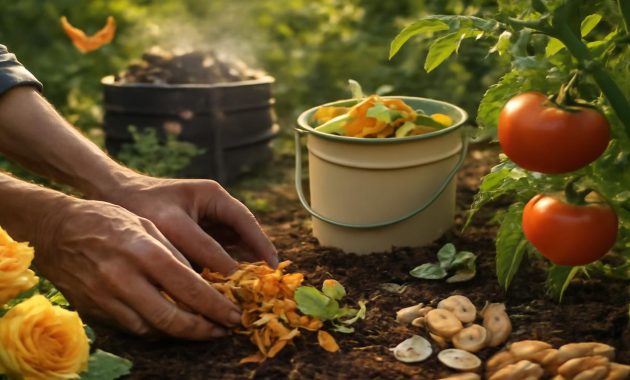
The bowl sat forgotten on the back of the counter, a sad little island of pale eggshells and coffee grounds. Someone had meant to take it out to the trash but got distracted, and now it waited, a small collection of things the world has agreed are useless. At least, that’s how most people see them. Cracked shells, onion skins, tea bags, the limp green top of a carrot. Trash. Something to hide in a bag and send away on a rumbling truck to an invisible “somewhere else.”
But step outside and listen—really listen—and the garden is telling a different story. The soil under your feet is hungry, and this “trash” you just threw away is, to your plants, pure gold. Not metaphorical gold, not the overpromised miracle product in a glossy bag, but the quiet, unsung, everyday treasure we spill into the garbage without a second thought.
Almost nobody cares about it. Which is strange, because your plants care a lot.
The Secret Life of What You Throw Away
Walk into any kitchen at dinner time and you’ll witness the same little ritual. The chopping board fills up with ends and scraps: the papery sheets of garlic, the browning outer leaf of a lettuce, the fibrous tail of a green bean. One by one, they’re scraped into a bin with a brisk, efficient swipe. There’s a small thud, a rustle of plastic, and that’s that. End of story.
But in the language of soil, those scraps are sentences waiting to be written. They carry minerals that took months, years, sometimes decades for nature to assemble. A carrot pulled from the ground brought up calcium and potassium from deep in the soil. An eggshell is a little sculpture of calcium carbonate, patiently laid down layer by microscopic layer inside a chicken. Coffee grounds are the concentrated remains of plant tissues that once soaked up sunlight and rain on the side of a mountain.
None of this is trash. It’s a bank account you are emptying into a landfill, one peel at a time.
If you’ve ever knelt down and pushed your fingers into real, living soil, you know the feeling. It’s soft and crumbly, almost sponge-like. It smells faintly of forest floor and rain. That smell is the scent of decay done right: millions of tiny decomposers—bacteria, fungi, insects—breaking down what has died so that something else can live. Every time you throw kitchen scraps into the bin instead of back to the soil, you’re interrupting that ancient cycle.
And yet, because the bin is closer than the garden, because we’re busy, because no one ever told us otherwise, we keep doing it.
The Day the Trash Became Treasure
Picture this: it’s early morning, the sky still soft and colorless, and you’re standing in your yard with a mug of coffee warming your hands. The soil in your beds looks tired—pale, a little compacted. Last year’s tomato plants gave a half-hearted harvest. The basil sulked. The flowers did their best, but you could feel them struggling.
Now imagine you take that coffee cup inside, scoop out the used grounds instead of rinsing them down the sink, and pour them into a small container labeled “For the Garden.” That same morning, your breakfast eggshells join it, rinsed and crushed. The onion skins from your soup, the ends of your celery, the peel from your apple—all of it finds its way not to a trash bag, but to a bowl that lives on purpose on your counter.
This is how it begins. Not with a complicated compost system or fancy tumblers. With a bowl. With a decision.
Over a few days, that bowl fills. A quiet weight grows. You start to notice patterns. You see how much potential you used to send away without thinking. The banana peels, in particular, might surprise you—how many there are, how quickly they pile up, how dark and sweet-smelling they become as they start to soften. It feels strangely wrong to throw them away now that you’re paying attention.
One evening, you carry your bowl out to the garden. The air is cool, the light slanting low. You scrape the contents into a small trench beside a tomato plant, cover it with a thin layer of soil, and pat it gently. It’s a small, secret burial: a grave for scraps that is, at the same time, the beginning of something alive.
You walk away. The soil gets to work.
Simple Kitchen Scraps That Plants Adore
Not all kitchen “waste” is equal, but a surprising amount of it is quietly powerful for your plants. The trick is to start seeing each peel and shell as an ingredient instead of an inconvenience.
| Kitchen Scrap | What It Gives to Plants | Easy Way to Use It |
|---|---|---|
| Banana peels | Potassium, a little phosphorus, trace minerals | Chop and bury near flowering plants |
| Eggshells | Calcium to prevent blossom end rot | Dry, crush to powder, sprinkle around plants |
| Coffee grounds | Organic matter, mild nitrogen boost | Mix lightly into soil or compost |
| Vegetable peels | A mix of nutrients and carbon | Compost or trench-bury in beds |
| Tea leaves (no plastic bags) | Organic matter, gentle fertilizer | Open bags, mix leaves into soil or compost |
The beauty of these scraps is their familiarity. You don’t have to buy anything special; you’re already producing them. Banana peels curl in the bowl like thin, yellow smiles. Eggshells dry into fragile, porcelain fragments that crunch softly when you crush them. Coffee grounds smell like the memory of morning even when they’re cold and spent. All of it feels almost too humble to matter, but in the slow logic of soil, these are building blocks.
Banana peels, chopped and lightly buried near roses or tomatoes, break down over weeks, feeding a steady trickle of potassium to help support blossoms and fruit. Eggshells crumble into the soil, adding calcium that can help keep your tomatoes and peppers from getting that heartbreaking, brown-black rot at the bottom. Coffee grounds invite worms and soil life closer, loosening compacted earth and improving structure.
None of this looks dramatic. There are no instant miracles, no overnight transformations. But somewhere under the surface, roots notice. Leaves deepen in color. Flowers hold a little longer. The whole garden feels…more alive.
Compost: The Quiet Alchemy in the Corner
There’s a particular kind of magic that happens in a compost pile. Stand next to one on a cool morning and you can sometimes feel the warmth radiating off it, as if someone tucked a sleepy animal under that heap of leaves and peels. It’s not magic, of course. It’s life—microbial, microscopic life—working in fierce, invisible shifts.
Building a compost system doesn’t have to be complicated. In one corner of a yard, a simple open bin made of old pallets does the job. On an apartment balcony, a lidded bucket or a compact compost tumbler can serve just as well. The key is consistency: your kitchen scraps (the “greens”), plus dry materials like shredded cardboard, dry leaves, or paper (the “browns”), with enough air and moisture to keep everything from turning into a slimy swamp.
Drop in a handful of carrot tops, an apple core, the pale inner leaves of a cabbage. Cover them with a layer of leaves or torn cardboard. Walk away. The pile seems still, but just beneath the surface it’s roaring with life. Bacteria begin the feast. Fungi send out thread-like filaments. Tiny insects arrive, then larger ones that prey on those insects. The pile heats up, cools, shifts, and settles.
Weeks turn into months. One day, you lift a forkful from the bottom of the pile and something in you lurches. The garbage you remember dropping in is gone. What’s left is dark, crumbly, uniform. It smells like a forest after rain. This is compost, and in your hands you’re holding transformed time. You think of the dinners, the breakfasts, the countless small actions that fed this pile. Every peel a sentence, every shell a comma, every coffee ground a period, and here is the finished story: soil food.
Spread this compost over your garden beds, and the plants don’t see “compost” at all. They see structure, moisture, nutrients, and an entire hidden city of microbes arriving at their roots. It is not a fertilizer in the quick, synthetic sense. It’s more like a library and a pantry and a hospital for the soil all at once, quietly making everything easier for your plants without shouting about it.
Trench Composting: Burying Treasure Where Roots Will Find It
If a big compost bin feels intimidating, there’s a simpler, almost secret method that gardeners have used for generations: trench composting. It’s as straightforward as it sounds. Instead of piling scraps in a bin, you bury them directly where your plants will grow—or already are growing.
Imagine drawing a line with your shovel down the length of your garden bed, opening a narrow trench about as deep as your hand is long. Into that dark slit of earth, you pour in your little bowl of scraps: chopped peels, wilted salad greens, used tea leaves. You can almost hear the soft thud as they meet the cool soil. Then you pull the earth back over them, smoothing it with the back of the shovel until the surface looks unchanged.
For a while, it is unchanged. A curious bird might hop along, head tilted, wondering what you were up to. But underground, the process begins. Worms wriggle toward the new banquet. Microbes, already everywhere, swarm and multiply. The scraps soften, surrender their shape, dissolve slowly into the soil structure.
By the time roots reach that vein of buried treasure, the recognizable bits are gone. What’s left is a zone of soft, moist, nutrient-rich earth that feels like a five-star restaurant to those roots. They spread eagerly through it, finding water held like a sponge and a microbe-rich buffet. You, meanwhile, barely lifted more than a shovel and a bowl to make it happen.
Move your trench line a little each time you bury new scraps, and over a season or two you’ll have fed your entire bed, one quiet stripe at a time. No big system. No special equipment. Just a slow, respectful returning of what came from the soil back into it.
Why Almost Nobody Cares—And Why You Might
We live in a world that hides its endings. Trash goes in a bag, the bag goes in a bin, the bin goes to a truck, and the truck disappears down the street. After that, it may as well fall off the edge of the earth. Out of sight, out of mind. The system is designed so you don’t have to care.
And yet, there is a price. Every load of organic “waste” that ends up in a landfill is trapped without air, slowly rotting and releasing methane, a potent greenhouse gas. Nutrients that could have gone back into hungry soils are locked away. Our gardens, parks, and fields need more and more inputs from outside—fertilizers mined or manufactured far away—while the raw ingredients rot behind fences and warning signs.
So most people keep treating banana peels and eggshells like a problem to be removed instead of a resource to be reclaimed. It’s not that they’re careless. It’s that no one ever invited them to notice.
You’re reading this, which means you are, in a way, being invited. Invited to pause when your hand hovers over the bin, peel in your palm, and ask a different question: not “How do I get rid of this?” but “Where could this go to do some good?”
That question changes how a kitchen feels. The quiet, repetitive acts of cooking and cleaning become connected to the life happening outside your door. The line between your counter and your soil softens. As seasons pass, you can taste that decision. In sweeter tomatoes. In fuller rose blooms. In basil leaves that grow a little more lush, their scent stronger when you tear them into strips over steaming pasta.
It isn’t about perfection. You don’t have to rescue every scrap. Some days, things will still end up in the trash. Life is busy, and habits are stubborn. But if even a portion of your “pure gold” starts making its way back into the earth that feeds you, you’re shifting a story that has been heading in the wrong direction for a long time.
The Pleasure of Caring About What Others Ignore
There’s a quiet satisfaction in caring about something the world has mostly decided to ignore. It feels almost like a rebellion, but a gentle one. You are not holding a sign or chanting a slogan. You are rinsing an eggshell, crushing it between your fingers into a powder, and sprinkling it around a young pepper plant. You are pouring cooled tea leaves at the base of a hydrangea. You are tipping a bowl of scraps into a small trench and cover it just as the evening swallows dip overhead.
In these moments, you are not just “gardening.” You’re joining a conversation that has been going on since the first forests fell and rotted and rose again greener. Everything that lives must one day be given back. What you’re doing—this bowl on the counter, this pile in the corner of the yard—is choosing to return what you can with intention instead of by accident.
The rewards are tangible: richer soil, sturdier plants, a garden that looks and feels more alive. But there’s another reward, more subtle, that sneaks up on you. One day, as you stand with bare feet in your yard or lean over a balcony railing to touch the leaves of a potted tomato, you feel it: this sense that your home is not just where you live, but part of something living. That your small acts matter in a web of roots and microbes and fallen leaves you cannot even see.
Most of the world will keep tossing its gold into plastic bags. Trucks will keep rumbling away. But in your little corner, you know better now. You know that the onion skins and banana peels and coffee grounds have another life waiting for them. All you have to do is give them the chance.
Frequently Asked Questions
Can I put all my kitchen scraps directly into the garden?
Not all of them. Fruit and vegetable scraps, coffee grounds, tea leaves (without plastic tea bags), and crushed eggshells are great. Avoid meat, dairy, oily foods, and large amounts of cooked food, as they can attract pests and create bad smells. Those are best kept out of simple home systems.
Will kitchen scraps in the garden attract animals?
They can, if left exposed. To avoid this, chop scraps and bury them 15–20 cm deep when trench composting, or cover them well in a compost bin with dry materials like leaves or shredded paper. In most gardens, this simple step prevents problems.
Are coffee grounds really good for plants?
Used coffee grounds are helpful in moderation. They add organic matter and a mild nitrogen boost. Mix them into the top layer of soil or compost rather than piling them thickly on the surface, which can form a crust and repel water.
How long does it take for kitchen scraps to become usable for plants?
In a warm, active compost pile, scraps can break down in a few months. Buried directly in soil, soft materials like peels and greens usually decompose within several weeks. Eggshells take longer but begin releasing calcium gradually over time.
Do I need a big yard to use my kitchen scraps for plants?
No. Balcony gardeners can use a small compost bucket, a compact tumbler, or even a worm bin. Potted plants appreciate a little finished compost mixed into their soil just as much as garden beds do. Even a single container of herbs can benefit from the gold you once threw away.